
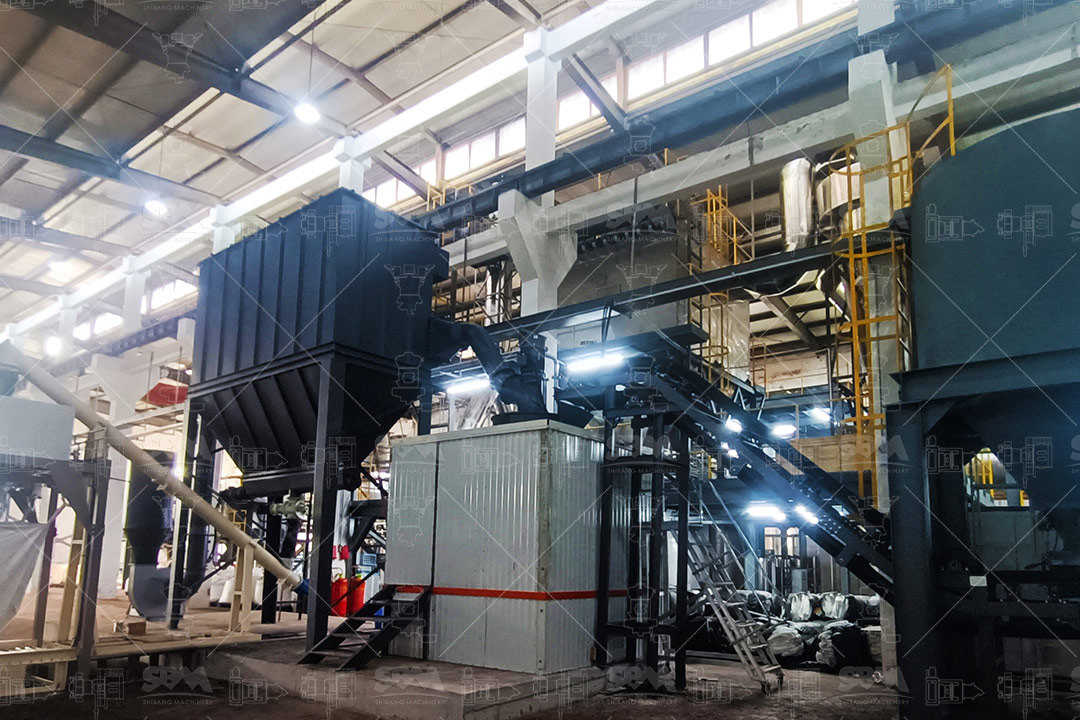
The global surge in waste tire generation has positioned tire pyrolysis as a critical technology for sustainable resource recovery. Through the process of thermal decomposition in an oxygen-free environment, waste tires are converted into pyrolysis oil, combustible gas, and a solid residue known as crude pyrolysis carbon black (rCB). While the oil and gas have clear energy applications, the crude carbon black requires sophisticated downstream processing—specifically ultra-fine grinding and purification—to transform it into a high-value industrial raw material suitable for rubber reinforcement, plastics, inks, and coatings.
This document outlines a professional industrial solution for the micronization of tire pyrolysis carbon black, focusing on the integration of high-efficiency grinding systems, with a particular emphasis on the SCM Series Ultrafine Grinding Mill for high-end applications.
1. The Challenge of Pyrolysis Carbon Black Processing
Crude carbon black from tire pyrolysis typically contains impurities such as residual steel wires, fiberglass, and inorganic ash. Furthermore, the particle size of the crude “char” is relatively large and inconsistent. To meet the quality standards of commercial carbon black (such as N330 or N660 grades), the material must undergo:
- De-ashing and Purification: To remove metallic and non-metallic impurities.
- Micronization: To reduce the particle size to the sub-micron or low-micron range to enhance its reinforcement properties.
- Consistency Control: To ensure a narrow particle size distribution (PSD).
2. Core Grinding Technologies and Equipment Selection
Depending on the target application and required fineness, different milling technologies are employed. The solution integrates several tiers of grinding equipment provided by SBM (Shanghai Shibang Machinery) to cover the full spectrum of production needs.
2.1 The Premier Choice for Ultrafine rCB: SCM Series Ultrafine Grinding Mill
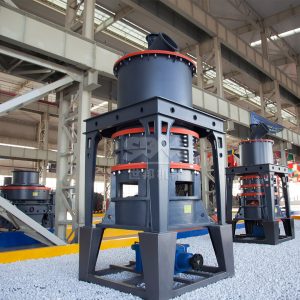
For producers aiming for the high-end market where fineness levels between 325 and 2500 mesh are required, the SCM Series Ultrafine Grinding Mill is the specialized solution.
The SCM series is designed specifically for producing ultrafine powder with a focus on safety and efficiency. A standout feature of this system is that its grinding chamber contains no rolling bearings or screws. This is a critical advantage when processing carbon black, as it eliminates the risk of bearing damage or equipment failure caused by the abrasive nature of the material or loose bolts falling into the machinery.
Read MoreIn terms of performance, the SCM series offers:
- Superior Fineness: It can achieve standards of d97 ≤ 5μm in a single pass.
- High Efficiency: Compared to traditional jet mills or stirred mills, the SCM series provides 40% higher grinding efficiency while reducing energy consumption by approximately 70% under identical power and fineness conditions.
- Safety and Environment: The system operates as an open-circuit system under negative pressure, ensuring a dust-free environment. It is also equipped with a high-efficiency pulse dust collector and a muffler to meet stringent environmental noise and emission standards.
2.2 Large-Scale Primary and Secondary Grinding: LM Series Vertical Roller Mill
For large-scale industrial operations where the initial throughput is high (up to 700 t/h), the LM Series Vertical Grinding Mill provides an integrated solution for crushing, grinding, classifying, and drying.
The LM-X series (Vertical Fine Grinding Mill) is particularly relevant for carbon black, offering a product fineness of 10–40μm (90-97% passing). Its advantage lies in its high automation and compact footprint, which is approximately 50% of a traditional ball mill system, significantly lowering construction costs.
2.3 High-Precision Ultrafine Vertical Grinding: LUM Series
The LUM Series Ultrafine Vertical Roller Mill combines Taiwanese roller technology with German powder selection technology to provide a high-purity output. With a fineness range of 325–2500 mesh and capacity up to 16 t/h, it is ideal for medium-to-large scale lines requiring high whiteness and purity control.
3. Technical Specifications of the SCM Series
For a specialized tire pyrolysis carbon black project, the following SCM models are typically recommended based on the desired scale:
| Model | Max Feed Size (mm) | Output Fineness (mesh) | Capacity (kg/h) | Main Unit Power (kW) |
|---|---|---|---|---|
| SCM1000 | ≤20 | 325-2500 | 1000-8500 | 132 |
| SCM1250 | ≤20 | 325-2500 | 2500-14000 | 185 |
| SCM1680 | ≤20 | 325-2500 | 5000-25000 | 315 |
4. The Integrated Process Flow
The grinding solution follows a systematic approach to ensure the highest quality of the recovered carbon black:
- Feeding and Pre-crushing: The crude pyrolysis carbon black, often containing chunks of char, is first processed by a hammer crusher (such as the PC series) to a size of ≤20mm. It is then transported via a TH series elevator to the storage silo.
- Controlled Feeding: An electromagnetic vibrating feeder uniformly delivers the material into the main unit of the SCM series mill.
- Ultrafine Grinding: Inside the mill, a scattering disk throws the material to the periphery via centrifugal force. Multiple grinding rollers rotate within ring channels, pulverizing the carbon black through intense rolling and crushing.
- Advanced Classification: The powdered material is carried by the blower’s airflow into a high-precision cage-type classifier. Unqualified coarse particles are returned to the grinding chamber, while the qualified fine powder proceeds to the collection stage.
- Product Collection: The finished product is gathered by a high-efficiency pulse dust collector. High-pressure air pulses periodically clean the filter bags, ensuring continuous operation and high recovery rates of the fine powder.
- Purification (Optional): If required by the end-user, the ground powder can further undergo chemical purification or pelletization for easier transport and use in the rubber industry.
5. Key Advantages of the SBM Solution
The implementation of SBM’s milling technology—particularly the SCM Series Ultrafine Grinding Mill—offers several strategic benefits to recyclers:
- Energy Efficiency: The precision control of grinding pressure and the optimized aerodynamics of the non-resistance volute (found in the MTW series) or the efficient classification of the SCM series result in 30%–50% lower energy consumption compared to older ball mill technologies.
- Operational Reliability: By utilizing thin oil lubrication (as seen in the MTW series) or the screw-free design of the SCM grinding chamber, the equipment boasts higher reliability and longer service intervals.
- Product Quality: The high classification precision prevents “coarse powder leakage,” ensuring that the final rCB has a stable and consistent particle size, which is vital for its reuse in high-grade rubber compounds.
- Environmental Compliance: Modern environmental regulations require dust-free operations. All SBM mills operate under negative pressure, preventing dust spillover and ensuring a clean workspace.
6. Application Case Study: High-Grade Carbon Black Recovery
In similar projects involving mineral and chemical processing, SBM equipment has demonstrated exceptional performance. For example, in anchoring agent production lines, the SCM and LUM series have successfully produced powders with fineness levels of <2μm (effectively 325 mesh and beyond) at capacities of 30,000 tons per year. This technical capability translates directly to the tire pyrolysis industry, where the target is often to achieve a d97 of 10μm or less to compete with virgin carbon black.
The transformation of waste tires into high-value carbon black is a cornerstone of the circular economy. Success in this field depends heavily on the ability to micronize crude char into a consistent, ultrafine powder. The SCM Series Ultrafine Grinding Mill, with its unique safety features, superior efficiency, and precision classification, stands as the preferred solution for this task. Combined with the large-scale capabilities of the LM Series Vertical Mill and the precision of the LUM Series, SBM provides a comprehensive, professional, and environmentally friendly ecosystem for tire pyrolysis carbon black processing.
By choosing this advanced solution, operators can ensure high product purity, reduced operational costs, and full compliance with modern industrial standards, ultimately turning a waste stream into a profitable and sustainable resource.