
Introduction
The transformation of raw iron ore into fine powder is a critical process in the modern metallurgical and steelmaking industries. Iron ore powder, or iron ore concentrate, serves as a primary feedstock for blast furnaces, direct reduction iron (DRI) plants, and pelletizing operations. The efficiency, fineness, and consistency of this powder directly impact downstream production costs and product quality. Achieving the desired particle size distribution requires specialized grinding equipment and well-engineered production lines. This guide explores the core equipment used in iron ore comminution, detailing the working principles, advantages, and applications of various grinding mills, and provides insights into configuring an optimal production line.
Key Stages in Iron Ore Powder Production
The journey from mined ore to fine powder typically involves several stages:
- Primary Crushing: Large lumps of run-of-mine ore (often up to 1 meter in size) are reduced to a manageable size of about 150-200mm using jaw crushers or gyratory crushers.
- Secondary & Tertiary Crushing: Further size reduction to below 30-50mm is achieved through cone crushers or impact crushers, preparing the material for the grinding circuit.
- Grinding (Pulverizing): This is the core stage where the crushed ore is ground into fine powder. The choice of grinding mill depends on the target fineness, capacity, and energy efficiency goals.
- Classification & Separation: Ground material is classified by particle size using air classifiers or screens. Oversize particles are recirculated for further grinding, while the correctly sized powder is sent to magnetic separators or other beneficiation equipment to increase iron content.
- Drying & Transportation: Moisture content is controlled, and the final concentrate powder is transported for pelletizing, sintering, or shipping.
Types of Grinding Mills for Iron Ore
Different mills are suited for different fineness requirements and production scales. Here’s a breakdown of the most common types.
1. Ball Mill
Output Fineness: 0.074-0.8mm (200-20 mesh)
Typical Application: Primary grinding stage, often in closed circuit with a spiral classifier or hydrocyclone in wet grinding processes for mineral processing plants.
Overview: The ball mill is a traditional and robust workhorse. It consists of a rotating cylindrical shell partially filled with grinding media (steel balls). The ore is fed into the mill, and the tumbling action of the balls crushes the material through impact and attrition.
Advantages: Simple structure, reliable operation, wide adaptability, and capable of both dry and wet grinding. It is excellent for achieving a relatively coarse grind required for initial liberation of iron minerals from gangue.
Considerations: High energy consumption, significant noise, and relatively low grinding efficiency for producing very fine powders (<45μm). It often requires pre-crushing to a small feed size.
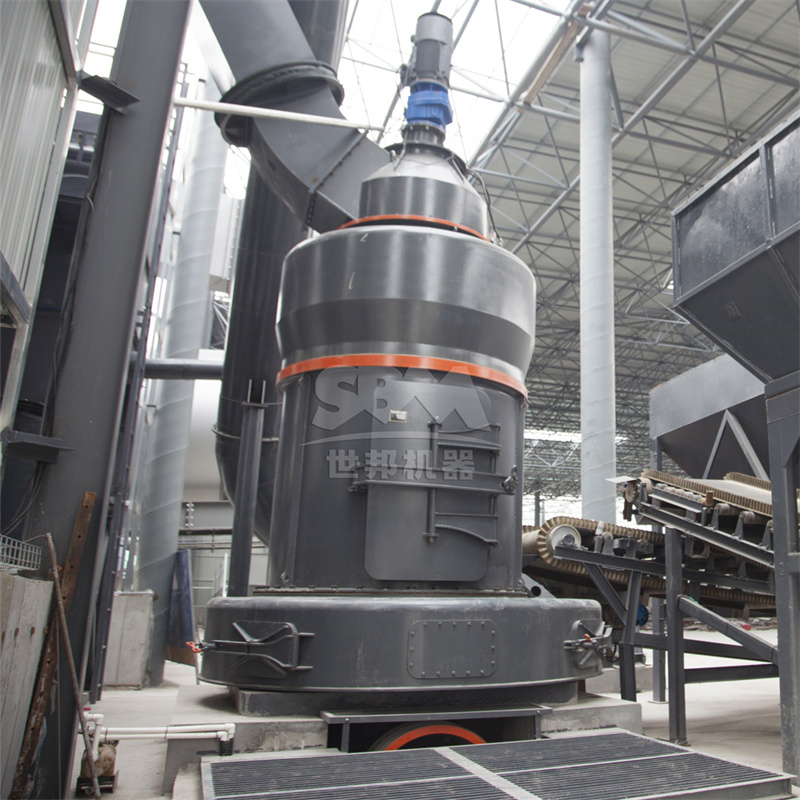
2. Vertical Roller Mill (VRM)
Output Fineness: 30-325 mesh (600-45μm), with special models reaching 600 mesh.
Typical Application: Dry grinding of iron ore concentrate for direct shipping or pellet plant feed. Ideal for large-scale, integrated mineral processing lines.
Overview: A VRM integrates crushing, grinding, drying, and classification in a single unit. Material is fed onto a rotating grinding table and crushed under rollers pressed against the table. Hot air dries the material and transports the fine powder to an integrated classifier.
Advantages: Superior energy efficiency (30-50% less power than a ball mill for the same task), excellent drying capability, compact footprint, lower noise levels, and easier maintenance. Its integrated classification system allows for precise particle size control.
For operators seeking a high-capacity, energy-efficient solution for producing iron ore powder in the 30-325 mesh range, our LM Series Vertical Roller Mill represents a top-tier choice. Its integrated design reduces the plant footprint by 50% and infrastructure costs by 40%. With a non-contact design that triples the life of wear parts and an intelligent control system for stable operation, the LM series, such as the LM190K (capacity 23-68 t/h), is engineered for large-scale, continuous production with minimal environmental impact through fully sealed negative pressure operation.
3. European Trapezium Mill (MTW Series)
Output Fineness: 30-325 mesh (down to 0.038mm).
Typical Application: Medium to fine grinding of non-metallic minerals and metallic ores like iron ore, especially where reliable, medium-scale production is needed.
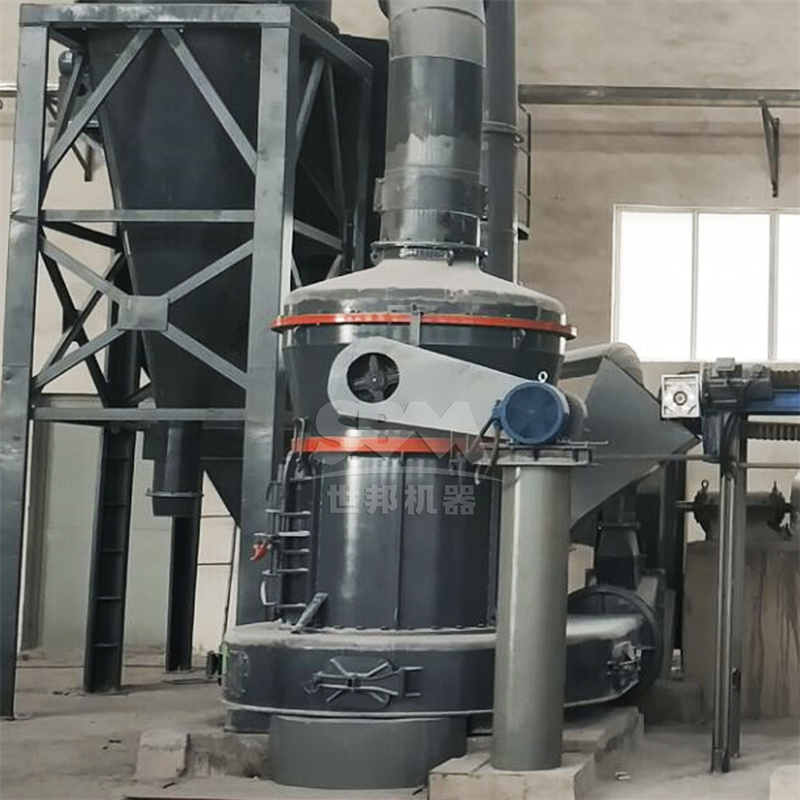
Overview: This mill is an advanced version of the traditional Raymond mill (pendulum mill). It uses curved grinding rollers and a wear-resistant grinding ring. The shovel scoops material to the grinding zone, where it is crushed by the rollers. An independent turbine classifier ensures accurate particle size separation.
Advantages: More stable and efficient than traditional Raymond mills, with features like an integral bevel gear drive (98% transmission efficiency), anti-wear shovel design, and an optimized arc air duct. It offers a good balance of performance, cost, and fineness control for many iron ore applications.
4. Ultrafine Grinding Mills (For Specialized Applications)
Output Fineness: 325-2500 mesh (45-5μm).
Typical Application: Production of ultra-fine iron ore powder for advanced materials, deep processing, or chemical industries. Not typical for standard steelmaking feed.
Overview: When extremely fine iron oxide powders are required, specialized mills like the SCM Series Ultrafine Mill come into play. These mills use a layered grinding principle with multiple grinding rings and rollers, coupled with a high-precision turbine classifier.
Advantages: Capable of producing very uniform, superfine powders. They are highly efficient for their target fineness range, with energy consumption significantly lower than traditional jet mills.
For projects demanding ultra-fine iron ore powder, our SCM Series Ultrafine Mill is the technological answer. It excels in producing powders between 325 and 2500 mesh (45-5μm) with exceptional uniformity, thanks to its high-precision vertical turbine classifier. The mill’s design emphasizes durability and eco-friendliness. For instance, the SCM1250 model offers a capacity of 2.5-14 t/h with a main power of 185kW, making it a powerful and efficient choice for specialized fine grinding applications where product fineness is paramount.
Designing an Iron Ore Powder Production Line
Selecting the right mill is only one part of the equation. A successful production line requires careful integration of all components.
- Feed System: Includes silos, vibrating feeders, and belt conveyors to ensure a consistent and controlled feed rate to the crusher and mill.
- Crushing Circuit: As described earlier, configured in stages to reduce the ore to the optimal feed size for the selected grinding mill (e.g., ≤20mm for an SCM Mill, ≤50mm for an LM Vertical Mill).
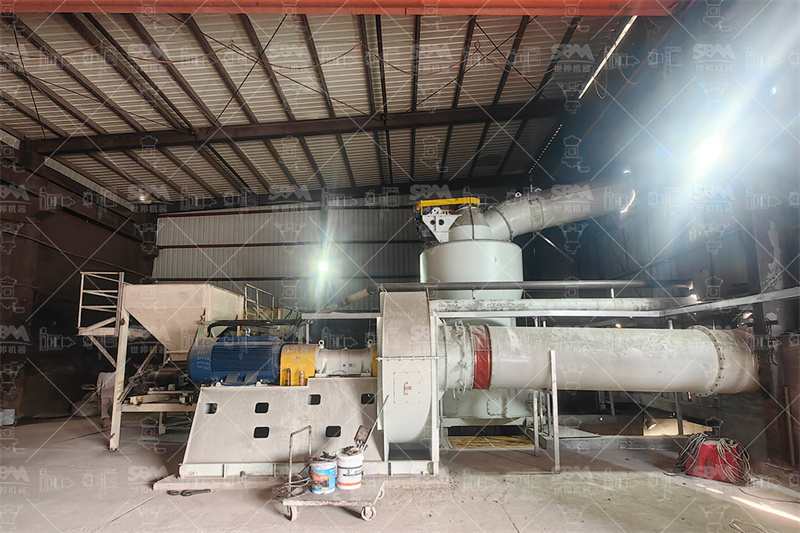
- Grinding & Classification Circuit: The heart of the line. This can be an open circuit (material passes through the mill once) or, more commonly, a closed circuit. In a closed circuit, the mill output goes to a classifier (e.g., a dynamic classifier in a VRM, or a separate air classifier for a ball mill). Fines proceed, while coarse material is returned to the mill inlet. This maximizes efficiency and controls product size.
- Beneficiation System: For low-grade ores, magnetic separators (drum or roller) are placed after grinding to separate magnetic iron minerals (magnetite) from the gangue, creating a high-grade concentrate.
- Dust Collection & Environmental Control: Essential for dry grinding processes. A comprehensive baghouse filter or pulse dust collection system, like those integrated into our MTW and SCM mills, captures airborne particles, ensuring a clean plant environment and complying with emissions standards.
- Control & Automation: Modern lines use PLC-based control systems to monitor and adjust feed rates, mill load, classifier speed, and fan velocity, optimizing performance and ensuring consistent product quality.
Conclusion
The production of iron ore powder is a sophisticated process that hinges on selecting the appropriate grinding technology. From the robust and familiar ball mill for primary grinding to the highly efficient Vertical Roller Mill for large-scale dry processing, and further to specialized ultrafine mills for niche applications, each piece of equipment serves a specific purpose. The choice depends on a careful evaluation of ore characteristics, desired product fineness, production capacity, energy costs, and total investment. By understanding the capabilities and advantages of different mills—such as the high-efficiency, integrated LM Vertical Roller Mill for standard concentrates or the precision-focused SCM Ultrafine Mill for specialized products—operators can design a production line that is not only effective but also economical and environmentally sustainable, forming a solid foundation for the entire iron and steel value chain.