
Introduction
Magnesite, a magnesium carbonate mineral (MgCO3), is a crucial raw material for refractories, agriculture, chemical industries, and environmental applications. Processing it into fine powder, particularly at 300 mesh (approximately 48 microns), significantly enhances its reactivity, surface area, and value in downstream processes. Achieving this specific fineness efficiently and consistently requires a carefully selected production line. This guide provides a comprehensive overview of the essential equipment needed to produce high-quality 300-mesh magnesite powder, from primary crushing to final collection.
Understanding the Production Process
The journey from raw magnesite ore to 300-mesh powder follows a systematic sequence. Each stage is critical for ensuring final product quality, production efficiency, and equipment longevity.
- Primary Crushing: Large raw magnesite blocks (often 200-500mm) are reduced to a manageable size, typically below 50mm.
- Intermediate Crushing & Drying: The material is further reduced and, if necessary, dried to achieve optimal moisture content for fine grinding.
- Fine Grinding & Classification: This is the core stage where the material is ground to the target fineness (300 mesh) and precisely classified.
- Powder Collection & Packaging: The finished powder is separated from the air stream, collected, and prepared for storage or shipment.
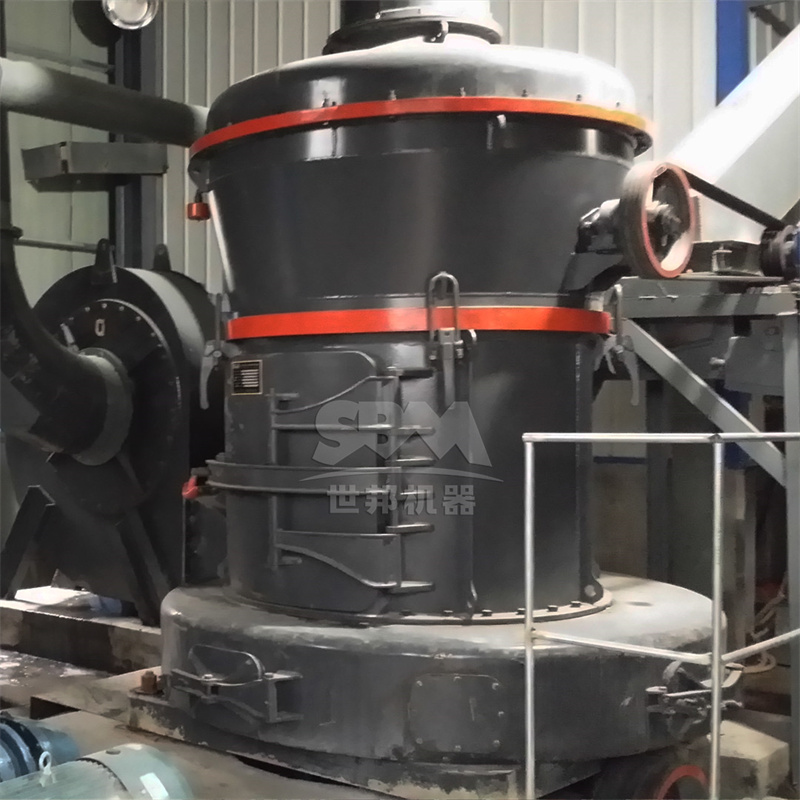
Essential Equipment for a 300-Mesh Magnesite Powder Production Line
1. Primary Crushing Equipment
The first step involves coarse crushing. Jaw Crushers are the most common choice for this duty. They offer high reliability, a large feed opening, and the ability to handle hard and abrasive materials like magnesite. The output from this stage is usually sized below 100-150mm.
2. Intermediate Crushing and Drying Equipment
For further size reduction and moisture control, a combination of equipment is used:
- Hammer Crushers or Impact Crushers: These are effective for secondary crushing, bringing the material size down to below 20-30mm. Hammer mills are particularly suitable for brittle minerals like magnesite.
- Dryers: If the raw magnesite has high moisture content (>1-2%), a rotary dryer or vertical dryer is essential. Efficient drying prevents clogging in the fine grinding mill and ensures stable operation.
3. The Heart of the Process: Fine Grinding Mill
Selecting the right fine grinding mill is paramount for producing 300-mesh magnesite powder efficiently. The mill must offer precise particle size control, energy efficiency, and low wear costs. Several technologies are available, but two stand out for this specific application.
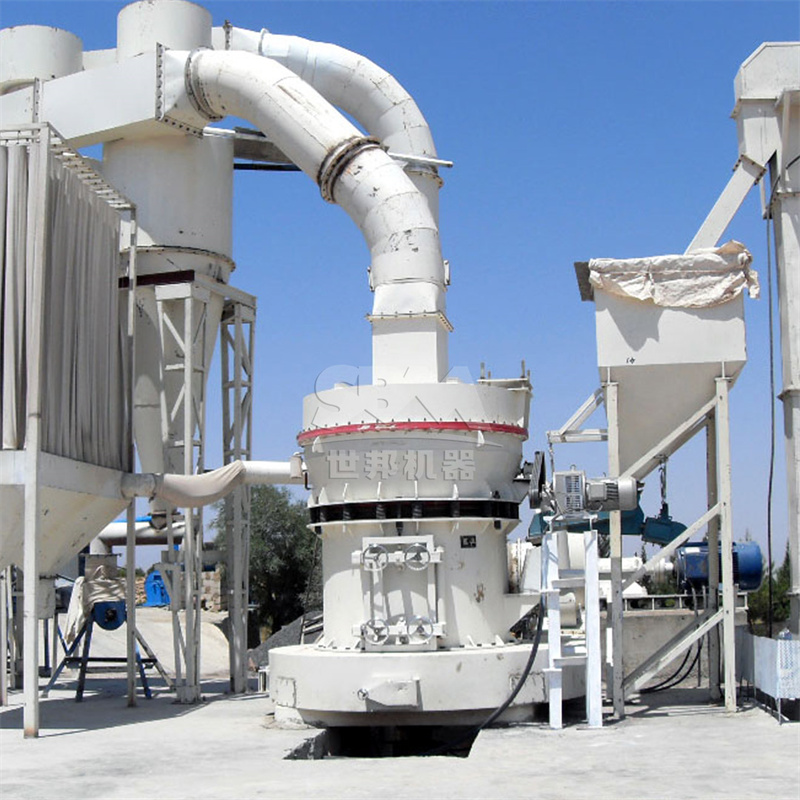
Option A: Raymond Mill (or European-Type Grinding Mill)
Traditional Raymond mills or their modern European-type trapezium mill successors are a popular choice for mid-range fineness. They are robust, offer good capacity, and are relatively cost-effective. For a 300-mesh product, they operate at the higher end of their capability range.
Our Recommended Solution: MTW Series European Trapezium Mill
For producers seeking a perfect balance of high capacity, reliability, and precise control for 300-mesh grinding, our MTW Series European Trapezium Mill is an outstanding choice. Engineered with advanced technology, it excels in processing minerals like magnesite to fineness levels between 30-325 mesh.
- Core Advantage for 300-Mesh: Its optimized arc air duct and high-efficiency classifier ensure precise particle size cutting at 300 mesh, with excellent product uniformity and minimal oversize particles.
- Efficiency & Durability: The integral bevel gear drive boasts 98% transmission efficiency, while the wear-resistant volute structure and anti-wear shovel design significantly reduce maintenance costs—a critical factor when processing abrasive materials.
- Model Selection: With models like the MTW138Z (6-17 t/h) or MTW175G (9.5-25 t/h), you can select a unit that perfectly matches your production requirements for 300-mesh magnesite powder.
Option B: Vertical Roller Mill (VRM)
VRMs are highly efficient grinding systems that integrate crushing, grinding, drying, and classification in a single unit. They are known for their lower energy consumption (30-40% less than ball mills) and smaller footprint.
Our Recommended Solution: LM Series Vertical Roller Mill
For large-scale, energy-conscious production of 300-mesh magnesite powder, our LM Series Vertical Roller Mill is the ideal technology. Its integrated design and intelligent control system make it a powerhouse for consistent output.
- Core Advantage for 300-Mesh: The dynamic classifier allows for multi-stage, precise adjustment of fineness, ensuring the 300-mesh target is met reliably. Special fine-powder models (LMX series) can even achieve up to 600 mesh if needed in the future.
- Economic & Operational Benefits: The non-contact design between rollers and the grinding table drastically reduces wear. Its ability to handle some moisture and its significantly lower energy consumption translate to a lower cost per ton of finished powder.
- Model Selection: Models such as the LM150K (13-38 t/h) or LM190K (23-68 t/h) provide substantial capacity for producing 300-mesh magnesite, making them suitable for major industrial operations.
4. Classification System
This is often integrated into the fine grinding mill (as in the MTW or LM mills). A high-precision, dynamic classifier (often turbine-based) is essential. It continuously separates particles that have reached the target size (300 mesh) from those that need further grinding, ensuring a tight particle size distribution.
5. Powder Collection System
After classification, the fine powder is carried by an air stream to the collection system. A high-efficiency Pulse Jet Baghouse Dust Collector is the industry standard. It captures over 99.9% of the fine powder, ensuring clean emissions and maximizing product yield. The collected powder is then conveyed to storage silos via screw conveyors or pneumatic systems.
6. Auxiliary Equipment
- Bucket Elevators & Screw Conveyors: For vertical and horizontal material transport between stages.
- Feeding Systems: Vibrating or screw feeders ensure a steady and controlled supply of material to the grinding mill.
- Electrical Control Panel: A centralized PLC-based control system automates the entire production line, monitors key parameters, and ensures safe and stable operation.
- Packaging Machine: For bagging the final powder into 25kg or 50kg bags, or for loading bulk tankers.
Key Considerations for Equipment Selection
- Raw Material Properties: Hardness, abrasiveness, and initial moisture content of your magnesite ore are decisive factors.
- Production Capacity: Define your required hourly or annual output (e.g., 5 t/h vs. 50 t/h).
- Energy Consumption: Operating costs are heavily influenced by grinding efficiency. VRMs and advanced trapezium mills typically lead in this area.
- Product Uniformity: The quality of the classifier directly impacts how consistent your 300-mesh powder will be.
- Space and Investment: Consider the physical footprint of the equipment and your capital budget.
Conclusion
Producing high-quality 300-mesh magnesite powder requires a synergistic system, not just a single machine. While primary crushers, dryers, and conveyors form the backbone, the choice of the fine grinding mill is the most critical decision. For most applications aiming at 300 mesh, modern grinding solutions like the MTW Series European Trapezium Mill (offering excellent precision and reliability) or the LM Series Vertical Roller Mill (delivering superior energy efficiency and large-scale integration) represent the optimal technological path. By carefully selecting equipment based on your specific ore characteristics and production goals, you can establish a profitable, efficient, and sustainable magnesite powder processing operation.