
Introduction
Flue Gas Desulfurization (FGD) is a critical environmental control technology employed by thermal power plants worldwide to reduce sulfur dioxide (SO2) emissions. Among various FGD methods, the wet limestone-gypsum process is the most widely adopted due to its high efficiency, reliability, and cost-effectiveness. The core of this process lies in the preparation of high-quality limestone powder with specific fineness and reactivity. The selection of appropriate grinding equipment directly impacts desulfurization efficiency, operational costs, and overall plant economics. This article provides a comprehensive overview of the primary equipment types used for producing desulfurization limestone powder, offers a detailed selection guide, and includes a cost analysis to aid decision-makers in optimizing their FGD systems.
Types of Limestone Grinding Equipment
The choice of grinding mill depends on required capacity, product fineness (typically 250-325 mesh or 45-63 μm for high-efficiency desulfurization), energy consumption, and capital investment. The main equipment categories are as follows:
1. Vertical Roller Mills (VRM)
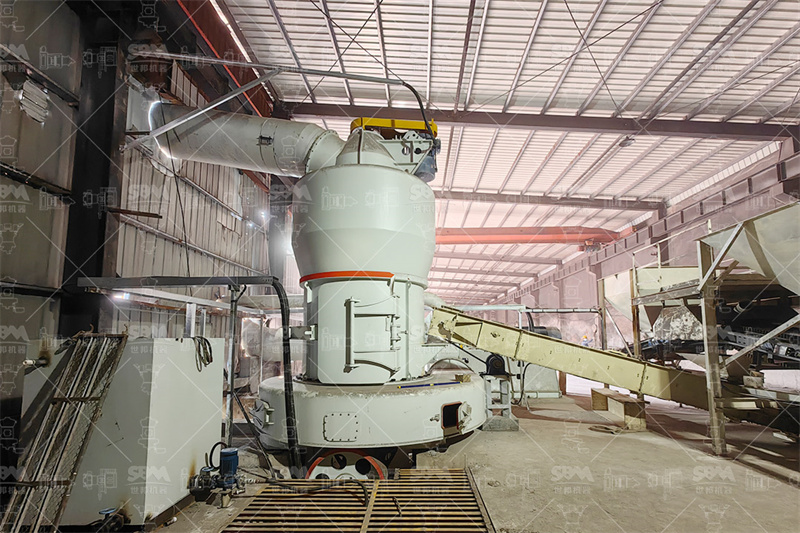
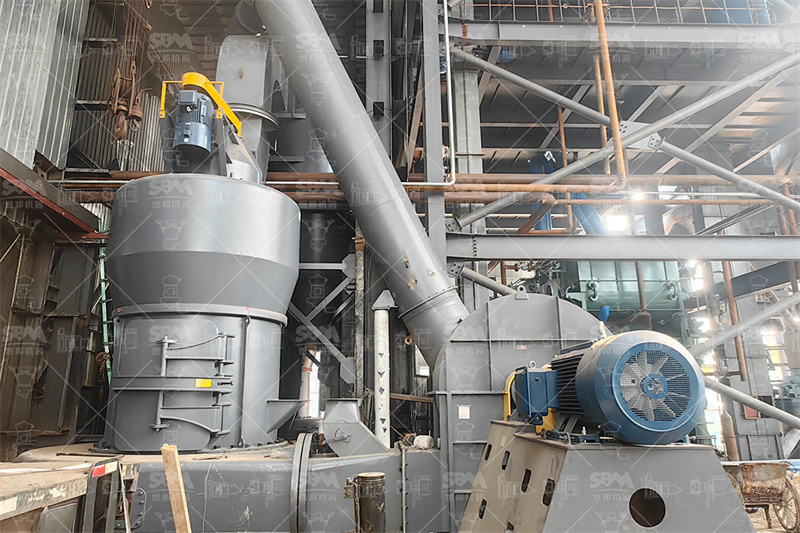
Vertical Roller Mills have become the industry standard for large-scale limestone preparation in power plants. They integrate crushing, grinding, drying, and classifying into a single, compact unit. Material is fed onto a rotating table and ground under pressure by hydraulically loaded rollers. Hot air introduced into the mill dries the limestone and transports the fine powder to a top-mounted classifier.
Advantages: High grinding efficiency (30-50% lower energy consumption than ball mills), excellent drying capability (can handle feed moisture up to 15-20%), compact footprint, and low noise levels.
Considerations: Higher initial investment and more complex maintenance for grinding rollers and table segments.
2. Raymond Mills (Medium-speed Trapezium Mills)
Raymond or pendulum roller mills are a mature technology widely used for medium to fine grinding. They operate on the principle of spring-loaded rollers rotating against a stationary grinding ring. The ground material is carried by an air stream to a classifier for size separation.
Advantages: Proven reliability, relatively lower capital cost, ability to produce a consistent product in the 30-325 mesh range, and easier maintenance compared to VRMs.
Considerations: Generally higher energy consumption per ton than VRMs for the same fineness, limited drying capacity, and lower single-unit capacity.
3. Ball Mills
Ball mills are traditional grinding systems where a rotating cylinder filled with steel balls cascades and tumbles the feed material, reducing it by impact and attrition. They can operate in either open or closed circuit with an external classifier.
Advantages: Extreme robustness, ability to handle abrasive materials, very wide capacity range, and can produce a broad spectrum of fineness.
Considerations: Highest specific energy consumption among major mill types, significant wear on liners and balls, large footprint, and high noise generation.
4. Ultrafine Grinding Mills
For advanced desulfurization processes requiring exceptionally high reactivity or for producing value-added by-products, ultrafine mills producing powder in the 5-45μm (325-2500 mesh) range may be considered. These include stirred media mills and advanced classifier mills.
Advantages: Produces powder with high specific surface area, leading to superior reactivity and potentially lower limestone consumption.
Considerations: Very high energy intensity, lower throughput, and higher operational complexity. Typically used for specialized applications rather than base FGD reagent preparation.
Selection Guide: Key Decision Factors
Selecting the optimal equipment requires a holistic analysis of technical and economic parameters.
1. Capacity and Product Fineness
Determine the hourly and annual limestone powder requirement based on plant size, sulfur content in coal, and target SO2 removal efficiency. The required fineness (e.g., 90% passing 325 mesh/45μm) is a primary driver for mill type selection. VRMs and modern Raymond mills are highly efficient in this range.
2. Raw Material Characteristics
Analyze the limestone’s grindability (Bond Work Index), moisture content, abrasiveness, and feed size. VRMs excel with moist materials. Highly abrasive limestone may influence the choice of wear materials and mill type.
3. Energy Efficiency
Power consumption is the largest operational cost component. A lifecycle cost analysis is essential. While VRMs have a higher capex, their significantly lower specific power consumption (kWh/ton) often leads to a lower total cost of ownership for large, continuous operations.
4. Space and Layout Constraints
VRMs offer a distinct advantage with their compact, vertical design, reducing building and foundation costs. Ball mill circuits require more horizontal space.
5. Operational and Maintenance (O&M) Philosophy
Consider the plant’s technical expertise and maintenance resource availability. Ball mills are simpler mechanically but have higher consumable costs. VRMs require more specialized maintenance but offer longer intervals between overhauls.
Cost Analysis: Capex, Opex, and Lifecycle Considerations
The total cost of ownership encompasses capital expenditure (Capex) and operational expenditure (Opex).
Capital Expenditure (Capex)
- Mill and Classifier: The equipment itself is the major cost. Ball mills are typically lower in price per unit of capacity than VRMs for smaller sizes, but this reverses for large capacities.
- Auxiliary Systems: Includes feeders, conveyors, dust collectors (bag filters are standard), silos, and piping. VRMs often have simpler auxiliary systems.
- Civil Works & Installation: VRMs require less building volume, leading to potential savings in civil engineering costs.
Operational Expenditure (Opex)
- Power Consumption: The dominant Opex factor. A VRM may use ~22 kWh/t for 325-mesh product, while a ball mill might use ~32 kWh/t. For a 1 million ton/year operation, this difference translates to ~10 GWh/year in energy savings.
- Wear Parts & Maintenance: Includes grinding rollers/tables, liners, balls, classifier blades, etc. Costs are highly material-dependent but are a significant recurring expense.
- Labor & Consumables: Generally similar across mill types for routine operation.
A thorough Net Present Value (NPV) or Internal Rate of Return (IRR) analysis over a 15-20 year lifespan is crucial for an accurate comparison.
Recommended Solutions for Modern Power Plants
For new thermal power plants or major FGD system upgrades, the trend strongly favors high-efficiency, integrated grinding systems. Based on extensive industry application data, we recommend evaluating our advanced mill technologies designed specifically for the rigorous demands of power plant desulfurization.
For large-scale power plants (≥300MW) requiring high-capacity, energy-efficient production of 250-325 mesh limestone powder, our LM Series Vertical Roller Mill represents an optimal solution. Its integrated design combines crushing, grinding, drying, and classifying in one unit, reducing footprint by 50% and infrastructure costs by 40% compared to traditional systems. With energy consumption 30-40% lower than ball mill systems and intelligent control for stable, automated operation, the LM series ensures low lifecycle costs and high reliability. Models like the LM190K (23-68 t/h) or LM220K (36-105 t/h) are perfectly scaled for major utility applications.
For mid-sized plants or situations requiring ultra-fine powder to maximize reactivity and minimize limestone consumption, our SCM Series Ultrafine Mill is the technology of choice. Capable of producing powder in the 325-2500 mesh (45-5μm) range, it enhances desulfurization kinetics significantly. The SCM series features a high-precision vertical turbine classifier for uniform product quality and a durable design with special material rollers. Its energy-efficient operation, with capacity reported to be twice that of some jet mills and 30% lower energy consumption, makes it a cost-effective option for advanced reagent preparation. The SCM1250 model (2.5-14 t/h) offers an excellent balance of performance and economy for such specialized needs.
Conclusion
The selection of desulfurization limestone powder production equipment is a strategic decision with long-term implications for a thermal power plant’s environmental compliance, operational efficiency, and profitability. While Raymond mills and ball mills remain in service, the superior energy efficiency, compact design, and advanced control of modern Vertical Roller Mills make them the preferred choice for new, large-capacity installations. For projects demanding the highest product fineness, ultrafine grinding technology presents a viable solution. A detailed technical and economic evaluation, considering all lifecycle costs, is imperative. Partnering with an experienced equipment supplier who can provide not only reliable machinery but also comprehensive process support and lifecycle services is key to ensuring a successful, sustainable, and cost-effective flue gas desulfurization operation.