
Introduction: The Significance of 200-Mesh Attapulgite Powder
Attapulgite, also known as palygorskite, is a unique magnesium aluminum phyllosilicate clay mineral prized for its exceptional colloidal, absorbent, and rheological properties. Its applications span a wide range of industries, including drilling fluids, pet litter, agricultural carriers, paints, adhesives, and pharmaceuticals. The performance of attapulgite in these applications is critically dependent on its particle size distribution. A fineness of 200 mesh (approximately 74 microns) represents a key benchmark, offering an optimal balance between surface area, viscosity development, and suspension properties for many industrial uses. Producing high-quality, consistent 200-mesh attapulgite powder requires a carefully selected and configured production line. This guide provides a comprehensive overview of the necessary equipment and process flow.
1. Understanding the Raw Material and Production Goals
Attapulgite ore is typically mined in lump or granular form, containing significant moisture and associated impurities like quartz, carbonate, and other clays. The primary production goals for 200-mesh powder are:
- Drying: Reduce moisture content from as high as 25-30% to below 10-12% for efficient grinding.
- Crushing: Reduce large lumps (up to 300mm) to a feed size suitable for fine grinding mills (typically below 20-30mm).
- Grinding & Classification: Achieve the target fineness of 200 mesh (74μm) with high throughput and energy efficiency, ensuring a narrow particle size distribution.
- Collection & Packaging: Efficiently collect the finished powder in a dust-free manner and prepare it for storage or shipment.
2. Core Equipment for a 200-Mesh Attapulgite Production Line
A complete production line consists of several interconnected systems. The selection depends on raw material characteristics, desired capacity, and automation level.
2.1. Drying System
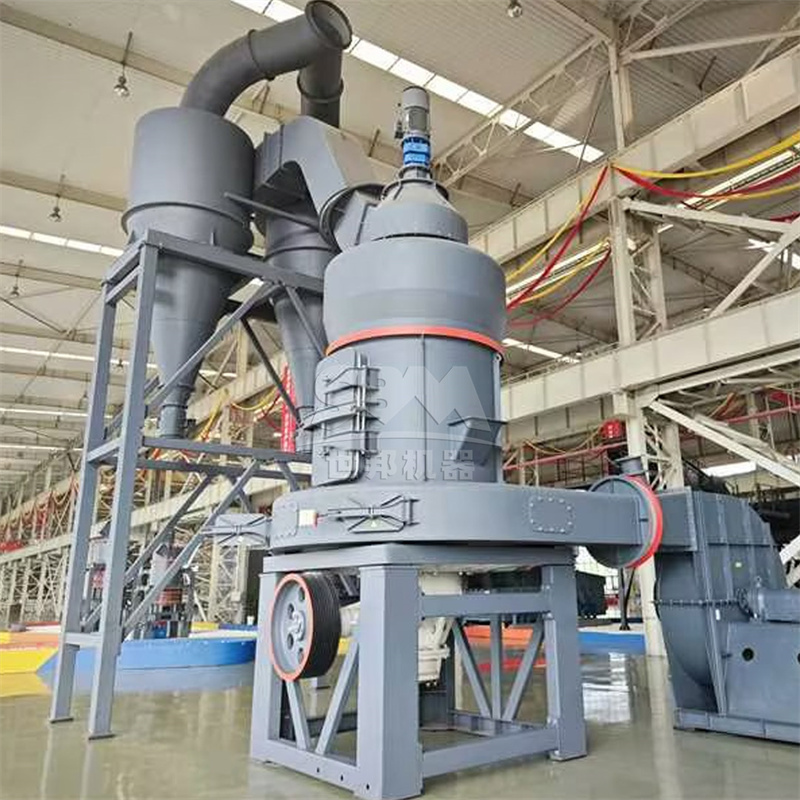
Moist attapulgite clay is highly cohesive and cannot be ground efficiently. A rotary dryer is the standard choice for high-capacity, continuous drying. It uses hot air (generated by a hot air furnace) flowing co-currently or counter-currently to the tumbling material to evaporate moisture. Proper temperature control is vital to prevent damaging the attapulgite’s crystal structure, which is responsible for its valuable properties.
2.2. Primary and Secondary Crushing Equipment
Dried attapulgite is often hard and fibrous. A two-stage crushing system is recommended:
- Jaw Crusher: Acts as the primary crusher, reducing large lumps (≤300mm) to a medium size (≤50mm). Its robust design handles the initial size reduction with high reliability.
- Hammer Crusher or Impact Crusher: Serves as the secondary crusher. It further reduces the 50mm pieces to below 10-20mm, creating a uniform feed for the grinding mill. Hammer mills are particularly effective for brittle minerals like dried attapulgite.
2.3. The Heart of the Process: Grinding and Classification Mill
This is the most critical component for achieving the target 200-mesh fineness. Several mill types can be used, but their suitability varies greatly.
Raymond Mill (MTW Series European Trapezium Mill)
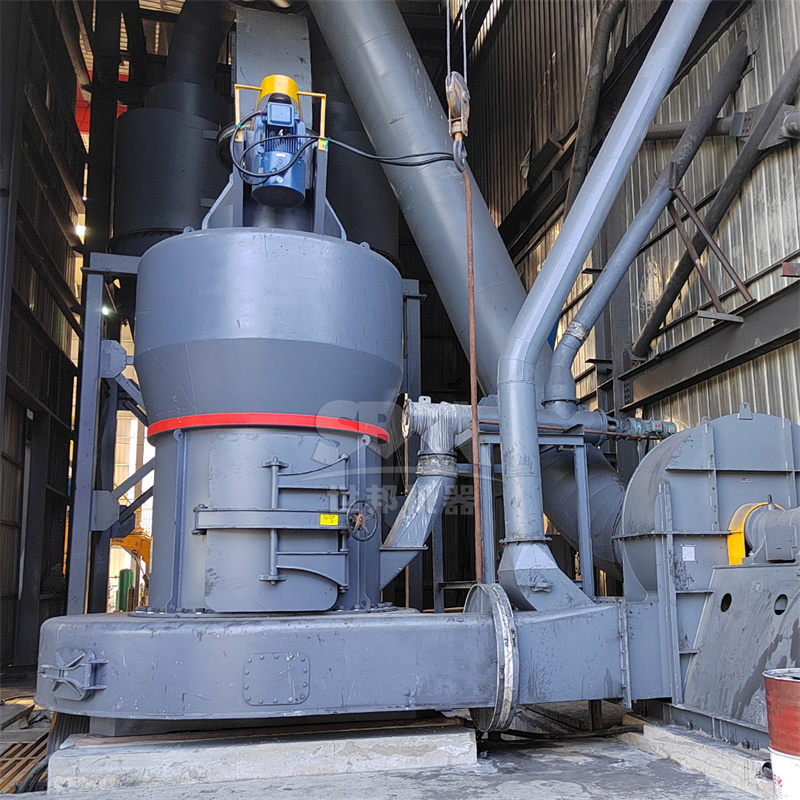
For producing 200-mesh (74μm) attapulgite powder, the MTW Series European Trapezium Mill is an outstanding and highly recommended choice. This mill is specifically engineered for grinding non-metallic minerals in the 30-325 mesh range. Its advantages make it ideal for attapulgite:
- Perfect Fineness Match: It effortlessly produces powder in the 30-325 mesh range, placing 200-mesh well within its optimal operating window.
- High Efficiency & Capacity: With capacities from 3 to 45 tons per hour, it meets both small and large-scale production needs. Its integral bevel gear drive boasts 98% transmission efficiency, saving energy.
- Durable & Low-Wear: The curved shovel design and wear-resistant volute structure significantly reduce maintenance costs and extend the life of grinding rollers and rings, which is crucial for the abrasive nature of clay minerals.
- Precise Classification: An internal classifier ensures consistent product fineness by separating and returning oversized particles for re-grinding.
For a typical 200-mesh attapulgite line, models like the MTW138Z (6-17 t/h) or MTW175G (9.5-25 t/h) would be excellent selections, offering the perfect balance of power, capacity, and control.
Other Mill Options (Comparison)
- Ball Mill: A traditional option. It can produce 200-mesh powder but is generally less energy-efficient than roller mills for this fineness range. It is better suited for wet grinding or producing coarser powders.
- Vertical Roller Mill (LM Series): Another excellent option, especially for larger capacities. It integrates grinding, drying (if a little moisture remains), and classification in one unit, saving space. Its energy consumption is 30-40% lower than ball mills.
- Ultrafine Mill (SCM Series): While capable of producing 200-mesh powder, the SCM series is designed for much finer grinding (325-2500 mesh). Using it for 200 mesh is over-specification and may not be the most cost-effective solution, as its advanced classifier and design are optimized for micron and sub-micron levels.
2.4. Powder Collection and Dust Control System
This system is essential for product recovery and environmental compliance. A modern grinding plant uses a two-stage collection:
- Cyclone Collector: Captures the majority (80-90%) of the product powder directly from the mill’s air stream through centrifugal force.
- Pulse Jet Baghouse Dust Collector: This is the final, critical stage. It captures the fine fraction that escapes the cyclone, ensuring >99.9% collection efficiency and meeting strict emission standards. The collected ultra-fine powder can often be blended back into the main product or sold as a higher-value grade.
2.5. Conveying, Storage, and Packaging
- Bucket Elevators & Screw Conveyors: Move material between drying, crushing, and grinding stages.
- Storage Silos: Store dried crude ore and finished powder.
- Packing Machine: Automatically weighs and packs the finished 200-mesh attapulgite powder into bags (e.g., 25kg, 50kg, 1-ton bags).
3. Recommended Production Line Configuration
For a medium-to-large scale operation targeting 5-15 tons per hour of 200-mesh attapulgite powder, a recommended configuration is:
- Feeding: Vibrating Feeder
- Drying: Rotary Dryer with Hot Air Furnace
- Primary Crushing: Jaw Crusher (to ≤50mm)
- Secondary Crushing: Hammer Crusher (to ≤20mm)
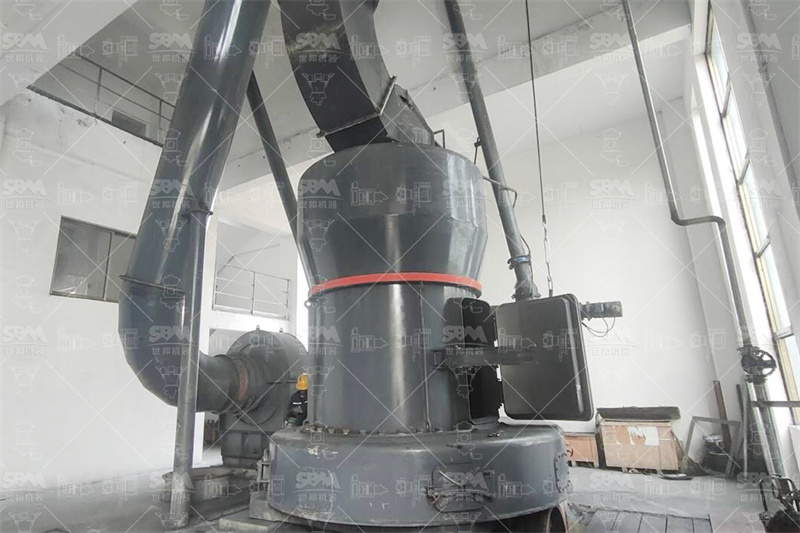
- Grinding & Classification: MTW175G European Trapezium Mill (Core Equipment)
- Product Collection: Cyclone Collector + Pulse Jet Baghouse Dust Collector
- Conveying & Packaging: Screw Conveyors, Storage Silo, Automatic Packing Machine
This setup emphasizes efficiency, durability, and precise control over the final product’s key parameter: the 200-mesh fineness.
4. Key Considerations for Equipment Selection and Operation
- Material Abrasiveness: Attapulgite is moderately abrasive. Prioritize mills with wear-resistant designs, like the MTW series with its special shovel and volute, to minimize downtime and maintenance costs.
- Moisture Control: Consistent and thorough drying is non-negotiable. Inconsistent feed moisture will lead to clogging in the mill and classifier, reducing output and quality.
- Particle Size Distribution (PSD): The goal is not just “200 mesh” but a consistent PSD. The classifier in the grinding mill is the key component controlling this. Advanced mills offer easy adjustment of the classifier speed to fine-tune the cut point.
- System Integration: Ensure all components are correctly sized to match the capacity of the grinding mill (the bottleneck). Proper piping, airlock valves, and fan sizing are crucial for smooth, dust-free operation.
5. Conclusion: Investing in the Right Technology
Producing high-quality 200-mesh attapulgite powder profitably requires more than just a grinder; it demands a complete, integrated system designed for the specific challenges of clay minerals. While several grinding solutions exist, the MTW Series European Trapezium Mill stands out as the optimal workhorse for this application, offering the perfect combination of target fineness capability, high capacity, energy efficiency, and low operational wear.
For producers looking to push into even finer grades or require integrated drying, the LM Series Vertical Roller Mill presents a powerful and versatile alternative. Its integrated design and lower energy consumption make it a future-proof investment for expanding product portfolios.
By carefully selecting equipment like the MTW or LM mills and building a coherent production line around them, attapulgite processors can ensure a reliable supply of consistent, high-value powder that meets the exacting standards of modern industry.