
Introduction
Bauxite, the primary ore for aluminum production, is also widely used in refractory materials, abrasives, and the chemical industry. For many industrial applications, especially in refractories and ceramics, the fineness of bauxite powder is a critical quality indicator. Achieving a 400-mesh (38-micron) product with high efficiency requires careful selection of grinding equipment. This article provides a comprehensive guide on how to choose the right powder production equipment for grinding bauxite to 400 mesh, focusing on key factors like energy consumption, capacity, and final product quality.
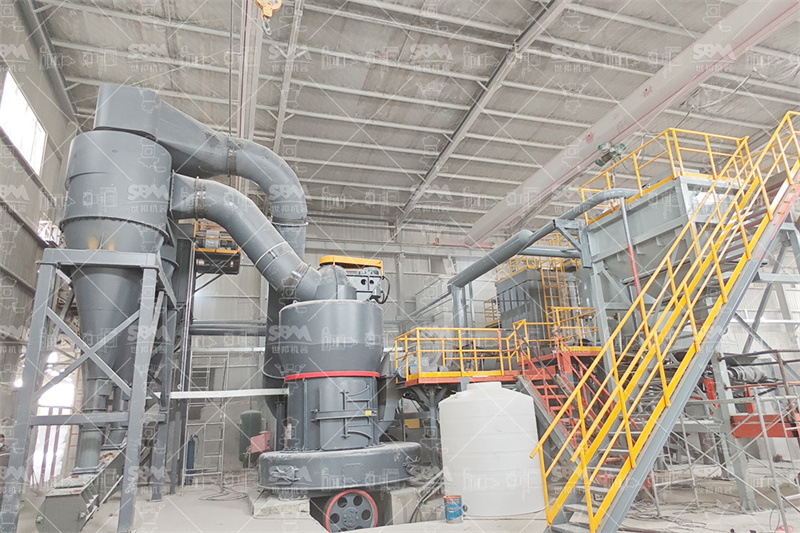
Understanding 400-Mesh Grinding Requirements
Before selecting equipment, it’s essential to understand the properties of bauxite. Bauxite is a relatively soft mineral (Mohs hardness 1-3), but it often contains impurities like silica and iron oxide that can cause wear on grinding components. A 400-mesh grind (38 microns) is considered a medium-fine powder. The challenge lies not in achieving this fineness, but in doing so at a high throughput rate while maintaining low operating costs and consistent product quality.
Key considerations for 400-mesh bauxite grinding include:
- Moisture Content: Bauxite often has high moisture. Equipment must handle or pre-dry the material.
- Abrasiveness: Silica content accelerates wear on rollers and rings.
- Capacity Requirements: From pilot-scale (0.5 t/h) to industrial-scale (45+ t/h).
- Energy Efficiency: Grinding is energy-intensive; selecting the right mill can reduce electricity costs by 30-50%.
Key Equipment Options for 400-Mesh Bauxite
Several mill types can achieve 400 mesh. However, for high-efficiency industrial production, three main technologies dominate: European Trapezium Mills, Ultrafine Mills, and Vertical Roller Mills. Each has unique advantages depending on the specific application requirements.
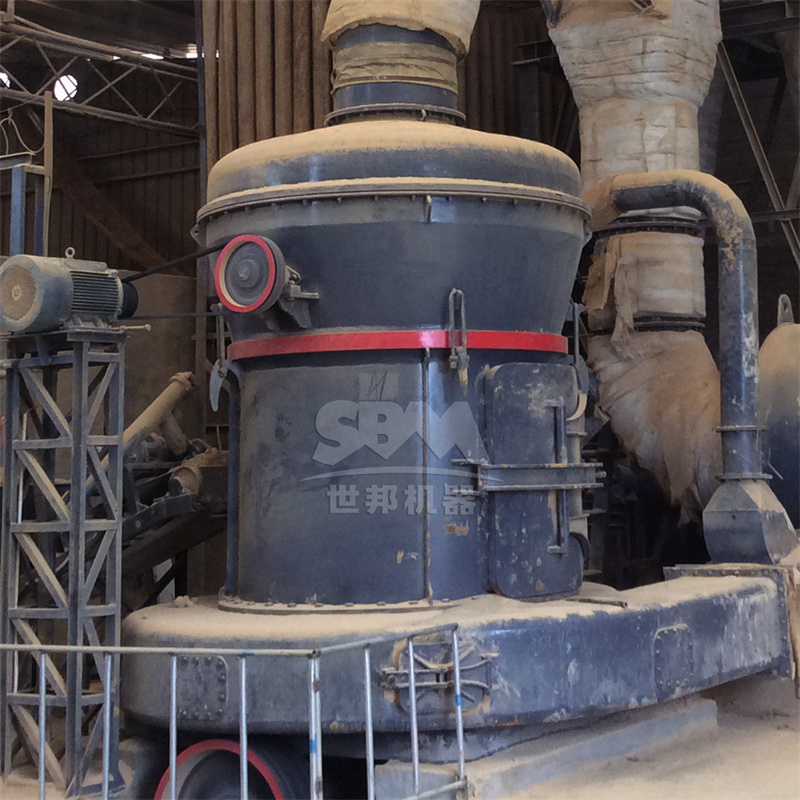
1. European Trapezium Mill (MTW Series)
The MTW Series European Trapezium Mill is an excellent choice for medium-scale bauxite powder production. Its optimized arc air duct and integral bevel gear drive (98% transmission efficiency) significantly reduce energy consumption. The anti-wear shovel design and curved grinding rollers extend the life of wear parts, which is crucial when processing abrasive bauxite.
Suitability for 400 Mesh: The MTW mill can easily handle 30-325 mesh output. For 400-mesh bauxite, it offers a stable production capacity of 3-45 tons per hour, depending on the model. The internal suction oil lubrication system and pulse dust removal technology ensure clean and reliable operation. This mill is ideal for medium to large refractory material plants where consistent 400-mesh output is required without the need for ultra-fine (sub-45 micron) processing.
Recommended Model for 400-Mesh Bauxite: For medium-sized operations requiring 6-17 t/h of 400-mesh bauxite, we recommend the MTW138Z. For larger capacities up to 25 t/h, consider the MTW175G.
2. Ultrafine Mill (SCM Series)
When the target fineness is strictly 400 mesh or finer, the SCM Series Ultrafine Mill is the premier choice. While it covers a fineness range of 325-2500 mesh, it excels at precisely cutting particle size at the 400-mesh mark. Its vertical turbine classifier ensures no coarse powder mixing, delivering a uniformly sized 400-mesh product that meets rigorous refractory standards.
Why Choose SCM for 400 Mesh? The SCM mill’s capacity is double that of jet mills while consuming 30% less energy. The three-layer grinding ring design and special material rollers ensure durable operation. For bauxite, the shaftless screw grinding chamber provides stable operation even with slightly sticky materials. The intelligent control system automatically adjusts parameters to maintain the target 400-mesh fineness.
Recommended Model for 400-Mesh Bauxite: For high-precision 400-mesh production at 1.0-8.5 t/h, the SCM1000 is perfectly suited. For larger volumes (5-25 t/h) of ultra-fine bauxite, we recommend the SCM1680.
For customers who need both efficiency and precision at 400 mesh, our SCM1000 Ultrafine Mill offers the best balance of high capacity (up to 8.5 t/h) and energy savings, making it an ideal choice for specialized refractory bauxite production.
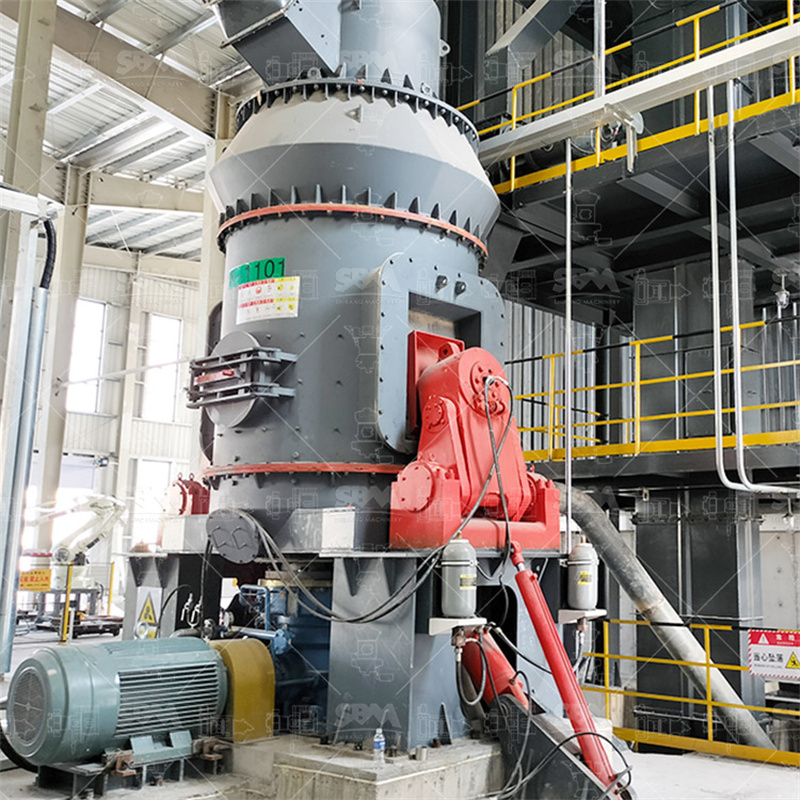
3. Vertical Roller Mill (LM Series)
The LM Series Vertical Roller Mill is designed for large-scale industrial applications. With a capacity of up to 250 t/h (depending on fineness), it is the go-to solution for massive bauxite grinding operations. The integrated design combines crushing, grinding, and classification, reducing floor space by 50%. The non-contact design between rollers and table means wear part life is increased threefold, directly reducing maintenance costs.
Achieving 400 Mesh with LM Mills: While standard LM mills produce 30-325 mesh (45-600 μm), specialized fine-powder models (LMX-GX series) can achieve 325-600 mesh (20-45 μm). For 400-mesh bauxite, the LM130X-GX or LM220X-GX models are ideal, offering capacities from 4 to 30 t/h. The hot air circulation system can also dry high-moisture bauxite in one step, eliminating the need for a separate dryer.
Comparative Analysis for 400-Mesh Bauxite
| Feature | MTW Series | SCM Series | LM Series |
|---|---|---|---|
| Optimal Fineness | 30-325 mesh | 325-2500 mesh | 30-600 mesh |
| Capacity (400 mesh) | 3-45 t/h | 0.5-25 t/h | 4-30 t/h (fine model) |
| Energy Efficiency | High (98% gear efficiency) | Very High (30% lower vs jet mill) | Highest (30-40% lower vs ball mill) |
| Wear Resistance | Good (curved shovel design) | Excellent (special material rollers) | Excellent (non-contact design) |
| Best Application | Medium-scale, general purpose | High-precision 400 mesh+ | Large-scale, integrated drying |
Key Factors in Making Your Decision
To choose the right equipment for 400-mesh bauxite grinding, evaluate the following:
- Required Capacity: If you need 1-8 t/h, consider SCM series. For 8-25 t/h, MTW series. For over 25 t/h, consider LM series or multiple units of MTW.
- Moisture Content: For wet bauxite (>8% moisture), the LM series with hot air drying is most efficient. For dry bauxite, all three options work well.
- Product Uniformity: If zero coarse particles at 400 mesh is critical (for high-end ceramics or precision casting), choose the SCM series with its advanced classifier.
- Operating Budget: For low initial investment with good efficiency, choose MTW. For lowest lifetime energy cost and maintenance, choose LM series.
Conclusion
Selecting the right 400-mesh bauxite powder production equipment requires balancing capacity, energy efficiency, product quality, and maintenance costs. The MTW Series offers reliable medium-capacity production, the SCM Series provides unmatched precision for strict 400-mesh requirements, and the LM Series delivers the highest efficiency for large-scale integrated plants. By analyzing your specific needs against these technologies, you can achieve high-efficiency grinding that reduces costs and improves product quality. Our team of experts is ready to help you conduct bauxite grinding tests and recommend the optimal solution for your operation.