
1. Introduction: The Growing Demand for Coating-Grade Marble Powder
The global coatings industry is experiencing a paradigm shift toward high-performance, cost-effective, and environmentally sustainable raw materials. Among these, coating-grade marble powder—a finely ground calcium carbonate (CaCO₃) derived from natural marble—has emerged as a critical functional filler. Its applications span architectural paints, industrial coatings, plastics, rubber, and adhesives, where it enhances opacity, brightness, and rheological properties while reducing production costs.
For calcium carbonate manufacturers, the challenge lies not merely in producing fine powder but in achieving stringent specifications: ultra-fine particle size (typically 325–2500 mesh, or 45–5 μm), narrow particle size distribution (PSD), high purity (>98% CaCO₃), and consistent whiteness (brightness >93%). These requirements demand specialized grinding and classification equipment capable of delivering precision, efficiency, and reliability at industrial scale.
This comprehensive guide explores the state-of-the-art production equipment for coating-grade marble powder, with a focus on key technologies, operational principles, and selection criteria. We also present our company‘s flagship solutions—the SCM Series Ultrafine Mill and the LUM Ultrafine Vertical Roller Mill—which have been engineered to set new benchmarks in the industry.
2. Key Quality Requirements for Coating-Grade Marble Powder
Before delving into equipment specifications, it is essential to understand the quality parameters that define coating-grade marble powder:
- Particle Size: For premium paint applications, 90% of particles must pass through a 10 μm or finer sieve. This corresponds to a d97 of 10 μm (approximately 1250 mesh).
- Brightness & Whiteness: ISO brightness should exceed 93%, with a CIE whiteness index above 85%. Impurities such as iron oxide or silica can cause discoloration.
- Oil Absorption: Typically 15–25 g/100g, which affects the paint‘s viscosity and pigment loading capacity.
- Moisture Content: Below 0.3% to prevent agglomeration and microbial growth.
- Particle Shape: Ideally rhombohedral or irregular polyhedral to improve dispersion and film integrity.
Achieving these attributes requires a grinding process that combines high energy efficiency with precise classification—areas where traditional ball mills often fall short.
3. Equipment Selection Criteria for Coating-Grade Production
Selecting the right grinding equipment is a multifaceted decision. Manufacturers must evaluate:
- Feed Size: Marble quarry scrap typically ranges from 0–20 mm for ultra-fine mills, while larger crushers may handle up to 50 mm.
- Target Fineness: 325 mesh (45 μm) is the entry point; 2500 mesh (5 μm) represents the high-end coating grade.
- Throughput Capacity: From pilot-scale (0.5 t/h) to massive industrial lines (250 t/h).
- Energy Consumption: Grinding is energy-intensive; equipment that reduces kWh per ton directly impacts profitability.
- Classification Efficiency: The ability to separate fine powder from coarse returns without oversize contamination.
- Environmental Compliance: Dust emissions, noise levels, and waste heat management.
Based on these criteria, we recommend two proven technologies for coating-grade marble powder: the SCM Series Ultrafine Mill for ultra-fine (5–45 μm) applications, and the LUM Ultrafine Vertical Roller Mill for higher capacity requirements.
4. Product Recommendation: SCM Series Ultrafine Mill (45–5 μm)
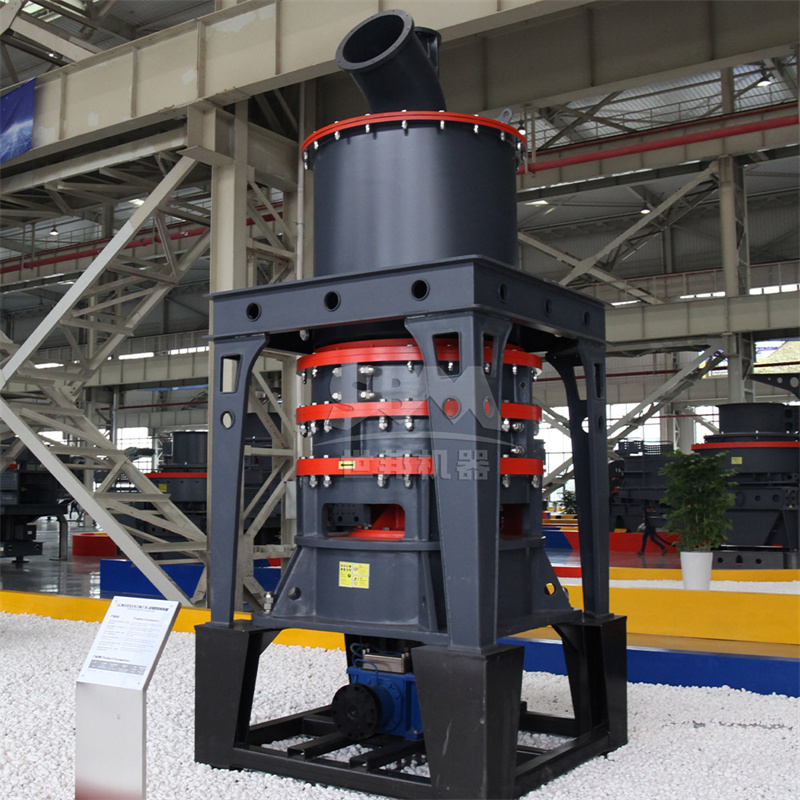
Our SCM Series Ultrafine Mill is specifically designed for the production of ultra-fine calcium carbonate powders used in premium coatings. It combines high-energy grinding with advanced classification to deliver consistent product quality.
Core Parameters
- Input Size: ≤20 mm
- Output Fineness: 325–2500 mesh (45–5 μm)
- Capacity: 0.5–25 ton/h (model-dependent)
Technical Advantages
- High Efficiency & Energy Saving: The SCM mill achieves 2x the capacity of traditional jet mills while consuming 30% less energy. An intelligent control system automatically adjusts parameters based on real-time particle size feedback.
- High-Precision Classification: A vertical turbine classifier provides sharp particle size cut-off, eliminating coarse powder contamination. The d97 consistency is maintained within ±1 μm.
- Durable Design: Rollers and grinding rings are made from special wear-resistant alloys, extending service life by several times. The shaftless screw grinding chamber ensures stable operation under continuous load.
- Eco-friendly & Low Noise: The pulse dust collection system exceeds international emission standards, while the soundproof enclosure keeps noise levels below 85 dB(A).
Working Principle
The main motor drives three layers of grinding rings to rotate. Materials are dispersed into the grinding path by centrifugal force, crushed by roller pressure, and ground layer by layer. Fine powder is conveyed by airflow to the classifier, while coarse particles return for regrinding. The final product is collected via a cyclone separator and pulse dust collector.
Models & Specifications
| Model | Capacity (t/h) | Main Power (kW) | Feed Size (mm) | Fineness (mesh) |
|---|---|---|---|---|
| SCM800 | 0.5–4.5 | 75 | 0–20 | 325–2500 |
| SCM900 | 0.8–6.5 | 90 | 0–20 | 325–2500 |
| SCM1000 | 1.0–8.5 | 132 | 0–20 | 325–2500 |
| SCM1250 | 2.5–14 | 185 | 0–20 | 325–2500 |
| SCM1680 | 5.0–25 | 315 | 0–20 | 325–2500 |
The SCM Series is ideal for manufacturers targeting the ultra-fine segment of the coating market, where particle sizes below 10 μm are required.
5. Product Recommendation: LUM Ultrafine Vertical Roller Mill
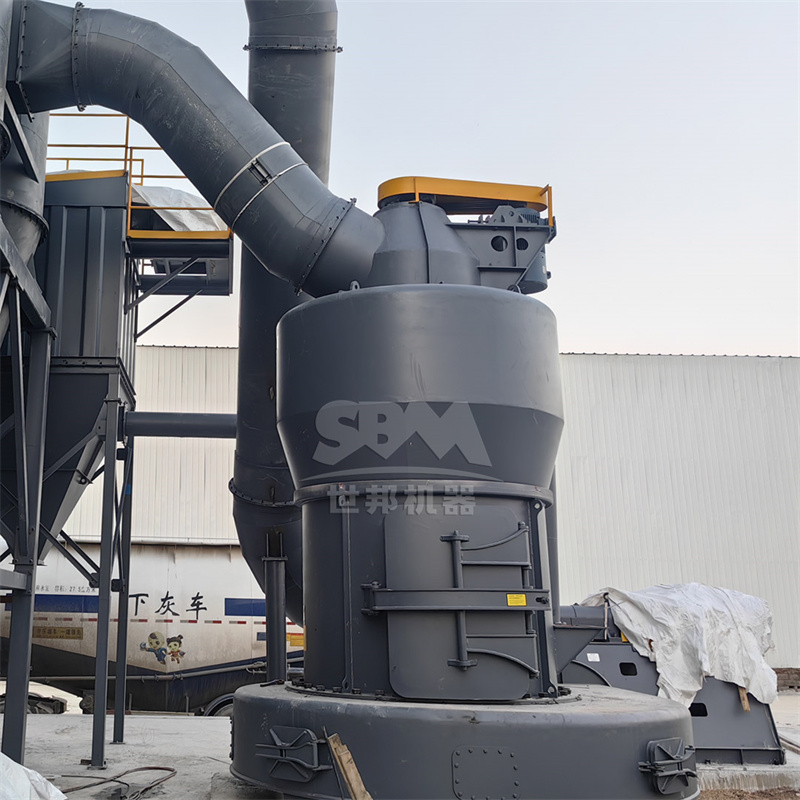
For larger-scale operations requiring consistent output of 325–2500 mesh marble powder, the LUM Ultrafine Vertical Roller Mill offers a compelling solution. It integrates grinding, classification, and drying in a single compact unit.
Core Parameters
- Feed Size: 0–20 mm
- Output Fineness: 325–2500 mesh (5–45 μm)
- Capacity: 1.6–15 t/h (model-dependent)
Technical Advantages
- Efficient Grinding: Unique roller and liner curvature profiles maximize the grinding zone, improving throughput by 15–20% compared to conventional vertical mills.
- Precise Classifying: Multi-rotor dynamic classifier technology ensures that no coarse particles escape into the final product. The cut size can be adjusted online.
- Smart Control: Fully automated PLC system monitors vibration, temperature, pressure, and power consumption. Remote operation and diagnostics are supported.
- Environmental Performance: Negative pressure operation prevents dust leakage. The system achieves <10 mg/Nm³ dust emissions.
Working Principle
Material enters the mill through the central feed port and is spread evenly across the grinding table by centrifugal force. Grinding rollers apply hydraulic pressure to crush and shear the material bed. Hot air (if drying is required) or ambient air lifts the fine particles to the classifier. Coarse particles fall back to the table, while the qualified fines are collected.
Models & Specifications
| Model | Main Power (kW) | Capacity (t/h) | Fineness d97 (μm) |
|---|---|---|---|
| LUM1525 | 220–250 | 1.6–11.5 | 5–30 |
| LUM1632 | 280–315 | 2.0–13.5 | 5–30 |
| LUM1836 | 355–400 | 2.3–15.0 | 5–30 |
The LUM Series excels in applications requiring high uptime and low operating costs, making it a favorite among large-scale calcium carbonate processors.
6. Comparison with Alternative Technologies
To contextualize the advantages of the SCM and LUM mills, it is useful to compare them with other common technologies:
- Ball Mills: While robust for coarse grinding (0.074–0.8 mm), ball mills are inefficient for ultra-fine applications. Their energy consumption is 30–40% higher, and they produce a wider PSD, leading to inferior coating performance.
- Jet Mills: Jet mills can achieve sub-micron sizes but at very high energy costs (typically 3–5x that of mechanical mills). They are suitable for niche applications but uneconomical for bulk coating-grade production.
- MTW/MRN Pendulum Mills: These are excellent for 30–325 mesh (600–45 μm) applications but cannot reliably produce powders below 10 μm. They remain a good option for pre-grinding or medium-fine products.
The SCM and LUM mills bridge the gap between traditional fine grinding and ultra-fine classification, offering a ‘best of both worlds‘ solution.
7. Integrated System Design Considerations
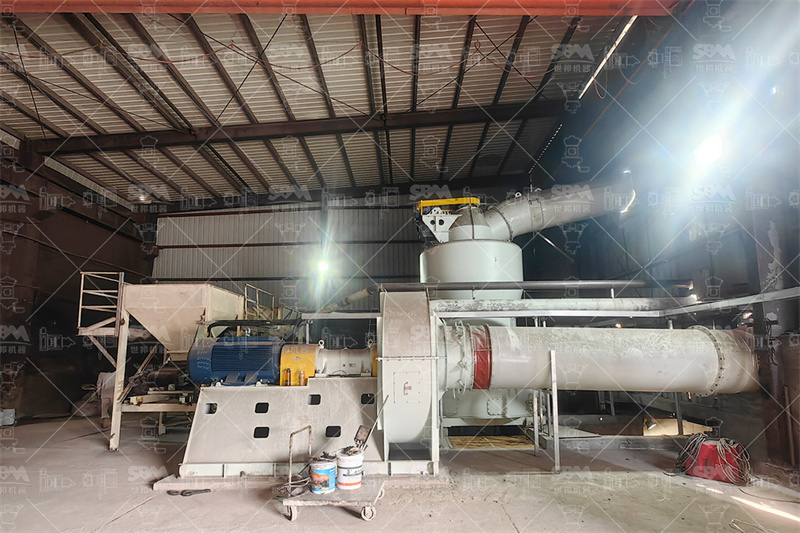
A successful coating-grade marble powder plant requires more than just a mill. Key auxiliary systems include:
- Pre-crushing: A hammer mill or jaw crusher reduces run-of-quarry marble to ≤20 mm.
- Drying System: If moisture exceeds 0.5%, a hot air generator or flash dryer is needed. The LUM mill can integrate drying directly, while the SCM mill may require a separate drying step.
- Classification & Collection: A high-efficiency cyclone followed by a pulse-jet bag filter ensures minimal product loss. The SCM classifier achieves >95% collection efficiency for d97 = 10 μm.
- Storage & Packing: Silo storage with moisture-proof liners, and automatic valve bag packers for 25–50 kg bags or jumbo bags.
We offer turnkey solutions that include all these components, customized to the client‘s raw material characteristics and target specifications.
8. Economic Analysis: ROI of Upgrading to Ultra-Fine Technology
Investing in high-efficiency equipment like the SCM or LUM series yields significant return on investment (ROI) through:
- Reduced Energy Cost: At $0.10/kWh, a 30% reduction in specific energy (from 80 to 56 kWh/t) saves $0.24 per ton. For a 10 t/h plant running 8000 hours/year, annual savings exceed $190,000.
- Higher Product Value: Coating-grade powder commands a premium of $20–50 per ton over standard filler-grade powder.
- Lower Maintenance: Durable wear parts in the SCM mill last 2–3 times longer than those in traditional mills, reducing downtime and replacement costs.
- Environmental Credits: Lower emissions and noise may qualify for government incentives or green certification.
9. Conclusion: Partnering for Excellence in Coating-Grade Production
As the coatings industry evolves, so must the technologies that supply its raw materials. Coating-grade marble powder demands a level of precision, efficiency, and reliability that only advanced grinding and classification systems can provide.
Our SCM Series Ultrafine Mill and LUM Ultrafine Vertical Roller Mill represent the culmination of decades of engineering experience and customer feedback. They are designed to help calcium carbonate manufacturers achieve:
- Ultra-fine powders down to 5 μm with exceptional consistency.
- Energy savings of 30% or more compared to legacy systems.
- Compliance with the strictest environmental regulations.
- Rapid return on investment through operational excellence.
We welcome you to contact our team for a detailed feasibility study, pilot testing, or a full-scale plant design. Together, we can elevate your marble powder production to the highest standards of the coating industry.