
Introduction
Barite powder, primarily composed of barium sulfate (BaSO4), is a critical industrial mineral widely used in the oil and gas drilling industry as a weighting agent for drilling fluids. Its high specific gravity (typically 4.1-4.3 g/cm³) makes it indispensable for controlling formation pressures and preventing well blowouts. The most common and commercially significant specification is 325 mesh (44 microns). Achieving a consistent, high-purity 325 mesh product with high throughput and low energy consumption is a primary challenge for barite processors.
Choosing the right production equipment is not a one-size-fits-all decision. It depends on several factors, including the feed material’s hardness and moisture content, the required throughput capacity, the desired fineness and particle size distribution, and the overall operational cost (capital expenditure and operational expenditure). This article provides a comprehensive guide to selecting the optimal grinding equipment for 325 mesh barite powder, focusing on key technologies that deliver high efficiency and superior product quality.
Key Considerations for Selecting Barite Grinding Equipment
Before diving into specific machine types, it is essential to evaluate the following critical factors:
- Feed Material Properties: The Mohs hardness of barite is typically 3.0 to 3.5. However, the presence of silica or other hard impurities can increase wear on grinding components. The feed moisture content should ideally be less than 6% to avoid clogging and reduce grinding efficiency.
- Required Throughput: Define your target capacity precisely. Whether you need 5 tons per hour or 45 tons per hour will dictate the class of machinery you should consider.
- Product Quality & Fineness: While the target is 325 mesh, the tolerance for oversize particles (e.g., +44 microns) is strictly controlled in API (American Petroleum Institute) standards (typically less than 3-5% retained on a 325 mesh screen). The equipment must provide precise classification to meet these standards consistently.
- Energy Efficiency & Operational Cost: Grinding is an energy-intensive process. Modern machines with advanced drive systems and optimized grinding mechanisms can cut energy consumption by 30% or more compared to conventional equipment.
Given these factors, three main types of grinding mills dominate the 325 mesh barite powder market: the Trapezium Mill (like the MTW Series), the Vertical Roller Mill (LM Series), and the Ultrafine Mill (SCM Series). Each has distinct advantages depending on the application scale and specific requirements.
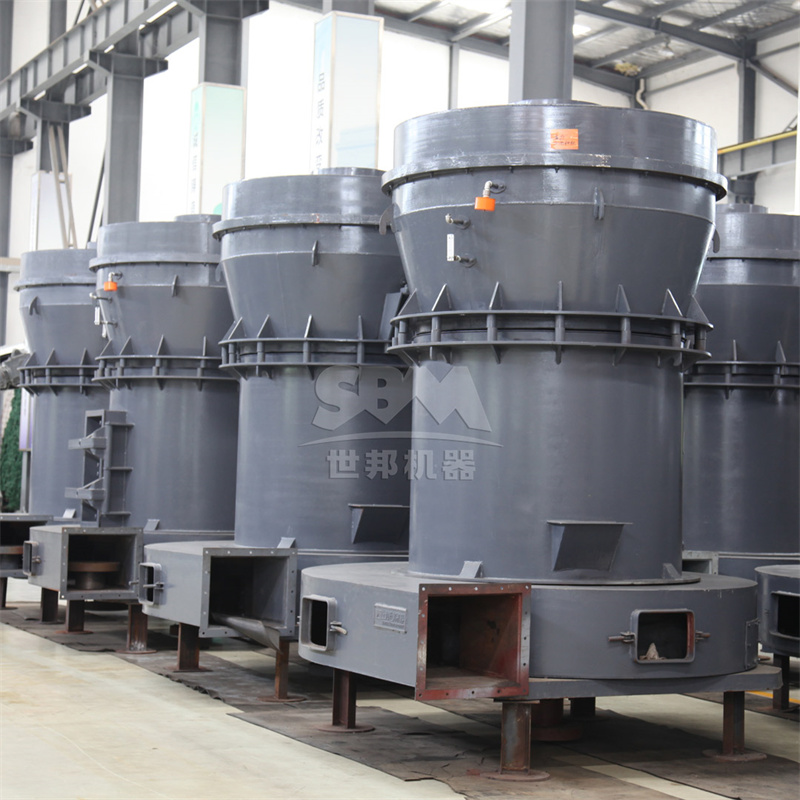
Option 1: The MTW Series European Trapezium Mill for Large-Scale Production
For large-scale industrial production of 325 mesh barite powder with high throughput (e.g., over 10 tons per hour), the MTW Series European Trapezium Mill is a proven workhorse. Its design is optimized for high capacity and low maintenance in demanding environments.
Key Advantages for Barite Processing:
- High Capacity & Adaptability: With a feed size up to 50mm and a capacity ranging from 3 to 45 tons per hour, the MTW mill is ideal for medium to large processing plants. It can handle coarser feeds, reducing the need for tertiary crushing.
- Optimized Grinding Mechanism: The trapezium-shaped grinding roller and ring create a stable material bed, providing efficient extrusion and crushing. The anti-wear shovel design and curved air duct significantly reduce maintenance costs and improve transmission efficiency.
- Integral Bevel Gear Drive: The transmission efficiency is as high as 98%, providing a direct, reliable power transfer that reduces energy loss and ensures stable operation under heavy loads.
- Precise Classification: The built-in classifier can achieve a fineness of 30-325 mesh, making it straightforward to set the equipment for the exact 325 mesh target with minimal fine-tuning.
Recommended Product: For projects requiring robust, large-scale and continuous production, we highly recommend the MTW175G European Trapezium Mill. With a capacity of 9.5 to 25 tons per hour and a main power of 160kW, it is perfectly suited to produce API-grade 325 mesh barite powder efficiently. Its strong structure and advanced lubrication system guarantee long-term, stable operation with low maintenance intervals.
Option 2: The LM Series Vertical Roller Mill for Integrated Operations
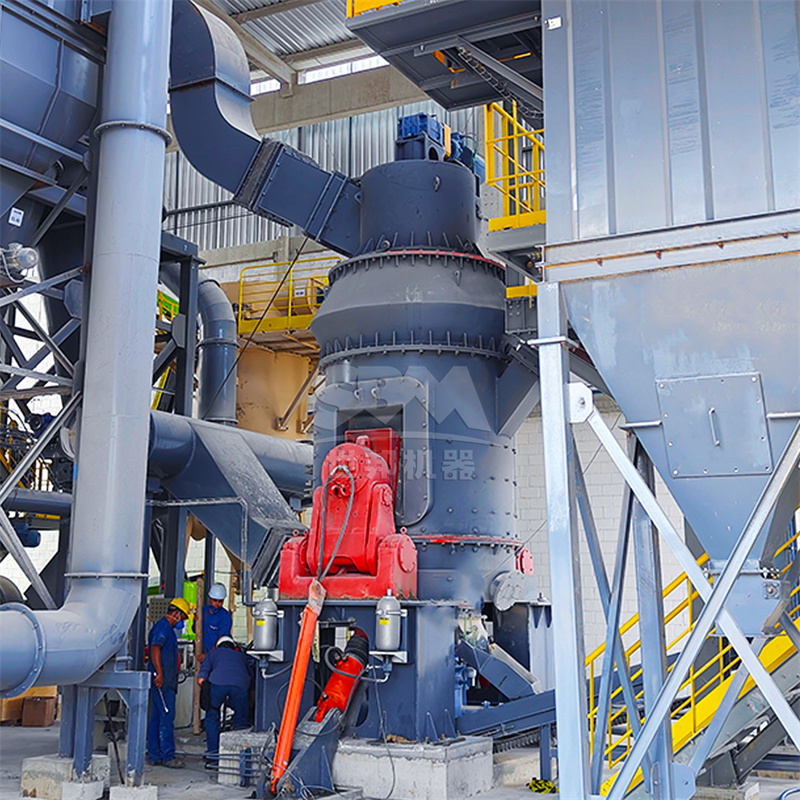
The Vertical Roller Mill (VRM) is another exceptional choice for large-scale barite grinding, particularly when a system that integrates drying, grinding, and classification is desired. The LM Series Vertical Roller Mill represents a pinnacle of grinding technology, offering unparalleled integration and energy efficiency.
Key Advantages for Barite Processing:
- Integrated Functionality: The LM mill crushes, grinds, and classifies material in a single unit, reducing the need for auxiliary equipment and decreasing the plant’s footprint by up to 50%. This integrated design lowers infrastructure costs by approximately 40%.
- Unmatched Energy Efficiency: Using a bed grinding principle, the LM mill consumes 30-40% less energy than traditional ball mill systems. The non-contact design between the rollers and the grinding table also extends the wear part life by three times, drastically reducing downtime and replacement costs.
- Intelligent Control: An expert-level auto-control system monitors parameters in real-time, allowing for remote or local switching. This minimizes manual intervention and ensures consistent product quality.
- Environmental Excellence: The fully sealed, negative pressure operation ensures dust emissions are controlled to near-zero levels, making it an environmentally friendly choice for modern industrial standards.
Recommended Product: For a complete, all-in-one solution that minimizes energy costs and maximizes output for 325 mesh barite powder, the LM150K Vertical Roller Mill is an excellent recommendation. With a capacity of 13-38 tons per hour and a main power of 280kW, it is designed for efficient, large-volume operations. Its use of hot air for drying (if needed) and its intelligent control system make it a leader in terms of total cost of ownership and process stability.
Option 3: The SCM Series Ultrafine Mill for High-Precision & Specialty Grades
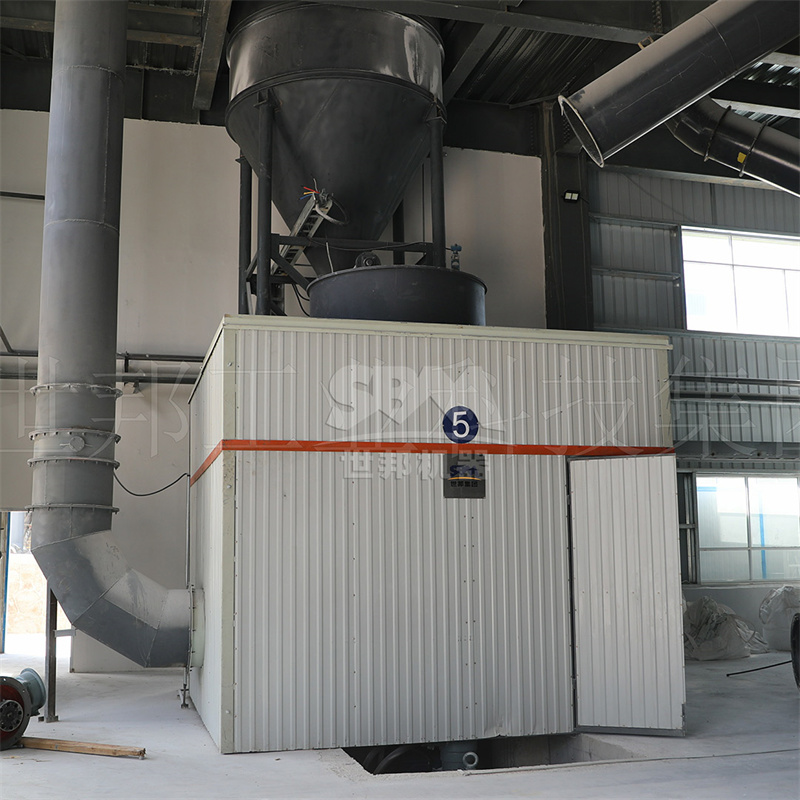
While the MTW and LM options are superb for standard 325 mesh production, processors looking for exceptionally uniform particle size distribution or the ability to produce finer grades (e.g., 400 to 1250 mesh) alongside 325 mesh should consider the SCM Series Ultrafine Mill. This machine is designed for high-precision grinding, where the purity and uniformity of the finished product are paramount.
Key Advantages for Barite Processing:
- Superior Precision: The vertical turbine classifier achieves highly precise particle size cutting. There is no mixing of coarse powder, ensuring a finished product that is exceptionally uniform – a critical requirement for high-value oil and drilling applications.
- High Efficiency: Despite its high fineness capabilities, the SCM mill boasts a capacity twice that of traditional jet mills, with 30% lower energy consumption. Its intelligent control system provides automatic feedback on finished product granularity for real-time adjustments.
- Durability: Special material rollers and rings are used to withstand wear. The shaftless screw grinding chamber ensures stable and reliable operation even with abrasive materials.
- Scalability: With models like the SCM1000 (1.0-8.5 t/h) and SCM1250 (2.5-14 t/h), it serves medium-scale production lines perfectly.
For a typical 325 mesh application, the SCM1250 Ultrafine Mill offers an excellent balance. With a capacity of 2.5-14 tons per hour and a 185kW main motor, it allows for flexible, high-quality production. Its low noise and eco-friendly design make it suitable for installations in sensitive areas.
Conclusion: Matching Equipment to Your Needs
Choosing the right equipment for 325 mesh barite powder production requires a careful analysis of your specific operational goals.
- For maximum capacity and long-term operational economy with large feed sizes: The MTW175G Trapezium Mill is an outstanding choice for high-tonnage production lines.
- For integrated processes, lowest energy consumption, and a compact footprint: The LM150K Vertical Roller Mill stands out as the industry standard for efficient, large-scale grinding.
- For high-precision, uniform particle size, and the flexibility to produce finer grades: The SCM1250 Ultrafine Mill provides the highest quality output for demanding applications.
Regardless of your choice, all series feature advanced intelligent control, durable wear parts, and industry-leading dust collection systems. By investing in the correct specifications and technology from the outset, you can ensure a high-efficiency, high-quality barite powder production line that meets the most stringent international standards for years to come.