
Introduction
Calcined petroleum coke (CPC) is a critical carbon material derived from the high-temperature treatment of green petroleum coke. It possesses high carbon content, low ash, and excellent thermal conductivity, making it an ideal feedstock for fuel production in industries such as power generation, cement manufacturing, and metallurgy. However, the effectiveness of CPC as a fuel depends heavily on its particle size distribution, uniformity, and surface area. Selecting the right milling and grinding equipment is therefore paramount for manufacturers aiming to optimize combustion efficiency, reduce emissions, and lower operational costs. This comprehensive guide explores the key factors to consider when choosing processing equipment for calcined petroleum coke, from raw material characteristics to final product specifications, and provides practical recommendations to help manufacturers make informed decisions.
Understanding the Material: Calcined Petroleum Coke
Before diving into equipment selection, it is essential to understand the physical and chemical properties of calcined petroleum coke. CPC is a hard, brittle, and highly abrasive material with a Mohs hardness of 2 to 3.5. Its density ranges from 1.8 to 2.1 g/cm³, and it contains less than 1% volatile matter after calcination. The material’s abrasiveness poses significant wear challenges for grinding equipment, while its low moisture content (typically <0.5%) makes it suitable for dry grinding processes.
For fuel applications, the ideal particle size of CPC typically ranges from 200 to 400 mesh (74 to 37 microns). Finer particles accelerate combustion, increase flame stability, and improve carbon burnout, but excessively fine powders can lead to handling difficulties and increased energy consumption. A well-designed grinding system must balance these competing demands while maintaining high throughput and low operating costs.
Key Selection Criteria for CPC Grinding Equipment
1. Required Fineness and Particle Size Distribution
The first and most critical factor in equipment selection is the target fineness. For fuel production, most manufacturers require a product fineness of 325 mesh (44 microns) or finer. The equipment must achieve a narrow particle size distribution to ensure uniform combustion. Coarse particles result in incomplete burning, while excessively fine particles can cause dust explosion risks and handling issues.
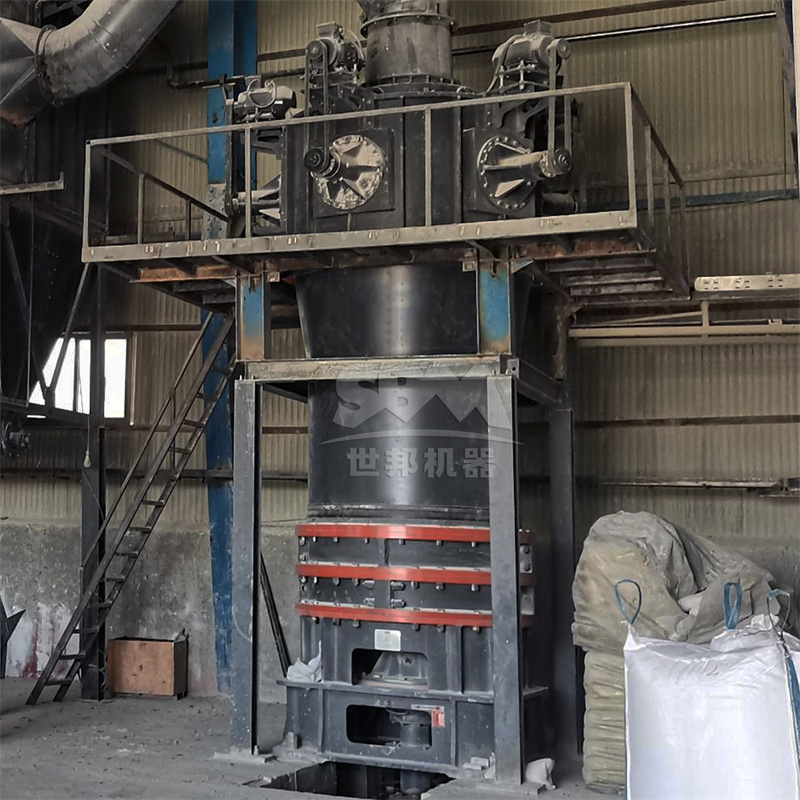
Our SCM Series Ultrafine Mill is specifically engineered for applications requiring ultra-fine powders between 325 and 2500 mesh (45 to 5 microns). With its vertical turbine classifier, it achieves precise particle size cutting, ensuring no coarse powder mixing. The SCM Series can process CPC with a feed size up to 20mm and deliver capacities ranging from 0.5 to 25 t/h, making it an ideal choice for manufacturers seeking high-precision grinding for premium fuel applications.
2. Capacity Requirements
Manufacturing scale directly dictates the required equipment capacity. Small-scale producers may need 1-5 t/h, while large integrated refineries often demand 20 t/h or more. Equipment manufacturers classify mills by capacity ranges, and it is crucial to select a model that matches both current and projected production volumes. Oversizing leads to capital waste and higher energy consumption per ton, while undersizing creates bottlenecks and increases maintenance frequency.
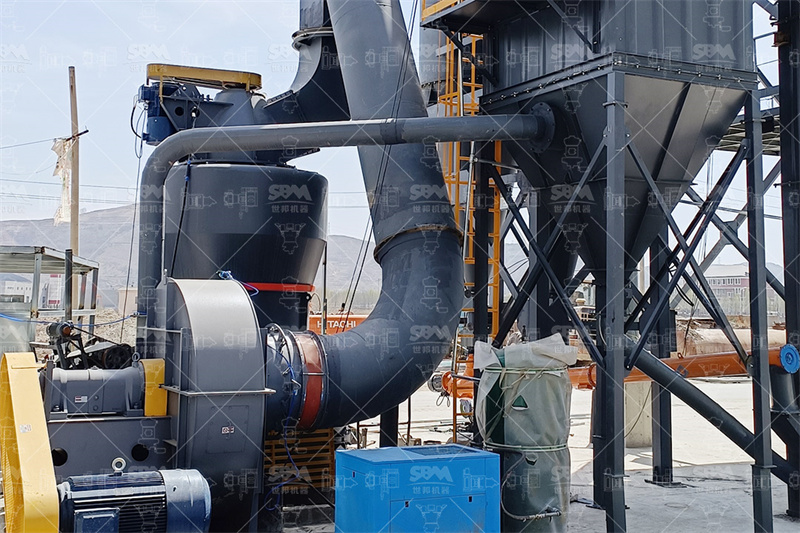
For medium to high-capacity CPC processing, we recommend the MTW Series European Trapezium Mill. Available in models from MTW110 (3-9 t/h) to MTW215G (15-45 t/h), this series offers the durability and efficiency needed for continuous industrial operation. Its integral bevel gear drive achieves transmission efficiency up to 98%, while the anti-wear shovel design and optimized arc air duct reduce maintenance costs by 30%.
3. Energy Efficiency and Operating Costs
Grinding is one of the most energy-intensive processes in CPC fuel production. Equipment with higher energy efficiency directly reduces the cost per ton of finished product. For CPC, which is abrasive and requires significant energy to break down, mills with bed-of-material grinding principles or optimized airflow systems demonstrate superior energy performance.
Energy consumption comparison: Traditional ball mill systems for CPC can consume 40-50 kWh per ton of finished product. In contrast, roller mills and vertical mills typically consume 20-30% less energy. The SCM Series Ultrafine Mill, for instance, achieves 30% lower energy consumption compared to jet mills while delivering twice the capacity. Its intelligent control system with automatic finished product granularity feedback ensures that energy is used only when needed, further optimizing operational costs.
4. Wear Resistance and Maintenance Requirements
Given the abrasive nature of calcined petroleum coke, equipment wear is a primary concern. Mills with replaceable wear parts, such as grinding rollers, rings, and liners, offer longer service life and lower maintenance costs. Advanced materials like high-chrome cast iron, ceramic composites, and tungsten carbide coatings significantly extend component life in CPC grinding applications.
Both the SCM Series and MTW Series feature wear-resistant designs. The SCM mill uses special material rollers and rings that extend service life several times over, while its shaftless screw grinding chamber ensures stable operation. The MTW mill incorporates a wear-resistant volute structure with non-resistance flow design, reducing maintenance costs by 30%. Manufacturers should request wear life guarantees from equipment suppliers and consider the availability of spare parts when making final decisions.
5. Environmental Compliance and Dust Control
Stringent environmental regulations require CPC processing plants to control dust emissions and noise levels. Modern milling equipment must incorporate effective dust collection systems, preferably with pulse jet bag filters that achieve 99.9% collection efficiency. Negative pressure operation prevents dust leakage, and soundproof enclosures help meet occupational noise limits.
The SCM Series Ultrafine Mill features pulse dust collection efficiency that exceeds international standards, along with a soundproof room design that ensures noise levels below 85 dB(A). Similarly, the MTW Series employs internationally advanced pulse dust removal technology, making both series suitable for environmentally conscious manufacturers.
6. Automation and Process Control
Modern CPC grinding plants benefit from integrated automation systems that monitor and control key parameters such as feed rate, mill load, temperature, and product fineness. Intelligent control systems reduce manual intervention, improve product consistency, and enable remote operation. Expert-level systems can automatically adjust grinding pressure and classifier speed to compensate for changes in material hardness or moisture content.
Comparative Analysis: SCM Series vs. MTW Series for CPC Fuel Production
| Feature | SCM Series Ultrafine Mill | MTW Series European Trapezium Mill |
|---|---|---|
| Output Fineness | 325-2500 mesh (45-5 μm) | 30-325 mesh (600-45 μm) |
| Capacity Range | 0.5-25 t/h | 3-45 t/h |
| Feed Size | ≤20 mm | ≤50 mm |
| Best Application | Ultra-fine fuel powder | Standard fuel powder |
| Energy Consumption | 30% lower than jet mills | Up to 30% lower than ball mills |
| Key Feature | Vertical turbine classifier | Integral bevel gear drive |
Additional Equipment Considerations
While the SCM and MTW series are the most suitable for CPC fuel production, other equipment alternatives exist for specific applications:
- LM Series Vertical Roller Mill: For very large capacities (3-250 t/h), the LM series integrates crushing, grinding, and selection in one system, reducing floor space by 50%. Its non-contact design between rollers and table extends wear part life by 3 times.
- Ball Mill: Suitable for coarser grinding (0.074-0.8mm) and large-scale operations (up to 450 t/h), but with higher energy consumption per ton.
- Hammer Mill: For primary crushing of CPC to 0-3mm before further grinding, with capacities up to 70 t/h.
Installation and Layout Considerations
The physical footprint of grinding equipment affects plant design and capital costs. Vertical mills and trapezium mills typically require less floor space than ball mills of equivalent capacity. Outdoor installation is possible for some models, reducing building costs. The SCM Series has a compact vertical design that saves valuable production floor space, while the MTW Series’s integral bevel gear drive reduces installation space requirements.
Manufacturers should also consider the auxiliary equipment needed: feeders, crushers for oversized material, bucket elevators, screw conveyors, storage silos, and dust collection systems. A complete grinding station for CPC fuel production typically includes:
- Raw material hopper with vibrating feeder
- Primary crusher (if feed size exceeds mill specifications)
- Magnetic separator to remove tramp metal
- Grinding mill (SCM or MTW series)
- Classifier system
- Cyclone collector and bag filter
- Product conveying system
- Control panel and automation system
Case Study: Optimizing CPC Fuel Grinding with SCM Series
A fuel producer in the Middle East processing 8 tons per hour of calcined petroleum coke for power generation faced quality issues with inconsistent particle size and high energy costs. After switching to the SCM1250 model, the following improvements were recorded:
- Product fineness increased from 200 mesh to 400 mesh D90
- Energy consumption reduced by 28% per ton
- Maintenance intervals extended from 500 hours to 2000 hours
- Combustion efficiency improved by 2%, reducing fuel consumption by 3%
This case demonstrates that investing in the right grinding equipment yields substantial operational and economic benefits.
Conclusion
Choosing the right equipment for processing calcined petroleum coke for fuel production requires a thorough analysis of material characteristics, target fineness, capacity needs, energy efficiency, wear resistance, and environmental compliance. The SCM Series Ultrafine Mill excels in producing ultra-fine powders with precise particle size distribution, making it ideal for premium fuel applications. The MTW Series European Trapezium Mill offers robust performance for standard fuel powder production with excellent energy efficiency and low maintenance costs.
Manufacturers should evaluate their specific production requirements and consult with equipment experts to select the optimal mill configuration. By partnering with a reputable supplier that offers comprehensive technical support, pilot testing, and after-sales service, manufacturers can ensure successful implementation and long-term operational excellence. Investing in the right grinding equipment is not just a capital decision—it is a strategic move that directly impacts product quality, production efficiency, and bottom-line profitability in the competitive energy market.