
Introduction
In the modern rubber manufacturing industry, the quality and durability of end products are directly influenced by the characteristics of raw materials and additives. Among these, marble powder, as a functional filler, plays a critical role in enhancing the mechanical properties, thermal stability, and dimensional accuracy of rubber products. The production of high-quality marble additives requires advanced milling and grinding equipment capable of delivering precise particle sizes, uniform distribution, and high production efficiency. This article explores how specialized marble additive production equipment, specifically the grinding mills manufactured by our company, significantly improves the quality and durability of rubber products.
The Role of Marble Additives in Rubber Manufacturing
Marble powder, primarily composed of calcium carbonate (CaCO3), is widely used as a reinforcing filler in rubber compounds. Its addition enhances tensile strength, tear resistance, and abrasion resistance while reducing production costs. However, the effectiveness of marble additives heavily depends on particle size distribution, surface morphology, and purity. Coarse or irregular particles can lead to stress concentration points, reducing the durability of rubber products. Therefore, precise grinding and classification technologies are essential to produce marble powder with optimal characteristics for rubber compounding.
Key Equipment for Marble Additive Production
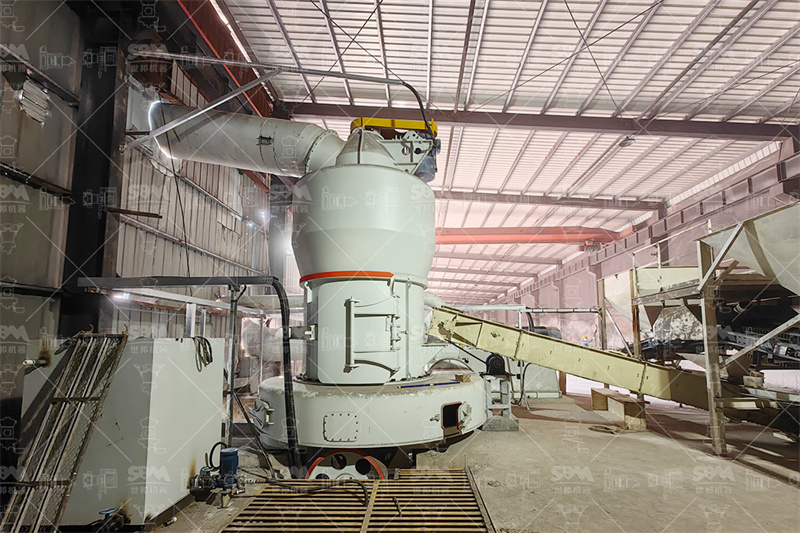
To achieve the desired fineness and uniformity in marble powder, our company offers a comprehensive range of grinding mills designed for different capacity and fineness requirements. Among these, two standout products are particularly suited for rubber additive production.
SCM Series Ultrafine Mill (45-5μm)
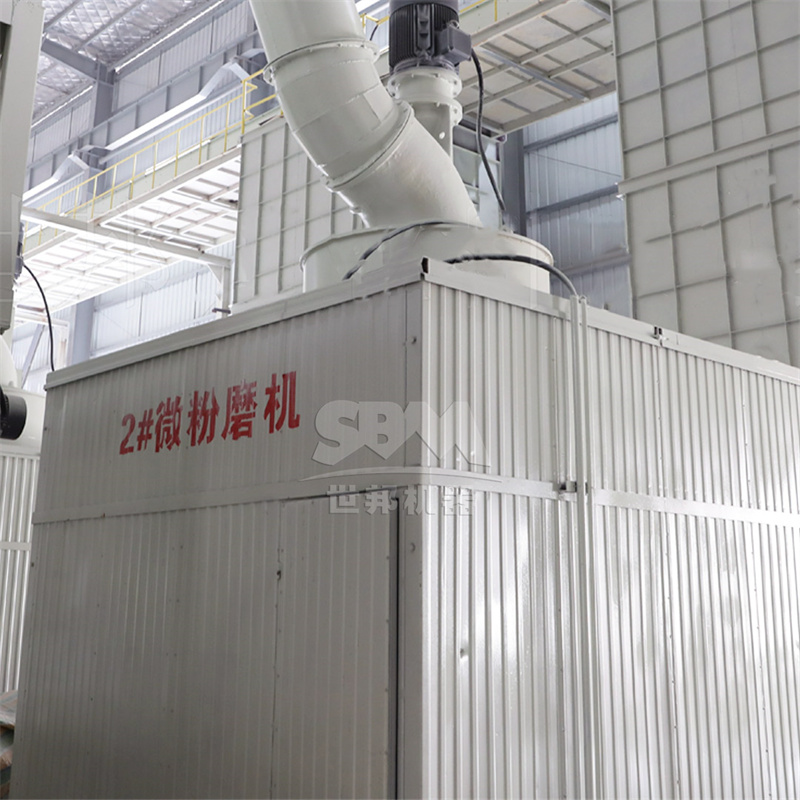
The SCM Series Ultrafine Mill is specifically engineered for producing ultra-fine marble powder with fineness ranging from 325 to 2500 mesh (45-5μm). With an input size of ≤20mm and capacity from 0.5 to 25 ton/h depending on model, this mill is ideal for manufacturing high-value rubber additives. Its technical advantages include high efficiency and energy saving—capacity is twice that of jet mills while consuming 30%% less energy. The intelligent control system automatically adjusts finished product granularity based on feedback, ensuring consistent quality. Additionally, the high-precision vertical turbine classifier achieves precise particle size cutting without coarse powder mixing, guaranteeing uniform finished products essential for rubber compounding. The durable design features special material rollers and rings that extend service life, while the shaftless screw grinding chamber ensures stable operation. Eco-friendly pulse dust collection and soundproof room design make it suitable for environmentally conscious manufacturing facilities.
MTW Series European Trapezium Mill (600-45μm)
For applications requiring medium to fine marble powder (30-325 mesh), the MTW Series European Trapezium Mill offers robust performance with capacities from 3 to 45 ton/h. Its anti-wear shovel design uses combined shovel blades to reduce maintenance costs, while curved design extends grinding roller life. The optimized arc air duct reduces airflow energy loss and improves transmission efficiency, with high-strength guard plates protecting the air duct working surface. The integral bevel gear drive achieves transmission efficiency up to 98%%, saving space and reducing installation costs. The wear-resistant volute structure features a non-resistance flow design that improves air selection efficiency, reducing maintenance costs by 30%%. These features make the MTW mill an excellent choice for producing marble additives with consistent particle size distribution suitable for rubber manufacturing.
How Advanced Mill Technology Enhances Rubber Product Quality
The quality of rubber products incorporating marble additives is significantly improved through several mechanisms enabled by advanced milling equipment:
1. Optimal Particle Size Distribution: The precise classification systems in our mills ensure that marble powder has a narrow particle size distribution. This uniformity allows for better dispersion in rubber compounds, eliminating agglomerates that could act as failure points. Products like the SCM Series can achieve fineness down to 5μm, which is ideal for high-performance rubber applications where filler particles must be well-distributed to maximize reinforcement.
2. Enhanced Surface Activity: The grinding process in our mills exposes fresh, active surfaces on marble particles, improving their bonding with rubber matrices. This results in better interfacial adhesion, leading to improved tensile strength and tear resistance in the final rubber product.
3. Reduced Contamination: The durable design of our equipment, including special material rollers and rings, minimizes wear particle contamination. This is crucial for maintaining the purity of marble additives, as any metallic contamination could catalyze rubber degradation or affect product color.
4. Consistent Quality Batch After Batch: Intelligent control systems in our mills automatically adjust parameters to maintain consistent output quality. This repeatability is essential for rubber manufacturers who require reliable filler properties to maintain product specifications across production runs.
Impact on Rubber Product Durability
Durability in rubber products is determined by their resistance to mechanical stress, thermal aging, and environmental factors. Marble additives produced with our equipment contribute to enhanced durability through:
Improved Abrasion Resistance: The uniform dispersion of fine marble particles creates a more homogeneous rubber matrix, reducing localized wear and extending product life in applications such as tires, conveyor belts, and seals.
Enhanced Thermal Stability: Marble powder acts as a heat sink, absorbing and dissipating thermal energy generated during rubber deformation. This reduces thermal degradation and maintains mechanical properties over extended service periods.
Dimensional Stability: The controlled particle size and shape of marble additives reduce shrinkage and swelling in rubber products, maintaining precise dimensions even under varying temperature and humidity conditions.
Case Studies and Practical Applications
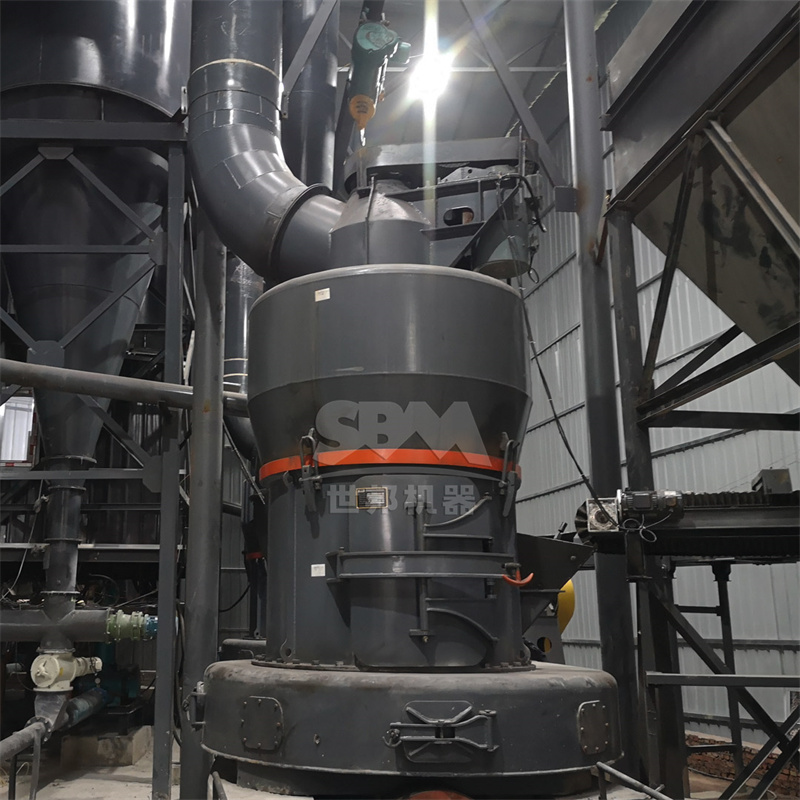
Rubber manufacturers using our SCM Series Ultrafine Mill for marble additive production have reported significant improvements in product quality. For instance, a manufacturer of industrial rubber rollers achieved a 20%% increase in roller lifespan after switching to marble powder produced with the SCM800 model, which delivers 0.5-4.5 t/h of 325-2500 mesh powder with 75kW main power. Similarly, a producer of rubber seals for automotive applications reported a 15%% reduction in product rejection rates after incorporating MTW Series mill-produced marble additives with a fineness of 30-325 mesh.
Conclusion
The quality and durability of rubber products containing marble additives are fundamentally dependent on the milling equipment used to produce the filler material. Our SCM Series Ultrafine Mill and MTW Series European Trapezium Mill represent the pinnacle of grinding technology, offering precise particle size control, energy efficiency, and consistent output. By investing in these advanced production systems, rubber manufacturers can achieve superior product performance, reduced waste, and enhanced competitiveness in the global market. The integration of intelligent control, durable design, and eco-friendly features ensures that our equipment not only meets current manufacturing demands but also anticipates future industry requirements for quality and sustainability.