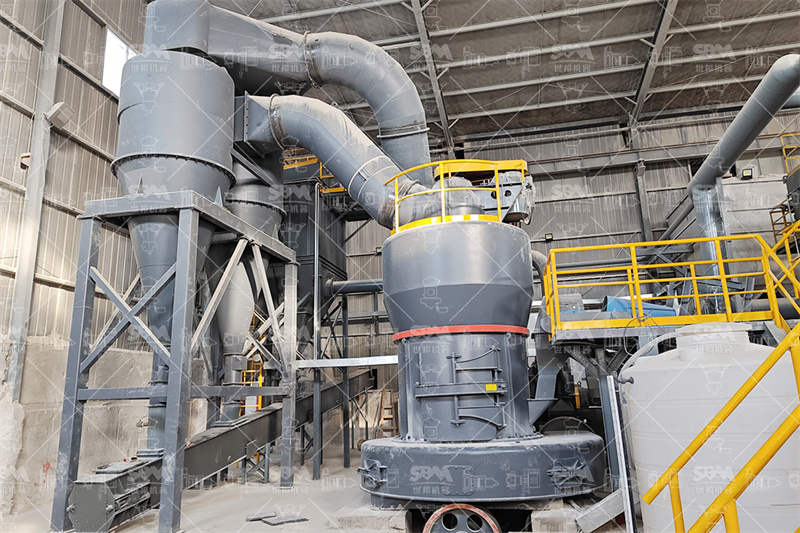
Introduction to FGD and the Role of Limestone Desulfurization Agents
Flue Gas Desulfurization (FGD) is a critical environmental technology employed by coal-fired power plants, industrial boilers, and various chemical facilities to remove sulfur dioxide (SO2) from exhaust flue gases. The most widely adopted method for this process is the wet limestone-gypsum FGD system. In this system, a slurry of finely ground limestone (calcium carbonate, CaCO3) is sprayed into the absorber tower, where it reacts with SO2 to produce calcium sulfite, which is then oxidized to form gypsum (CaSO4·2H2O). The efficiency of this entire process is heavily dependent on the quality and fineness of the limestone powder used. A typical specification for an effective FGD absorbent is a 200-mesh (74 μm) grind, with a high specific surface area to maximize the reaction rate. To achieve this consistently and economically, specialized milling equipment is required. This article explores the key machines used in the production of 200-mesh limestone desulfurization agents, focusing on technologies that offer high efficiency, low energy consumption, and superior product quality.
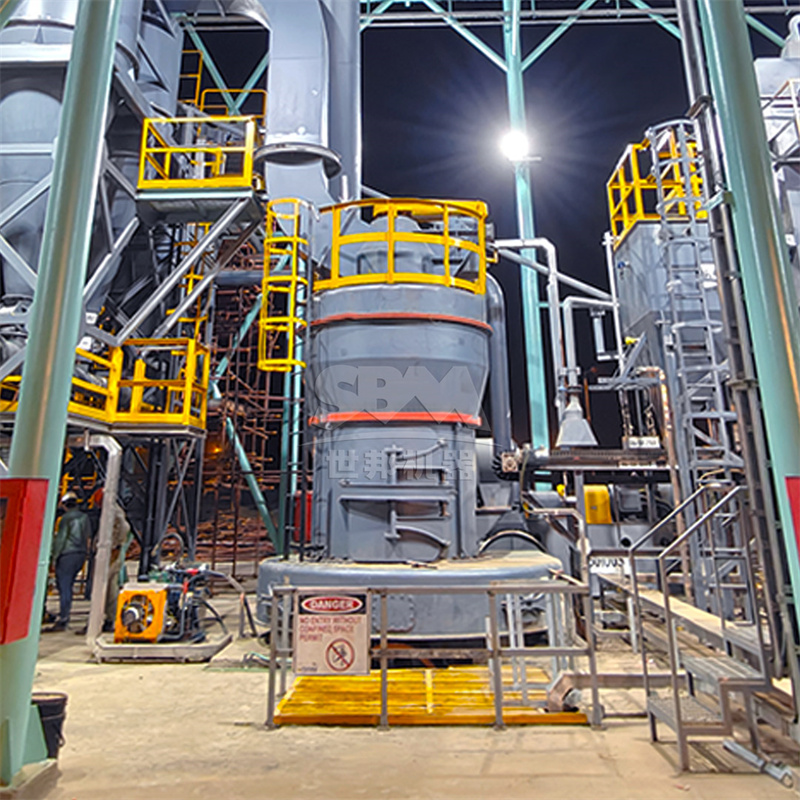
Core Requirements for Limestone Desulfurization Agent Production
The production of a high-quality desulfurization agent involves size reduction of run-of-mine limestone (often with a top size of 20-50 mm) down to a fine powder. The primary requirements for the milling system include:
- High Capacity: FGD plants require large volumes of absorbent. The grinding system must be capable of handling throughputs of several tons per hour, up to hundreds of tons per day.
- Precise Particle Size Control: While 200 mesh (74 μm) is the target, maintaining a tight particle size distribution (e.g., 90% passing 200 mesh) is crucial. Coarse particles can reduce reactivity, while over-grinding wastes energy.
- Low Energy Consumption: Grinding is an energy-intensive process. Selecting a mill with high efficiency can significantly reduce operating costs.
- High Reliability and Durability: Limestone is an abrasive material. Equipment must be designed to withstand wear and tear, ensuring long service life and minimal downtime.
- Environmental Friendliness: The grinding process should be clean, with efficient dust collection systems to meet strict emission standards.
Key Machine 1: The Efficient Hammer Mill for Primary Crushing
Before fine grinding, the raw limestone often needs to be reduced from large lumps (up to 400 mm) to a smaller, consistent feed size (typically below 20-30 mm) for the main mill. The Hammer Mill is an excellent solution for this primary crushing stage. It operates on a straightforward principle: high-speed rotating hammers inside a crushing chamber impact the material, breaking it against breaker plates and a discharge grate. For limestone, a hammer mill offers a high crushing ratio and high capacity with a compact, low-investment footprint. Our company’s hammer mill series, such as the PC4015-132 model, can process 40-70 tons per hour of limestone down to 0-3 mm, making it an ideal upstream crusher for feeding a fine grinding mill. Its wear-resistant high-manganese steel liners and hammers ensure a long operational life, even with this abrasive material, significantly lowering maintenance costs.
Key Machine 2: Precision Grinding with the MTW Series European Trapezium Mill
For the core task of grinding limestone to 200 mesh (74 μm), the MTW Series European Trapezium Mill stands out as a top-tier choice. This mill incorporates several patented innovations that make it highly suitable for FGD applications. Its integral bevel gear drive system achieves a transmission efficiency of up to 98%, ensuring that more electrical energy is converted into grinding energy rather than being lost as heat. The optimized arc air duct reduces airflow resistance, improving the mill’s overall pneumatic efficiency. The anti-wear combined shovel blade design extends the life of the grinding roller and ring assembly, reducing the frequency of part replacements. For a typical FGD plant requiring a capacity of 10-15 tons per hour of 200-mesh product, the MTW138Z model is an excellent fit. With a main motor power of 90 kW, this mill can produce 6-17 tons per hour of powder with a fineness ranging from 10 to 325 mesh, easily meeting the standard 200-mesh requirement. Its intelligent control system ensures stable operation and consistent product quality, which is vital for the downstream chemical reaction in the FGD scrubber.
Product Recommendation: For the most demanding desulfurization operations requiring high throughput and proven reliability, we strongly recommend the MTW Series European Trapezium Mill. Its robust construction, energy-saving design, and precise classification make it the workhorse of the modern FGD plant.
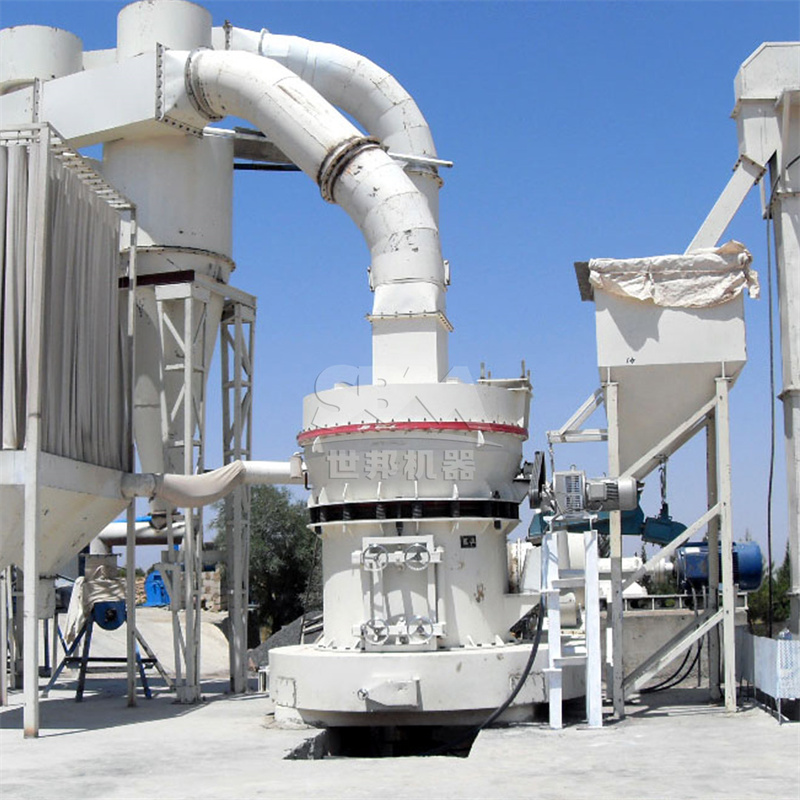
Key Machine 3: Advanced Solution with the SCM Series Ultrafine Mill
While the MTW series excels at producing standard 200-mesh material, there is a growing trend toward using even finer limestone (e.g., 325 mesh or 45 μm) to increase the reactivity of the slurry and improve SO2 removal efficiency. The SCM Series Ultrafine Mill is specifically designed for this task. Capable of producing powders with a fineness ranging from 325 to 2500 mesh (45-5 μm), this mill is a cutting-edge solution. Its unique vertical turbine classifier ensures precise particle size cutting, eliminating coarse powder mixing and guaranteeing a uniformly fine product. The design features special wear-resistant materials for the rollers and grinding rings, extending their service life several times over compared to standard mills. The SCM series offers a capacity of 0.5 to 25 tons per hour, making it suitable for both small-scale production and as a finishing mill for a portion of a larger plant’s output.
Product Recommendation: For plants seeking to upgrade to a high-efficiency micro-fine product or those looking for an integrated system with the lowest possible energy consumption, the SCM Series Ultrafine Mill is the ideal choice. It is, for example, twice as productive as a jet mill while consuming 30% less energy.
Key Machine 4: Large-Scale Production with the LM Series Vertical Roller Mill
For large-scale central grinding stations or very large FGD installations that require a single, high-capacity machine, the LM Series Vertical Roller Mill (VRM) is the most cost-effective solution. With capacities ranging from 3 to 250 tons per hour, a VRM can replace several traditional ball mills. Its integrated design combines crushing, grinding, drying, and classification into a single unit, reducing the plant’s floor space by up to 50% and infrastructure costs by 40%. The VRM’s principle of a grinding table and stationary rollers ensures a low specific energy consumption—30-40% lower than a comparable ball mill system. The LM series features intelligent, expert-level automatic controls that monitor and adjust parameters in real-time, ensuring consistent product quality with minimal operator intervention. For a large power plant consuming thousands of tons of limestone per day, a model like the LM220K (capacity 36-105 t/h) would be the central piece of the material preparation system.
Conclusion: Selecting the Optimal Grinding System
The production of an efficient 200-mesh limestone desulfurization agent requires a well-designed and optimized grinding circuit. The choice of equipment depends on the specific capacity requirements, desired fineness, available budget, and operational preferences. Our company provides a comprehensive range of grinding technologies to meet every need:
- For primary crushing: The robust and low-cost Hammer Mill.
- For a reliable, energy-efficient standard solution: The MTW Series European Trapezium Mill.
- For ultra-fine products and high precision: The advanced SCM Series Ultrafine Mill.
- For massive, single-unit throughput: The high-capacity LM Series Vertical Roller Mill.
By selecting the appropriate machine or combination of machines, FGD operators can ensure a consistent supply of high-quality absorbent, leading to lower operating costs, reduced reagent consumption, and, ultimately, compliance with stringent environmental emission regulations.