
Introduction
In the rubber industry, the quality and performance of finished products—such as tires, seals, hoses, and industrial belts—depend heavily on the properties of their raw materials. Quartz stone additives, when processed to a fine and uniform particle size, serve as excellent reinforcing fillers that improve hardness, wear resistance, dimensional stability, and thermal conductivity. However, achieving the ideal fineness (often between 45 μm and 5 μm, i.e., 325 to 2500 mesh) requires specialized milling equipment. This article provides a professional overview of high-efficiency production equipment for quartz stone additives used in rubber manufacturing, highlighting key features and offering a practical selection guide to help you choose the optimal system for your production needs.
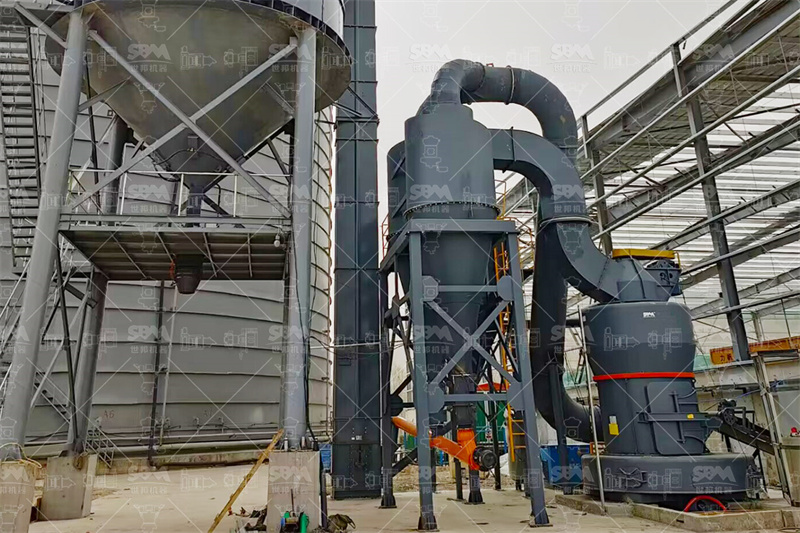
Why Quartz Stone Additives Matter in Rubber
Quartz (silicon dioxide, SiO₂) is a hard, chemically inert mineral. When ground into a fine powder, it becomes a cost-effective functional filler. In rubber compounds, finely milled quartz improves:
- Mechanical Strength: Increased tensile strength and tear resistance.
- Abrasion Resistance: Essential for tire treads and conveyor belts.
- Thermal Stability: Reduces heat buildup during dynamic loading.
- Dimensional Control: Lowers shrinkage during curing.
To unlock these benefits, the particle size distribution must be precise. Coarse particles act as stress concentrators, while ultra-fine, uniform powders maximize reinforcement. This is where advanced grinding mills become indispensable.
Key Features of High-Efficiency Quartz Additive Production Equipment
1. Ultra-Fine Grinding Capability (325-2500 Mesh)
The most critical requirement for rubber-grade quartz additives is the ability to produce ultra-fine powders. Equipment like the SCM Series Ultrafine Mill is specifically engineered to output fineness ranging from 325 mesh (45 μm) down to 2500 mesh (5 μm). This allows manufacturers to tailor the filler particle size for specific rubber applications—from general-purpose goods to high-performance engineering components.
2. High Precision Classification
No coarse powder contamination is acceptable in premium rubber products. Advanced vertical turbine classifiers, such as those integrated into the SCM mill, ensure a sharp particle size cut-off. This guarantees a uniform finished product, eliminating the risk of surface defects or inconsistent mechanical properties in the final rubber article.
3. Energy Efficiency and High Output
Industrial production demands low operating costs. Modern mills offer capacity up to 2 times greater than jet mills while consuming 30% less energy. For example, the SCM1680 model achieves a throughput of 5.0-25 tons per hour with a main power of only 315 kW. Intelligent control systems automatically adjust parameters based on real-time granularity feedback, optimizing energy use without sacrificing quality.
4. Durable and Low-Maintenance Design
Quartz is highly abrasive. Therefore, wear-resistant components are vital. Mills featuring special alloy rollers and rings—and shaftless screw grinding chambers—can extend service life several times over compared to conventional designs. This reduces downtime and replacement part costs, ensuring continuous operation.
5. Eco-Friendly and Low-Noise Operation
Environmental compliance is a growing concern. Modern mills incorporate high-efficiency pulse dust collectors that exceed international emission standards. Combined with soundproof room designs that keep noise levels below 85 dB, these systems can be installed in urban or environmentally sensitive areas without issue.
Selection Guide: Choosing the Right Mill for Your Rubber Additive Line
Selecting the proper equipment depends on your target fineness, required throughput, and material characteristics. Below is a systematic guide to help match your needs to the right technology.
Step 1: Define Your Particle Size Target
- For general rubber fillers (30-325 mesh / 600-45 μm): Consider the MTW Series European Trapezium Mill or LM Series Vertical Roller Mill. These systems handle larger feed sizes (up to 50 mm) and offer capacities from 3 to 250 tons per hour. They are ideal for coarse to medium grinding with high efficiency.
- For high-performance rubber additives (325-2500 mesh / 45-5 μm): The SCM Series Ultrafine Mill or LUM Ultrafine Vertical Roller Mill is the correct choice. Only these machines can consistently produce the ultra-fine, uniform powders required for premium rubber compounds.
Step 2: Assess Your Production Volume
- Small to medium capacity (0.5-4.5 t/h): Models like the SCM800 are perfect for specialty rubber manufacturers.
- Medium to large capacity (5-25 t/h): The SCM1680 provides the highest throughput in the ultrafine category.
- Massive industrial scale (20-250 t/h): For base filler production, the LM Series Vertical Roller Mill (e.g., LM280K) or MTW215G delivers unmatched capacity.
Step 3: Evaluate Feed Material and Pre-Processing
Most ultrafine mills require feed sizes of ≤20 mm. If your quartz stone is larger, a primary crusher (like a Hammer Mill or Jaw Crusher) must be installed upstream. The Hammer Mill (models PC4008-75 to PC4015-132) can reduce 40 mm feed down to 0-3 mm, preparing material for fine grinding.
Step 4: Consider Operating Costs and Footprint
- Energy Savings: The SCM Series uses 30% less energy than jet mills. The LM Series reduces energy consumption by 30-40% compared to ball mills, thanks to its bed-grinding principle.
- Floor Space: The LM Series’ integrated design (crushing, grinding, and classifying in one unit) cuts floor space by 50%, reducing infrastructure costs.
Recommended Solutions from Our Product Line
Based on the criteria above, we strongly recommend the following two products for high-efficiency quartz stone additive production:
Recommendation 1: SCM Series Ultrafine Mill (45-5 μm)
This is our flagship solution for producing ultra-fine quartz powder for high-end rubber products. With an output fineness of 325-2500 mesh, a capacity of 0.5-25 t/h, and a feed size of ≤20 mm, it perfectly balances precision and productivity. Its intelligent control system and durable, wear-resistant components ensure a low total cost of ownership.
Recommendation 2: MTW Series European Trapezium Mill (600-45 μm)
For manufacturers requiring high-volume production of slightly coarser fillers (30-325 mesh), the MTW series is ideal. It features an anti-wear shovel design, a highly efficient integral bevel gear drive (transmission efficiency up to 98%), and an optimized arc air duct that reduces energy loss. Models like the MTW215G can handle up to 45 t/h, making it a powerhouse for large-scale additive production.
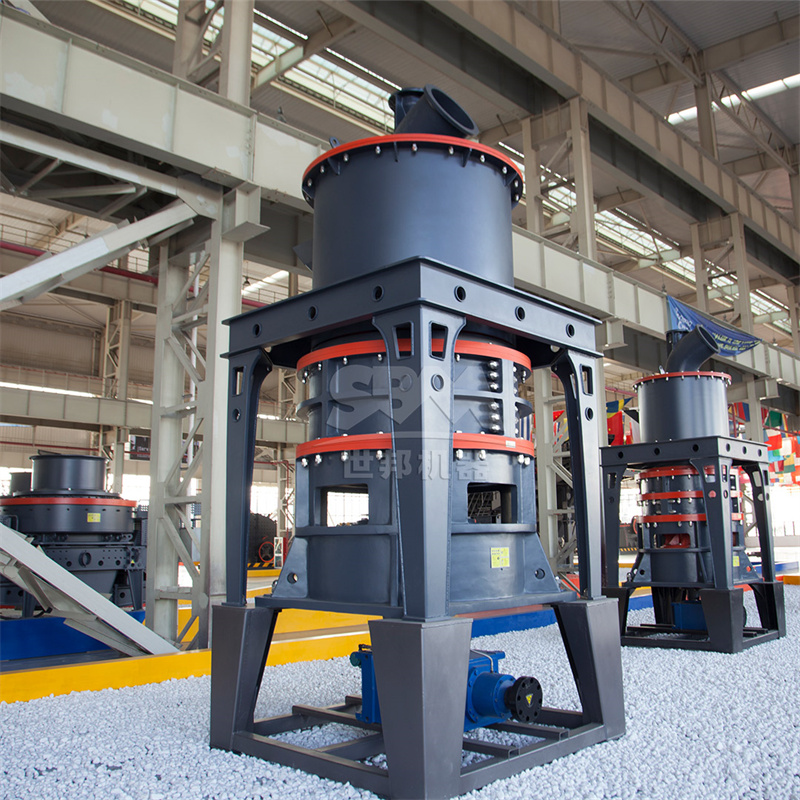
Working Principle Overview
Understanding the core mechanics helps in maintenance and optimization. For instance, the SCM Series uses a main motor to drive three layers of grinding rings. Material is dispersed by centrifugal force, crushed by roller pressure, and ground layer by layer. Finished powder is collected by a cyclone and a pulse dust removal system.
In contrast, the MTW Series employs a trapezium grinding ring and roller design. The main motor drives rollers to revolve and self-rotate. Shovels throw material between the ring and rollers, forming a stable layer for efficient extrusion crushing. The classifier then precisely separates the product.
Conclusion
Investing in high-efficiency quartz stone additive production equipment is a strategic decision that directly impacts the quality and cost of rubber products. By focusing on key features such as ultra-fine grinding capability, precise classification, energy efficiency, and durability, you can build a production line that delivers consistent, high-performance fillers. Whether your need is for ultra-fine powders (SCM Series) or high-volume medium-fineness production (MTW Series), our comprehensive range of mills—including LM Vertical Roller Mills and LUM Ultrafine Mills—provides a tailored solution for every application. We invite you to contact our engineering team to select the optimal model for your specific quartz additive requirements.