
Introduction
Calcium carbonate is one of the most widely used industrial minerals, serving as a critical raw material in industries ranging from paper and plastics to paints, coatings, construction, and pharmaceuticals. The processing of calcium carbonate—from mined limestone or marble to fine powders of controlled particle size—requires specialized equipment capable of delivering consistent quality, high throughput, and operational efficiency. This comprehensive guide explores the main types of calcium carbonate processing equipment, provides guidance on selection based on application requirements, and offers a detailed cost analysis to help manufacturers make informed investment decisions.
Understanding Calcium Carbonate Processing Stages
Calcium carbonate processing typically involves three main stages: crushing, grinding or milling, and classification. The choice of equipment at each stage depends on the feed material’s hardness, moisture content, required final fineness, and production capacity. Most calcium carbonate ores have a Mohs hardness of 3, making them relatively soft and easy to grind compared to harder minerals like quartz or feldspar. However, the presence of impurities and the need for ultra-fine products (down to 5 microns or finer) introduce specific technical challenges.
Types of Calcium Carbonate Grinding Mills
1. Ball Mills
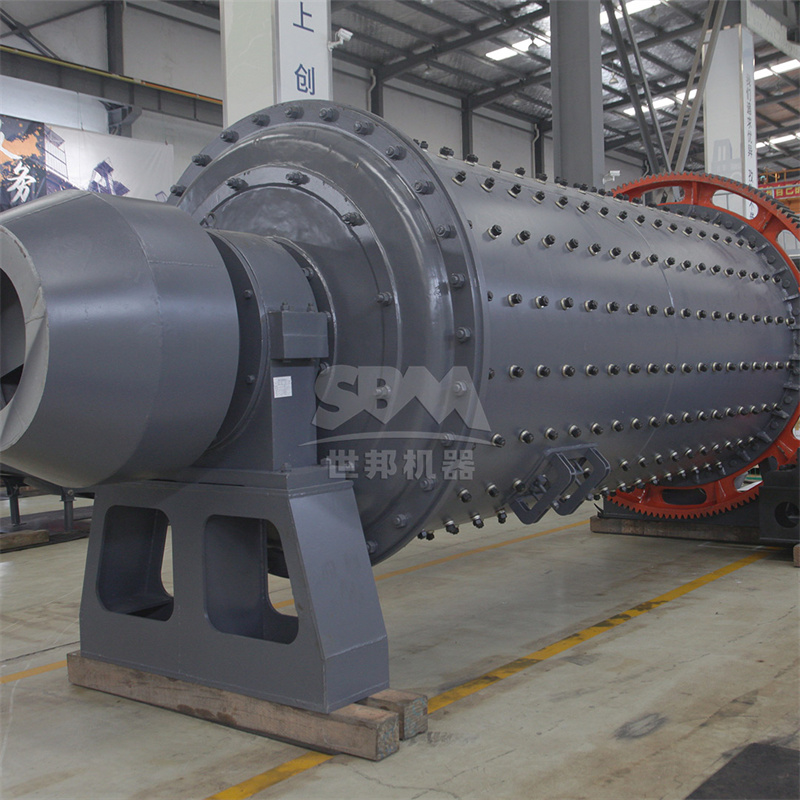
Ball mills are among the oldest and most reliable grinding solutions for calcium carbonate. They operate by rotating a cylindrical shell partially filled with grinding media (usually steel balls). Material is crushed and ground by the tumbling action of the media. Ball mills offer a crushing ratio of up to 300:1 and can handle capacities from less than 1 ton per hour to over 450 tons per hour. However, they are energy-intensive, with energy consumption typically 30-40% higher than modern vertical roller mill systems. Ball mills remain popular for coarse to medium grinding (0.074-0.8mm) and for operations where capital cost is the primary concern.
2. Raymond Mills and Pendulum Mills
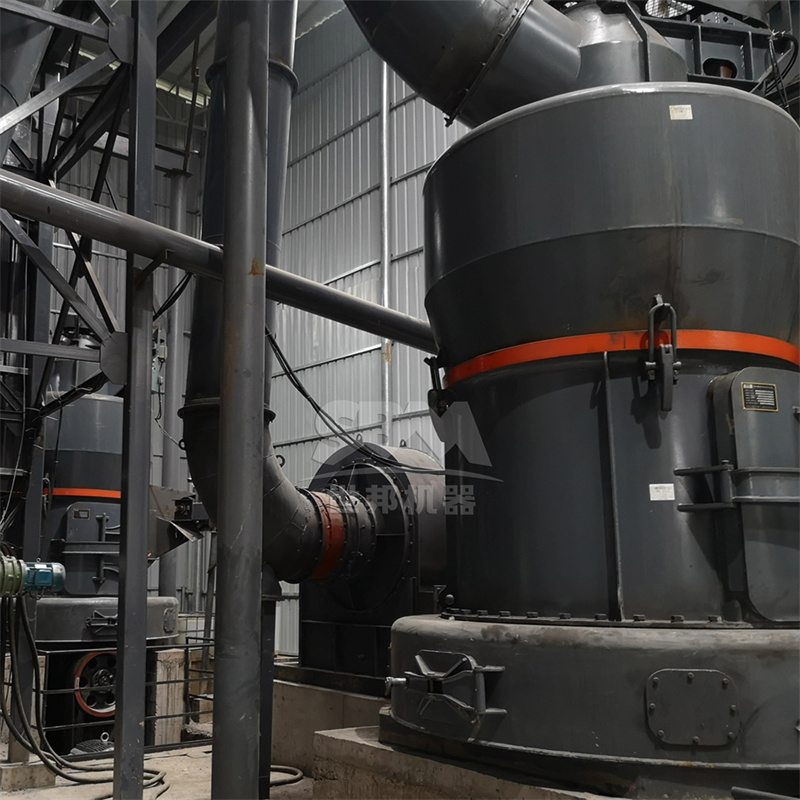
Raymond mills and pendulum mills (such as the MRN series) are medium-speed grinding mills widely used for calcium carbonate processing to produce powders in the 30-325 mesh range. These mills operate on the principle of centrifugal force: grinding rollers swing outward and press against a stationary grinding ring, crushing the material between them. The MRN Pendulum Mill, for example, features thin oil lubrication technology for maintenance-free operation and an efficient pulse dust collector for eco-friendly performance. With models ranging from MB5X98 (capacity 2.7-6.5 t/h) to MB5X298 (capacity up to 83 t/h), pendulum mills offer a cost-effective solution for medium-scale production.
3. European Trapezium Mills (MTW Series)
The MTW Series European Trapezium Mill represents a significant advancement in medium-speed grinding technology. Designed for output fineness from 30 to 325 mesh with capacities up to 45 tons per hour, the MTW mill incorporates several patented innovations. The anti-wear shovel design combines shovel blades to reduce maintenance costs, while the optimized arc air duct minimizes airflow energy loss. An integral bevel gear drive achieves transmission efficiency of up to 98%, saving space and reducing installation costs. The wear-resistant volute structure with non-resistance flow design improves air selection efficiency and reduces maintenance costs by 30%. With models including MTW110 (3-9 t/h) through MTW215G (15-45 t/h), the MTW series is ideal for medium to large-scale calcium carbonate grinding applications requiring consistent product quality.
4. Vertical Roller Mills (LM Series)
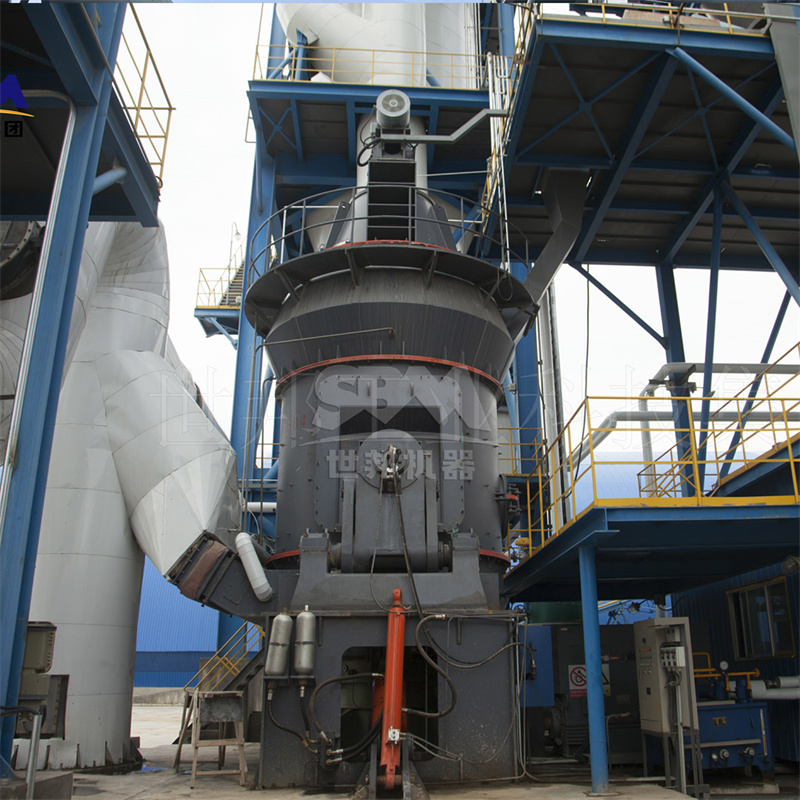
Vertical roller mills have gained significant popularity in calcium carbonate processing due to their excellent energy efficiency and compact design. The LM Series Vertical Roller Mill integrates crushing, grinding, and classification into a single system, reducing floor space by up to 50% compared to traditional ball mill systems. With energy consumption 30-40% lower than ball mills, the LM series offers substantial operational savings. The non-contact design between rollers and table increases wear part life by three times. Available in multiple configurations—including the LM130K (capacity 10-28 t/h) up to the LM280K (capacity 50-170 t/h)—vertical roller mills are suitable for both coarse and fine grinding applications. The LM series also includes specialized models for coal grinding, slag processing, and ultra-fine powder production down to 600 mesh.
5. Ultrafine Mills (SCM Series)
For applications requiring ultra-fine calcium carbonate powders in the 325-2500 mesh range (5-45 microns), specialized ultrafine mills are essential. The SCM Series Ultrafine Mill is engineered specifically for this demanding application. With a feed size of up to 20mm and capacities ranging from 0.5 to 25 tons per hour, the SCM mill achieves capacity twice that of jet mills while consuming 30% less energy. The vertical turbine classifier ensures precise particle size cutting with absolutely no coarse powder mixing, guaranteeing uniform finished products. Special material rollers and rings extend service life several times over, while the shaftless screw grinding chamber ensures stable operation. The SCM series is available in five models: SCM800 (0.5-4.5 t/h, 75kW), SCM900 (0.8-6.5 t/h, 90kW), SCM1000 (1.0-8.5 t/h, 132kW), SCM1250 (2.5-14 t/h, 185kW), and SCM1680 (5.0-25 t/h, 315kW).
6. Ultrafine Vertical Roller Mills (LUM Series)
For producers seeking ultra-fine powder with vertical mill efficiency, the LUM Ultrafine Vertical Roller Mill offers a compelling solution. With unique roller and liner curves that improve grinding efficiency, multi-rotor classification technology that eliminates coarse particles, and PLC automation for stable operation, the LUM series delivers precise fineness control in the 5-30 micron range. Models include LUM1525 (1.6-11.5 t/h), LUM1632 (2-13.5 t/h), and LUM1836 (2.3-15 t/h), with main power ranging from 220kW to 400kW.
Equipment Selection Guide
Selecting the right calcium carbonate processing equipment requires careful consideration of several factors:
- Required Fineness: For products coarser than 325 mesh, MTW or LM series mills offer excellent efficiency. For ultra-fine products (325-2500 mesh), SCM or LUM series mills are recommended.
- Production Capacity: Small to medium operations (under 10 t/h) can consider SCM, MTM, or smaller LM models. Large-scale operations benefit from LM series vertical mills or high-capacity MTW models.
- Energy Costs: In regions with high electricity costs, vertical roller mills and ultrafine mills offer significant energy savings compared to ball mills or jet mills.
- Moisture Content: For materials with moisture above 5%, mills with hot air drying capability (like LM series) may be necessary.
- Space Constraints: Vertical mills require less floor space than horizontal ball mills or Raymond mills.
Cost Analysis
When evaluating the total cost of ownership for calcium carbonate processing equipment, several cost components must be considered:
Initial Capital Investment: Ball mills typically have the lowest initial cost per ton of capacity, while vertical roller mills and ultrafine mills command higher prices due to their advanced technology. For example, a complete MTW138Z grinding system may cost 30-50% more than a comparable ball mill system. However, the LM series vertical mill, with its integrated design, can reduce infrastructure costs by 40% due to outdoor installation capability.
Energy Consumption: Energy represents the largest operational cost in calcium carbonate grinding. Ball mills consume approximately 25-35 kWh per ton for medium-fine grinding. MTW series mills reduce this to 18-25 kWh per ton. LM vertical roller mills achieve 15-22 kWh per ton—a 30-40% reduction compared to ball mills. The SCM ultrafine mill, while producing much finer powder, consumes only 20-30 kWh per ton, compared to 50-80 kWh per ton for jet mills achieving similar fineness.
Maintenance and Wear Parts: Ball mills require regular replacement of liners and grinding media, with annual maintenance costs typically 5-8% of capital investment. Raymond and pendulum mills have higher roller and ring wear but benefit from lower replacement part costs. LM series mills, with non-contact roller-table design, extend wear part life by three times compared to traditional mills. The MTW series’ combined shovel blades reduce maintenance costs through extended component life.
Installation and Civil Works: Ball mill systems require substantial foundations and building structures, often adding 20-30% to total project costs. The LM series vertical mill, designed for outdoor installation, reduces civil engineering costs by up to 40%. The MTW series, with its integral bevel gear drive, saves space and reduces installation costs compared to traditional gear drives.
Labor and Automation: Modern mills like the SCM, LM, and LUM series feature intelligent control systems with automatic finished product granularity feedback, real-time parameter monitoring, and remote/local switching capabilities. These systems reduce manual intervention by 50-70% compared to traditional mills, translating to significant labor cost savings over the equipment’s lifespan.
Recommended Product: SCM Series Ultrafine Mill
For calcium carbonate producers requiring ultra-fine powders in the 325-2500 mesh range with maximum efficiency and product quality, we recommend the SCM Series Ultrafine Mill. This mill delivers twice the capacity of jet mills while consuming 30% less energy, making it the most cost-effective solution for ultra-fine calcium carbonate production. The vertical turbine classifier ensures precise particle size cutting with absolutely no coarse powder mixing, guaranteeing uniform finished products that meet the most demanding specifications. Available in five models with capacities from 0.5 to 25 tons per hour, the SCM series can be configured to match any production requirement. The intelligent control system with automatic finished product granularity feedback reduces operator workload and ensures consistent quality batch after batch. For producers who prioritize both energy efficiency and product uniformity, the SCM Series Ultrafine Mill represents the optimal choice.
Conclusion
Selecting the right calcium carbonate processing equipment requires balancing multiple factors including required fineness, production capacity, energy costs, maintenance requirements, and capital budget. Ball mills remain viable for coarse grinding applications with low capital requirements. European trapezium mills and pendulum mills offer excellent performance for medium-fine grinding at moderate investment levels. Vertical roller mills provide superior energy efficiency and compact design for large-scale operations. For ultra-fine applications, the SCM Series Ultrafine Mill delivers unmatched efficiency and product quality. By carefully evaluating these options against specific production requirements, calcium carbonate processors can optimize their equipment selection to maximize profitability and product quality for years to come.