
Introduction
In the rubber industry, limestone (calcium carbonate) is a widely used additive that enhances product properties such as hardness, tensile strength, and processability. The choice of limestone additive production equipment directly impacts the quality of the final rubber product, production efficiency, and operational costs. This article provides a comprehensive guide on selecting the right limestone grinding equipment for rubber applications, focusing on key features, technical benefits, and practical considerations.
Understanding the Role of Limestone in Rubber Products
Limestone powder serves multiple functions in rubber manufacturing:
- Filler reinforcement: Improves dimensional stability and reduces shrinkage
- Cost optimization: Replaces more expensive raw materials without compromising quality
- Processing aid: Enhances dispersion and flow characteristics during mixing
- Surface finish: Contributes to smooth, uniform product surfaces
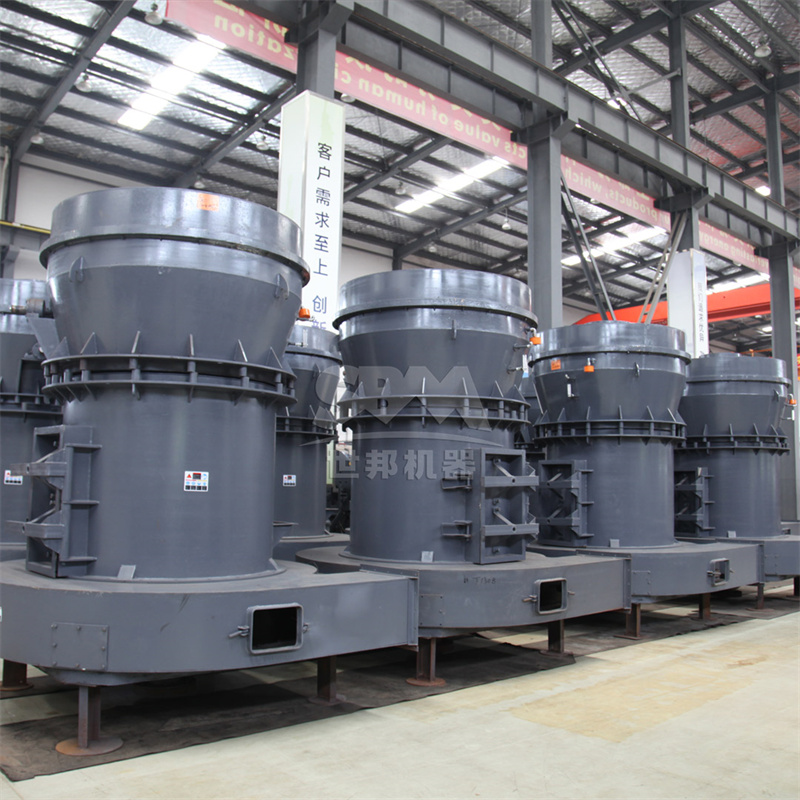
The effectiveness of limestone as an additive depends heavily on particle size, distribution uniformity, and purity. For most rubber applications, fineness requirements range from 325 mesh (45μm) to 2500 mesh (5μm), with specific grades selected based on the rubber compound formulation.
Critical Factors in Equipment Selection
1. Output Fineness and Particle Size Distribution
Rubber products demand precise control over particle size. Coarse particles can create stress points leading to product failure, while excessively fine particles may increase compound viscosity unnecessarily. The ideal equipment must provide:
- Adjustable fineness range to accommodate different rubber grades
- Narrow particle size distribution for consistent product quality
- Ability to achieve ultra-fine grades (sub-10μm) for high-performance applications
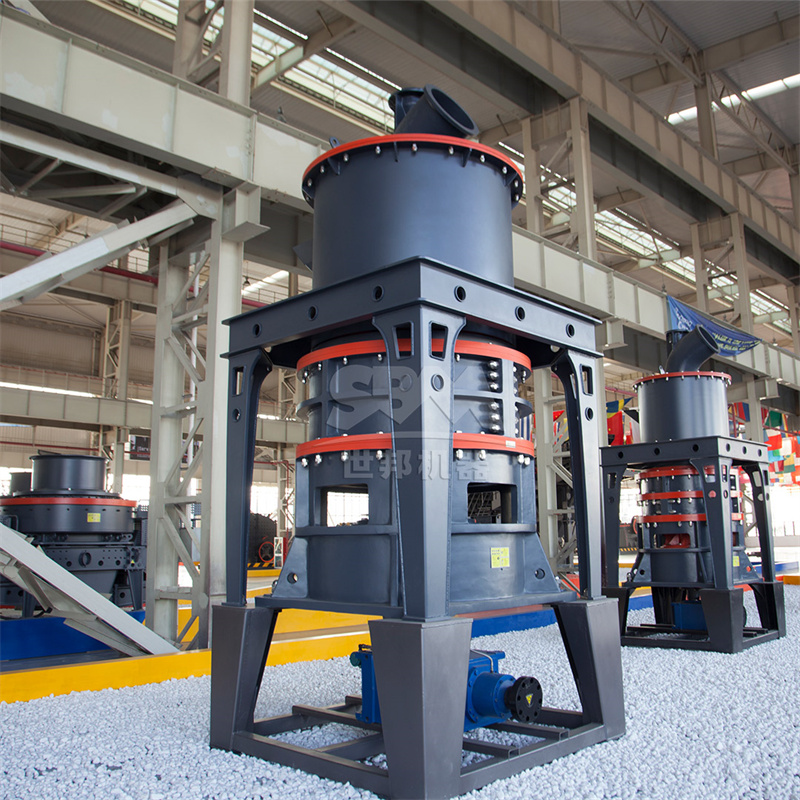
Our SCM Series Ultrafine Mill delivers exceptional performance in this regard, producing powders from 325 to 2500 mesh with superior particle size uniformity. The vertical turbine classifier ensures precise cutting, eliminating coarse powder contamination that could compromise rubber product integrity.
2. Production Capacity and Scalability
Matching equipment capacity to production requirements is essential for economic viability. Consider both current needs and future expansion plans:
- Small to medium operations: 0.5-8 ton/h capacity range
- Large-scale industrial production: 10-45 ton/h or higher
- Continuous vs. batch operation: Continuous mills offer better efficiency for high-volume production
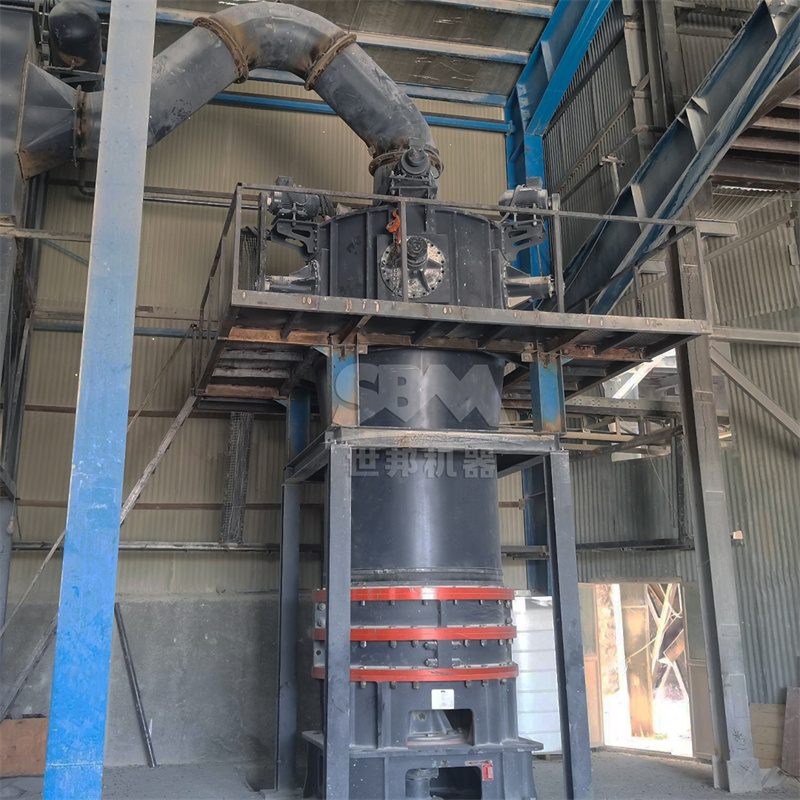
The SCM1000 model, with capacity of 1.0-8.5 ton/h and main power of 132kW, represents an ideal balance for medium-scale rubber additive production. For larger operations, the SCM1680 can reach up to 25 ton/h, making it suitable for centralized grinding facilities serving multiple rubber plants.
3. Energy Efficiency and Operating Costs
Energy consumption represents a significant portion of production costs. Modern grinding technologies offer substantial improvements:
- SCM Series: 2x the capacity of jet mills with 30% lower energy consumption
- LM Vertical Roller Mill: 30-40% lower energy consumption compared to ball mill systems
- Intelligent control systems: Automatic feedback on product fineness optimizes energy use
For rubber manufacturers prioritizing energy efficiency, the LM Series Vertical Roller Mill offers an integrated design that combines crushing, grinding, and classification in a single unit. The non-contact design between rollers and table reduces wear part consumption while maintaining high efficiency.
4. Material Handling and Pre-processing Requirements
Different raw material characteristics affect equipment selection:
| Parameter | SCM Series | MTW Series | LM Series |
|---|---|---|---|
| Max feed size | ≤20mm | ≤50mm | ≤50mm |
| Moisture tolerance | Low | Moderate | High (with hot air) |
| Hardness range | Medium-hard | Medium-hard | All ranges |
For limestone with larger feed sizes (up to 50mm), the MTW Series European Trapezium Mill provides excellent pre-processing capability. The integral bevel gear drive achieves 98% transmission efficiency, while the optimized arc air duct reduces energy loss during material transport.
Technical Advantages of Modern Limestone Grinding Equipment
Intelligent Control Systems
Modern mills incorporate advanced automation for consistent product quality:
- Real-time monitoring of grinding parameters
- Automatic adjustment of classifier speed
- Remote operation capabilities
- Predictive maintenance alerts
Environmental Compliance
Rubber industry facilities face increasingly stringent environmental regulations:
- Pulse dust collection: Our SCM Series achieves dust collection efficiency exceeding international standards
- Soundproof design: Noise levels maintained below 85dB
- Negative pressure operation: LM Series ensures zero dust leakage
- Low emission systems: All our mills meet or exceed national emission standards
Durability and Maintenance
Equipment reliability directly affects production uptime:
- SCM Series: Special material rollers and rings extend service life several times over; shaftless screw grinding chamber ensures stable operation
- MTW Series: Combined shovel blades reduce maintenance costs by 30%; curved design extends grinding roller life
- LM Series: Modular grinding roller assembly enables quick change, reducing downtime by 40%
Product Comparison for Rubber Additive Production
| Equipment | Fineness Range | Capacity Range | Best Suited For |
|---|---|---|---|
| SCM Ultrafine Mill | 325-2500 mesh | 0.5-25 t/h | High-quality fine powder for premium rubber products |
| MTW Trapezium Mill | 30-325 mesh | 3-45 t/h | Standard rubber filler applications |
| LM Vertical Mill | 30-325 mesh | 3-250 t/h | Large-scale industrial production |
| LUM Ultrafine Mill | 325-2500 mesh | 1.6-15 t/h | Ultra-fine specialty applications |
Selecting the Optimal Solution for Your Rubber Manufacturing
Based on our extensive experience with rubber industry clients, we recommend the following decision framework:
- For high-end rubber products (automotive seals, precision gaskets) requiring 1250-2500 mesh limestone: Choose the SCM Series Ultrafine Mill for its superior classification precision and product uniformity.
- For general rubber goods (hoses, belts, floor mats) using 200-325 mesh filler: The MTW Series European Trapezium Mill offers excellent value with its robust design and low maintenance costs.
- For large-scale centralized production serving multiple rubber plants: The LM Series Vertical Roller Mill provides unmatched capacity and energy efficiency.
Conclusion
Choosing the right limestone additive production equipment for rubber products requires careful evaluation of fineness requirements, production scale, energy efficiency, and long-term operating costs. Our complete range of grinding mills—from the high-precision SCM Series to the high-capacity LM Series—offers solutions for every rubber manufacturing scenario. With features like intelligent control, durable construction, and environmental compliance, these systems help rubber manufacturers achieve consistent product quality while optimizing production economics.
Contact our technical team for personalized equipment recommendations based on your specific limestone characteristics and rubber product requirements. Our engineers can provide sample testing and process design to ensure optimal equipment selection for your application.