
Introduction
In the competitive landscape of printing ink manufacturing, the quality of raw materials directly influences the final product’s performance, color vibrancy, and consistency. Limestone (calcium carbonate) has emerged as a critical functional additive in ink formulations, serving as an extender, rheology modifier, and pigment carrier. To meet the stringent demands of modern ink production—where particle size uniformity, purity, and production efficiency are paramount—specialized milling equipment is essential. This article explores the technical requirements for limestone additive production and presents advanced solutions that combine high efficiency, precision classification, and environmental sustainability.
The Role of Limestone in Printing Ink
Limestone powder, when processed to the correct fineness, offers multiple benefits in ink manufacturing:
- Rheology Control: Fine calcium carbonate improves ink flow and prevents settling.
- Opacity Enhancement: It increases coverage and reduces the need for expensive pigments.
- Cost Optimization: As a functional filler, it lowers production costs without compromising quality.
- Printability: Properly ground limestone improves ink transfer and adhesion properties.
However, these benefits are only realized when the limestone additive meets strict specifications: typically 325 to 2500 mesh (5–45 μm) with minimal coarse particle contamination. Achieving this requires industrial milling equipment that delivers consistent output, energy efficiency, and low maintenance.
Key Technical Challenges in Limestone Additive Production
Ink manufacturers face several technical hurdles when producing limestone additives:
- Particle Size Precision: Ink formulations demand narrow particle size distributions. Oversized particles cause printing defects, while excessive fines increase viscosity unpredictably.
- Energy Consumption: Traditional grinding methods (e.g., ball mills) can consume excessive power, driving up operational costs.
- Equipment Wear: Limestone is moderately abrasive, and standard mill components may degrade quickly, leading to frequent downtime.
- Environmental Compliance: Dust emissions and noise must be controlled to meet regulatory standards and ensure worker safety.
Advanced Milling Solutions for Limestone Additives
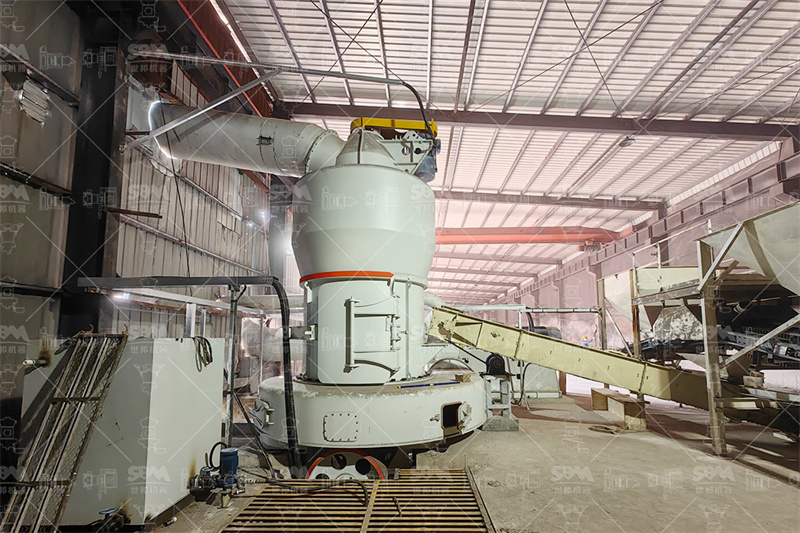
Modern milling technology addresses these challenges through innovative design and intelligent control systems. Among the most effective solutions for limestone additive production are the SCM Series Ultrafine Mill and the MTW Series European Trapezium Mill, both offering distinct advantages depending on the target fineness and capacity requirements.
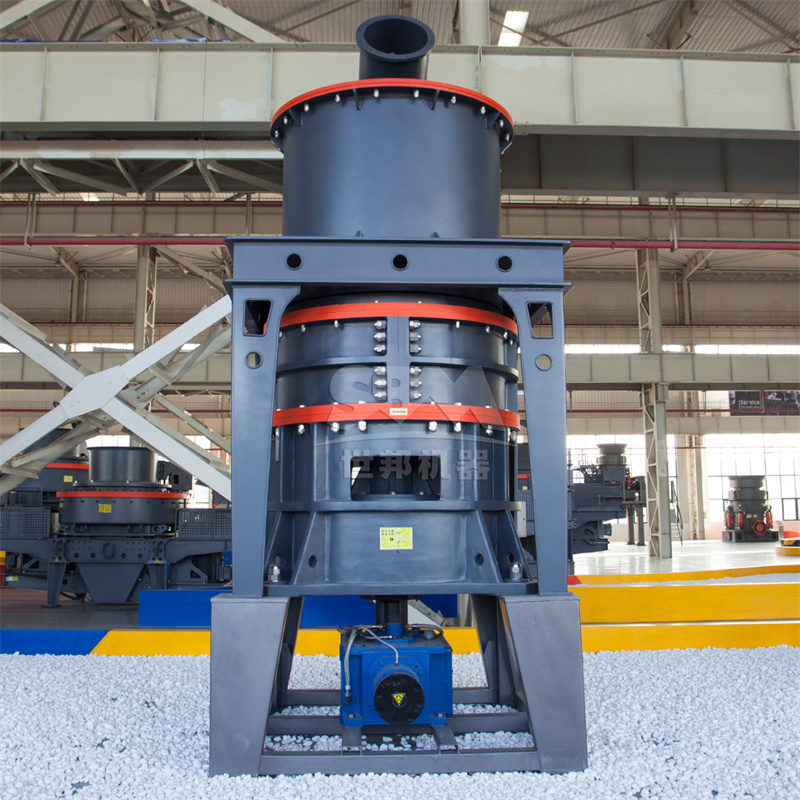
SCM Series Ultrafine Mill (45–5 μm)
The SCM Series is specifically engineered for ultra-fine grinding, making it ideal for high-end ink applications requiring particle sizes below 45 μm (325 mesh) down to 5 μm (2500 mesh). Key features include:
- Input Size: ≤20 mm
- Output Fineness: 325–2500 mesh (5–45 μm)
- Capacity: 0.5–25 ton/h (model-dependent)
Technical Advantages:
- High Efficiency & Energy Saving: Capacity is twice that of jet mills, with 30% lower energy consumption. Intelligent control provides automatic finished product granularity feedback.
- High-Precision Classification: The vertical turbine classifier achieves precise particle size cutting, eliminating coarse powder mixing and ensuring uniform finished products.
- Durable Design: Special material rollers and rings extend service life several times over. The shaftless screw grinding chamber ensures stable operation.
- Eco-friendly & Low Noise: Pulse dust collection efficiency exceeds international standards. A soundproof room design ensures noise levels remain low.
Working Principle: The main motor drives three layers of grinding rings to rotate. Materials are dispersed into the grinding path by centrifugal force, crushed by roller pressure, and ground layer by layer. Finally, powder collection is completed by a cyclone collector and a pulse dust removal system.
Models & Specifications:
- SCM800: 0.5–4.5 t/h, Main Power 75 kW, Fineness 325–2500 mesh
- SCM900: 0.8–6.5 t/h, Main Power 90 kW
- SCM1000: 1.0–8.5 t/h, Main Power 132 kW
- SCM1250: 2.5–14 t/h, Main Power 185 kW
- SCM1680: 5.0–25 t/h, Main Power 315 kW
For ink manufacturers prioritizing ultra-fine limestone additives with consistent quality, the SCM1250 Ultrafine Mill is highly recommended for medium-to-large production lines, offering a balance of capacity (up to 14 t/h) and precision classification.
MTW Series European Trapezium Mill (600–45 μm)
For applications requiring coarser limestone powder (30–325 mesh, i.e., 45–600 μm), the MTW Series provides a robust and cost-effective solution. Its key parameters include:
- Input Size: ≤50 mm
- Output Fineness: 30–325 mesh (down to 0.038 mm)
- Capacity: 3–45 ton/h (model-dependent)
Technical Advantages:
- Anti-wear Shovel Design: Combined shovel blades reduce maintenance costs. Curved design extends grinding roller life.
- Optimized Arc Air Duct: Reduces airflow energy loss and improves transmission efficiency. High-strength guard plates protect the air duct working surface.
- Integral Bevel Gear Drive: Transmission efficiency up to 98%, saving space and reducing installation costs.
- Wear-resistant Volute Structure: Non-resistance flow design improves air selection efficiency. Maintenance costs reduced by 30%.
Working Principle: The main motor drives the grinding rollers to revolve around the central axis while self-rotating to generate centrifugal force. Shovels throw materials between the ring and rollers to form a material layer, achieving efficient crushing through extrusion. The classification system precisely controls the finished product size.
Models & Specifications:
- MTW110: 3–9 t/h, Main Power 55 kW
- MTW138Z: 6–17 t/h, Main Power 90 kW
- MTW175G: 9.5–25 t/h, Main Power 160 kW
- MTW215G: 15–45 t/h, Main Power 280 kW
For high-capacity production of limestone additives up to 325 mesh, the MTW215G European Trapezium Mill stands out with its 45 t/h throughput and patented thin-oil lubrication system, ensuring continuous operation with minimal maintenance.
Comparative Analysis: SCM vs. MTW for Ink Applications
| Parameter | SCM Series Ultrafine Mill | MTW Series Trapezium Mill |
|---|---|---|
| Target Fineness | 5–45 μm (325–2500 mesh) | 45–600 μm (30–325 mesh) |
| Ideal Application | Premium inks, high-gloss formulations | Standard inks, cost-sensitive production |
| Energy Efficiency | 30% less than jet mills | 98% gear transmission efficiency |
| Max Capacity | 25 t/h (SCM1680) | 45 t/h (MTW215G) |
| Maintenance | Extended roller/ring life | Anti-wear shovel; 30% lower maintenance cost |
Environmental and Operational Considerations
Both the SCM and MTW series incorporate advanced environmental protection features:
- Pulse Dust Collection: Efficiency exceeds international standards, capturing fine particles that could otherwise contaminate the workspace.
- Soundproof Design: Noise levels are controlled below 85 dB(A), ensuring operator comfort.
- Intelligent Control: PLC-based systems with remote monitoring reduce manual intervention and optimize energy usage in real-time.
Recommendations for Ink Manufacturers
Selecting the right milling equipment depends on the specific requirements of the ink formulation:
- For Ultra-Fine Additives (5–45 μm): The SCM Series Ultrafine Mill is the optimal choice. We recommend the SCM1250 for medium-scale operations (2.5–14 t/h) or the SCM1680 for high-volume production (up to 25 t/h). Both models deliver consistent particle size distribution critical for high-end printing inks.
- For Standard Additives (45–600 μm): The MTW Series offers unmatched reliability and cost-efficiency. The MTW215G is ideal for large-scale production, while the MTW138Z suits mid-range capacity needs.
Additionally, for manufacturers seeking even broader capabilities, the LM Series Vertical Roller Mill provides an integrated grinding-classification system with floor space reduction of 50% and energy savings of 30–40% compared to ball mills. However, for dedicated limestone additive production in ink manufacturing, the specialized designs of the SCM and MTW series yield superior results.
Conclusion
High-efficiency limestone additive production equipment is indispensable for modern printing ink manufacturing. The ability to precisely control particle size while minimizing energy consumption and environmental impact directly translates to better ink quality and lower production costs. The SCM Series Ultrafine Mill and MTW Series European Trapezium Mill represent the cutting edge of milling technology, offering solutions tailored to both ultra-fine and standard fineness requirements. By selecting the appropriate equipment, ink manufacturers can ensure consistent product quality, operational efficiency, and sustainable growth in a competitive market.