
Introduction: The Critical Role of Activated Carbon Additives in Water Treatment
In the modern landscape of environmental protection and industrial water treatment, activated carbon remains one of the most versatile and effective filtration media available. For manufacturers, the quality and consistency of activated carbon additives are paramount. Whether the end-use is municipal drinking water purification, industrial wastewater remediation, or point-of-use filtration cartridges, the physical properties of the activated carbon—such as particle size distribution, surface area, and hardness—directly dictate its adsorption efficiency and service life.
However, the journey from raw material (like coconut shells, coal, or wood) to a final, high-performance product is complex. The selection of the appropriate production equipment, particularly for grinding, pulverizing, and classification, is a decision that carries immense operational and financial weight. Choosing the wrong machinery can lead to high energy consumption, inconsistent particle fineness, excessive wear and tear, and ultimately, a product that fails to meet stringent water treatment standards.
This comprehensive guide is designed for equipment buyers, plant managers, and production supervisors. We will dissect the key factors you must consider when selecting milling equipment for activated carbon additive production, focusing on efficiency, precision, and lifecycle cost. We will also showcase industry-leading solutions that meet these exacting demands.
Key Criterion #1: Precision of Particle Size Distribution (PSD)
Activated carbon used in water treatment does not have a ‘one-size-fits-all’ specification. The required fineness varies dramatically depending on the application phase:
- Powdered Activated Carbon (PAC): Typically requires 80% passing a 44-micron (325 mesh) sieve. It is used in batch treatment or direct dosing.
- Granular Activated Carbon (GAC): Often requires a specific mesh range like 8×20 or 12×40 for fixed-bed filters.
- Advanced or Micro-PAC: For high-efficiency adsorption with rapid kinetics, fineness down to 45-5 microns (325-2500 mesh) is required.
The ability to precisely cut particle size without generating excessive ‘fines’ (over-grinding) or coarse particles (under-grinding) is the most critical technical metric. A vertical turbine classifier is essential here. Unlike traditional grinding methods that produce a wide distribution, high-precision classifiers ensure a steep PSD curve. For manufacturers targeting the high-end micro-PAC market for specific pollutant removal (like PFAS or micro-pollutants), the need for equipment capable of achieving ultra-fine output (d97 < 10 μm) is non-negotiable.
Key Criterion #2: Energy Efficiency and Operational Economy
Grinding is an energy-intensive process. In the production of carbon additives, energy costs often represent the largest variable expense after raw materials. When evaluating equipment, look beyond the motor power rating (kW) and ask about the specific energy consumption (kWh per ton).
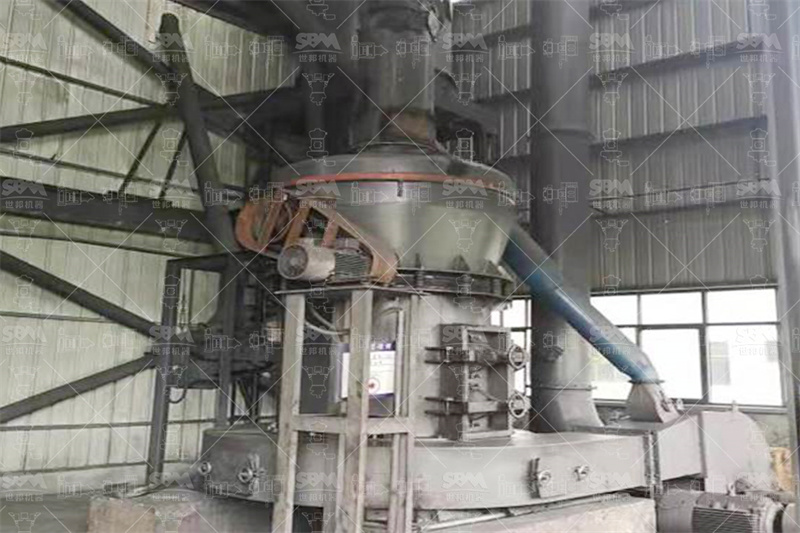
Traditional ball mills, while reliable, are notorious for high energy consumption and high heat generation, which is detrimental to activated carbon. The heat can dry out the carbon, but more importantly, the energy waste is massive. Modern roller mills and vertical mills utilize a ‘bed grinding’ principle. In this method, material is crushed between rollers and a rotating table or grinding ring, rather than by impaction from loose media. This mechanism consumes 30-40% less energy than ball mills for the same throughput. Furthermore, advanced internal circulating systems reduce the need for external conveying, saving additional power.
Key Criterion #3: Wear Resistance and Material Handling
Activated carbon, particularly after activation, is highly abrasive. It contains high ash content and is exceptionally hard. The wear metals from the grinding equipment are the primary contaminant in the final product. In water treatment, heavy metal contamination is strictly regulated. Therefore, the grinding contact parts (rollers, rings, and shovels) must be constructed from specialized wear-resistant alloys.
When selecting equipment, inspect the metallurgy of the grinding elements. Look for features like:
- Special material rollers and grinding rings: These should be several times harder than standard manganese steel.
- Anti-wear shovels: The material feeding mechanism should be designed to deflect abrasion away from the main housing.
- Modular wear parts: Quick-change systems reduce downtime significantly.
Key Criterion #4: Integrated System Design and Environmental Compliance
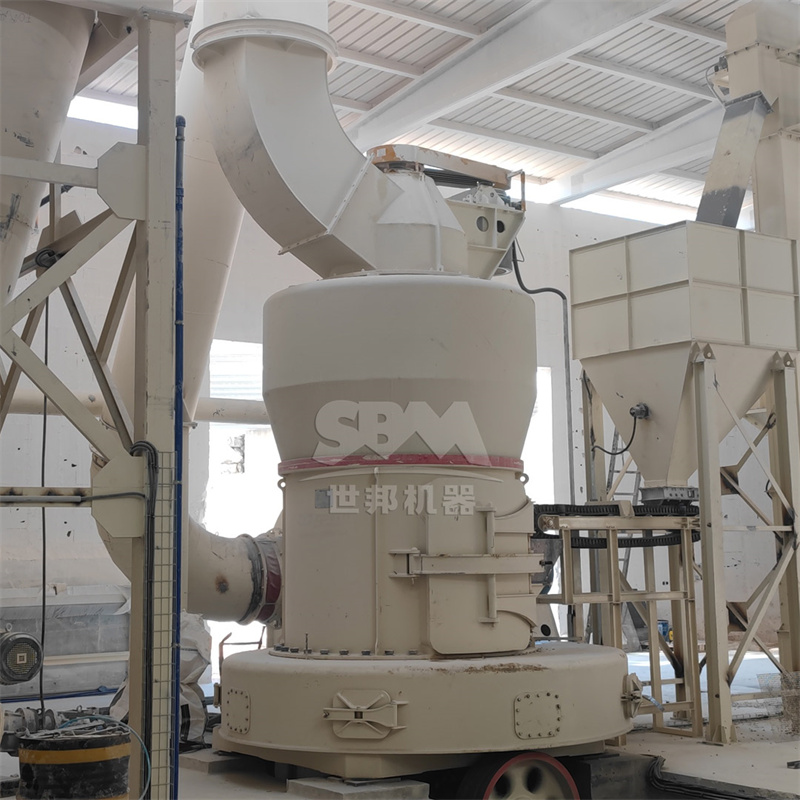
A milling machine is not an island. It operates within a system that includes feeding, conveying, classifying, and dust collection. In the production of activated carbon additives, dust control is non-negotiable for safety and environmental compliance. The equipment should integrate seamlessly with a high-efficiency pulse dust collector.
Look for systems that offer:
- Sealed negative pressure operation: This prevents dust leakage and ensures a clean working environment.
- Automation: An intelligent control system that automatically adjusts the classifier speed and grinding pressure based on real-time particle size feedback. This eliminates human error and ensures consistent quality shift after shift.
- Low Footprint: Vertical integrated structures can reduce floor space by up to 50% compared to horizontal configurations.
Selecting the Right Machine: A Comparative Analysis
To meet the high standards of the water treatment market, manufacturers generally choose between three main types of milling technology. We have categorized our recommended solutions below to help you match equipment to your exact production goals.
1. For Ultra-Fine Micro-PAC (45-5μm): SCM Series Ultrafine Mill
If your target market requires highly active, ultra-fine carbon for specialized adsorption, our SCM Series Ultrafine Mill is the industry benchmark. This machine is specifically engineered to address the challenges of hard-to-grind materials like activated carbon.
Why SCM is the best fit:
- High-Precision Classification: The vertical turbine classifier achieves a cutting precision that ensures no coarse powder mixing. This ensures a uniform finished product, which is critical for consistent adsorption kinetics.
- Efficiency: It boasts a capacity twice that of jet mills with 30% lower energy consumption. This is a game-changer for operating costs.
- Durability: The special material rollers and rings extend service life several times over, protecting your product from metallic contamination.
Models in the SCM Series: The series includes the SCM800 (0.5-4.5t/h), SCM1000 (1.0-8.5t/h), and the flagship SCM1680 (5.0-25t/h). This allows for scalability from pilot plants to large-scale commercial production.
2. For Fine to Medium PAC (600-45μm): MTW Series European Trapezium Mill
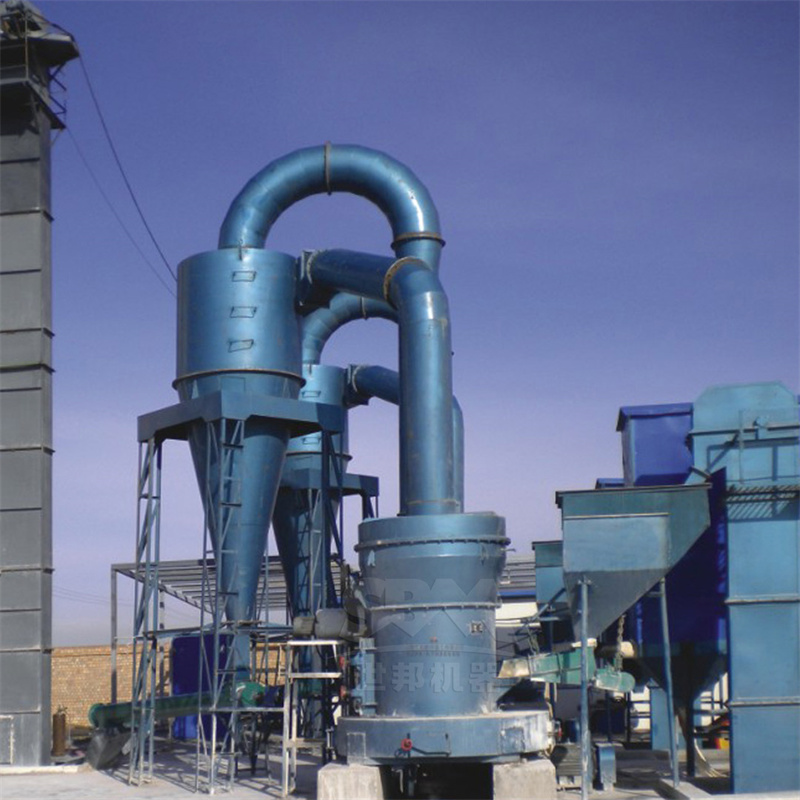
For the mainstay of the water treatment market, where a fineness of 80-325 mesh is required, the MTW Series European Trapezium Mill offers the ideal balance of throughput and economy. This is our most versatile solution for the bulk production of PAC and fine GAC.
Why MTW is the market leader:
- Integral Bevel Gear Drive: Transmission efficiency reaches up to 98%, significantly saving energy compared to belt-driven systems.
- Optimized Air Duct: The arc duct design reduces airflow resistance, which lowers energy loss and improves internal circulation.
- Anti-Wear Shovels: The curved design of the shovel blades distributes material efficiently while extending the life of the grinding roller.
Models in the MTW Series: From the MTW110 (3-9t/h) to the MTW215G (15-45t/h), this series covers all mid-to-large-scale capacities. The MRN158 and MRN198 models within this family are also excellent choices for high-throughput operations requiring absolute reliability.
Critical Advice for Implementation
After deciding on the core mill type (SCM or MTW), the ancillary equipment is equally vital. Ensure your production line includes:
- An Accurate Feeder: A vibrating feeder (like the GZ series) guarantees a constant, jamming-free flow of material into the mill, which is essential for maintaining pressure and stability.
- Cyclone Collectors: These serve as the primary product collection point, reducing the load on the bag filter and preserving filter life.
- Negative Pressure System: Ensure the fan power is rated to maintain a constant suction through the system. If the airflow drops due to bag filter clogging, the mill’s output immediately decreases.
Conclusion: Driving Quality with the Right Technology
Choosing the right activated carbon additive production equipment is a strategic investment. It determines not only your production capacity but also the quality approval rate of your final product. By prioritizing energy efficiency, classification precision, and wear resistance, you can secure a competitive edge in the demanding water treatment industry.
We strongly recommend a thorough factory test using your specific carbon feedstock before finalizing your purchase. However, the engineering data from our SCM and MTW series speaks for itself. By integrating a high-efficiency milling solution, you are not just buying machinery; you are buying the capability to produce a superior, market-ready product. Consult with our engineering team to map out a milling solution that matches your raw material moisture content, hardness, and required throughput. With the right equipment, you can turn raw carbon into high-value purification media that makes water safer for communities and industries worldwide.