
Introduction: The Critical Role of Bentonite Processing in Soil Improvement
Bentonite, a highly versatile clay mineral, has become an indispensable material in modern agriculture, civil engineering, and environmental remediation. Its exceptional water absorption, swelling capacity, and cation exchange properties make it a key additive for soil conditioning, waterproofing barriers, and nutrient retention. However, the raw bentonite extracted from quarries is rarely suitable for direct application. It contains high moisture content (often 20-30%), impurities, and large particle agglomerates that hinder its performance.
To unlock its full potential, bentonite must undergo a series of mechanical and thermal treatments—crushing, drying, grinding, and classification. Choosing the right processing equipment is not a one-size-fits-all decision. It requires a deep understanding of your target fineness, capacity requirements, energy efficiency, and the specific soil amendment goals. In this article, we will systematically guide you through the selection of grinding mills, dryers, and classifiers, with a special focus on our advanced product lines that are engineered to deliver superior performance in bentonite processing.
Step 1: Pre-Processing – Drying and Crushing
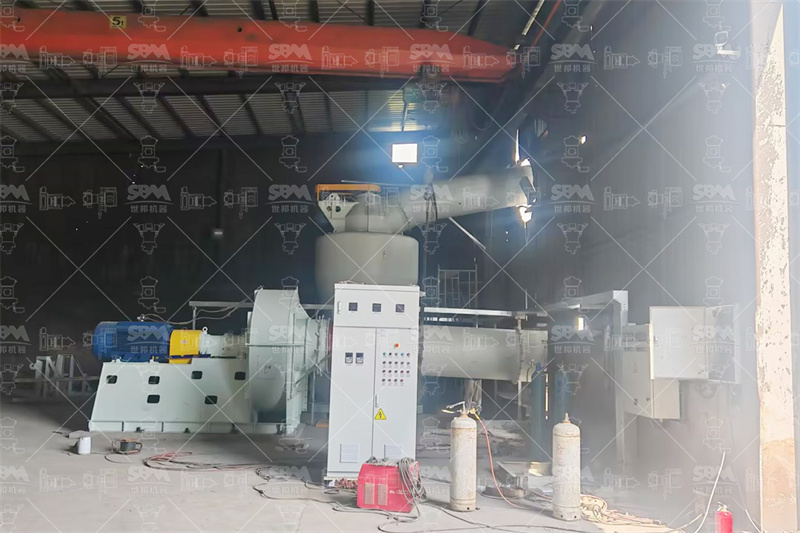
Before grinding, raw bentonite must be reduced in size and moisture. A typical bentonite mine yields material with 15% to 25% moisture, which must be dried to below 5% to prevent clogging and optimize grinding efficiency. A rotary drum dryer, equipped with a hot air furnace, is the industry standard. For high-capacity operations, we recommend using a drying system that integrates with the mill’s hot air circulation to save energy.
In terms of crushing, a hammer mill or jaw crusher can reduce the feed size to under 20–30 mm, which is ideal for the primary grinding stage. Our Hammer Mill (PC Series), with an output fineness of 0-3 mm and capacities ranging from 8 to 70 t/h, is an excellent pre-crusher for large bentonite blocks. Its high-manganese steel liners and optimized cavity ensure stable operation and long service life, making it a cost-effective first step.
Step 2: Selecting the Right Grinding Mill – Key Parameters for Bentonite
The heart of any bentonite processing plant is the grinding mill. The key parameters to consider are:
- Feed Size: Ensure the mill can accept the output from your crusher (typically ≤20 mm).
- Output Fineness: For soil improvement, bentonite powder typically requires fineness between 60 and 200 mesh (0.25 mm to 0.074 mm). However, for high-end applications like drilling mud, a finer powder (325 mesh or more) is needed.
- Capacity: Match the mill’s throughput (t/h) with your production goals.
- Moisture Content: Some mills can handle moisture up to 10%, but lower is always better.
For medium-fine grinding (100-325 mesh), our MTW Series European Trapezium Mill is a proven workhorse. It features an integral bevel gear drive with 98% transmission efficiency, and its anti-wear shovel design extends maintenance intervals. With capacities up to 45 t/h and an output fineness of 30-325 mesh, this mill is ideal for producing soil conditioner bentonite at scale. Its optimized arc air duct reduces energy loss, directly cutting operating costs.
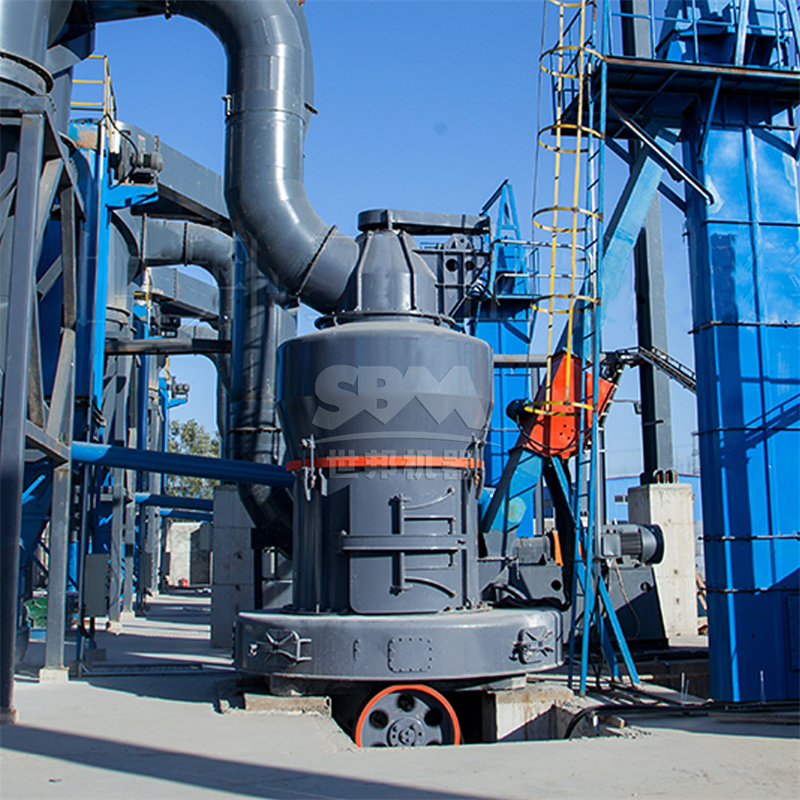
For operations demanding higher fineness (325-2500 mesh) and higher purity, we recommend the SCM Series Ultrafine Mill. This equipment uses a three-layer grinding ring and a vertical turbine classifier to produce extremely consistent powder. Its capacity is double that of jet mills while consuming 30% less energy. The intelligent control system automatically adjusts the classification speed to maintain the target particle size, making it an excellent choice for premium bentonite products.
Step 3: The Classifier – Fine-Tuning Particle Size Distribution
The classifier is a critical component for soil improvement because it determines the precision of the final particle size. For bentonite, a stable and controllable particle size distribution ensures consistent water absorption and soil binding. A vertical turbine classifier, as used in the SCM and LUM mills, provides the sharpest cut. It prevents coarse powder from contaminating the final product, ensuring a uniform finish.
When selecting a classifier, consider the following:
- Rotational Speed Control: Variable frequency drives (VFD) allow real-time adjustments.
- Bypass Design: In the MTW mill, the classifier works in a closed-loop system with the fan, ensuring that particles are returned to the grinding chamber for re-processing if they are too coarse.
- Wear Resistance: Classifier blades should be made of hardened steel to handle abrasive bentonite.
Step 4: Integrated Drying and Grinding – The Vertical Roller Mill Advantage
For plants that want to combine drying and grinding in a single unit, the LM Series Vertical Roller Mill is the optimal solution. It accepts feed moisture up to 10-15% and has a built-in hot air drying system inside the mill chamber. This eliminates the need for a separate dryer, reducing floor space by 50% and infrastructure costs by 40%.
The LM mill uses a bed-grinding principle, which consumes 30-40% less energy than traditional ball mills. Its intelligent control system monitors the grinding table and roller pressure in real-time. For bentonite soil improvement, the LM130K or LM150K models are excellent, providing capacities of 10-38 t/h and fineness ranges from 170 μm to 40 μm.
Our Recommendation: For a mid-sized soil improvement plant looking for reliability and low energy consumption, we strongly recommend the SCM900 Ultrafine Mill. It offers a capacity of 0.8-6.5 t/h, a fineness range of 325-2500 mesh, and a main power of just 90kW. Its high-precision classification system ensures that every particle meets your quality standards, maximizing the soil conditioning benefits.
Conclusion: Making the Right Investment
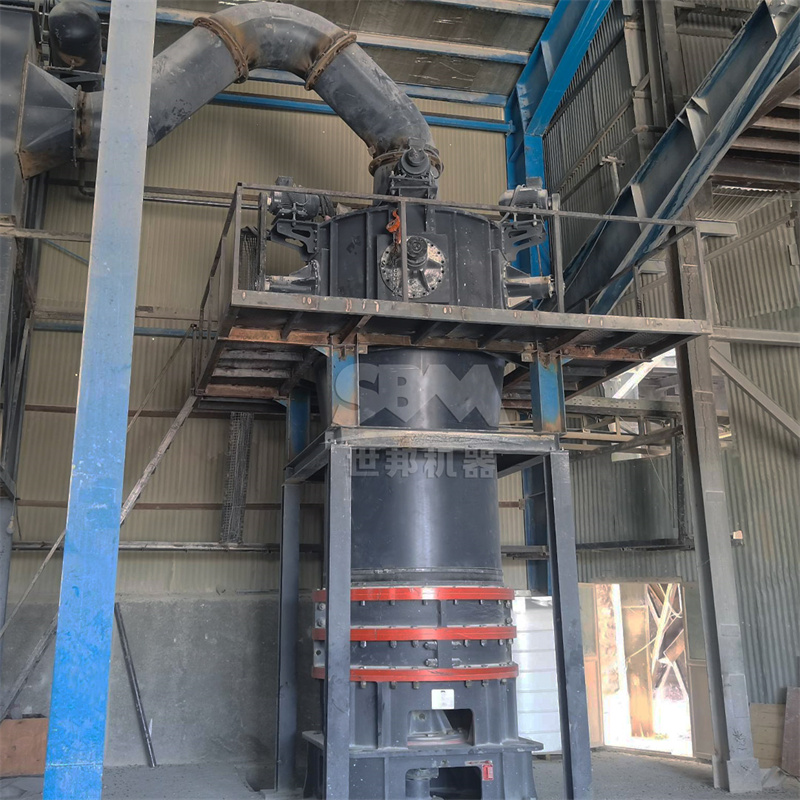
Choosing the right bentonite processing equipment is a strategic decision that impacts your product quality, energy costs, and long-term operational efficiency. Start by defining your target fineness and capacity, then match those requirements to a mill with proven technical advantages. For coarse to medium grinding (30-325 mesh), the MTW Series delivers high capacity and excellent wear life. For ultra-fine grinding (325-2500 mesh), the SCM Series provides unmatched precision and energy efficiency.
Finally, do not overlook the importance of an integrated system. A well-designed line combines a hammer mill for pre-crushing, a vertical roller mill for combined drying and grinding, and a turbine classifier for final sizing. By leveraging our decades of experience in powder processing, you can select equipment that not only meets current demands but also adapts to future market needs. Contact our engineering team today to discuss your project’s specific requirements and receive a personalized system design.