
Introduction
Bentonite is a versatile clay mineral widely used as a thickening agent, rheology modifier, and suspension stabilizer in water-based and solvent-based coating formulations. The performance of bentonite additives in coatings—such as viscosity build, thixotropy, and anti-settling properties—largely depends on the fineness, particle size distribution, and activation quality of the processed bentonite powder. To achieve optimal results, coating manufacturers must invest in high-efficiency production equipment that ensures consistent grinding, precise classification, and low operational costs. This article provides a comprehensive guide to the key machines used in bentonite processing for coatings, with a focus on selection criteria, technical advantages, and practical recommendations.
1. Ultrafine Grinding Mills for Bentonite (D50: 5–45 μm)
Ultrafine grinding is essential for producing bentonite additives with a particle size below 45 micrometers, which is critical for enhancing the surface area and swelling capacity in coating applications. The SCM Series Ultrafine Mill is a leading solution in this category. With a feed size of ≤20 mm, the SCM mill can achieve an output fineness ranging from 325 meshes to 2500 meshes (approximately 45–5 μm). This flexibility is particularly valuable for coating manufacturers who need to tailor the particle size to specific rheological requirements.
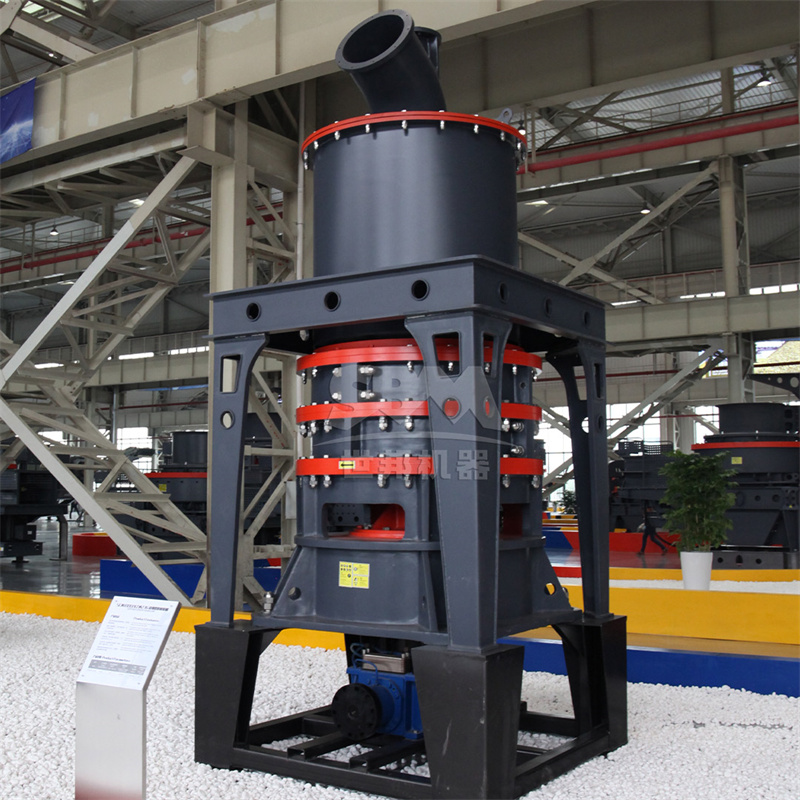
Key technical advantages of the SCM series include an energy-efficient design that delivers twice the capacity of jet mills while consuming 30% less energy. The vertical turbine classifier ensures precise particle size cutting with no coarse powder mixing, resulting in uniformly fine powders. Additionally, the use of special material rollers and rings extends service life significantly, while the pulse dust collection system meets international environmental standards. For coating plants aiming to produce high-value bentonite additives with a narrow particle size distribution, the SCM series is an ideal choice.
2. European Trapezium Mills for Medium-Fine Bentonite (45–600 μm)
For applications where a medium-fine bentonite powder (e.g., 100–325 mesh) is sufficient, such as in anti-corrosive primers or general-purpose paints, the MTW Series European Trapezium Mill offers a robust and cost-effective solution. The MTW mill accepts feed sizes up to 50 mm and produces fineness between 30 and 325 meshes, with capacities ranging from 3 to 45 tons per hour depending on the model.
The MTW series incorporates an anti-wear shovel design and an optimized arc air duct that reduces airflow energy loss, improving transmission efficiency by up to 98% via an integral bevel gear drive. The wear-resistant volute structure further reduces maintenance costs by 30%, making it a dependable workhorse for continuous bentonite production. Notably, the patented internal suction oil lubrication system and advanced pulse dust removal technology enhance operational safety and environmental compliance.
3. Vertical Roller Mills for Large-Scale Integrated Production
When a coating plant requires a single machine that integrates crushing, grinding, and classification with minimal floor space, the LM Series Vertical Roller Mill stands out. The LM mill is designed for high-capacity applications, with capacities ranging from 3 to 250 tons per hour and feed sizes up to 50 mm. The integrated design reduces floor space by 50% and infrastructure costs by 40%, which is a significant advantage for greenfield or retrofit projects.
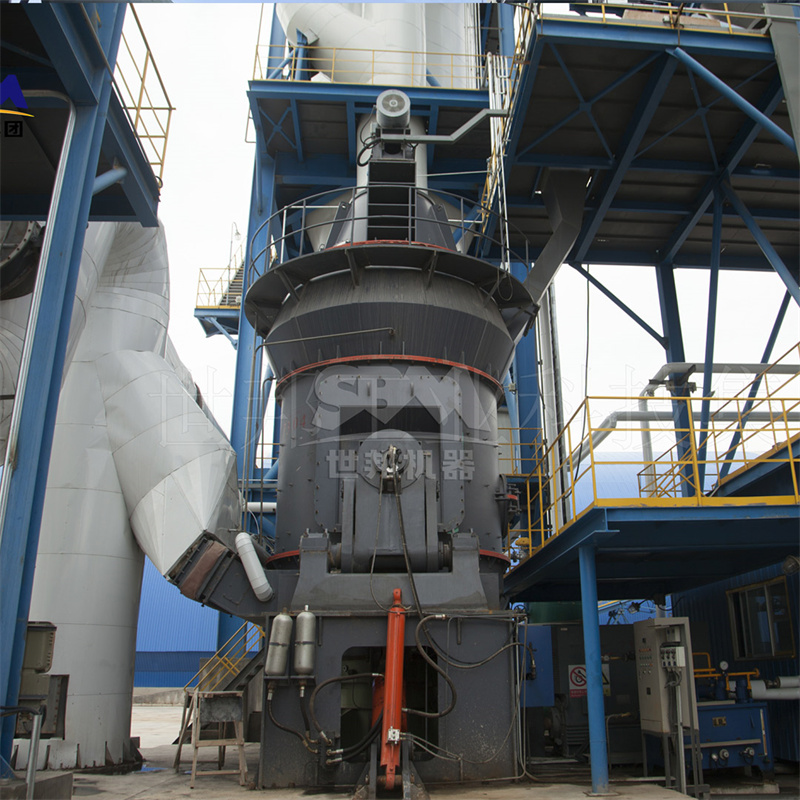
One of the most impressive features of the LM series is its low operating cost: the non-contact design between rollers and table increases wear part life by three times, and energy consumption is 30–40% lower than that of traditional ball mill systems. The expert-level automatic control system allows real-time monitoring of parameters, reducing manual intervention and ensuring consistent product quality. For coating manufacturers who demand high throughput and energy efficiency, the LM vertical roller mill is a superior option.
4. Medium-Speed Trapezium Mills for Economical Production
For mid-sized operations that balance cost and performance, the MTM Series Medium-speed Trapezium Mill provides a practical solution. It handles feed sizes up to 35 mm and produces fineness from 45 to 325 meshes, with a capacity of 3 to 22 tons per hour. The intelligent pressure regulation system compensates for roller wear automatically, extending roller and ring life by 30%.
The MTM mill features a revolutionary roller assembly with horizontal pull-rod connection that protects main shaft bearings, and its damping and noise reduction technology eliminates equipment resonance. This machine is particularly suitable for producers who prioritize low initial investment and simplified maintenance.
5. Ball Mills for Coarse Grinding and Bulk Processing
Although ball mills are less energy-efficient than vertical roller mills, they remain widely used for coarse bentonite grinding (0.074–0.8 mm) due to their proven reliability and versatility. The Ball Mill is available in dry and wet modes, covering powder preparation and mineral processing for cement, metallurgy, and chemical industries. With a crushing ratio up to 300:1 and continuously adjustable fineness, ball mills can handle feed sizes up to 25 mm and achieve capacities from 0.65 to 450 tons per hour.
Modern ball mill designs incorporate wear-resistant liners and high-chrome steel media, reducing downtime by 40%. For plants that already have a ball mill infrastructure, this technology remains an economical choice for primary grinding before further processing.
6. Hammer Mills for Pre-Crushing Bentonite Lumps
Before any fine grinding occurs, raw bentonite lumps often need to be crushed to a consistent size to ensure smooth feeding into downstream mills. The Hammer Mill is an efficient pre-crusher that reduces run-of-mine bentonite (up to 40 mm) to a uniform size of 0–3 mm. With high capacity and a crushing ratio, the hammer mill uses high-speed rotating hammers and wear-resistant high manganese steel liners for long service life.
Models such as PC4008-75 (8-15t/h) and PC4015-132 (40-70t/h) are perfect for preparing feed material for ultrafine or vertical roller mills. Its compact structure and low investment cost make it an essential first step in any bentonite processing line.
7. Ultrafine Vertical Roller Mill for Specialty Coatings
For high-end coating formulations that demand ultra-fine bentonite with a narrow distribution (325–2500 mesh), the LUM Ultrafine Vertical Roller Mill is engineered for precision. It adopts multi-rotor technology for precise classifying, ensuring no coarse particles contaminate the final product. The PLC automation system provides stable operation, and the negative pressure design prevents dust leakage, making it an environmentally friendly option.
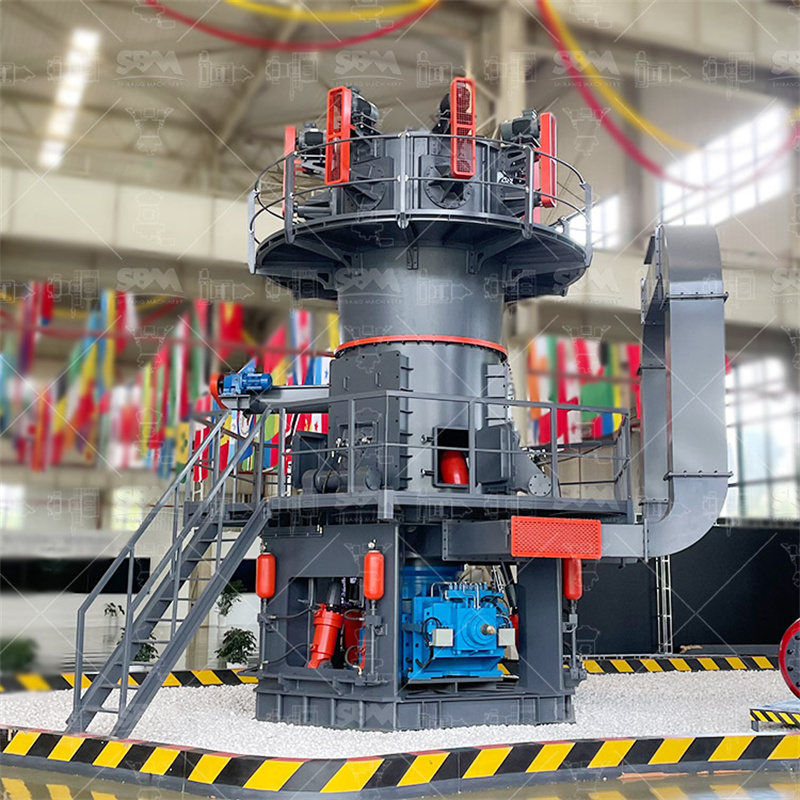
Specifically, the LUM1525 model offers a capacity of 1.6–11.5 t/h, while the LUM1836 can reach 2.3–15 t/h, making it suitable for medium to high throughput specialty coating plants.
8. Pendulum Mills for High-Capacity Bentonite Additives
The MRN Pendulum Mill is another robust alternative for producing coating-grade bentonite with fineness between 30 and 325 meshes. It boasts a thin oil lubrication system that is maintenance-free, and its new classifier design combined with an isolated cyclone reduces energy consumption. With capacities ranging from 2.7 to 83 tons per hour, the MRN mill is highly scalable for large coating additive producers.
Selection Guide and Recommendation
Choosing the right grinding equipment for bentonite additives depends on several critical factors: required fineness, production capacity, energy consumption, and capital budget. For coating applications, a particle size below 45 μm is often necessary to maximize swelling and thickening efficiency. Therefore, ultrafine grinding solutions such as the SCM or LUM series are strongly recommended for high-performance additives. If the product specification is less stringent (e.g., 200 mesh), the MTW or MTM series offer excellent cost-efficiency.
We recommend our SCM1000 Ultrafine Mill as the preferred choice for coating-grade bentonite production. With a capacity of 1.0–8.5 t/h and a fineness range of 325–2500 mesh, it provides the exact particle size control needed for premium paint additives. Its energy-saving design and durable components ensure a rapid return on investment. For higher throughput requirements, the LM170K Vertical Roller Mill (18–48 t/h) is an equally outstanding option, delivering large volumes of uniformly ground bentonite with minimal energy consumption.
Conclusion
High-efficiency production equipment is the backbone of bentonite additive manufacturing for coatings. From pre-crushing hammer mills to ultrafine vertical roller mills, each machine plays a specific role in achieving the desired particle characteristics. By evaluating your production goals and selecting a mill with advanced classification, low energy consumption, and robust design, you can ensure consistent, high-quality bentonite additives that enhance the performance of your coating products. Investing in the right technology today will yield long-term operational excellence and market competitiveness.