
Introduction to Powdered Bituminous Coal Production
Powdered bituminous coal, commonly referred to as pulverized coal, is a critical energy source and industrial raw material used across thermal power generation, steel manufacturing, cement production, and chemical processing. The quality of the final powder—characterized by its fineness, uniformity, and moisture content—directly influences combustion efficiency, product purity, and operational costs. Selecting the right production equipment is therefore not merely a procurement decision but a strategic investment that impacts your entire production chain. With a wide array of grinding mills and classifiers available on the market, making an informed choice requires a systematic evaluation of several technical and economic factors.
Key Factor 1: Raw Material Properties and Feed Size
Before evaluating any equipment, you must first thoroughly analyze your raw material. Bituminous coal varies significantly in hardness, moisture content, abrasiveness, and volatile matter. The maximum feed size entering the mill is a primary constraint. For instance, equipment like a Hammer Mill can accept feed sizes up to 40mm and reduce them to 0-3mm, which is suitable for pre-crushing. However, for direct pulverization into fine powder (45-5μm), a mill with a smaller input size specification, such as our SCM Series Ultrafine Mill (≤20mm) or MTW Series European Trapezium Mill (≤50mm), would be more appropriate. If your raw coal comes in large lumps, you may need to incorporate a primary crusher before the main grinding unit. Understanding the Bond Work Index of your coal will also help in estimating the specific energy consumption and mill capacity requirements.
Key Factor 2: Required Fineness and Particle Size Distribution
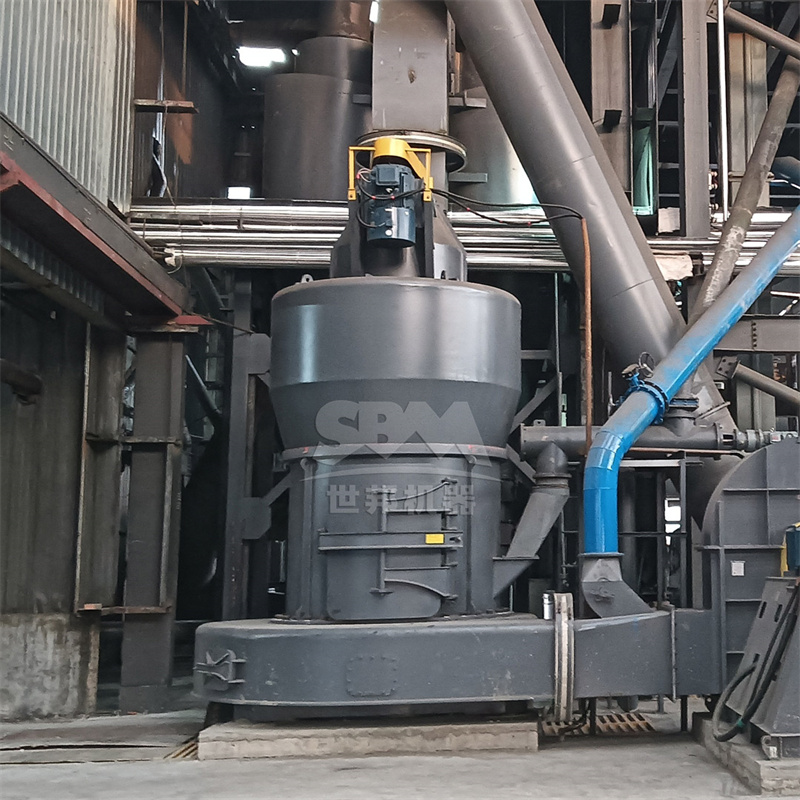
The required fineness of the powdered coal is arguably the most crucial technical parameter. A coal-fired power plant might require a product fineness of 80% passing 200 mesh (75μm) to ensure complete combustion. In contrast, a chemical plant using coal for injection or gasification may need much finer powder, such as 325-2500 mesh (45-5μm). For standard industrial combustion, our MTW Series or MTM Series Medium-speed Trapezium Mill provides a consistent output range of 30-325 mesh. However, for high-value applications like ultra-fine coal-water slurry fuel or high-reactivity coke breeze, you should consider the SCM Series Ultrafine Mill, which offers a precise output fineness range of 325-2500 mesh. The vertical turbine classifier in the SCM Series ensures a sharp particle size distribution, eliminating the risk of coarse powder contamination which can lead to incomplete combustion and slagging in boilers.
Key Factor 3: Production Capacity and Throughput Requirements
Your target annual production output dictates the mill’s throughput capacity (measured in tons per hour). Underestimating capacity can lead to bottlenecks, while overestimating leads to excessive idle time and capital waste. For small to medium operations, the MTM100 with a capacity of 3-8 t/h is an excellent entry-level option. For mid-size industrial boilers or cement kilns, the MTW138Z or LM130K Vertical Roller Mill (offering 10-28 t/h) provides a robust balance. For large scale utility plants requiring massive volumes, the LM Series Vertical Roller Mill is the industry standard; models like the LM280M in the Vertical Coal Mill series are designed to produce 50-90 t/h of pulverized coal. The ability to handle varying capacities within a single model also allows for future expansion. Our MTW models, for instance, include the MTW175G and MTW215G, scaling from 9.5-45 t/h, demonstrating how a modular approach can serve both current needs and future growth.
Key Factor 4: Grinding Mechanism and Energy Efficiency
There are three dominant grinding mechanisms for coal: impact crushing, attrition, and compression. Ball Mills rely primarily on impact and attrition, which are reliable but notoriously energy-intensive. For energy saving, the industry is moving towards bed grinding principles. The LM Series Vertical Roller Mill and the SCM Series Ultrafine Mill utilize a grinding bed where material is crushed under pressure. The LM Series boasts an energy consumption rate 30-40% lower than traditional ball mill systems. The MRN Pendulum Mill also offers an efficient pendulum grinding swing that minimizes over-grinding. When selecting equipment, look for technological features that reduce energy loss. For example, the MTW Series features an optimized arc air duct that reduces airflow energy loss and bevel gear drive with 98% transmission efficiency. These seemingly minor details compound to significant operational savings, often reducing the payback period for the equipment by a substantial margin.
Key Factor 5: Classification Precision and System Design
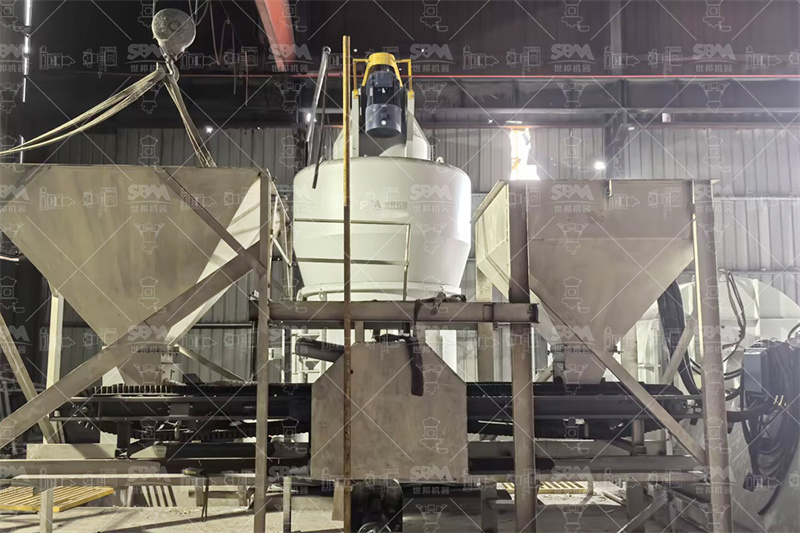
Pulverized coal production is not just about grinding; it is about classification. The classifier separates the fine powder from the coarse material, returning the latter to the grinding zone. A high-precision classifier ensures the final product meets the strict fineness criteria without being over-milled, which wastes energy. Top-tier equipment features advanced classifiers. For example, the LUM Ultrafine Vertical Roller Mill utilizes multi-rotor technology, guaranteeing that no coarse particles enter the final dust collector. Similarly, the SCM Series uses a vertical turbine classifier that can achieve cutting accuracy down to a specific micron size without the need for external screening. Furthermore, the integration of the mill with the hot air drying system and the dust collection system is vital. Since bituminous coal can have varying moisture content, the mill’s air duct must be capable of introducing hot air for in-situ drying. The negative pressure system and pulse dust collectors (as seen in our MTW and SCM models) prevent dust leakage, ensuring environmental compliance and product recovery rates exceeding 99%.
Product Recommendation: SCM Series Ultrafine Mill
For clients requiring exceptional fineness (325-2500 mesh) and consistently high product quality, we strongly recommend the SCM Series Ultrafine Mill. Its capacity is twice that of jet mills while using 30% less energy, ensuring a strong return on investment. The intelligent control system automatically adjusts parameters based on particle size feedback, stabilizing production. With durable roller materials tested to last several times longer than standard alloys, the SCM Series (Models SCM800, SCM900, SCM1000, SCM1250, and SCM1680) offers a versatile capacity range of 0.5-25 t/h, making it ideal for high-end coal powder applications where surface area and reactivity are paramount.
Product Recommendation: MTW European Trapezium Mill
For general-purpose production (30-325 mesh) with a preference for reliability and low maintenance, the MTW Series European Trapezium Mill is unrivaled. The models, including the MTW110, MTW138, and the large-capacity MTW215G, provide capacities up to 45 t/h. The design focuses on reducing operational friction: anti-wear shovel blades, curved grinding rollers to extend lifespan, and a wear-resistant volute structure that cuts maintenance costs by 30%. Whether you are operating a captive power plant or a cement production line, the MTW Series offers the durability and efficiency needed to maintain uninterrupted production schedules.
Best Practices for Site Integration and Operation
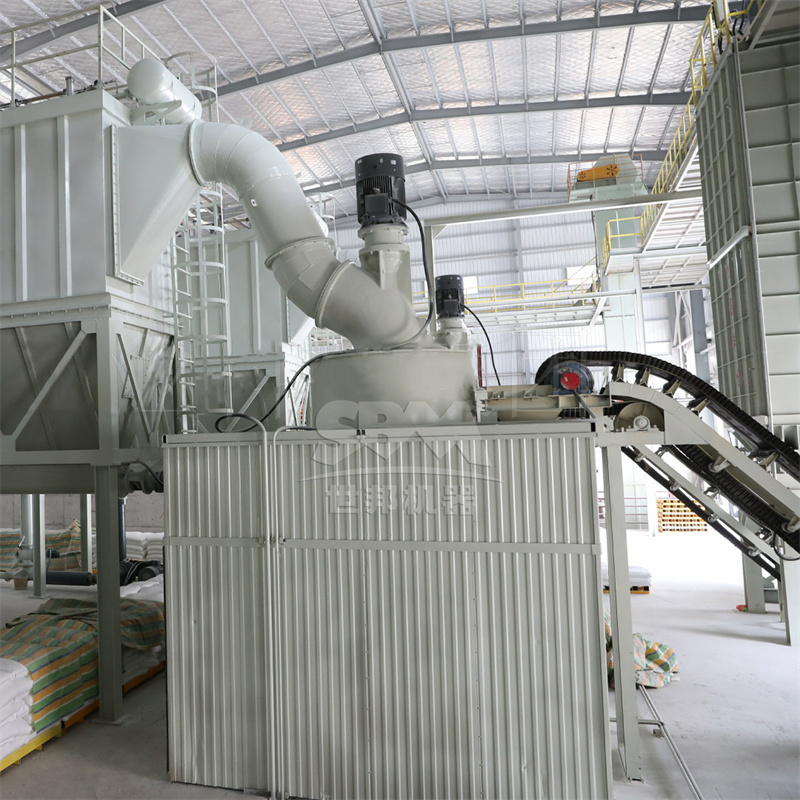
Choosing the right machine is the first step; integrating it correctly is the second. Best practices dictate that you assess the physical layout of your plant. Vertical Roller Mills (LM Series) feature an integrated design that combines crushing, drying, and classifying, which can reduce your floor space by up to 50% and allow for outdoor installation, significantly reducing civil engineering costs. Ensure that the explosion-proof measures are in place; since bituminous coal is combustible, the system must be equipped with nitrogen protection, CO/O2 monitoring, and explosion relief valves. Furthermore, consider the automation level; our advanced mills feature expert control systems that allow for remote monitoring and one-click start-up, reducing manual intervention and human error. Regular maintenance of the classifier blades and grinding rings is essential, and choosing mills with modular assemblies (like the quick-change system in our LM-Y series) can reduce downtime by up to 40%.
Cost-Benefit Analysis and Lifecycle Assessment
Finally, a comprehensive cost-benefit analysis should go beyond the initial purchase price to include operating costs—energy, grinding media, wear parts, and maintenance. A Ball Mill may have a lower upfront cost, but due to the high power consumption (often requiring 1250kW for large models), the lifetime cost can exceed that of a more efficient Vertical Mill by 30%. The LM Series Vertical Roller Mill offers a non-contact design between rollers and the table, meaning the wear parts do not suffer the same impact as a ball mill liner, extending service life by three times. Similarly, the MRN Pendulum Mill uses thin oil lubrication to reduce friction and maintenance frequency. We advise clients to calculate the cost per ton of finished product against the specific fineness required. By utilizing our state-of-the-art test center, you can run your coal sample through our equipment to determine the exact throughput and power consumption before making a final decision. This due diligence ensures that the equipment you choose today will continue to be the most profitable solution for years to come.