
1. Introduction to Barite Powder Processing
Barite (barium sulfate, BaSO4) is a critical industrial mineral widely used in oil and gas drilling fluids, paint, rubber, paper, and medical applications. The global demand for high-purity, ultra-fine barite powder continues to surge, making efficient processing equipment a top priority for producers. Whether targeting a fineness of 325 mesh (D97) for drilling-grade barite or an ultra-fine 2500 mesh for high-end composites, the selection of grinding mills, classification systems, and packaging machinery determines both product quality and plant profitability.
This comprehensive guide explores the complete processing chain—from primary crushing to final bagging—with a focus on high-efficiency equipment. We will analyze key technologies, performance criteria, and integration strategies. As a leading manufacturer of advanced mineral processing machinery, we will highlight our flagship solutions designed specifically for barite applications.
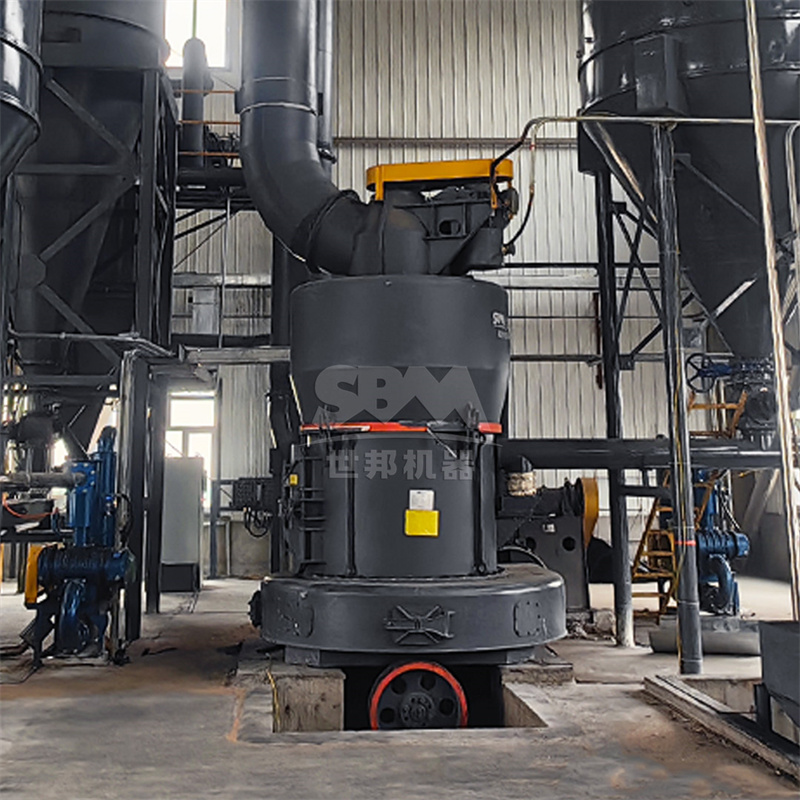
2. Primary Crushing and Pre-Grinding Solutions
Before barite ore can be milled, it typically requires size reduction to below 50mm. For medium-hard ores, our Hammer Mill series offers an ideal primary crushing solution. Equipped with high-manganese steel liners and an optimized crushing cavity, these units deliver a high reduction ratio (up to 40:1) with minimal investment. Models like the PC4015-132 handle up to 70 tph of feed material with a rotor speed designed to minimize over-grinding.
For pre-grinding applications in cement or large-scale barite plants, the LM-Y Vertical Pre-grinding Roller Mill is revolutionary. It integrates sand making and grinding into one unit, reducing power consumption by 30-50% compared to traditional ball mill circuits. The LM150Y model, with a table diameter of 1500mm and 280kW power, can produce 6-10 tph of pre-ground material, significantly boosting downstream mill throughput.
3. Core Milling Technologies: From Trapezium to Ultrafine
The heart of any barite processing line is the grinding mill. Based on the required fineness and capacity, several technologies are applicable. For standard industrial grades (30-325 mesh), the MTW Series European Trapezium Mill is our recommended workhorse. Its integral bevel gear drive achieves 98% transmission efficiency, while the anti-wear shovel design reduces maintenance costs by 30%. The MTW215G model offers a capacity of 15-45 t/h, making it ideal for large-scale drilling-grade barite production.
For downstream value-added products requiring 325-2500 mesh (5-45 μm), our SCM Series Ultrafine Mill stands out. In direct comparison tests, the SCM mill achieves double the capacity of conventional jet mills with 30% lower energy consumption. This is achieved through a three-layer grinding ring design and a vertical turbine classifier that ensures no coarse powder mixing.
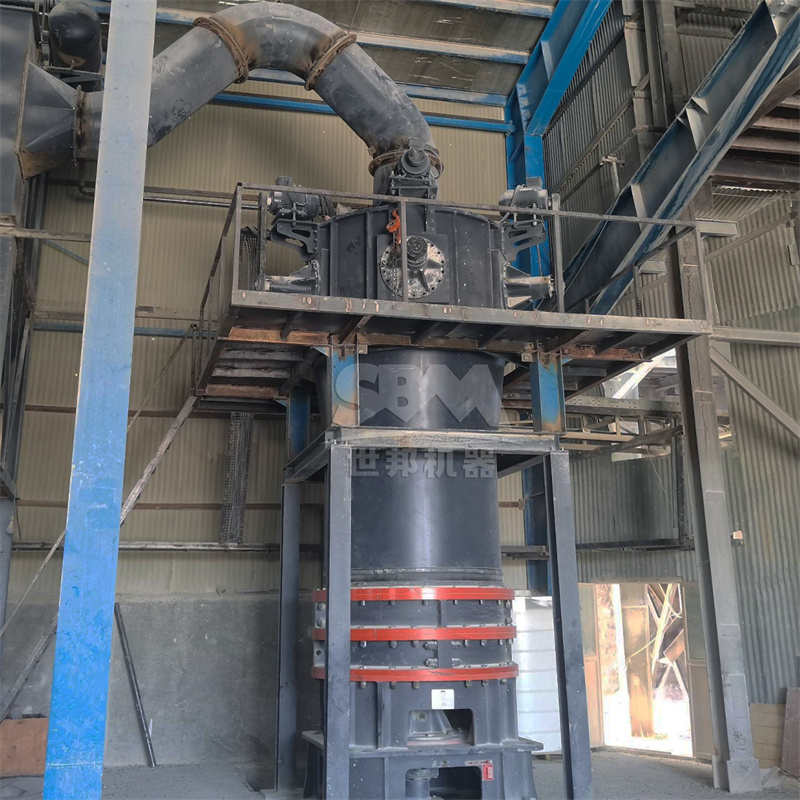
4. High-Precision Classification in Barite Circuits
Classification accuracy is paramount, especially for barite used in drilling mud where a specific gravity of 4.2 g/cm³ and particle size consistency are mandatory. Our grinding systems incorporate advanced dynamic classifiers that provide a precise cut. The MTW and LM series mills feature multi-stage adjustable classifiers (realized via PLC control) that can switch fineness settings in minutes without stopping the process.
In the SCM ultrafine system, the vertical turbine classifier operates at variable speeds to achieve d97 particle sizes from 5 to 45 micrometers. The system automatically feedbacks finished product granularity to the control unit, adjusting the classifier speed to maintain uniform quality. For ultra-high capacity classification, stand-alone units using similar turbine technology can be deployed to process 100% of the mill output, ensuring a clean separation without oversize particles.
When classifying barite for the paint industry, a two-stage classification loop is recommended. The primary classifier removes coarse particles, while the secondary stage (often a high-speed rotor) extracts the finest fraction below 10 μm. This configuration maximizes yield and adds premium pricing to the final powder.
5. Efficient Collection and Dust Filtration
After classification, the barite powder must be separated from the conveying air. Cyclone collectors are the first stage, capturing up to 90% of the product. However, for environmental compliance and material recovery, a pulse-jet baghouse filter is essential.
Our systems use internationally advanced pulse dust removal technology with a filtration efficiency exceeding 99.99%. The SCM and MTW mills are designed with an integrated negative-pressure system, which not only prevents dust leakage but also enhances conveying capacity. The filter bags are made of anti-static materials to handle fine barite powder safely. Collected dust is recycled back into the system, ensuring zero material loss and a clean working environment with noise levels below 85 dB(A) when the optional soundproof room is installed.
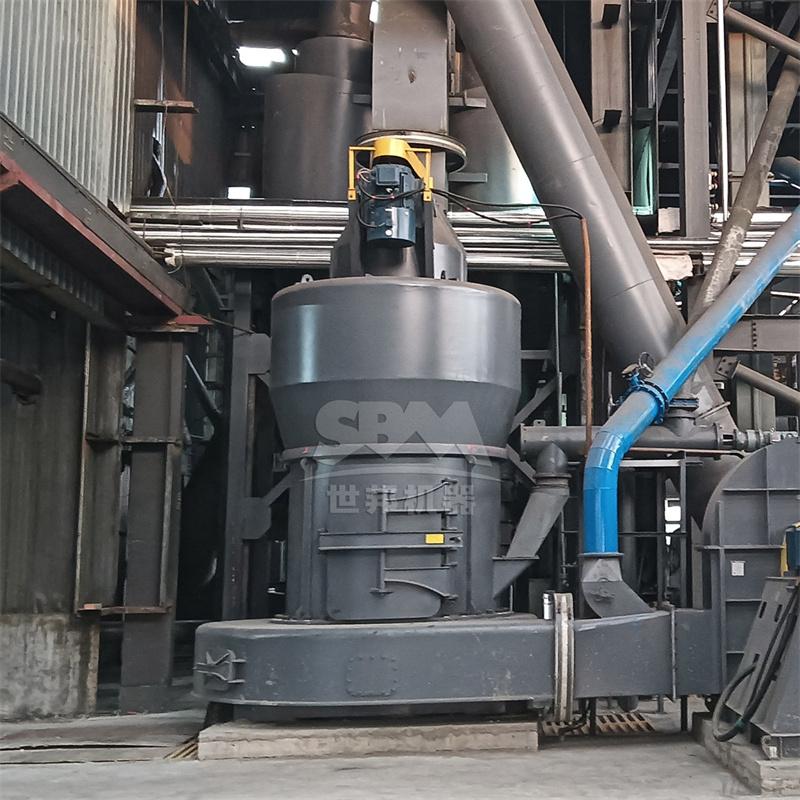
6. Bagging Systems for Finished Powder
Efficient bagging is the final critical step. Barite powder is notoriously abrasive and has high bulk density (up to 2.7 g/cm³ when packed). Standard packaging equipment often suffers rapid wear. We recommend a two-pronged approach:
- For small plants (less than 10 t/h): A single-spout impeller packer with air-assisted filling for valve bags. This handles 25kg or 50kg bags at a rate of 300-400 bags per hour.
- For large-scale operations (over 20 t/h): A rotary or linear auger-type bagging system with fully automatic bag placers and palletizers. These systems are PLC-controlled and include metal detection to ensure product purity.
Additionally, big-bag (jumbo bag) filling stations should be integrated into the line to serve bulk customers. A surge hopper with a fluidizing pad ensures consistent flow into the bagging spout, preventing bridging of the fine powder.
7. Featured Product: SCM Series Ultrafine Mill in Barite Processing
For producers aiming at the high-margin ultrafine barite market (e.g., for radiation shielding plastics or high-gloss paints), the SCM1680 Ultrafine Mill is our top recommendation. With a feed size of up to 20mm, it directly processes crushed ore into D97 5-45μm powder at a capacity of 5-25 t/h. The main power is 315kW, and the specific energy consumption per ton of finished powder is significantly lower than any alternative.
The key to its efficiency lies in the multi-layer grinding ring design and the shaftless screw grinding chamber, which ensures stable operation without vibration issues. The special material rollers and rings have a service life that is several times longer than standard alloy parts. Paired with our pulse dust collector and a high-precision turbine classifier, the SCM1680 forms a closed-loop system that delivers uniform particle size distribution, essential for consistent product viscosity in drilling fluids.
8. Featured Product: MTW Series European Trapezium Mill for Bulk Barite
Alternatively, if the primary goal is producing API-grade barite (D97 75μm) at the highest throughput and lowest operating cost, we recommend the MTW215G Trapezium Mill. This machine is engineered for continuous heavy-duty operation. Its unique curved air duct reduces airflow energy loss, and the volute structure improves selection efficiency by 20%.
The MTW215G features a 280kW main motor and can produce 15-45 t/h of 325-mesh barite. The internal circulation and external recycling system ensures that even moist feed (up to 6% moisture) is dried within the grinding chamber. This eliminates the need for a separate drying unit, significantly reducing capital expenditure. The bevel gear drive system simplifies installation, saving valuable floor space.
9. Plant Integration and Intelligent Control
Modern barite plants demand centralized control. Our equipment is compatible with DCS (Distributed Control System) or PLC-based platforms. The LM Series mills feature an expert-level auto-control system that supports remote and local switching. It monitors parameters such as bearing temperature, vibration, and classifier current in real-time.
For a turnkey plant, the sequence starts with a vibrating feeder to the hammer mill, then belt conveyor to the mill surge hopper. The grinding system automatically adjusts feed rate based on the mill motor current and the classifier differential pressure. This ensures the mill operates at maximum fullness without overloading. The entire line can be operated by just two technicians per shift, dramatically reducing labor costs. Installation is simplified by our modular design; the LM series, for instance, can be installed outdoors, reducing workshop construction costs by 40%.
10. Conclusion: Maximizing ROI with Advanced Equipment
Selecting the right barite processing equipment is a complex decision balancing fineness, capacity, energy cost, and maintenance overhead. The industry is shifting away from energy-hungry ball mills toward vertical roller mills (LM series) and high-efficiency trapezium mills (MTW series) for standard products, and ultrafine vertical mills (LUM or SCM) for premium products.
Our complete line of crushers, mills, classifiers, and dust collectors ensures that every step of the powder packaging process is optimized. Whether you need 10 t/h of 200-mesh or 25 t/h of 1250-mesh powder, our equipment offers lower energy consumption, reduced noise pollution, and a rapid payback period. For a detailed engineering study and equipment selection based on your specific barite ore characteristics, contact our application engineers to discuss your project requirements.