
Introduction
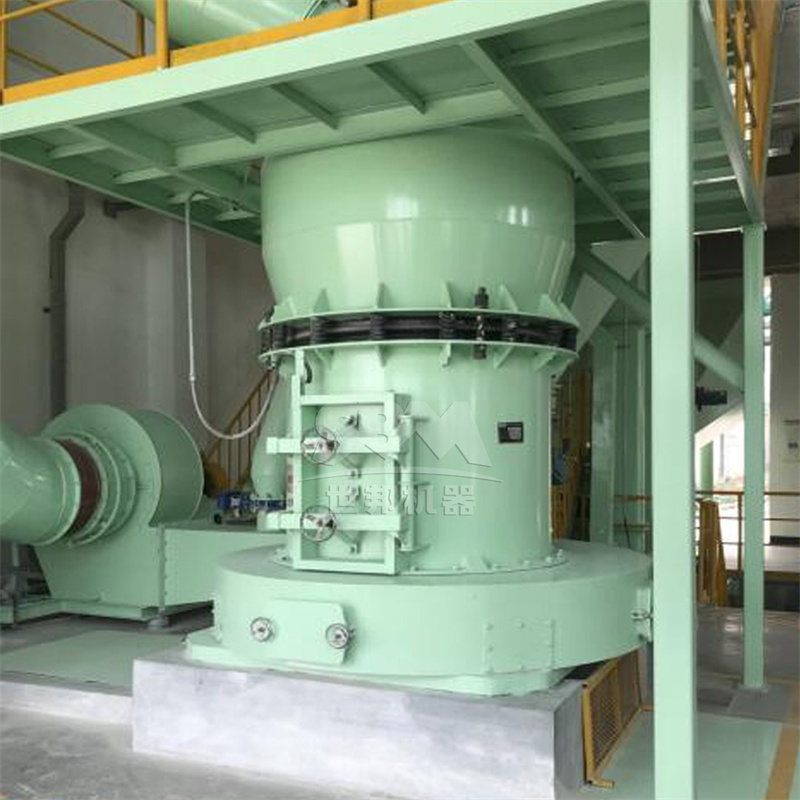
The global push for sustainable energy solutions has brought nuclear power back into the spotlight. However, the management of radioactive waste remains a critical challenge. One of the most effective and widely adopted methods for safe disposal is the use of radioactive cement, a specialized matrix designed to encapsulate low and intermediate-level radioactive waste. A key component in producing high-integrity radioactive cement is the use of barite (barium sulfate, BaSO₄). Due to its high density and ability to absorb gamma radiation, barite powder serves as an exceptional aggregate, significantly enhancing the shielding properties of the cement matrix.
However, not all barite powder is suitable for this demanding application. The production of barite powder for radioactive cement requires meticulous control over particle size, distribution, and purity. The choice of grinding equipment is therefore not merely a production decision; it is a critical safety parameter. This article provides a comprehensive guide to selecting the right barite powder production equipment, focusing on key technical considerations and the advanced technologies available to meet the stringent industry standards.
Key Requirements for Barite Powder in Radioactive Cement
Barite ore typically requires processing to achieve the specifications needed for radiation shielding concrete. The primary properties dictate the choice of grinding technology:
1. Particle Size and Distribution
The particle size of the barite powder directly impacts the density and homogeneity of the final cement product. Theoretically, a denser particle packing leads to fewer voids and better radiation attenuation. Standards for radioactive cement often require a specific Blaine fineness or a particle distribution that falls within a tight curve. Typically, a fineness ranging from 325 mesh (45 µm) to 2500 mesh (5 µm) is required to achieve optimal packing density and workability. Coarse particles can create weak points in the matrix, while overly fine powder may require excessive water for mixing, leading to increased porosity and reduced shielding efficiency.
2. Purity and Specific Gravity
The specific gravity of barite is a fundamental property for shielding. High-purity barite has a specific gravity of approximately 4.2 to 4.5 g/cm³. Any contamination from other minerals can dilute this density and compromise the cement’s ability to block radiation. Grinding equipment must operate in a way that minimizes wear and tear, preventing metallic contamination of the final powder.
3. Consistency and Repeatability
In the nuclear industry, consistency is paramount. Every batch of radioactive cement must meet strict quality assurance protocols. The barite powder production process must be highly repeatable, ensuring that each batch conforms to the exact same specifications. This requires precise control over the classification process and the ability to fine-tune the grinding parameters.
Critical Selection Criteria for Grinding Equipment
Choosing the appropriate mill is a complex decision. It involves balancing capacity, energy efficiency, and, most importantly, the ability to achieve and maintain the required powder characteristics. Several factors should be evaluated:
1. Control Over Fineness
The selected mill must be equipped with a high-efficiency, low-loss classifier. Traditional mills often struggle to produce a narrow particle size distribution, leading to a mix of excessively coarse and fine particles. Advanced classifier technology, such as a vertical turbine classifier, is essential. It provides a precise cut point, ensuring about 100% of the powder meets the required fineness specification without any oversized particles that could weaken the cement structure.
2. Protection Against Contamination
Wear parts are inevitable in any grinding equipment. However, for this application, the wear rate of the grinding components must be exceptionally low. The use of special materials for rollers and grinding rings is critical to minimize the introduction of iron or other metallic elements into the barite powder. Additionally, the design should ensure that any wear is uniform and does not compromise the structural integrity of the grinding chamber.
3. System Stability and Eco-Friendliness
Grinding operations can generate significant heat, noise, and dust. For a plant dedicated to producing materials for the nuclear sector, environmental and occupational safety are non-negotiable. The system must be fully integrated with pulse dust collection to ensure zero dust leakage, and it should be designed for quiet operation to protect the workforce. Furthermore, a stable grinding bed is required to prevent vibration and ensure consistent output, which is a hallmark of high-quality mill designs.
Technological Solutions in Barite Powder Production
Modern milling technology offers several solutions tailored to these strict requirements. The choice often comes down to the target fineness and the required throughput.
Option 1: SCM Series Ultrafine Mill
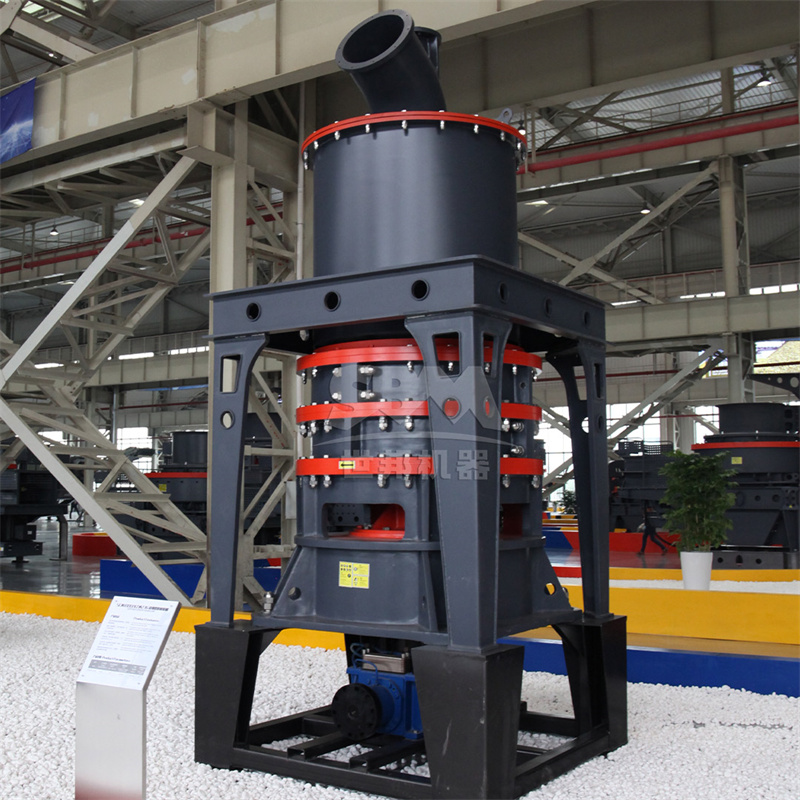
For projects demanding exceptionally fine powder with a narrow particle size distribution, the SCM Series Ultrafine Mill is an optimal choice. This machine is specifically designed to produce powder in the 45-5 µm range (equivalent to 325-2500 mesh). Its technical advantages make it ideal for high-value applications like radiation shielding.
The SCM Ultrafine Mill features a vertical turbine classifier that operates on the principle of centrifugal force, achieving a high-precision ‘cut’ of particles. This ensures that there is no mixing of coarse powder in the finished product, a critical factor for maintaining the homogeneity and density required in radioactive cement. The design also boasts high efficiency, with a capacity roughly double that of a jet mill while consuming 30% less energy. This efficiency is achieved through its innovative shaftless screw grinding chamber and multiple layers of grinding rings that increase the effective grinding area. To address wear and contamination concerns, the mill uses rollers and rings made from special materials, extending the service life by several times and safeguarding the purity of the barite. For instance, the SCM1250 model offers a capacity of 2.5-14 t/h with a main power of 185 kW, providing a robust production scale for large-scale waste encapsulation projects.
Option 2: MTW Series European Trapezium Mill
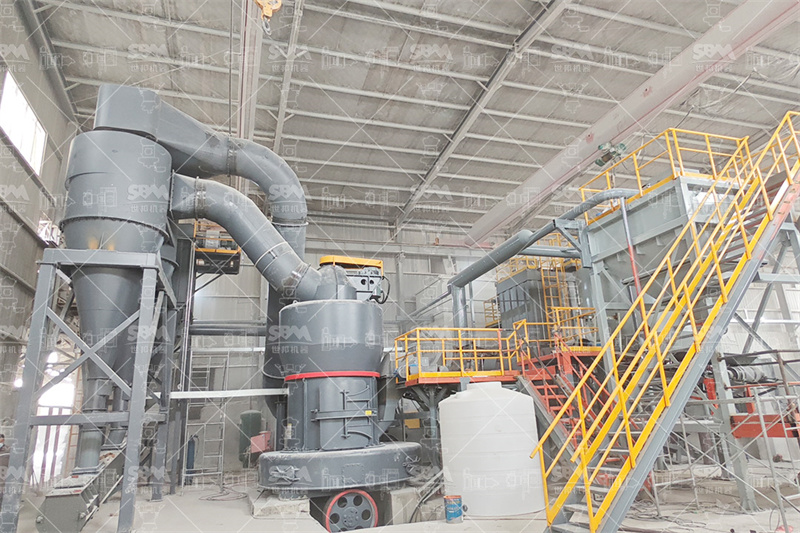
When the project requires a higher throughput with a slightly less stringent but still consistent fineness (typically 30-325 mesh), the MTW Series European Trapezium Mill stands out. This mill is a workhorse known for its reliability, low operating costs, and high capacity (up to 45 t/h). It excels in producing a consistent product within the specified fineness range.
The MTW mill incorporates an anti-wear shovel design and an optimized arc air duct. The integral bevel gear drive system ensures transmission efficiency of up to 98%, which reduces energy costs which is a significant factor in a continuous production environment. The robust volute structure with a non-resistance flow design improves air selection efficiency and reduces maintenance costs by 30%. This mill is engineered for stability. For example, the MTW175G model offers a capacity of 9.5-25 t/h, making it suitable for medium to large production lines. Its design ensures that the wear on the grinding rollers is distributed evenly, extending the operational life of the equipment and maintaining the consistency of the output.
Conclusion
The selection of barite powder production equipment for radioactive cement is a decision with far-reaching implications for safety and efficiency. It requires a deep understanding of the material’s end-use and the mechanics of the grinding process. By focusing on advanced classification control, minimal contamination, and high stability, operators can ensure that they produce a shielding aggregate of the highest quality.
We provide a range of solutions to meet these challenges head-on. For ultra-fine, high-precision requirements, the SCM Series Ultrafine Mill is unrivalled in its class. For heavy-duty, high-capacity operations, the MTW Series European Trapezium Mill offers the durability and efficiency necessary to meet the demanding standards of the nuclear industry. Investing in these advanced technologies is not just about grinding minerals; it is about building a safer future through superior materials.