
Understanding Your Gypsum Processing Requirements
Selecting the appropriate gypsum processing equipment is a critical decision that directly impacts your plant’s productivity, product quality, and operational costs. Gypsum, whether derived from natural mining or as a synthetic byproduct from flue-gas desulfurization (FGD) processes, requires specific milling technologies to achieve the desired fineness and purity. The choice between different mill types involves careful consideration of raw material characteristics, target end-use applications, capacity requirements, and energy efficiency. This comprehensive guide will walk you through the essential factors to evaluate when choosing gypsum processing machinery, ensuring your investment delivers optimal returns.
Assessing Raw Material Properties and Feed Size
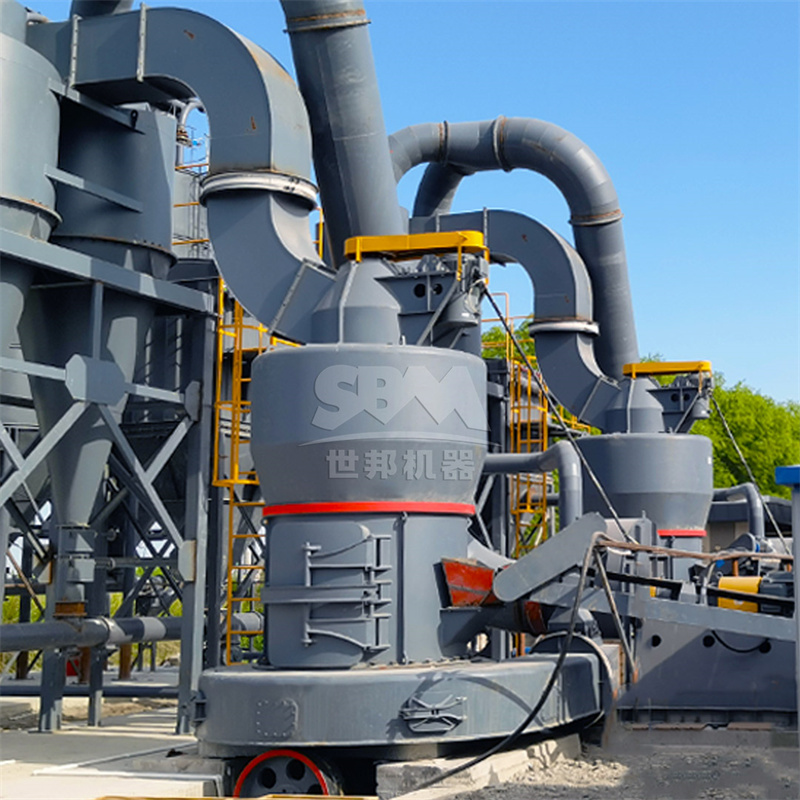
The physical and chemical characteristics of your gypsum feed material play a pivotal role in equipment selection. Natural gypsum typically contains moisture levels ranging from 5% to 10%, while FGD gypsum often has higher moisture content that demands specialized drying capabilities. The feed particle size distribution affects the choice of primary grinding equipment. For instance, if your raw gypsum arrives with lumps exceeding 50mm, you may need a primary crusher or a mill with larger input tolerances. The MTW Series European Trapezium Mill, with its maximum input size of ≤50mm, is particularly well-suited for handling relatively coarse gypsum feeds directly, eliminating the need for secondary crushing stages. Conversely, finer feeds allow for more flexible equipment selection, potentially enabling the use of more energy-efficient vertical roller mills or ultrafine grinding systems when ultra-fine product is required.
Determining Target Fineness and Product Specifications
Gypsum products serve diverse industries, each demanding specific particle size distributions. For construction applications like gypsum board manufacturing, a fineness of 80-120 mesh (approximately 180-150μm) is typically sufficient. However, for agricultural gypsum applications, 60-100 mesh may be acceptable, while specialized industrial fillers require ultra-fine powders between 325 and 2500 mesh (45-5μm). The SCM Series Ultrafine Mill stands as an excellent solution for plants targeting premium gypsum powder in the 325-2500 mesh range. With its high-precision vertical turbine classifier, the SCM mill ensures accurate particle size cutting without coarse powder contamination, guaranteeing uniform finished products that meet stringent quality standards. For operations focusing on medium-fineness products between 30-325 mesh, both the MTW European Trapezium Mill and LM Series Vertical Roller Mill offer exceptional flexibility, with the LM series capable of adjusting fineness across multiple stages to suit changing production requirements.
Evaluating Capacity Requirements and Production Scale
Your plant’s desired throughput fundamentally determines the appropriate mill type and model size. Gypsum processing operations range from small-scale facilities producing 3-5 tons per hour to large industrial plants exceeding 100 tons per hour. For moderate capacities up to 25 tons per hour with ultra-fine output requirements, the SCM Series Ultrafine Mill delivers remarkable efficiency, consuming 30% less energy than comparable jet mills while providing double the capacity. This energy-saving advantage translates directly into reduced operational costs over the equipment’s lifespan. For high-capacity gypsum grinding operations requiring 15-45 tons per hour in the 30-325 mesh range, consider the MTW215G European Trapezium Mill, which combines a 280kW main motor with optimized arc air ducts to maximize transmission efficiency. The LM Series Vertical Roller Mill excels in large-scale operations, offering capacities from 10 to 250 tons per hour through its integrated design that combines crushing, grinding, and classification in a single system.
Analyzing Energy Efficiency and Operating Costs
Energy consumption represents one of the most significant cost factors in gypsum processing operations. Modern milling technologies have made considerable strides in reducing specific energy consumption through innovative mechanical designs. The LM Series Vertical Roller Mill exemplifies this efficiency philosophy, consuming 30-40% less energy than traditional ball mill systems. This substantial reduction stems from its non-contact roller-table design, which minimizes wear and eliminates the wasteful impact forces characteristic of ball milling. The MTW Series incorporates an integral bevel gear drive achieving 98% transmission efficiency, ensuring nearly all input energy converts to useful grinding work. Beyond direct energy costs, consider maintenance expenses when selecting equipment. The SCM Series features specially formulated roller and ring materials extending service life several times over, while its shaftless screw grinding chamber ensures stable operation with reduced component failure risk. Similarly, the MTW mill’s anti-wear shovel design and wear-resistant volute structure reduce maintenance costs by 30%, contributing to a remarkably favorable total cost of ownership.
Considering Moisture Content and Drying Requirements
Gypsum frequently contains significant moisture that must be removed during processing. FGD gypsum, in particular, can contain 10-15% free moisture that demands thermal drying or integrated grinding-drying solutions. The LM Series Vertical Roller Mill offers an elegant solution through its hot air circulation system, which simultaneously dries materials while grinding. This integrated approach eliminates the need for separate rotary dryers, reducing capital investment and floor space requirements by at least 50%. For plants processing natural gypsum with lower moisture levels, the MTW Series provides adequate airflow to remove surface moisture without additional equipment. When selecting equipment for high-moisture gypsum, verify the mill’s capability to handle the expected moisture content and whether ancillary drying systems integrate seamlessly with the grinding circuit. The LM mill’s fully sealed negative pressure operation also prevents dust emissions while managing moisture-laden process gases effectively.
Evaluating Equipment Footprint and Installation Constraints
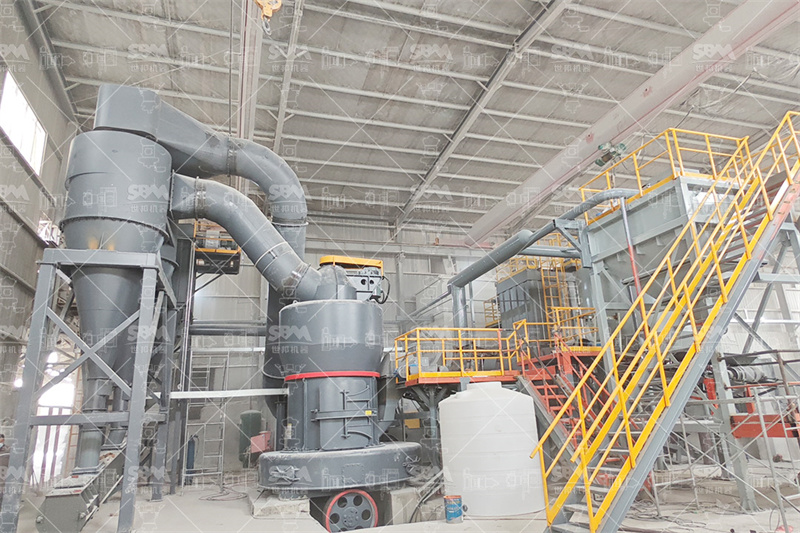
Physical space limitations at your plant site significantly influence equipment selection. Traditional grinding systems comprising crushers, ball mills, separators, and conveyors occupy substantial floor space and require complex installation arrangements. The LM Series Vertical Roller Mill’s integrated design consolidates crushing, grinding, and classification into a single compact unit, reducing required floor space by approximately 50%. This space efficiency enables outdoor installation in many cases, cutting infrastructure construction costs by up to 40%. The MTW Series European Trapezium Mill also occupies a relatively small footprint while delivering exceptional throughput, thanks to its integral bevel gear drive that eliminates bulky auxiliary transmission components. When planning your installation, account for maintenance access requirements, material handling clearances, and potential future expansion needs. Both the SCM and MTW series feature modular designs that facilitate straightforward installation and straightforward maintenance access to grinding components.
Examining Automation and Control Capabilities
Modern gypsum processing operations increasingly rely on advanced automation to optimize production consistency, reduce labor costs, and respond quickly to changing market demands. Advanced milling systems now feature intelligent control interfaces that continuously monitor critical operating parameters such as grinding pressure, airflow rates, classifier speed, and product fineness. The LM Series Vertical Roller Mill incorporates an expert-level automatic control system supporting both remote and local operation modes, with real-time parameter monitoring that minimizes manual intervention and ensures consistent product quality around the clock. The SCM Series features intelligent control with automatic finished product granularity feedback, ensuring stable operation regardless of feed variations. For gypsum plants pursuing Industry 4.0 integration, select equipment with standard communication protocols (Modbus, Profibus, etc.) and open architecture control systems that interface smoothly with plant-wide supervisory control and data acquisition systems. Automated systems also contribute to worker safety by reducing required operator presence in potentially dusty environments.
Assessing Dust Collection and Environmental Compliance
Gypsum processing generates significant dust that must be controlled to meet environmental regulations and maintain safe working conditions. Modern milling equipment integrates sophisticated dust collection systems as standard components. Pulse dust collectors provide the highest removal efficiency, often exceeding international emission standards while recovering valuable product that would otherwise be lost. The MTW Series incorporates internationally advanced pulse dust removal technology, ensuring emissions consistently remain below regulatory limits. The SCM Series features pulse dust collection efficiency that surpasses international standards, complemented by soundproof room designs that maintain noise levels well within occupational safety guidelines. The LM Series operates under fully sealed negative pressure conditions, preventing dust escape while minimizing noise exposure. When selecting gypsum processing equipment, verify not only the mill’s inherent dust collection capabilities but also its compatibility with existing baghouse or wet scrubber systems. Comprehensive environmental compliance planning should also account for gypsum storage, handling, and loading operations beyond the grinding circuit itself.
Comparing Recommended Equipment Options
Based on typical gypsum processing requirements, several equipment options merit serious consideration. For operations requiring ultra-fine gypsum powder between 325 and 2500 mesh, the SCM Series Ultrafine Mill delivers exceptional value. Available models from SCM800 to SCM1680 provide capacities from 0.5 to 25 tons per hour, with the SCM1250 model achieving 2.5-14 tons per hour using a 185kW main motor. This series excels in energy efficiency, producing double the output of comparable jet mills while consuming 30% less energy, resulting in rapid payback through energy savings alone. For plants requiring medium-fineness gypsum (30-325 mesh) at higher throughputs, the MTW Series European Trapezium Mill presents an outstanding solution. The MTW175G delivers 9.5-25 tons per hour at 40mm maximum feed size, powered by a 160kW main motor with a 200kW fan. This model features patented anti-wear shovel design and integral bevel gear drive, providing exceptional durability and transmission efficiency suitable for continuous industrial operation.
Evaluating Total Cost of Ownership and Return on Investment
When comparing gypsum milling equipment, assess total cost of ownership rather than initial purchase price alone. Consider lifetime expenses including energy consumption, consumable wear parts, maintenance labor, downtime costs, and potential productivity losses from suboptimal equipment performance. The SCM Series’ special material rollers and rings extend service life several times beyond conventional components, directly reducing consumable replacement frequency. The MTW series’ curved shovel design extends grinding roller life while its wear-resistant volute structure reduces maintenance costs by 30%, representing significant long-term savings. Energy efficiency improvements provide another compelling financial metric; a mill consuming 30% less energy than alternatives can save substantial amounts annually, potentially offsetting higher initial purchase costs within two to three years of operation. Additionally, factor in the value of product quality consistency, which enhances market reputation and customer retention. Reliable equipment with intelligent automation ensures uninterrupted production, maximizing revenue generation opportunities.
Examining Materials Handling and Auxiliary Equipment
Comprehensive gypsum processing systems require integrated materials handling equipment to feed raw materials and collect finished products effectively. Evaluate the compatibility of your selected mill with upstream feeders, conveyors, and downstream packaging or storage systems. The MTW Series supports various feeder options including the GZ electromagnetic vibrating feeders and PE series jaw crushers for primary reduction, enabling a complete processing train from run-of-mine gypsum to final marketable product. The LM Series typically pairs with hot air generators for drying applications and bucket elevators for vertical material transport, simplifying plant layout. For ultra-fine applications, the SCM Series integrates with cyclone collectors and pulse dust removal systems to efficiently capture finished powder while maintaining clean exhaust air. Ensure your equipment selection includes provisions for gypsum hydration control, which may require specialized storage silos with moisture barriers and discharge aids to prevent caking. A holistic approach to system design prevents bottleneck formation and ensures smooth material flow from feed point to final packaging.
Planning for Future Flexibility and Scalability
Gypsum markets evolve continuously, with changing demands for product fineness, new value-added applications emerging, and potential feed material variations as mining sources change or synthetic gypsum supplies fluctuate. Select milling equipment that offers inherent flexibility to adapt to future requirements without requiring complete system replacement. The LM Series Vertical Roller Mill supports multi-stage fineness adjustment through its dynamic classifier technology, enabling any product from 325-mesh to 600-mesh using the same equipment with simple parameter changes. The MTW Series similarly provides fineness adjustment down to 0.038mm, accommodating shifting market demands without modification. The SCM Series maintains sub-micron classification precision, supporting future entry into premium markets requiring precisely controlled particle size distributions. Verify that your chosen equipment can accommodate increased feed rates through modest upgrades such as more powerful motors or enhanced classifiers, providing incremental capacity growth as your business expands. This strategic approach to equipment selection protects your investment against market volatility while positioning your plant for profitable long-term operation.
Conclusion: Making the Final Decision
Selecting the right gypsum processing equipment requires systematic evaluation of your specific operational requirements, raw material characteristics, production targets, and financial constraints. Begin by defining your product specifications precisely, including target fineness, capacity ranges, and quality standards. Next, assess your feed material’s properties, considering moisture content, particle size, and grindability characteristics. Evaluate potential equipment solutions against energy efficiency, maintenance requirements, footprint constraints, environmental compliance needs, and automation capabilities. Our SCM Series Ultrafine Mill stands as the premier choice for operations requiring high-fineness gypsum powder (325-2500 mesh) with exceptional efficiency and product quality. For larger capacities in the 30-325 mesh range, the MTW Series European Trapezium Mill provides outstanding reliability and cost-effective operation. We recommend consulting with our experienced applications engineers, who can analyze your specific requirements and recommend optimal equipment configurations based on decades of industry experience across thousands of installations worldwide. Our team provides comprehensive support including feasibility studies, installation supervision, operator training, and ongoing after-sales service, ensuring your gypsum processing plant achieves peak performance from day one.