
Introduction: The Bauxite Grinding Challenge
Bauxite, the primary ore for aluminum production, is also a critical raw material in the refractory, cement, and abrasive industries. For many downstream applications, particularly in the production of high-grade refractories and ceramics, bauxite must be ground into a fine, uniform powder. A common specification in this sector is 80-mesh (approximately 180 microns). Achieving this fineness efficiently and at scale requires specialized machinery. Choosing the wrong equipment can lead to high energy consumption, excessive downtime, inconsistent product quality, and ultimately, lower profitability. This comprehensive guide will walk you through the crucial factors in selecting the right 80-mesh bauxite powder production equipment.
The selection process is not merely about finding a machine that can crush ore. It involves a holistic assessment of your raw material characteristics, target throughput, energy costs, and operational expertise. Bauxite is a moderately hard material characterized by high alumina content and varying levels of silica, iron oxide, and other impurities. The grinding equipment must be robust enough to handle these abrasive components while maintaining a stable output. In this context, we will analyze the key decision-making criteria and highlight industry-leading solutions superior to traditional alternatives.
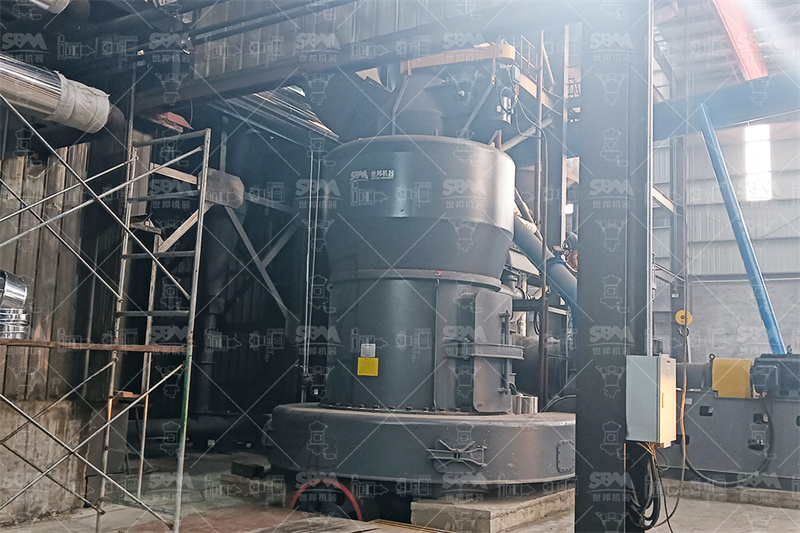
Critical Selection Criteria for 80-Mesh Bauxite Grinding
Before evaluating specific machines, it is essential to define your project’s technical requirements. Ignoring these parameters can result in a complete mismatch between the machine and the task. The key factors to consider in your selection process are detailed below.
1. Feed Size and Hardness (Work Index)
The size of your mined bauxite lumps is the first filter for your equipment choice. If you are feeding primary crusher discharge, which can be up to 50mm, a mill capable of accepting large feed directly is required. The Mohs hardness of bauxite is typically between 1 and 3, but the Bond Work Index (the resistance to grinding) can vary. A robust mill with a high crushing ratio is necessary to handle hard, dense bauxite variants without excessive wear and tear on the rollers and grinding rings.
2. Required Capacity and Throughput
What is your target production rate in tons per hour (t/h)? For small-scale operations, a capacity of 3-10 t/h may suffice. However, for industrial-scale production, you may require 20 t/h, 50 t/h, or even higher. The mill’s capacity must be matched with your downstream industrial consumers’ demand. Oversizing equipment leads to wasted capital, while undersizing creates a production bottleneck. Always select equipment that offers a buffer capacity margin for peak demand.
3. Grinding Efficiency and Energy Consumption
Grinding is energy-intensive, often accounting for the largest operational expense. Traditional ball mills are notoriously inefficient, as a significant portion of energy is lost as heat. However, modern vertical roller mills and trapezium mills utilize a ‘bed of material’ grinding principle. This principle confines the grinding action to a thin layer, reducing friction and energy usage dramatically. High-efficiency mills can offer 30-40% lower energy consumption compared to ball mills, which directly translates to lower cost per ton of finished product.
4. Product Fineness and Classification Precision
While you aim for 80-mesh (180µm), you must also define the acceptable particle size distribution. Is a distribution between 100-mesh and 60-mesh acceptable? Or do you need a strict 80-mesh cut with no coarse particles? The integrated air classifier plays a vital role here. A high-precision vertical turbine classifier ensures that oversized particles are returned to the grinding zone while only qualified fine powder passes through. This prevents mixing of coarse powder and ensures a uniform specification, which is vital for high-quality refractory bricks and castables.
5. Wear and Maintenance Costs
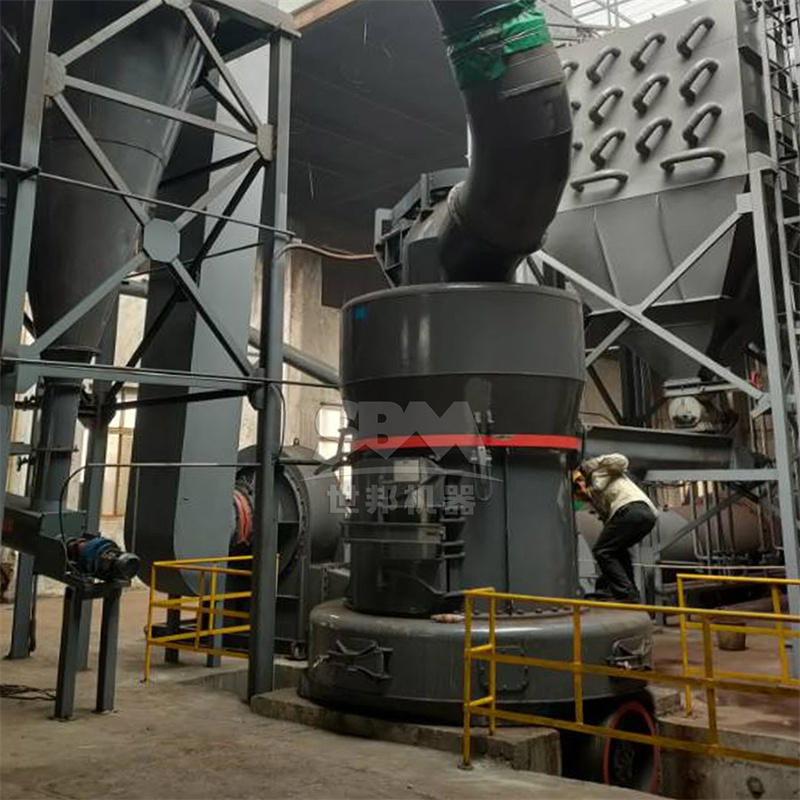
Bauxite is abrasive due to its high alumina content. The wear parts of the mill—such as grinding rollers, rings, and shovels—are subjected to severe stress. Investing in equipment with advanced wear-resistant materials (like high-chrome alloys or special composite materials) can extend the service life of these parts by several times. Additionally, consider the ease of maintenance. A mill with a quick-change roller assembly or a swing-out arm system can significantly reduce downtime for maintenance, directly impacting the overall profitability of your plant.
Comparing Mill Technologies for 80-Mesh Production
Several grinding technologies exist, each with specific trade-offs. Below, we compare them to highlight which approach offers the ‘high-yield grinding’ benefits you seek.
Ball Mills
Ball mills are a legacy technology. While they are well-understood and reliable, their drawbacks are substantial for projects where efficiency is paramount. They are bulky, noisy, and require the constant tumbling of high-chrome steel balls. For 80-mesh bauxite, a ball mill would consume enormous energy and generate excessive heat, potentially causing moisture issues. The plant footprint is large, and the foundation costs are high.
High-Pressure Grinding Rolls (HPGR) or Pre-Grinders
These are excellent for primary size reduction but rarely achieve the final 80-mesh fineness in a single pass. They usually serve as pre-grinding equipment before a pulverizer, adding complexity and capital cost to the system. They introduce micro-cracks in the material but require a secondary mill to reach the required sieve specification.
Vertical Roller Mills (VRM) and Trapezium Mills
This category represents the modern standard for non-metallic mineral processing. These systems combine grinding and classification in one machine, simplifying the process flow. They offer the ‘bed of material’ grinding benefit, lower energy consumption, and superior drying capacity if the bauxite contains residual moisture.
Recommended Solutions: Maximizing Yield and Efficiency
Based on extensive field testing and engineering analysis, we recommend our **SCM Series Ultrafine Mill** and **MTW Series European Trapezium Mill** for high-yield 80-mesh bauxite powder production. These machines are designed to address the specific pain points of the refractory industry: energy efficiency, wear resistance, and precise classification.
Why Choose the MTW Series for High-Capacity 80-Mesh Grinding?
For most bauxite grinding operations targeting 80-mesh, the MTW Series is an ideal candidate. It is engineered for medium-to-large-scale production with remarkable robustness.
Technical Superiority: The MTW mill features an innovative anti-wear shovel design and a curved grinding roller. This specific curvature increases the contact area between the roller and the ring, leading to more effective grinding and a longer service life—a crucial factor given bauxite’s abrasiveness. The integral bevel gear drive boasts a transmission efficiency of up to 98%, significantly reducing energy loss compared to traditional belt or gearbox-driven mills.
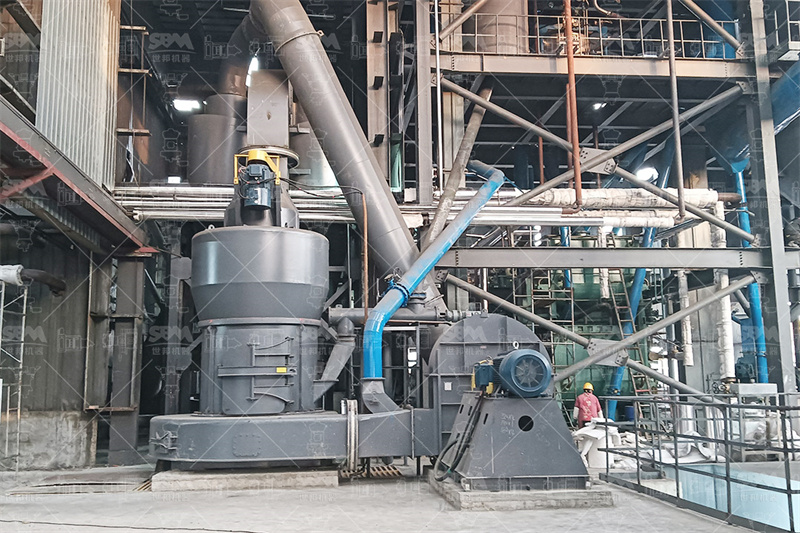
Capacity and Precision: With output fineness adjusting from 30 to 325 mesh (with standard operation in the 80-150 mesh range), the MTW is perfect for your requirement. Models like the MTW138Z (6-17 t/h) or the MTW175G (9.5-25 t/h) are perfect for medium-to-large operations. The optimized arc air duct reduces airflow energy loss, and the dynamic classifier ensures a tightly controlled particle size distribution—no coarse powder mixing, guaranteeing consistency in your refractory products.
When to Opt for the SCM Series for Finer Control?
If your downstream process requires a significant fraction of the material to be finer that 80-mesh (for example, a blend containing 200-mesh powder), then the SCM Series Ultrafine Mill is the perfect choice. Although its primary name is ‘Ultrafine,’ the SCM is highly efficient in the 80-400 mesh range, offering a capacity of up to 25 tons per hour for the larger (SCM1680) model.
Advanced Grinding Mechanics: The SCM series works on a multi-layer grinding ring rotation principle. The materials are dispersed into the grinding path by centrifugal force and crushed layer by layer. This special method produces low bulk density products, which is often a required characteristic for refractory insulation materials. More importantly, its vertical turbine classifier achieves precise particle size cutting, preventing any coarse bauxite particles from passing through, thus maintaining strict 80-mesh compliance.
Cost-Efficiency: The SCM Series uses special wear-resistant materials for its rollers and rings, extending service life several times compared to standard mills. The shaftless screw grinding chamber ensures stable operation, and the energy consumption is up to 30% lower than that of jet mills. For a complete system, we often pair the SCM with a pre-crusher to handle the feed size, but it is the core machine that guarantees your profitability. It is the definitive solution for high-yield grinding with demanding fineness requirements.
Alternative: The MRN Pendulum Mill
For those operating at the lower end of the capacity spectrum or dealing with extremely sticky material, our MRN Pendulum Mill offers a simpler, lower-maintenance alternative. With models ranging from 2.7 to 83 t/h, it features a maintenance-free thin-oil lubrication system, which is a first-in-class design that reduces downtime. However, for the specific high-efficiency demands of 80-mesh bauxite, the MTW and SCM remain the top recommendations due to their superior classification and energy-saving features.
Conclusion: Assessing Lifecycle Costs
When evaluating equipment options, look beyond the initial purchase price. The total cost of ownership includes energy bills (capex vs. opex), replacement parts, and downtime penalties. The MTW and SCM series mills reduce downtime thanks to quick-change wear parts and modular assemblies.
Furthermore, consider the environmental compliance of the mill. Our systems are fully sealed and can be paired with advanced pulse dust collectors, ensuring emissions exceed international standards. This not only protects the environment but also helps in recovering valuable bauxite dust that would otherwise be lost.
Recommendation Summary
Selecting the right equipment is a strategic decision. For high-yield bauxite grinding at 80-200 mesh with strict quality control, we strongly recommend the MTW Series European Trapezium Mill for its robust design and high capacity, or the SCM Series Ultrafine Mill for applications requiring exceptionally precise particle size distribution and multi-layer grinding benefits. Both systems offer substantial energy savings, reduced maintenance, and high-precision classification, ensuring your bauxite powder production is both cost-effective and reliable. We invite you to consult with our engineers to conduct a material test and determine the exact model that will unlock the highest yield for your specific raw materials.