
1. Introduction to Basalt Processing
Basalt is one of the most abundant volcanic rocks on Earth, characterized by its high compressive strength, excellent durability, and resistance to extreme weather conditions. These properties make basalt an ideal raw material for construction aggregates, road base materials, high-grade asphalt mixtures, and even fiber production for industrial applications. However, the very same properties that make basalt valuable also present significant challenges during processing. Its high hardness (typically 5-7 on the Mohs scale) and high silicon dioxide content cause severe wear on grinding equipment. To efficiently process basalt into fine powders (ranging from aggregates of a few millimeters to ultra-fine powders of 45 microns or less), selecting the right equipment is critical. This article provides a comprehensive overview of the main basalt processing equipment types, their working principles, and a practical guide to selecting the most suitable machine for your specific production goals.
2. Main Types of Basalt Processing Equipment
Basalt processing usually involves three main stages: primary crushing, secondary crushing, and grinding (pulverizing). Given the abrasive nature of basalt, equipment must be robust and efficient. The core machinery types include jaw crushers and cone crushers for coarse and intermediate crushing, and various forms of mills for fine grinding. In this guide, we focus primarily on the grinding phase, which produces the powdered basalt used in high-value applications.
2.1 Ball Mills
Ball mills are the workhorses of the mineral processing industry. They consist of a rotating cylindrical shell partially filled with grinding media, usually steel balls. As the shell rotates, the balls are lifted and then cascade down, crushing the basalt through impact and attrition. Ball mills are highly versatile and can handle a wide range of capacities (from 0.65 to 450 t/h in our GMQ series). They are suitable for both dry and wet grinding, making them a robust option for large-scale operations that require a fine product (0.074 to 0.8mm). However, their energy consumption is relatively high, and the wear on balls and liners is significant due to the crushing action on hard basalt.
2.2 Vertical Roller Mills (VRM)
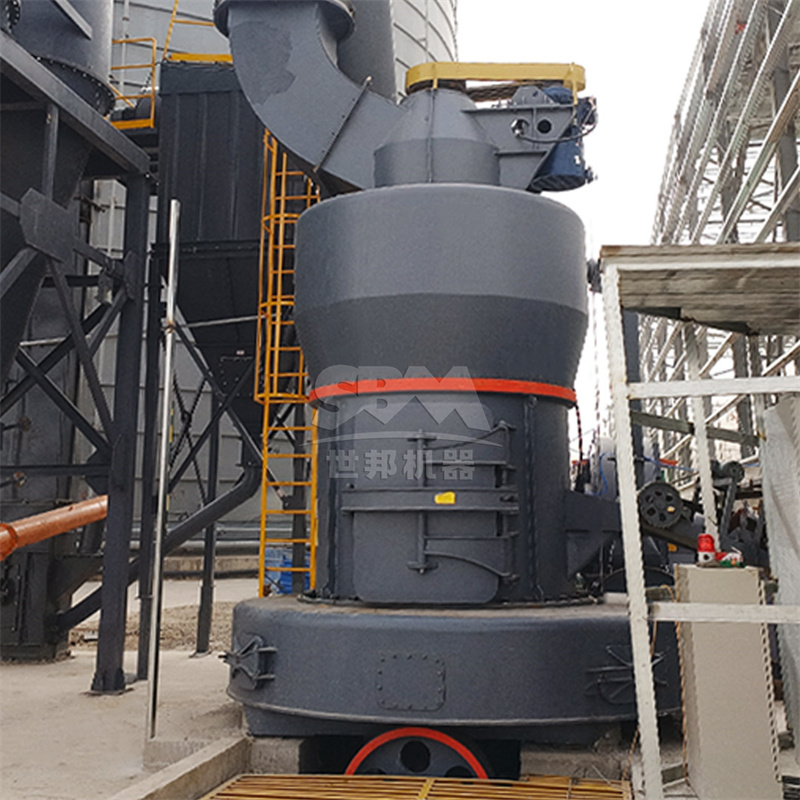
Vertical roller mills (VRMs) have become the standard in modern cement and mineral plants due to their high efficiency and low energy consumption. In a VRM, the material is fed onto a rotating grinding table. Grinding rollers, hydraulically pressed onto the material bed, crush and grind the basalt by compression. The ground material is then carried by an upward airflow to a dynamic classifier. VRMs integrate drying, grinding, and classification in a single unit, which minimizes floor space and auxiliary equipment. Our LM Series Vertical Roller Mill is a prime example of this technology, offering a 30-40% lower energy consumption compared to ball mill systems. They are widely used for producing fine powder with a fineness from 170 to 45 microns (or even finer) and can be configured for cement, slag, coal, and mineral applications.
2.3 European Trapezium Mills and Medium-speed Mills
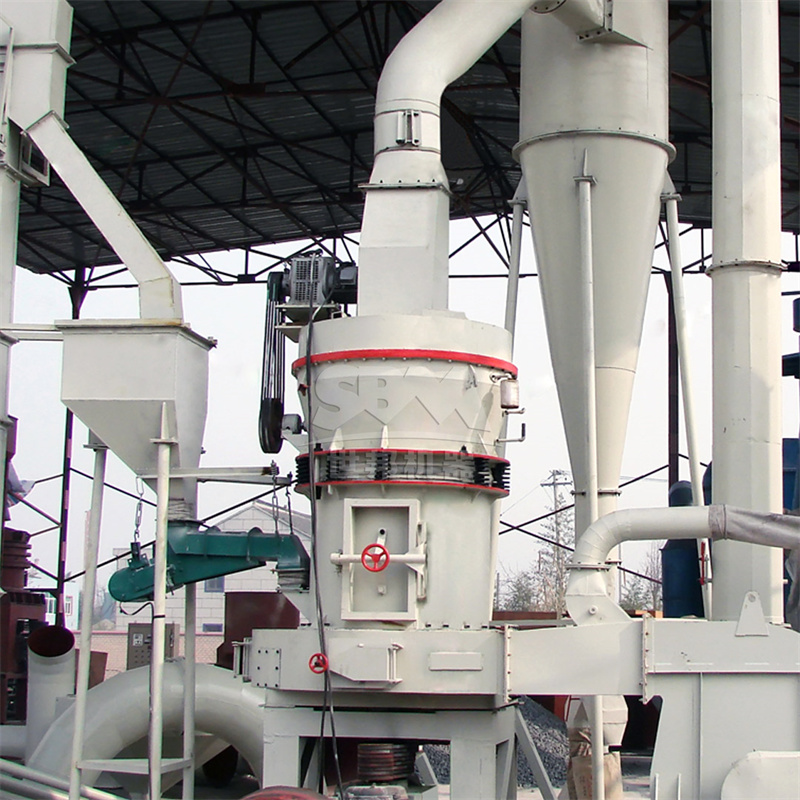
These mills are categorized as medium-speed ring-and-roller mills, operating at moderate speeds to crush material between grinding rollers and a fixed grinding ring. The European Trapezium Mill (such as our MTW Series) utilizes an angled, trapezoid-shaped grinding ring and roller, which ensures a larger contact area and higher grinding efficiency. The Medium-speed Trapezium Mill (MTM) operates on a similar principle but is typically used for smaller capacities. These mills are excellent for producing 30-325 mesh powders and are valued for their low maintenance costs and high wear resistance, especially when equipped with specialized anti-wear shovel designs and bevel gear drives.
2.4 Ultrafine Grinding Mills
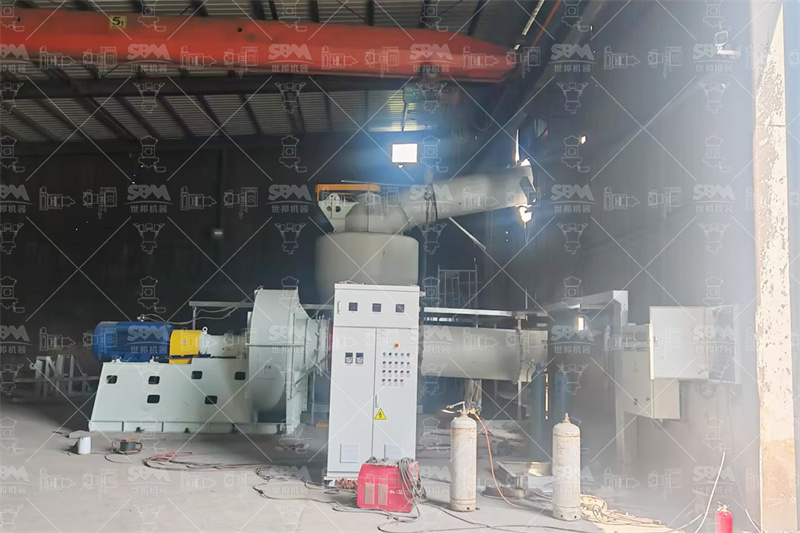
For applications requiring very fine powders (325-2500 mesh), such as high-end fillers, plastic modifiers, or basalt fiber production, ultrafine mills are essential. These include ultrafine vertical roller mills and pendulum mills designed to deliver extreme precision and fineness. For this specific requirement, we highly recommend our SCM Series Ultrafine Mill. With its exceptional efficiency—being twice as productive as jet mills while consuming 30% less energy—the SCM Mill is the ideal solution for demanding ultrafine production. It features a vertical turbine classifier that ensures precise particle size cutting without coarse powder mixing, guaranteeing the uniformity required for high-grade products. The durable design, utilizing special materials for rollers and rings, makes it particularly adept at handling abrasive materials like basalt.
3. Working Principles of Key Mills
Understanding the specific working principles helps in selecting the right machine for your job.
Ball Mill: The motor rotates the shell via a gearbox. Liners on the inner wall lift the steel balls. When the balls fall, they strike the basalt fragments, crushing them. Fine material exits through a discharge grate.
Vertical Roller Mill (LM Series): The main motor drives the grinding table to rotate. Basalt feed enters through the central chute and is spread evenly by centrifugal force. Grinding rollers rotate under hydraulic pressure, crushing the material bed. Hot air or conveying air sweeps the fine particles to the classifier. Here, the rotating classifier wheel ensures only qualified particles pass, while oversized ones fall back to the table for re-grinding.
Ultrafine Mill (SCM Series): As described in our company’s product literature, the main motor drives three layers of grinding rings to rotate at high speed. Material is dispersed into the grinding path by centrifugal force, crushed by high-pressure rollers, and ground layer by layer until it reaches the required fineness. The powder is then collected by a high-efficiency cyclone and a pulse dust collector, ensuring both high yield and environmental compliance.
For high-volume aggregate production (0-5mm), a Hammer Mill is a compact and cost-effective choice, but for powder production in the 45 to 1000 mesh range, the traction of the MTW and LM series is unmatched. For ultra-fine applications, the SCM is the industry standard.
4. Selection Guide: How to Choose the Right Equipment
Choosing the right equipment is crucial for economic viability. Here is a systematic guide to help you decide, based on your specific basalt processing needs:
Step 1: Determine the Required Output Fineness. This is the most critical factor. If you need coarse powder (30-40 mesh) for anti-crack fibers or simple fillers, an MTW Trapezium Mill or the MRN Pendulum Mill is ideal. If your target is 80-400 mesh for high-grade paint, rubber, or plastic fillers, the LM Vertical Roller Mill or the LM-Y Pre-grinding Mill offers the best energy efficiency. If you require ultra-fine powder (325-2500 mesh) for specialized high-end chemical or composite materials, look no further than the SCM Ultrafine Mill.
Step 2: Assess Capacity Requirements. Calculate the tonnage you need to produce per hour. For capacities from 0.5 to 25 t/h at ultrafine levels, the SCM800 to SCM1680 models are suitable. For medium capacities of 3 to 45 t/h, the MTW Series (MTW110 to MTW215G) or the LM Vertical Mills (LM130K to LM190K) provide versatile options. For massive operations exceeding 100 t/h, the large-scale LM series (LM220K and above) are designed to handle bulk tonnage.
Step 3: Consider Moisture Content. If your raw basalt has high moisture, a Vertical Roller Mill (VRM) has a distinct advantage because it utilizes hot air integrated with the mill for drying and conveying, eliminating the need for a separate drying unit. For other mill types, you may need to pre-dry the material to ensure efficient grinding and classification.
Step 4: Evaluate Energy Efficiency and Maintenance. Basalt is highly abrasive; wear costs are a major OPEX. Both the LM and SCM series have non-contact designs in critical areas or use special wear-resistant materials to extend lifespan. The LM series is known for a 30-40% reduction in energy consumption versus ball mills. The MTW series features integral bevel gear drives with up to 98% efficiency and combined shovel blades to cut maintenance costs. Always consider total cost of ownership, not just the initial purchase price.
Step 5: Modular and Automation Needs. Modern facilities require intelligent control systems. Our LM Series features an expert-level auto-control system with real-time monitoring, reducing manual intervention. This is essential for maintaining consistent quality in basalt powder production, which is often used in strict industrial formulas.
5. Smart Investment: Our Recommended Solutions
To simplify your decision-making process, we recommend focusing on two specific models from our extensive lineup.
Recommendation 1: SCM Series Ultrafine Mill – If your aim is to create high-value, ultra-fine basalt powder for premium applications (plastics, rubber, coatings, or basalt micro-fibers), the SCM mill is the machine of choice. It offers precision at 325-2500 mesh with impressive energy savings. Models like the SCM1000 or SCM1250 offer excellent throughput (up to 14 t/h) while guaranteeing that no coarse particles contaminate your final product—a critical factor for high-end manufacturing.
Recommendation 2: MTW Series European Trapezium Mill – For general mineral powder production (10-325 mesh) where reliability and low maintenance are key, the MTW series is an industry workhorse. The MTW175G, with a capacity up to 25 t/h and a 160kW main power, provides an excellent balance of performance and economy. Its patented anti-wear shovel design and optimized arc air duct make it surprisingly cost-effective to maintain despite basalt’s abrasiveness. This is a perfect solution for medium-scale producers of construction materials and powder fillers.
6. Conclusion
Processing basalt requires precision-engineered machinery capable of handling extreme hardness. Whether you aim for coarse aggregates, fine powders for calcium-carbonate replacement, or ultra-fine grades for high-tech applications, the primary decision lies in matching fineness and capacity. Ball mills serve simple needs but lack efficiency; VRMs and Trapezium mills offer superior energy management and capacity; and ultrafine mills open the door to niche markets.
Selecting the wrong mill can result in severe wear, high energy bills, and sub-standard product quality. We invite you to consult with our engineering team to analyze your ore characteristics and project goals. With options ranging from the high-efficiency LM to the precise SCM, we guarantee a solution designed for the unique challenges of basalt processing.