
Introduction: The Critical Role of Equipment in Calcite Processing
In the realm of industrial minerals, chemical-grade calcite powder holds a position of paramount importance. It serves as a vital raw material in the production of plastics, rubber, paints, adhesives, and advanced composite materials. However, not all calcite powders are created equal. The stringent requirements for chemical-grade products—including high purity (typically CaCO3 content above 98%), controlled particle size distribution, and extremely low levels of impurities—demand precision at every stage of production. The selection of appropriate grinding and classification equipment is therefore not merely a financial decision; it is a strategic choice that defines the quality ceiling of your final product and the economic efficiency of your entire operation. This guide will navigate you through the intricate process of selecting calcite powder production equipment, focusing on three critical pillars: purity, efficiency, and cost-effectiveness.
Understanding Chemical-Grade Calcite: Beyond Simple Grinding
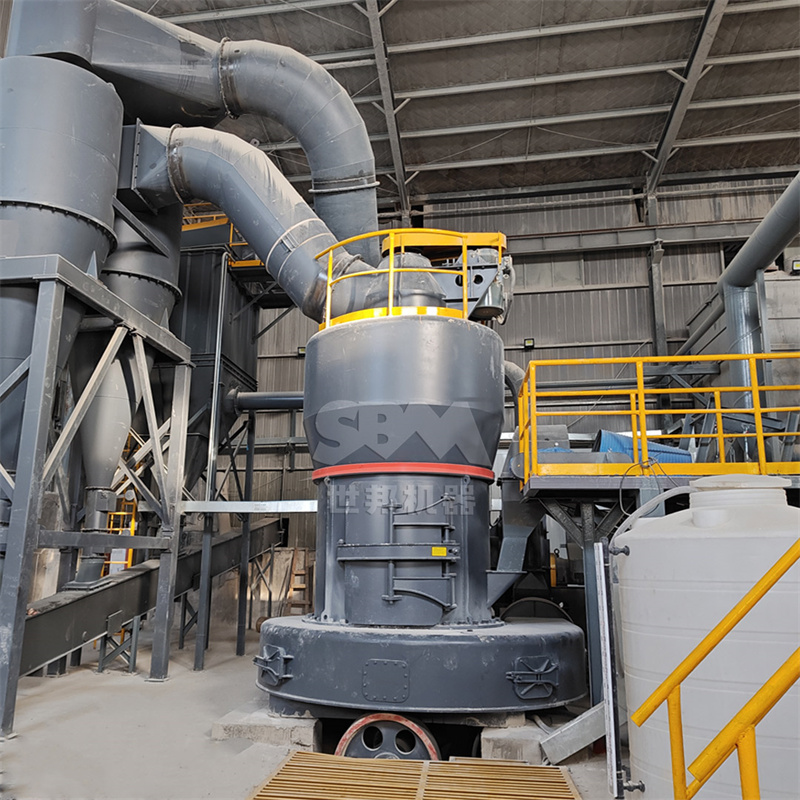
Chemical-grade calcite, often referred to as ground calcium carbonate (GCC), must meet rigorous specifications. Unlike construction-grade fillers, which tolerate a wide range of particle sizes, chemical applications require precise fineness, often ranging from 45 micrometers (325 mesh) down to 5 micrometers (2500 mesh) for high-end applications. The purity is equally critical; the grinding process must not introduce iron, silica, or other contaminants from the equipment itself. This introduces the first major challenge: selecting mill technologies that combine high comminution efficiency with wear-resistant design to minimize product contamination.
Key Factor 1: Purity and Contamination Control
Ensuring the final product’s purity begins with the selection of the grinding media and the machine’s internal contact components. Traditional ball mills, while versatile, often rely on high-chrome steel balls and liners, which can shed micro-particles into the powder, compromising its chemical-grade status. For superior purity, equipment incorporating special material rollers and grinding rings is essential. These components, often made from high-alloy wear-resistant materials, significantly extend service life while reducing the risk of metallic contamination. In the preliminary crushing stage, a Hammer Mill (0-3mm) provides an excellent solution for reducing run-of-mine calcite to a manageable feed size. Its design enables a high crushing ratio with minimal fines generation, ensuring you enter the main grinding stage with a clean, consistent feedstock. This compact and robust pre-grinder is ideal for preparing material for subsequent fine grinding stages.
Key Factor 2: Efficiency and Energy Consumption
Efficiency in mineral processing translates directly to operational profitability. Energy costs often represent a substantial portion of the total production cost for calcite powder. Therefore, the milling technology must be assessed on its specific energy consumption (kWh per ton of finished product). High-efficiency systems should be equipped with intelligent control systems that automatically adjust operational parameters based on real-time feedback on finished product granularity, ensuring optimal performance without manual intervention. Modern technologies such as vertical roller mills (VRM) and ultrafine vertical mills operate on the principle of a grinding bed, which uses 30-40% less energy than traditional ball mills. Furthermore, an integrated design that combines grinding and classification in a single unit reduces the system footprint and associated auxiliary equipment costs. For producing a broad range of products from 600 to 45 micrometers, the MTW Series European Trapezium Mill is a stellar example of high-efficiency engineering. Its integral bevel gear drive system achieves transmission efficiency up to 98%, directly reducing energy loss compared to traditional shaft-coupled systems, and saves valuable workshop space.
Key Factor 3: Classification Precision and Product Uniformity
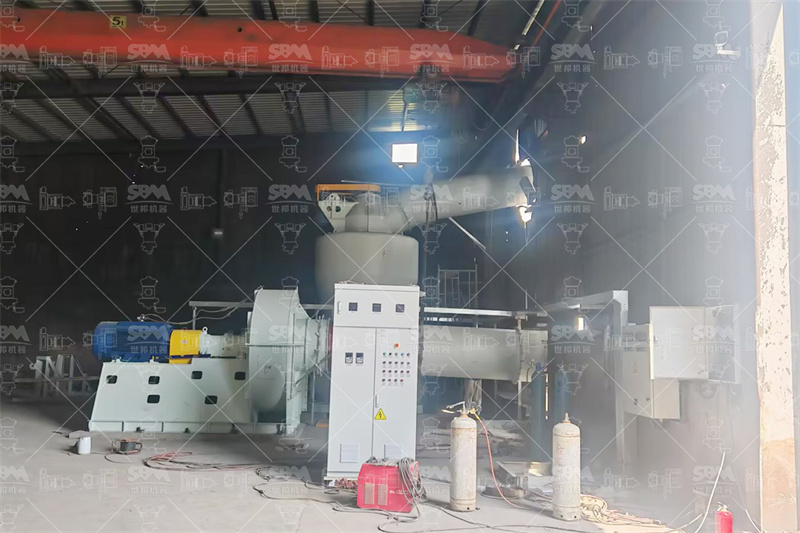
The ability to precisely cut the finished product at a target particle size is a non-negotiable requirement for chemical-grade materials. A poor classification system leads to a wide particle size distribution, which negatively impacts the final product’s properties, such as the gloss and impact resistance of plastics or the opacity of paints. The key to overcoming this lies in high-precision dynamic classifiers. A vertical turbine classifier, for instance, can achieve sharp particle size cuts with no coarse powder mixing, ensuring uniform finished products that meet exacting customer standards. This precision is particularly crucial when producing ultrafine powders in the 45-5μm range. The classifier’s speed and air flow must work in perfect harmony with the grinding force to create a continuous, efficient process.
Key Factor 4: Operational Costs and Maintenance
Long-term profitability hinges on the Total Cost of Ownership (TCO), which includes initial capital investment, installation costs, and ongoing maintenance. Equipment with complex drive systems or numerous wear parts can lead to costly downtime and frequent replacement. Look for designs that emphasize durability and ease of maintenance. For example, a shaftless screw grinding chamber contributes to stable operation and reduces component failure. Similarly, innovative roller assemblies with automatic pressure regulation systems can compensate for wear, extending the life of rollers and rings by up to 30%. For high-throughput industrial operations, the vertical roller mill offers a modular grinding roller assembly that allows for quick-change of wear parts, drastically reducing maintenance downtime. Moreover, the environmental compliance of the equipment is a factor that simultaneously affects cost and corporate responsibility. Systems equipped with efficient pulse dust collection technology and soundproofing not only ensure compliance with stringent environmental regulations but also improve working conditions and reduce product loss.
Technological Showcase: The SCM Series Ultrafine Mill
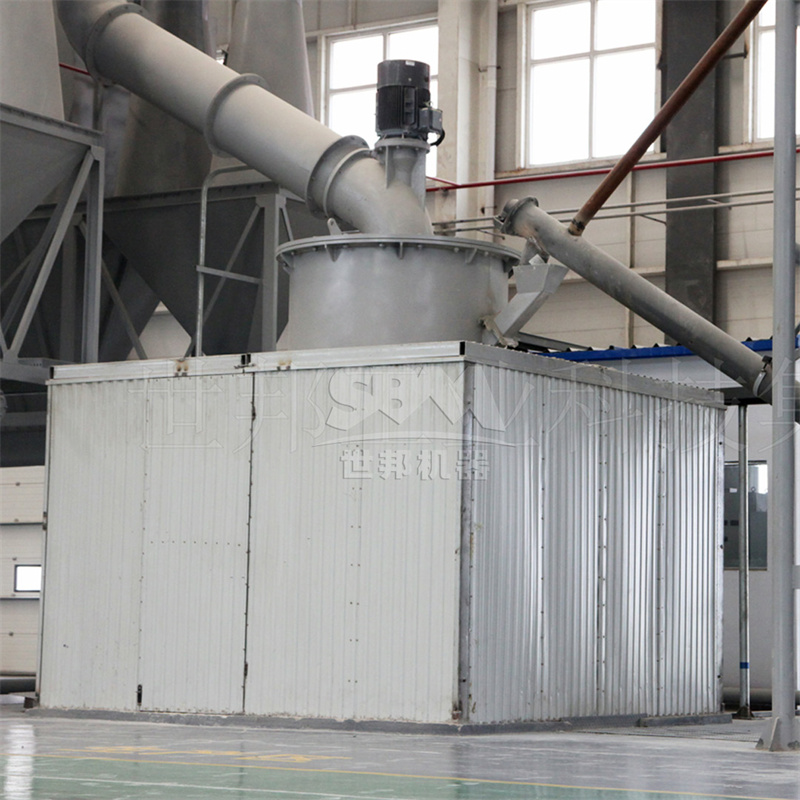
When the application demands the finest powders, particle sizes like 325 to 2500 mesh (45-5μm), you enter the territory of ultrafine grinding. In this arena, the SCM Series Ultrafine Mill stands out as a pinnacle of engineering. This machine is specifically designed to address the most challenging aspects of ultrafine production. Its output capacity is twice that of jet mills, yet it consumes 30% less energy, making it a benchmark for efficiency in the ultrafine segment. The SCM mill features a vertical turbine classifier renowned for its high-precision classification, ensuring unmatched particle size uniformity without any coarse powder contamination. The grinding mechanism, utilizing multiple layers of grinding rings and special material rollers, provides substantial centrifugal force to break down calcite efficiently, layer by layer. The machine is enclosed in a soundproof design with a high-efficiency pulse dust collector, making it an eco-friendly solution that adheres to international emissions standards.
Technological Showcase: The MTW Series European Trapezium Mill
For applications requiring a versatile middle range of fineness, consider the MTW Series European Trapezium Mill, delivering fineness from 600 to 45μm. This series is engineered for high capacity and reliability. Its patented features, such as anti-wear combined shovel blades and an optimized arc air duct, are designed to minimize maintenance and maximize energy efficiency. The integral bevel gear drive is a standout feature, offering high transmission efficiency and reducing both installation space and costs. Whether you choose the SCM for ultrafine applications or the MTW for general-purpose production, our team provides comprehensive support to ensure you select a system that aligns perfectly with your raw material characteristics and production targets.
Conclusion: A Strategic Investment in Your Product’s Future
Choosing the right chemical-grade calcite powder production equipment is a multifaceted decision that should never be based on price alone. The true value lies in an integrated system where purity is preserved through advanced materials, efficiency is championed by innovative drive and grinding mechanisms, and costs are controlled by durable designs and intelligent automation. By rigorously evaluating equipment on these key factors—purity, efficiency, and cost—you position your operation to not only meet the stringent demands of the chemical market but to do so with a profitable and sustainable approach. We invite you to consult with our engineers to conduct material testing and feasibility studies, ensuring your investment leads to a future of high-quality output and maximized returns.