
Introduction to Bentonite in White Cement Manufacturing
Bentonite, a clay mineral primarily composed of montmorillonite, plays a critical role in the production of white cement. Its unique properties—such as high water absorption, swelling capacity, and thixotropy—make it an essential additive for enhancing the plasticity, workability, and strength of cement slurries. However, the processing of bentonite for white cement applications demands exceptionally high purity and fineness. Any contamination or inconsistency in particle size can compromise the whiteness index and structural integrity of the final product. Thus, selecting the right grinding and classification equipment is not merely an operational decision; it is a strategic imperative for achieving superior cement quality.
In the competitive landscape of building materials, white cement producers face the dual challenge of maximizing throughput while maintaining ultra-fine particle distribution. Traditional ball mills often fall short in terms of energy efficiency and precise particle control. This article provides an in-depth technical analysis of high-efficiency bentonite processing machinery, focusing on roller mills, ultrafine mills, and vertical grinding systems. We highlight the operational parameters, selection criteria, and technological innovations from our extensive product portfolio to guide professionals in optimizing their production lines.
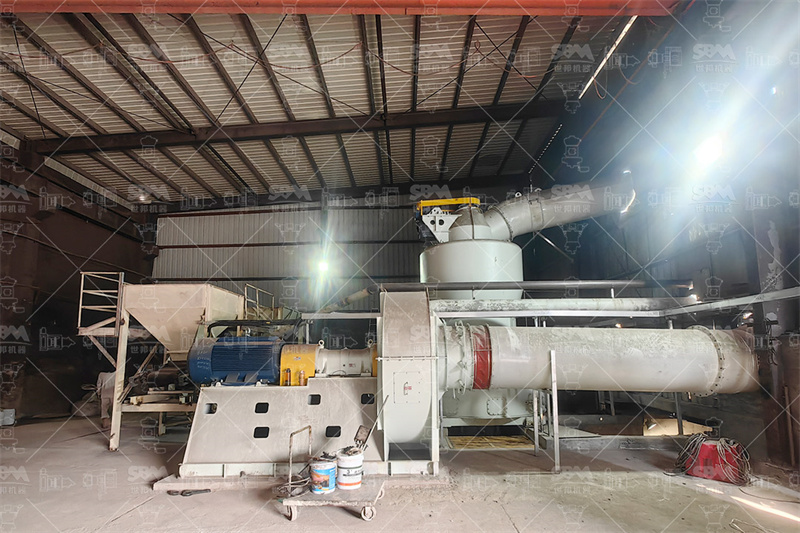
Understanding the Material: Bentonite Characteristics
Before delving into equipment selection, it is imperative to understand the material’s lithology. Run-of-mine bentonite often contains associated minerals like quartz, feldspar, and calcite, which must be removed or finely ground. For white cement, the target fineness typically ranges from 45 μm to 5 μm (325 to 2500 mesh). Achieving this requires a mill that offers high grinding force and precise classification. The moisture content of bentonite, often ranging from 8% to 15%, also demands a system capable of handling sticky materials without clogging. Our SCM Series Ultrafine Mill, for example, utilizes a shaftless screw grinding chamber to facilitate smooth material flow, preventing blockages commonly experienced with high-clay content feeds.
Key Machine 1: Medium-Speed Trapezium Mills (600-45 μm)
For primary and secondary grinding stages where particle sizes between 600 μm and 45 μm are required, the MTW Series European Trapezium Mill and MTM Series Medium-speed Trapezium Mill are industry benchmarks. These machines are engineered for high-capacity throughput and lower energy consumption.
MTW Series European Trapezium Mill adopts an integral bevel gear drive with a transmission efficiency of up to 98%. It features an anti-wear shovel design with combined blades, which significantly extends the service life of grinding rollers. The optimized arc air duct reduces airflow resistance, enhancing classifier efficiency by over 30%. With an input size of up to 50mm and a capacity ranging from 3 to 45 tons per hour, the MTW series is ideal for large-scale bentonite pre-grinding. Specifically, the MRN198 Pendulum Mill, a variant in our offering, incorporates thin oil lubrication and a pulse dust collector, making it a maintenance-free and eco-friendly solution for capacities up to 33 t/h.
Selection Insight: For producers targeting a fineness of 45 μm (325 mesh) as a final product for cement additives, we recommend the MTW175G model, which delivers 9.5-25 t/h. Its curved design extends roller life, and the non-resistance volute structure reduces maintenance costs by 30%, ensuring a rapid return on investment.
Key Machine 2: Ultrafine Vertical Roller Mills (325-2500 mesh)
In modern white cement production, the active component of bentonite often requires ultra-fine grinding to enhance its reactivity and surface area. The vertical roller mill (VRM) design stands out for its ability to combine drying, grinding, and classifying in one unit.
The LUM Ultrafine Vertical Roller Mill is specifically designed for the 325-2500 mesh range. It uses a multi-rotor classifier to ensure no coarse particles are mixed in the final output. For ultra-fine requirements, this mill offers a distinct advantage over jet mills: it operates with 30% lower energy consumption and a capacity that is double that of traditional air-swept mills. The LUM series utilizes PLC automated control with negative pressure operation, ensuring zero dust leakage—a critical factor for maintaining the purity of white cement.
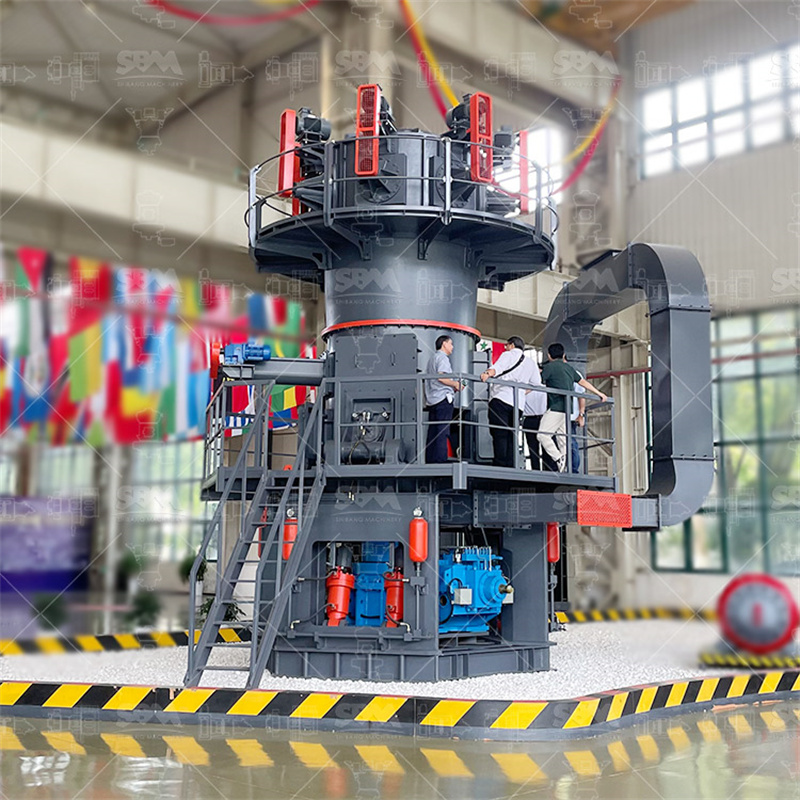
Alternatively, the SCM Series Ultrafine Mill is a flagship product for fineness levels between 45 μm and 5 μm. It employs a unique grinding mechanism where three layers of grinding rings rotate, dispersing materials by centrifugal force. This ensures layer-by-layer grinding for uniform particle distribution. The vertical turbine classifier in the SCM series provides a precise cut point, making it superior for high-grade bentonite. The SCM1250 model, with a main power of 185kW, can produce between 2.5 and 14 tons per hour, making it a versatile choice for medium-sized plants.
Innovative Pre-Grinding Technologies
To optimize the entire comminution circuit, many cement plants are now integrating pre-grinding roller presses. The LM-Y Vertical Pre-grinding Roller Mill is designed to increase the output of existing ball mills or finish grinding systems by 50-100%.
Utilizing a bed grinding principle, the LM-Y mill consumes 30-50% less power than conventional crushing equipment. It is exceptionally suited for hard materials like cement clinker and limestone, creating a micro-crack structure inside the particles which facilitates subsequent ultra-fine grinding. For a white cement plant requiring a massive capacity of up to 330 TPH for additive preparation, models like LM220-Y and LM340-Y are available, featuring hydraulic systems for quick roller change and low maintenance downtime.
Comprehensive Selection Guide
Choosing between a Trapezium Mill, a Vertical Roller Mill, or a combination depends heavily on the specific project requirements:
- Feed Size and Capacity: If the feed material is large (>30mm) and the required capacity exceeds 15 t/h, the MTW series or LM series is recommended. For finer outputs, the SCM or LUM series must be utilized.
- Fineness Requirements: White cement requires controlled fineness (typically less than 10% residue on a 45μm sieve). The SCM series, showcasing a fineness of up to 2500 mesh, provides the high specific surface area needed for early strength development in white cement.
- Energy Efficiency and Investment Costs: LM Series vertical mills can reduce floor space by 50%, leading to lower infrastructure costs. The non-contact design between rollers and table extends wear part life by 3 times, ensuring lower operational expenditure over the long run.
Technical Advancement: High-Precision Classification
The quality of white cement heavily relies on the whiteness consistency, which is affected by the particle size distribution of bentonite. Our vertical turbine classifier technology ensures automatic finished product granularity feedback. If the material becomes too coarse, the system automatically adjusts the rotor speed. In standard configurations, the pulse dust collection system exceeds international emission standards.
Energy Savings: Through optimized internal airflow and soundproof room designs, our equipment operates at noise levels significantly below 90 dB, aligning with strict environmental regulations in mining operations. Furthermore, the bearing housing maintenance features, specifically in the MRN pendulum mill series, ensure that the gearbox is protected from dust contamination, thereby extending the operational lifecycle.
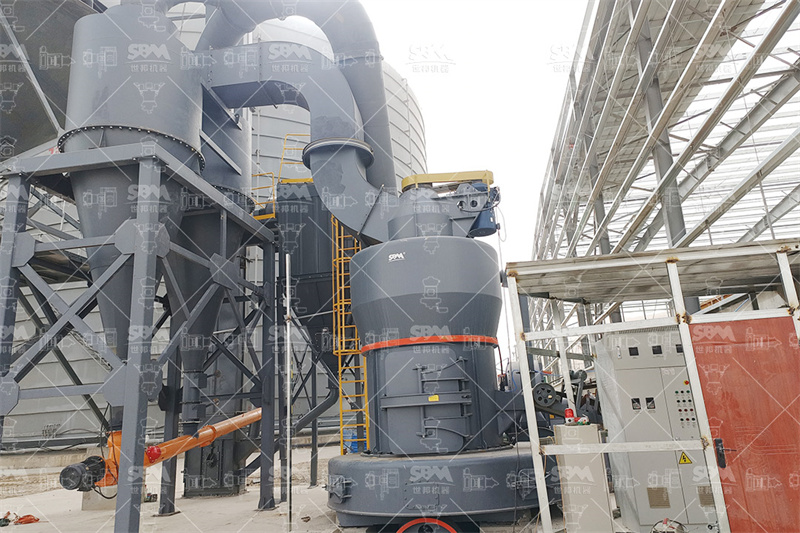
Featured Recommendation: SCM1250 & LUM1632
Based on our comprehensive portfolio, we recommend two primary systems for white cement bentonite processing:
1. SCM Series Ultrafine Mill (SCM1250/SCM1680): For producers focusing on high-value, ultra-fine bentonite (<45 μm), this is the optimal choice. It features special material rollers and rings that extend the service life by several times compared to ordinary castings. The intelligent control system provides automatic feedback on granularity, ensuring that the whiteness of the cement is not compromised by inconsistent grind. Models are capable of producing a precise 2500 mesh product with a capacity up to 25 t/h.
2. LM Series Vertical Roller Mill (LM220K): For producers who require a versatile system capable of handling both raw meal and additives at high capacities, the LM130X-GX to LM220X-GX models are ideal. They integrate a multi-stage dynamic classifier and can dry moisture up to 15% within the mill. The grinding table speed is efficiently matched to the hardness of the bentonite, ensuring a bed of material that maximizes crushing yield while preventing vibrations.
Conclusion
The processing of bentonite for white cement is a demanding operation that requires robust, efficient, and precise equipment. By transitioning from legacy ball mills to advanced trapezium or vertical roller mills, producers can achieve significantly lower energy consumption and better product quality. We recommend that professionals perform a material test using our laboratory scale systems to determine the specific work index and wear profile of their bentonite source.
Ultimately, the selection of an Ultrafine Mill or a Medium-speed Trapezium Mill should align with the final application of the powder. For superior whiteness and high reactivity, the SCM series provides the precision required. For massive scale and energy conservation, the LM series offers integrated drying, grinding, and classification. Our engineering team is available to provide comprehensive pilot plant testing to validate these recommendations for your specific mineralogical composition, ensuring that your white cement production line remains profitable, sustainable, and of the highest industrial standard.