
1. Understanding Gypsum Powder Production Requirements
Cement-grade gypsum powder, primarily composed of calcium sulfate dihydrate (CaSO₄·2H₂O) or its dehydrated forms, serves as a critical set-regulating agent in Portland cement production. The quality and particle size distribution of gypsum powder directly influence the setting time, strength development, and overall performance of the final cement product. When selecting production equipment, the first consideration is raw material characteristics—typically natural gypsum rock or industrial desulfurization gypsum (FGD gypsum)—which significantly differ in moisture content, hardness, and chemical purity. Natural gypsum generally contains 8-12% free moisture, while FGD gypsum may contain up to 15-18% surface moisture, profoundly influencing the drying and grinding system design. Additionally, the target fineness for cement application typically falls within 45-325 mesh (approximately 45-600 micrometers), with most plants requesting a residue of 8-12% on the 0.045mm sieve. The production capacity requirement, usually ranging from 10 to 100 metric tons per hour for integrated cement plants, dictates whether a single grinding unit or a combination of pre-crushing and fine grinding stages is necessary.
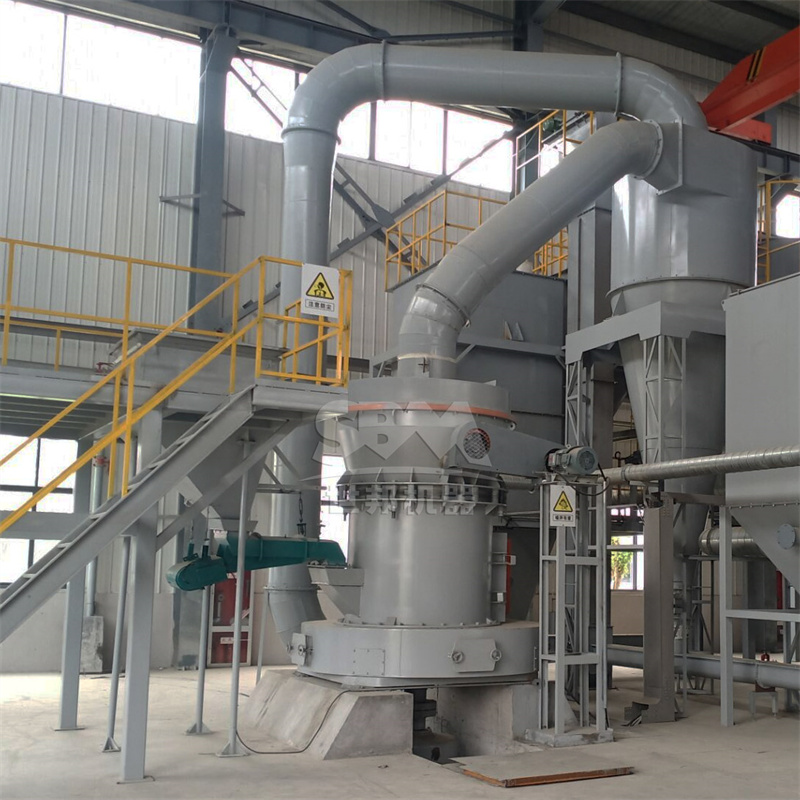
2. Preliminary Crushing and Drying Technologies
Before fine grinding, gypsum must undergo primary size reduction and moisture removal. For run-of-mine gypsum with lump sizes up to 500mm, a jaw crusher or impact crusher reduces material to below 20-50mm. Given the moderate hardness of gypsum (Mohs hardness 1.5-2.5), hammer crushers or impact crushers prove exceptionally effective, achieving high crushing ratios with minimal energy consumption. Our hammer mill series, for example, accepts feed sizes up to 40mm and produces 0-3mm output with capacities ranging from 8 to 70 t/h, integrating seamlessly into complete gypsum processing lines. Simultaneously, drying is crucial because moisture above 5% causes material agglomeration, coating on grinding media, and decreased mill throughput. Rotary dryers with co-current airflow systems are industry standard, utilizing hot gases from kilns or dedicated hot air generators at inlet temperatures of 600-800°C. For energy-efficient operations, some integrated processes employ vertical roller mills (VRMs) equipped with hot air sweeping capabilities, which combine drying, grinding, and classification in a single unit. This technique reduces the required system footprint while specifically accommodating high-moisture FGD gypsum where hot gas entering the mill accomplishes instantaneous moisture evaporation.
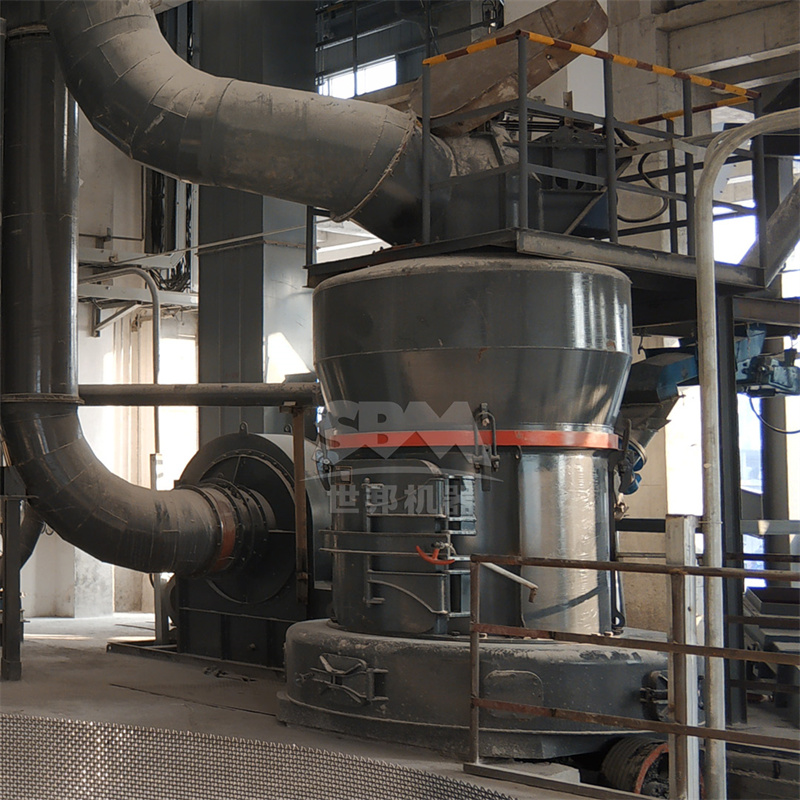
3. Selecting the Optimum Grinding Mill Technology
The grinding stage represents the core of gypsum powder production, where equipment selection profoundly impacts product quality and operating economics. Ball mills, traditional workhorses for cement plants, offer proven reliability and capacities up to 450 t/h, but suffer from low energy efficiency (typically less than 10% of input power converted to useful grinding work), high noise levels, and coarser output fineness constrained to 80-325 mesh ranges. Conversely, vertical roller mills (VRMs) have gained dominance in modern cement-grade gypsum processing due to their energy efficiency—consuming 30-40% less power than equivalent ball mill systems—and combined drying-grinding-classifying capability within one compact unit. The LM series vertical roller mills apply compressive grinding forces via hydraulic cylinders, achieving product fineness from 170-600 micrometers with fineness adjustments through separator speed control. For cement plants producing gypsum powder targeted at 38-45 micrometers average particle size, our MTW European Trapezium Mill provides an intermediate solution, integrating bevel-gear drives with anti-wear shovel designs to deliver capacities from 3 to 45 t/h with fineness adjustable between 30-325 mesh.
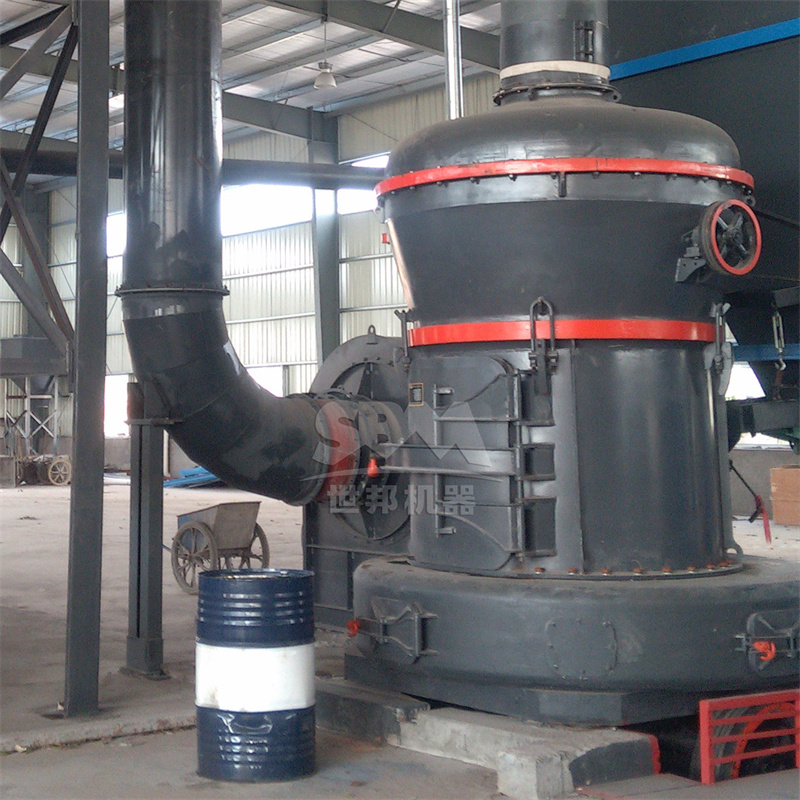
4. SCM Ultrafine Mill: Precision Answer for High-Fineness Gypsum Applications
When cement-grade gypsum requires exceptionally fine powder—particularly for high-performance or rapid-hardening cement formulations where 325-2500 mesh particle sizes (5-45 micrometers) are specified—the SCM Series Ultrafine Mill emerges as the optimal technical solution. The SCM mill operates on a multi-layer grinding ring principle, where the main motor drives three stacked grinding rings to rotate, dispersing materials into the grinding path via centrifugal force. Rollers then crush the material layer by layer, while a vertical turbine classifier ensures precise particle size distribution without coarse powder contamination. This design achieves twice the capacity of jet mills with 30% lower energy consumption, representing significant operational savings. The SCM800 through SCM1680 models cover capacities from 0.5 t/h to 25 t/h, all with exceptional fineness stability. For installations requiring ultra-fine gypsum powder as cement additive, the SCM1000 (1.0-8.5 t/h, 132kW main power, 325-2500 mesh fineness) or SCM1250 (2.5-14 t/h, 185kW main power) configurations offer proven performance. The machine incorporates intelligent control with automatic finished product granularity feedback, while pulse dust collection systems exceed international standards and sound-suppressing enclosures limit operational noise. Maintenance advantages include special material rollers and rings extending service life several-fold over conventional mills, coupled with a shaftless screw grinding chamber for stable continuous operation.
5. MTW European Trapezium Mill: Versatile Workhorse for Medium-Capacity Operations
For gypsum powder production lines requiring outputs between 3-45 t/h with fineness specifications of 30-325 mesh (600-45 micrometers)—typical for most ordinary Portland cement production—the MTW Series European Trapezium Mill presents the most technologically advanced and cost-effective choice. Distinguished by its integral bevel gear drive system that achieves 98% transmission efficiency, the MTW series eliminates bulky traditional transmission components, saving installation space and reducing civil engineering costs by approximately 20%. The curved shovel design ensures materials are continuously thrown between rollers and the grinding ring, forming an efficient material bed for extrusion crushing. The optimized arc air duct with high-strength guard plates minimizes airflow energy loss while protecting the working surface from abrasive wear. With models ranging from the MTW110Z (3-10 t/h, 55kW main motor) to the MTW215G (15-45 t/h, 280kW main power), operators can select configurations precisely aligned with their line capacity requirements. The MRN158 and MRN198 pendulum mill alternatives further extend model coverage, incorporating thin-oil lubrication systems that are virtually maintenance-free and optimized square-pipe collectors that reduce system airflow resistance. All MTW and MRN series mills utilize internationally advanced pulse dust removal technology, ensuring emission concentrations below 30mg/Nm³—exceeding current environmental protection standards in most jurisdictions. Automatic lubrication systems and multi-stage classification adjustments enable rapid response to changing feedstock conditions or product specifications.
6. System Design Considerations for Optimized Gypsum Plants
Selecting individual equipment units represents only part of successful gypsum powder plant development; the integration of sourcing, pre-processing, grinding, classification, and storage must function as a harmonious system. The design layout must account for material flow efficiency—gypsum reaching the grinding mill should avoid unnecessary conveying stages that increase power consumption and maintenance exposure. Current best practice gravitates toward an integrated vertical mill arrangement where the moisture-laden gypsum feeds directly into the mill inlet, and hot gases from a dedicated hot air generator enter concurrently, accomplishing lifting, drying, size reduction, and classification within the single apparatus. This approach reduces the footprint by up to 50% relative to traditional systems requiring separate dryer, ball mill, and classifier installations—also cutting infrastructure investment by 40% per industry data. When configuring a system around our MTW series or LM series mills, an appropriately rated feeder (typically electromagnetic vibrating feeders GZ2F through GZ5F) must ensure consistent feed rates preventing both overloading and underutilization. Downstream, baghouse collectors sized according to mill outlet volume (typically 1.2-1.5 times the classifier volume flow) maintain negative pressure and capture product—cyclone pre-collectors preceding bag filters can reduce filter loading by 60-70%. For finished powder handling, pneumatic conveying systems must be designed with appropriate air velocities in consideration of gypsum’s hygroscopic characteristics (recommended conveying velocities between 18-25 m/s), preventing moisture pickup and subsequent flow impairment in storage silos. Instrumentation including in-line moisture analyzers, particle size monitors (utilizing dynamic image analysis or laser diffraction technologies), and weigh-belt feeder controllers close the loop for automatic production management.
7. Operational Cost Optimization
Long-term economic performance depends on careful attention to wear protection, maintenance scheduling, and energy management. Grinding elements in contact with gypsum experience abrasive wear, particularly when silica impurities exceed 5%. Our wear-resistance engineering for grinding rollers/rings uses special alloy materials extending service intervals by three-fold compared to conventional manganese steels—reducing replacement frequency and associated labor costs. Hydraulic systems on VRMs and system pressure adjustments on spring-loaded mills require scheduled inspection every 500-800 operating hours, with oil sampling analysis every 2,000 hours being industrial best practice. Energy optimization strategies include variable frequency drives on main fans and separator drives, since turndown operation is required at reduced production rates or when processing softer crystalline gypsum types. Waste heat recovery opportunities should be evaluated for the drying circuit—utilizing cooler exhaust gases from cement kiln or calciner preheater systems minimizes auxiliary fuel consumption. The implementation of our industrial internet-of-things (IIoT) capable automation system provides real-time grinding pressure, separator speed, and differential pressure monitoring, allowing expert control logic to optimize throughput continuously. Baseline operating data across various installations suggest an energy consumption of 18-25 kWh per ton of cement-grade gypsum powder when using modern VRM equipment, versus 30-40 kWh/t for conventional ball mills—achievable savings of 30-40% validates capital expenditure on advanced grinding systems.
8. Conclusion and Equipment Selection Guidelines
Definitive equipment selection for cement-grade gypsum powder processing demands systematic evaluation of raw material composition, desired product fineness distribution, planned capacity utilization, available utilities, and capital cost constraints. For all projects, we recommend progressing through feasibility analysis (raw material testing via laboratory-scale grinding), flow-sheet development, and then specifying the grinding technology—referencing crucial custom criteria: maximum feed size input requirements, hardness variation, product fineness thresholds, and whether simultaneous moisture removal is mandatory. In summary, SCM Ultrafine Mills represent the technologically superior choice for ultra-fine gypsum powder production at 325-2500 mesh, delivering exceptional energy efficiency with 30% margins over alternative technologies, whereas MTW European Trapezium Mills excellently serve conventional cement plant requirements between 30-325 mesh at capacities up to 45 t/h with durability under continuous industrial processing. Our expert engineering team offers process optimization services covering complete system design—from primary crusher to silo storage—ensuring gypsum powder quality enhancing cement performance while minimizing operational complexity and environmental footprint.