
Introduction: Why Bentonite Additives Matter in Papermaking
In the modern papermaking industry, bentonite-based additives have become indispensable functional materials. They are widely used as retention aids, drainage aids, coating pigments, pitch control agents, and filler modifiers. Bentonite improves sheet formation, enhances ink absorption, reduces pitch deposits, and increases the overall quality of coated and uncoated paper grades. For mill owners, the key to unlocking the full potential of bentonite lies not only in the raw material quality but also in the grinding and processing equipment used to convert raw bentonite into papermaking-grade additives.
This guide provides a comprehensive overview of the production equipment required for manufacturing bentonite additives in papermaking. It covers the entire process from crushing to ultrafine grinding, classification, and environmental control. Whether you are building a new bentonite processing line or upgrading an existing one, this article will help you select the right equipment and optimize your production efficiency.
Understanding Bentonite and Its Role in Papermaking
Bentonite is a naturally occurring clay mineral primarily composed of montmorillonite. Its unique properties—high swelling capacity, cation exchange ability, large surface area, and thixotropic behavior—make it highly valuable in paper production. In papermaking, bentonite additives serve several critical functions:
- Retention and drainage: Bentonite microparticles improve the retention of fines and fillers while enhancing drainage rates on the wire.
- Coating: Modified bentonite is used in coating formulations to improve rheology, opacity, and printability.
- Pitch control: Bentonite adsorbs pitch and stickies, reducing deposits on paper machine fabrics and rolls.
- Filler modification: Bentonite can modify calcium carbonate and kaolin fillers to improve their compatibility with papermaking chemistry.
To achieve these functions, bentonite must be processed to specific particle sizes, typically in the range of 200 to 2500 mesh, depending on the application. This is where advanced grinding equipment becomes essential.

Key Equipment in Bentonite Processing for Paper Additives
A complete bentonite processing line for papermaking additives typically includes crushing, grinding, classification, dust collection, and packaging stages. The choice of grinding mill is the most critical decision, as it determines the particle size distribution, production capacity, energy consumption, and final product quality.
1. Crushing Equipment: Hammer Mill
The first step in bentonite processing is crushing the raw material from lump form (0-40mm) down to 0-3mm. A hammer mill is the ideal choice for this stage. Our Hammer Mill features high capacity, a high crushing ratio, and a compact structure. With models like PC4008-75 (8-15t/h), PC4012-90 (15-40t/h), and PC4015-132 (40-70t/h), you can match the crusher capacity to your grinding mill requirements. The high-manganese steel liners ensure long service life and low maintenance costs.
2. Grinding Equipment: The Heart of the Production Line
For bentonite additives in papermaking, fine and ultrafine grinding is essential. The target fineness usually ranges from 325 mesh to 2500 mesh. Several types of mills can be used, but not all are equally efficient. Below we compare the most suitable options.
SCM Series Ultrafine Mill (45-5μm)
The SCM Series Ultrafine Mill is specifically designed for producing ultrafine powders in the 325-2500 mesh range. It is an ideal choice for manufacturing high-grade bentonite additives for papermaking. Key advantages include:
- High efficiency and energy saving: Capacity is twice that of jet mills, with 30% lower energy consumption.
- High-precision classification: The vertical turbine classifier ensures precise particle size cutting, with no coarse powder mixing.
- Durable design: Special material rollers and rings extend service life several times over. The shaftless screw grinding chamber ensures stable operation.
- Eco-friendly and low noise: Pulse dust collection efficiency exceeds international standards, and the soundproof room design ensures low noise levels.
With models ranging from SCM800 (0.5-4.5t/h) to SCM1680 (5.0-25t/h), the SCM series can meet the needs of both small and large bentonite processing plants. For paper additive production, the SCM series is highly recommended for its ability to produce uniform, ultrafine bentonite powder with excellent dispersion properties.
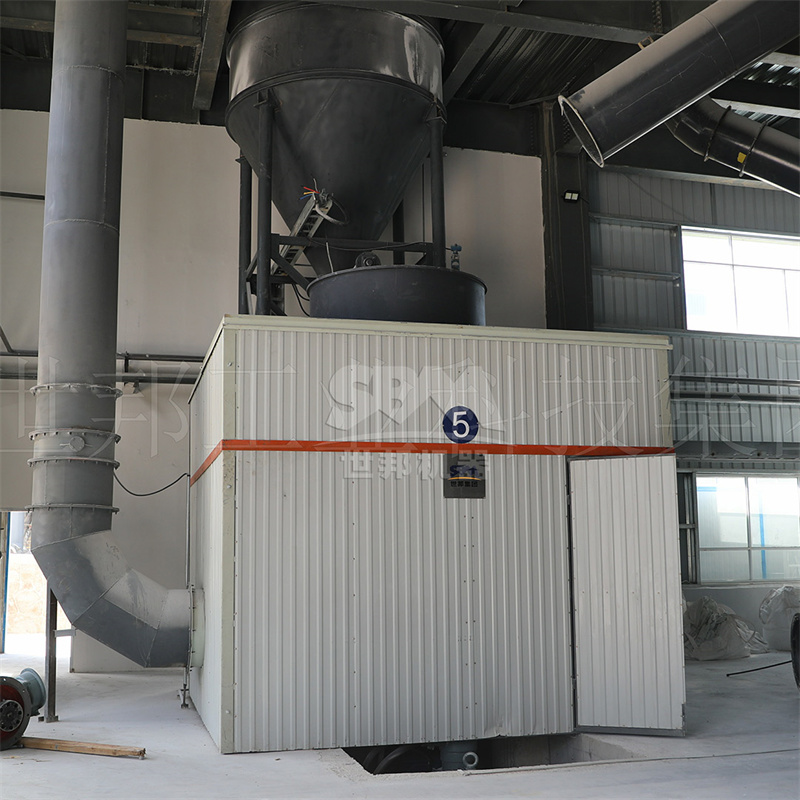
LUM Ultrafine Vertical Roller Mill
Another excellent choice for ultrafine bentonite grinding is the LUM Ultrafine Vertical Roller Mill. It combines grinding, classification, and drying in one unit. With a fineness range of 325-2500 mesh and models like LUM1525 (1.6-11.5t/h), LUM1632 (2-13.5t/h), and LUM1836 (2.3-15t/h), the LUM mill offers:
- Unique roller and liner curves for improved grinding efficiency.
- Multi-rotor technology for precise classification with no coarse particles.
- PLC automation for stable operation.
- Negative pressure operation with no dust leakage.
For paper mills that require a compact, environmentally friendly, and highly automated solution, the LUM mill is an excellent alternative.
MTW Series European Trapezium Mill (600-45μm)
For medium-fine bentonite additives (e.g., 200-325 mesh), the MTW Series European Trapezium Mill is a cost-effective and reliable choice. It features an anti-wear shovel design, optimized arc air duct, integral bevel gear drive (efficiency up to 98%), and a wear-resistant volute structure. With capacities from 3t/h (MTW110) to 45t/h (MTW215G), the MTW mill is suitable for large-scale production of bentonite additives where ultrafine grinding is not required.
LM Series Vertical Roller Mill (600-45μm)
The LM Series Vertical Roller Mill is a versatile option for bentonite processing. It integrates crushing, grinding, and selection, reducing floor space by 50%. Energy consumption is 30-40% lower than ball mill systems. With capacities from 3t/h to 250t/h, the LM series can handle almost any production scale. For paper additive production, the LM series is particularly suitable for medium to large mills that require high throughput and low operating costs.
3. Classification and Dust Collection
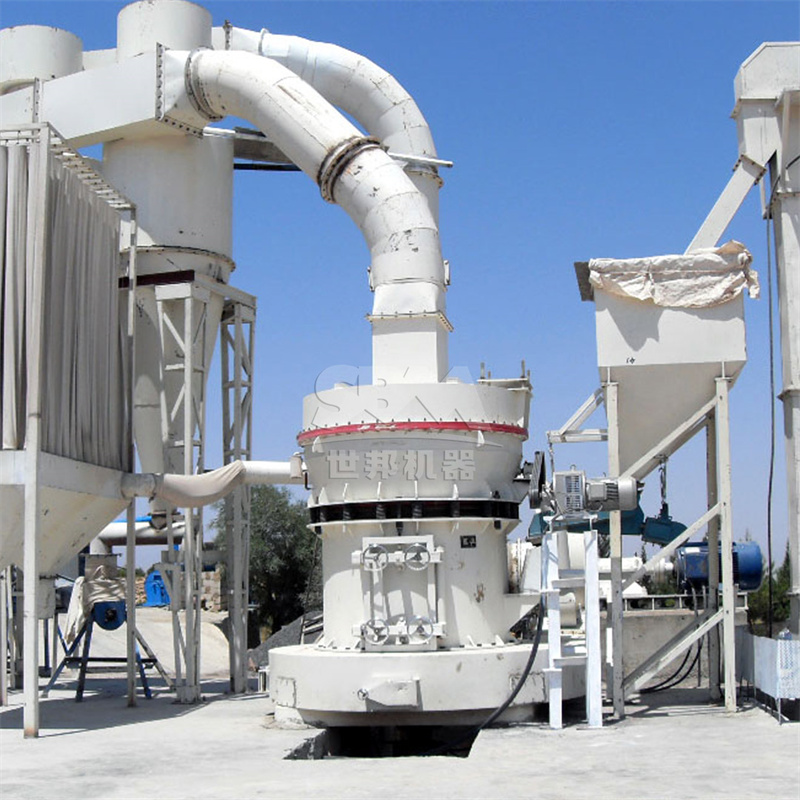
Precise classification is critical for ensuring the quality of bentonite additives. Coarse particles can negatively affect paper formation and coating uniformity. All our mills—SCM, LUM, MTW, and LM—are equipped with high-precision classifiers. In addition, pulse dust collection systems ensure that emissions meet strict environmental standards. The SCM series, for example, features a pulse dust collector with efficiency exceeding international standards.
How to Choose the Right Equipment for Your Bentonite Additive Production
Selecting the right mill depends on several factors:
- Target fineness: For ultrafine additives (e.g., 1250-2500 mesh), choose SCM or LUM. For medium-fine (325-800 mesh), MTW or LM can be sufficient.
- Production capacity: Small plants (0.5-5t/h) can use SCM800 or LUM1525. Large plants (10-25t/h) should consider SCM1250/1680, LUM1836, or LM series.
- Energy consumption: Ultrafine grinding is energy-intensive. SCM and LUM are designed for low energy consumption per ton.
- Automation level: LUM and SCM offer intelligent control with automatic feedback, reducing labor costs.
- Environmental compliance: All our mills come with advanced dust collection and noise reduction features.
Recommended Products for Bentonite Additive Production
Based on our extensive experience in the papermaking industry, we recommend the following two products for bentonite additive production:
- SCM Series Ultrafine Mill: Best for producing high-value ultrafine bentonite additives (325-2500 mesh). It offers the highest efficiency, precise classification, and eco-friendly operation. Models SCM1000 and SCM1250 are particularly popular among paper additive manufacturers.
- LUM Ultrafine Vertical Roller Mill: Ideal for mills that require a compact footprint, high automation, and consistent product quality. The LUM1836 model with 2.3-15t/h capacity is a strong contender for medium-scale production.
Both products are backed by our patented technology, including intelligent control systems, wear-resistant materials, and advanced dust removal. They are designed to help mill owners achieve high profitability, low maintenance, and compliance with environmental regulations.
Conclusion
Producing bentonite additives for papermaking is a technically demanding process that requires the right equipment. From crushing with a hammer mill to ultrafine grinding with SCM or LUM mills, every step affects the final product quality and your bottom line. By choosing the right machinery—such as our SCM Series Ultrafine Mill or LUM Ultrafine Vertical Roller Mill—you can produce high-performance bentonite additives that meet the exacting standards of modern paper mills.
For more information on how our equipment can optimize your bentonite additive production, please contact our technical team. We provide customized solutions, on-site installation, and lifelong after-sales service.