
Introduction
Chemical-grade gypsum powder is a critical raw material in industries ranging from construction and ceramics to pharmaceuticals and food additives. Unlike natural gypsum used in wallboard, chemical-grade gypsum demands higher purity, controlled particle size distribution, and consistent whiteness. Whether you are processing synthetic gypsum (FGD gypsum) or natural mineral gypsum, the grinding mill you select directly impacts product quality, energy consumption, and project profitability. With a market full of mill types—ultrafine mills, trapezium mills, vertical roller mills, and ball mills—choosing the right one can be overwhelming. This article breaks down the key factors and recommends specific equipment from our proven portfolio.
Key Properties of Chemical-Grade Gypsum Powder
Before diving into equipment selection, define your target specifications:
- Fineness: Typically 325 mesh (45μm) to 1250 mesh (10μm) for chemical applications. Some specialty grades require 2500 mesh (5μm).
- Whiteness: Often >90% for fillers and food/pharma grades; requires minimal iron contamination.
- Purity: Calcium sulfate dihydrate or hemihydrate content above 95%.
- Moisture: Usually below 1% after grinding and drying.
- Capacity: From 0.5 t/h for pilot plants to 45 t/h for large industrial lines.
Your mill must handle these requirements without introducing wear debris or excessive heat that could alter gypsum’s crystal structure.
Types of Grinding Mills and Their Suitability
1. Ultrafine Mills (e.g., SCM Series)
For chemical-grade gypsum requiring 325–2500 mesh, ultrafine mills are ideal. They combine high-precision classification with efficient grinding. The SCM Series Ultrafine Mill is particularly well-suited because its vertical turbine classifier ensures no coarse powder mixing, critical for chemical purity. With capacity up to 25 t/h and fineness down to 5μm, it can serve both small and large projects.
2. Trapezium Mills (e.g., MTW, MTM Series)
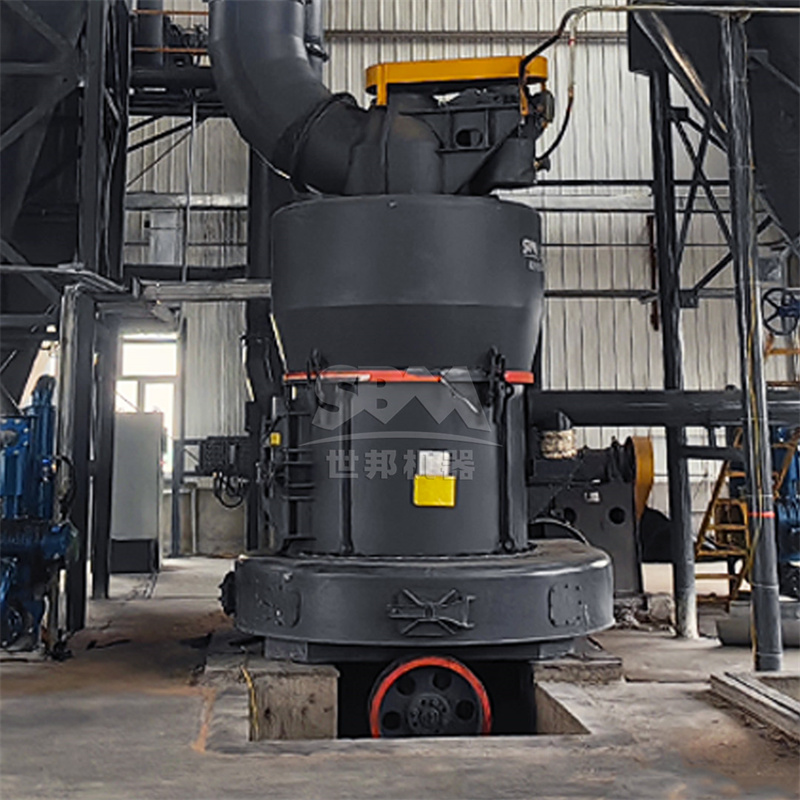
If your target fineness is 30–325 mesh (600–45μm) and capacity is moderate to high (3–45 t/h), European trapezium mills offer an excellent balance of throughput and energy efficiency. The MTW Series, with its integral bevel gear drive and wear-resistant volute, reduces maintenance and power costs. For chemical-grade gypsum, the MTW’s optimized arc air duct prevents material buildup, ensuring consistent output.
3. Vertical Roller Mills (e.g., LM, LUM Series)
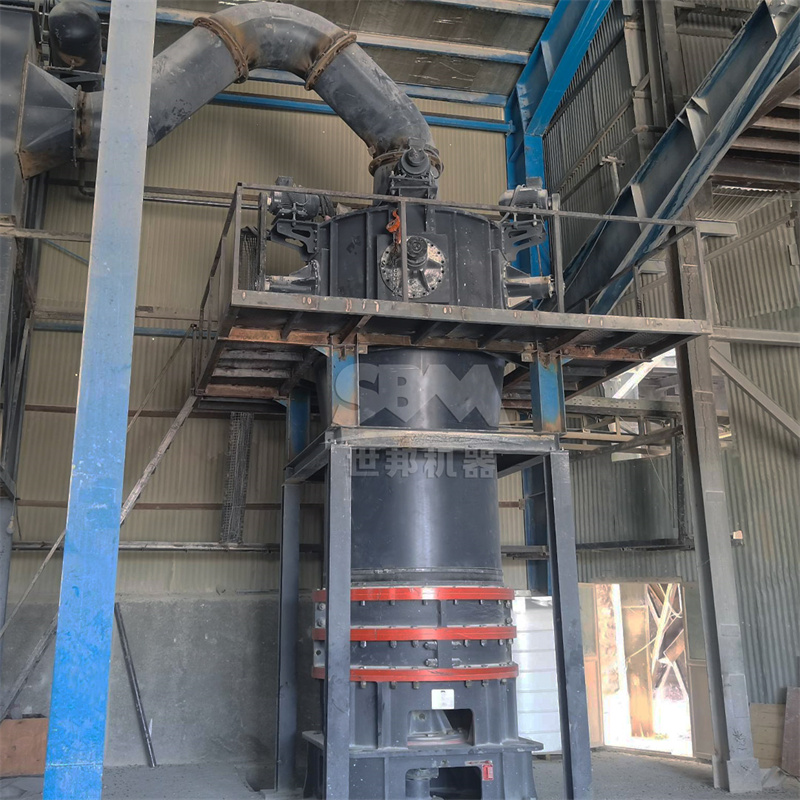
For very large capacities (up to 250 t/h) and finer products (down to 45μm), vertical roller mills are the workhorse. The LM Series integrates crushing, grinding, and classification, reducing floor space by 50%. Its low operating cost (30–40% less energy than ball mills) makes it attractive for high-volume chemical gypsum lines. The LUM Ultrafine Vertical Mill extends fineness to 2500 mesh, ideal for high-value chemical applications.
4. Ball Mills
Ball mills are suitable for coarse grinding (0.074–0.8mm) and are often used in wet or dry processing. However, for chemical-grade gypsum, ball mills risk iron contamination from steel media and liners. They are better suited for pre-grinding or low-purity applications.
5. Hammer Mills
For primary crushing to 0–3mm, hammer mills are a cost-effective choice. They prepare feed material for finer grinding mills.
Selection Criteria: A Step-by-Step Approach
Step 1: Define Your Product Specification
Determine required fineness (mesh or μm), particle size distribution (PSD), whiteness, and purity. For chemical-grade gypsum, a narrow PSD is often more important than ultimate fineness.
Step 2: Determine Required Capacity
Calculate hourly throughput based on your project scale. Consider future expansion—choosing a mill with 20–30% headroom can avoid costly upgrades.
Step 3: Evaluate Energy Consumption
Grinding is energy-intensive. Ultrafine mills consume 30% less energy than jet mills. Vertical roller mills use 30–40% less than ball mills. Compare specific energy consumption (kWh/t) for each candidate.
Step 4: Consider Maintenance and Wear
Chemical-grade gypsum is moderately abrasive. Mills with wear-resistant rollers and liners (e.g., special material rollers in SCM, high-chrome in MTW) reduce downtime and maintain product purity.
Step 5: Assess Environmental Compliance
Dust emission and noise are regulated. Pulse dust collection (efficiency >99.9%) and soundproof designs are mandatory. The SCM Series and LM Series both feature advanced pulse dust removal and negative pressure operation.
Step 6: Check Automation and Control
Intelligent control with automatic granularity feedback (SCM) or expert auto-control (LM) ensures consistent quality and reduces labor.
Step 7: Footprint and Infrastructure
Vertical mills save space; trapezium mills require foundations; ultrafine mills are compact. Choose based on available land and indoor/outdoor installation.
Recommended Products for Chemical-Grade Gypsum
Based on the above criteria, we recommend two flagship mills:
SCM Series Ultrafine Mill (45–5μm)
The SCM Series is purpose-built for ultrafine chemical-grade gypsum. Its vertical turbine classifier achieves precise particle size cutting (no coarse powder mixing), and the shaftless screw grinding chamber ensures stable operation. With models from SCM800 (0.5–4.5 t/h) to SCM1680 (5–25 t/h), it covers pilot to industrial scales. Energy consumption is 30% lower than jet mills, and the pulse dust collector exceeds international standards. For a chemical gypsum project requiring 800 mesh (18μm) and 10 t/h, the SCM1000 (1.0–8.5 t/h) or SCM1250 (2.5–14 t/h) would be ideal.
MTW Series European Trapezium Mill (600–45μm)
For projects targeting 200–325 mesh (75–45μm) with capacities up to 45 t/h, the MTW Series offers exceptional reliability. Its anti-wear shovel design and curved grinding rollers extend maintenance intervals. The integral bevel gear drive achieves 98% transmission efficiency. The MTW215G model delivers 15–45 t/h at 10–325 mesh, suitable for large chemical gypsum lines. The patented internal suction oil lubrication system ensures long bearing life.

Case Study: 15 t/h Chemical-Grade Gypsum Line
A European chemical company needed to process FGD gypsum into 325 mesh powder for wallboard additives. They selected an MTW175G mill (9.5–25 t/h) combined with a hammer mill for pre-crushing. The line achieved 15 t/h at 325 mesh, with whiteness maintained at 92%. Energy consumption was 28 kWh/t, and dust emissions were below 10 mg/m³. The mill’s volute structure reduced maintenance costs by 30% compared to their previous ball mill.
Conclusion
Choosing the right grinding mill for chemical-grade gypsum requires a clear understanding of your product spec, capacity, and operational constraints. Ultrafine mills like the SCM Series excel for fine, high-purity applications, while trapezium mills like the MTW Series offer high throughput for medium-fine products. Vertical roller mills (LM/LUM) are best for very large capacities. Always prioritize wear resistance, energy efficiency, and dust control. With the right equipment, your chemical gypsum project can achieve consistent quality and profitable operation.
For further assistance, our engineers can help you select the optimal mill configuration based on your raw material and target product.