
Introduction to Cobalt in Catalyst Applications
Cobalt is one of the most strategically important metals in modern catalyst manufacturing. Its unique electronic configuration, variable oxidation states, and superior thermal stability make it indispensable in a wide range of catalytic processes, including Fischer-Tropsch synthesis, hydrodesulfurization (HDS), hydrocracking, ammonia synthesis, and lithium-ion battery cathode production. As global demand for cleaner fuels, higher-performance batteries, and more efficient chemical processes continues to rise, the quality and consistency of cobalt-based catalyst powders have become critical factors in determining end-product performance.
The production of high-quality cobalt catalysts demands precise control over particle size distribution (PSD), surface area, morphology, and chemical homogeneity. Among the many unit operations involved in catalyst preparation, milling and classification are arguably the most influential in determining the final performance characteristics of the catalyst. Selecting the right milling and classification equipment is therefore not merely a matter of throughput—it is a strategic decision that directly impacts catalytic activity, selectivity, and operational lifespan.
In this article, we will explore the key considerations for choosing milling and classification solutions for cobalt catalyst processing, examine the specific requirements of cobalt-based catalyst materials, and introduce some of the most advanced equipment solutions available on the market today.
Why Particle Size Matters in Cobalt Catalysts
The catalytic performance of cobalt-based materials is intrinsically linked to particle size. In heterogeneous catalysis, reactions occur on the surface of the catalyst. Therefore, reducing particle size to the micro- or nano-scale dramatically increases the specific surface area, providing more active sites for reactant molecules to interact with. This directly translates to higher catalytic activity and improved conversion rates.
However, particle size reduction is not without its challenges. Excessively fine particles can lead to:
- Agglomeration: Fine particles tend to cluster together, reducing effective surface area and creating inconsistencies in catalytic behavior.
- Mass transfer limitations: In some reactor configurations, overly fine particles can cause pressure drop issues or uneven gas distribution.
- Sintering during activation: Nanoparticles may agglomerate or sinter at high activation temperatures, leading to loss of active surface area.
- Handling difficulties: Ultrafine powders pose challenges in transport, storage, and reactor loading.
For these reasons, the optimal particle size distribution for cobalt catalysts is typically in the range of 1–100 micrometers, depending on the specific catalytic application. Achieving this target with precision, consistency, and scalability requires advanced milling and classification technology.

Key Requirements for Cobalt Catalyst Milling
Cobalt catalyst materials present several unique challenges during milling and classification:
1. Material Hardness and Abrasiveness
Cobalt and its oxides (Co₃O₄, CoO) exhibit moderate to high Mohs hardness (typically 4–6 for oxides, higher for intermetallics). The abrasiveness of these materials can cause significant wear on grinding surfaces, leading to contamination of the product and increased maintenance costs. Equipment with wear-resistant liners and grinding elements is essential.
2. Contamination Control
Catalyst poisoning is a major concern in catalytic processes. Even trace amounts of iron, chromium, or other metal contaminants introduced during milling can dramatically reduce catalytic activity. Therefore, milling equipment must minimize metal-to-metal contact or use materials that are chemically compatible with the catalyst system.
3. Thermal Sensitivity
Some cobalt catalyst precursors are thermally sensitive and may decompose or undergo phase transformations if excessive heat is generated during grinding. Controlled grinding temperatures and efficient heat dissipation are critical design considerations.
4. Narrow Particle Size Distribution
Consistent catalytic performance requires a narrow PSD. Coarse particles may not fully participate in reactions, while ultrafine particles may cause handling and agglomeration issues. High-precision classification is therefore indispensable.
5. Scalability and Continuous Operation
As catalyst production scales from laboratory to industrial volumes, equipment must maintain consistent performance and support continuous operation with minimal downtime.
Milling Technologies for Cobalt Catalyst Processing
Several milling technologies are available for cobalt catalyst processing, each with distinct advantages and limitations:
Ball Mills
Ball mills are the traditional workhorse of catalyst grinding. They utilize steel balls as grinding media and can handle a wide range of feed sizes and material hardness. Ball mills are suitable for both dry and wet grinding and can achieve fineness down to approximately 0.074 mm (200 mesh). However, they are energy-intensive, generate significant noise and heat, and may introduce contamination from grinding media wear.
Hammer Mills
Hammer mills are suitable for preliminary crushing of cobalt catalyst precursors, reducing feed material from 40 mm to 0–3 mm. They are simple, robust, and capable of high throughput. However, they cannot achieve the fine particle sizes required for most catalytic applications and are typically used as a pre-grinding step.
Jet Mills
Jet mills use high-velocity compressed air or steam to cause particle-on-particle collisions. They can achieve very fine particle sizes (down to 1–5 μm) without contamination from grinding media. However, jet mills are energy-intensive, have limited throughput, and may not be cost-effective for large-scale catalyst production.
Vertical Roller Mills and Ultrafine Mills
Vertical roller mills and ultrafine grinding mills represent the state of the art in catalyst processing. These systems combine grinding, classification, and drying in a single integrated unit, offering high efficiency, precise particle size control, and low contamination risk. Among these, the SCM Series Ultrafine Mill from our company stands out as an ideal solution for cobalt catalyst processing.
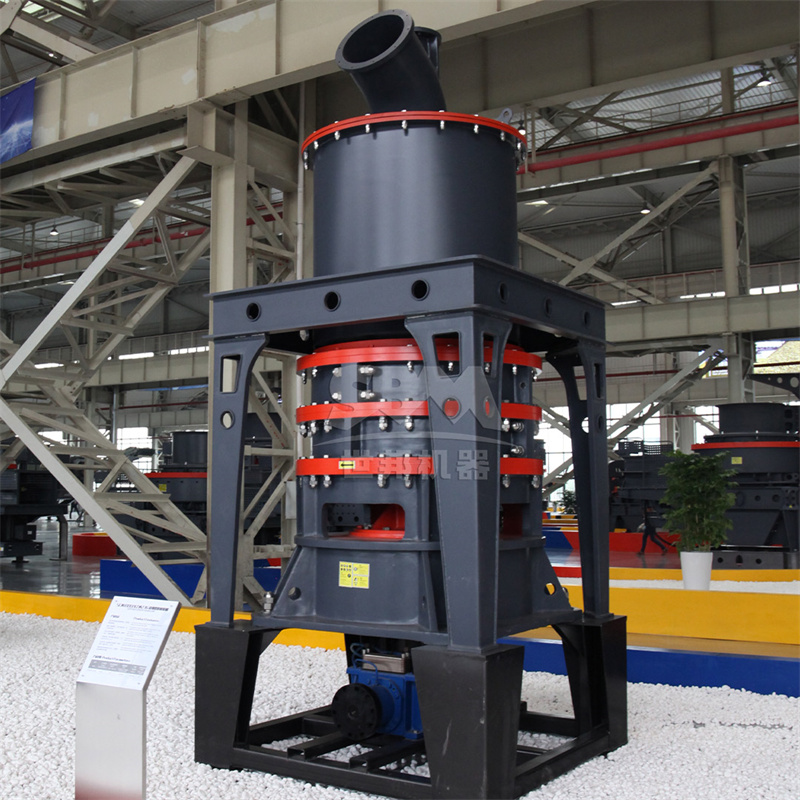
SCM Series Ultrafine Mill: A Precision Solution for Cobalt Catalysts
The SCM Series Ultrafine Mill is a highly efficient grinding system designed for producing ultrafine powders in the range of 325–2500 mesh (approximately 45–5 μm). With a feed size of up to 20 mm and a capacity range of 0.5–25 tons per hour (depending on the model), it is well-suited for both pilot-scale and full-scale cobalt catalyst production.
Technical Advantages
High Efficiency and Energy Saving: The SCM Series delivers twice the capacity of conventional jet mills while consuming 30% less energy. Its intelligent control system features automatic finished-product granularity feedback, ensuring consistent product quality with minimal operator intervention.
High-Precision Classification: The vertical turbine classifier achieves precise particle size cutting, eliminating coarse powder mixing and ensuring a uniform finished product. This is particularly important for cobalt catalysts, where PSD consistency directly affects catalytic performance.
Durable Design: Special material rollers and rings extend service life several times over compared to standard components. The shaftless screw grinding chamber ensures stable operation even under continuous, high-load conditions.
Eco-friendly and Low Noise: The pulse dust collection system exceeds international emission standards, while the soundproof room design ensures noise levels remain well within regulatory limits.
Working Principle
The main motor drives three layers of grinding rings to rotate. Materials are dispersed into the grinding path by centrifugal force, crushed by roller pressure, and ground layer by layer. Finally, powder collection is completed by a cyclone collector and a pulse dust removal system. This multi-stage grinding and classification process ensures that cobalt catalyst powders achieve the desired fineness and uniformity.
Models and Specifications
- SCM800: Capacity 0.5–4.5 t/h | Main Power 75 kW | Fineness 325–2500 mesh
- SCM900: Capacity 0.8–6.5 t/h | Main Power 90 kW | Fineness 325–2500 mesh
- SCM1000: Capacity 1.0–8.5 t/h | Main Power 132 kW | Fineness 325–2500 mesh
- SCM1250: Capacity 2.5–14 t/h | Main Power 185 kW | Fineness 325–2500 mesh
- SCM1680: Capacity 5.0–25 t/h | Main Power 315 kW | Fineness 325–2500 mesh
LM Series Vertical Roller Mill: Large-Scale Catalyst Production
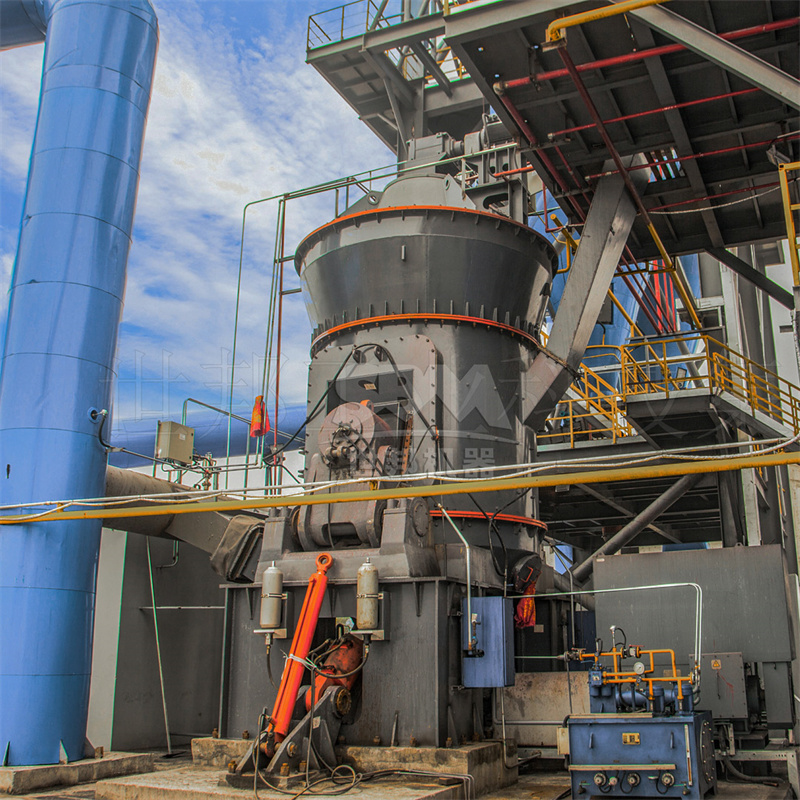
For applications requiring higher throughput—such as industrial-scale cobalt catalyst manufacturing—the LM Series Vertical Roller Mill offers an excellent solution. With a capacity range of 3–250 tons per hour and fineness adjustable from 30 to 325 mesh (and up to 600 mesh for special models), the LM Series is one of the most versatile and productive mills available.
Technical Advantages
Integrated Design: The LM Series integrates crushing, grinding, and classification into a single compact unit, reducing floor space by up to 50% compared to conventional systems. Outdoor installation is possible, further reducing infrastructure costs by up to 40%.
Low Operating Cost: The non-contact design between rollers and table significantly reduces wear, extending wear-part life by up to three times. Energy consumption is 30–40% lower than ball mill systems, resulting in substantial operational savings.
Intelligent Control: The expert-level auto-control system supports both remote and local operation, with real-time monitoring of all critical parameters. This reduces manual intervention and ensures stable, consistent production.
Environmental Compliance: Fully sealed negative pressure operation ensures zero dust emission, while operating noise is kept to a minimum.
Working Principle
The main motor drives the grinding table via a reducer. Materials enter through the central feed port and spread evenly via centrifugal force. Grinding rollers apply pressure to crush the material layer; qualified fines are carried by hot air to the classifier, while coarse powder returns to the table for re-grinding. This continuous circulation ensures high grinding efficiency and precise product fineness.
Choosing the Right Solution: Key Decision Factors
When selecting milling and classification equipment for cobalt catalyst processing, several factors should be carefully evaluated:
1. Target Particle Size and PSD
Determine the optimal particle size and distribution for your specific catalytic application. Ultrafine mills like the SCM Series are ideal for nano- and micro-scale catalysts, while larger mills like the LM Series are better suited for applications requiring coarser particles at high throughput.
2. Production Scale
Consider both current and projected production volumes. The SCM Series offers scalability from 0.5 to 25 t/h, making it suitable for pilot through medium-scale production. The LM Series, with capacities up to 250 t/h, is designed for large-scale industrial operations.
3. Contamination Sensitivity
If catalyst purity is paramount, choose equipment that minimizes metal-to-metal contact and uses compatible wear materials. Both the SCM and LM Series are designed with this consideration in mind.
4. Energy Efficiency and Operating Cost
Evaluate total cost of ownership, including energy consumption, wear-part replacement, and maintenance labor. Advanced mills like the SCM and LM Series offer significant long-term savings despite higher initial investment.
5. Integration and Automation
Modern catalyst production increasingly relies on automated, integrated systems. Choose equipment with intelligent controls, real-time monitoring, and the ability to integrate with upstream and downstream processes.
Conclusion
Cobalt catalysts are essential to a wide range of modern industrial processes, and the quality of these catalysts depends heavily on the milling and classification equipment used in their production. Selecting the right solution requires a careful balance of particle size requirements, production scale, contamination control, energy efficiency, and automation.
Our company offers a comprehensive range of milling and classification solutions designed specifically for the demanding requirements of cobalt catalyst processing. The SCM Series Ultrafine Mill delivers high-precision grinding and classification for ultrafine catalyst powders, while the LM Series Vertical Roller Mill provides unmatched capacity and efficiency for large-scale production. Together, these two product lines cover virtually every cobalt catalyst processing requirement, from laboratory-scale development to full industrial production.
By choosing the right milling and classification solution, catalyst manufacturers can achieve higher catalytic activity, better consistency, and lower operating costs—ultimately delivering superior products to their customers and staying competitive in an increasingly demanding global market.