
Introduction: The Critical Role of Attapulgite in Rubber Compounds
Attapulgite, a hydrated magnesium aluminum silicate clay mineral, has emerged as an indispensable functional filler in the rubber industry. Its unique needle-like crystal structure and high surface area deliver exceptional reinforcement, thixotropic properties, and thermal stability to rubber compounds. Whether you are producing tires, hoses, seals, or specialty rubber goods, the performance of your final product depends heavily on the particle size distribution, purity, and surface characteristics of the attapulgite filler. Consequently, selecting the right grinding and processing equipment is not merely a procurement decision—it is a strategic investment that directly impacts product quality, production efficiency, and operational costs.
This comprehensive guide explores the key considerations for choosing machinery to process rubber-grade attapulgite filler. We will examine the specific requirements of the rubber industry, compare different mill technologies, and highlight how the right equipment can elevate your product to meet the most demanding specifications. Along the way, we will introduce two flagship products from our company that have proven instrumental in attapulgite processing: the SCM Series Ultrafine Mill and the MTW Series European Trapezium Mill.
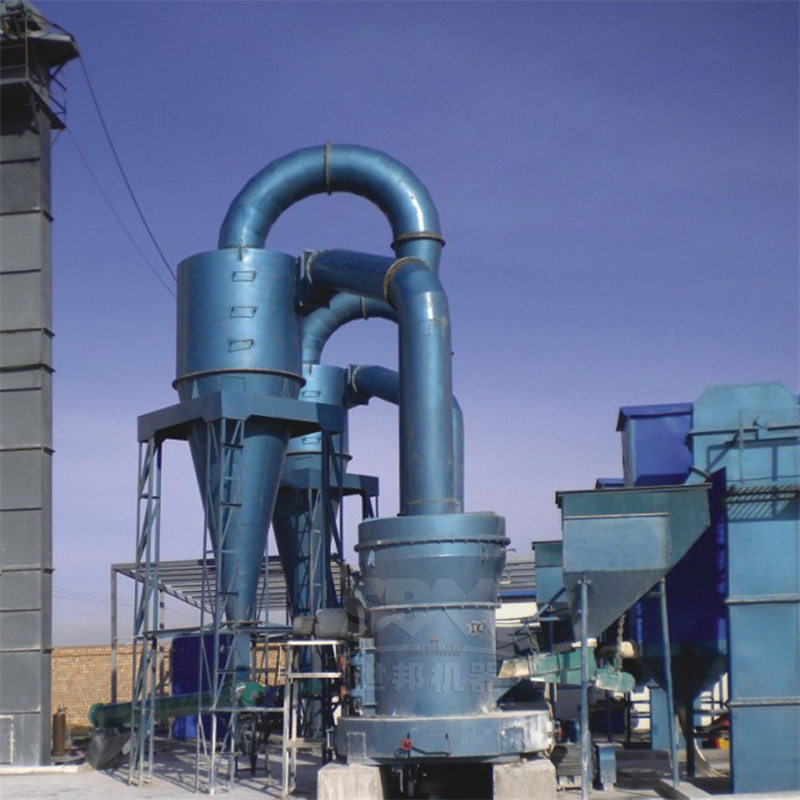
Understanding the Demands of Rubber Attapulgite Filler
Rubber formulations demand fillers with precise particle size distribution, low impurity content, and consistent morphology. Attapulgite’s acicular (needle-like) structure is easily damaged by excessive heat or improper grinding forces, which can compromise its reinforcing efficiency. Therefore, the ideal processing equipment must achieve:
- Controlled Fineness: Typically between 200 and 1250 mesh (approximately 74 to 10 microns), depending on the rubber application. Ultrafine grades (down to 5 microns) are increasingly sought for high-performance rubber.
- Preservation of Crystal Structure: Gentle grinding forces and efficient classification prevent fiber breakage.
- High Capacity with Energy Efficiency: To meet industrial-scale production without excessive power consumption.
- Dust Control and Environmental Compliance: Attapulgite dust poses health risks, so closed-loop systems with pulse dust collection are essential.
- Reliability and Low Maintenance: Wear parts must withstand abrasive clay minerals.
These requirements narrow the field of suitable machinery to advanced pendulum mills, vertical roller mills, and ultrafine grinding mills with dynamic classifiers.
Key Machinery Options for Attapulgite Processing
Several mill types are commonly employed for attapulgite filler production. Each has distinct advantages and limitations:
- Raymond Mills (Pendulum Mills): Traditional choice for 80-325 mesh. However, they often struggle with ultrafine grinding and have higher energy consumption per ton.
- Ball Mills: Capable of fine grinding but energy-intensive, with high wear rates and potential for iron contamination.
- Vertical Roller Mills: Efficient for large-scale production, but may alter particle shape due to high pressure.
- Ultrafine Mills (e.g., Jet Mills, Ring Roller Mills): Best for achieving 325-2500 mesh with precise top-size control. The SCM series falls into this category.
- European Trapezium Mills: A modern upgrade over traditional pendulum mills, offering higher capacity and finer output. The MTW series is a prime example.
For rubber attapulgite, the sweet spot often lies in combining a robust coarse grinding stage (if necessary) with an ultrafine mill that can deliver D97 < 10 microns while preserving the needle morphology. This is where our recommended equipment shines.

SCM Series Ultrafine Mill: Precision Grinding for High-Performance Rubber Filler
When rubber manufacturers require attapulgite filler with a fineness of 325 to 2500 mesh and a capacity of up to 25 tons per hour, the SCM Series Ultrafine Mill is the definitive solution. This mill is engineered to deliver unparalleled precision and efficiency, making it ideal for producing top-tier rubber fillers.
Technical Advantages Tailored for Attapulgite
- High Efficiency & Energy Saving: The SCM mill boasts a capacity twice that of conventional jet mills while consuming 30% less energy. For an industry where energy costs are a significant operational expense, this translates to substantial savings. The intelligent control system with automatic finished product granularity feedback ensures consistent quality without constant operator intervention.
- High-Precision Classification: The vertical turbine classifier achieves precise particle size cutting, eliminating coarse powder mixing. This guarantees a uniform finished product—critical for predictable rubber reinforcement. For attapulgite, this means you can reliably produce a filler with a narrow particle size distribution, enhancing tensile strength and elongation in the rubber compound.
- Durable Design: Special material rollers and rings extend service life several times over compared to standard components. The shaftless screw grinding chamber ensures stable operation, reducing downtime. Given attapulgite’s abrasive nature, this durability is a major cost-saver.
- Eco-friendly & Low Noise: The pulse dust collection efficiency exceeds international standards, capturing fine particles that would otherwise be hazardous. The soundproof room design ensures noise levels are kept low, contributing to a safer workplace.
Working Principle
The main motor drives three layers of grinding rings to rotate. Materials are dispersed into the grinding path by centrifugal force, crushed by roller pressure, and ground layer by layer. Finally, powder collection is completed by a cyclone collector and a pulse dust removal system. This gentle, layer-by-layer grinding action helps preserve the attapulgite’s needle structure better than impact-based mills.
Models & Specifications
The SCM series offers a range of models to suit different production scales:
- SCM800: Capacity 0.5-4.5 t/h | Main Power 75 kW | Fineness 325-2500 mesh
- SCM900: Capacity 0.8-6.5 t/h | Main Power 90 kW | Fineness 325-2500 mesh
- SCM1000: Capacity 1.0-8.5 t/h | Main Power 132 kW | Fineness 325-2500 mesh
- SCM1250: Capacity 2.5-14 t/h | Main Power 185 kW | Fineness 325-2500 mesh
- SCM1680: Capacity 5.0-25 t/h | Main Power 315 kW | Fineness 325-2500 mesh
For a rubber filler producer aiming at the high-end market, the SCM1250 or SCM1680 offers an excellent balance of capacity and fineness. The ability to adjust fineness from 325 to 2500 mesh on the same machine provides remarkable flexibility to serve diverse rubber applications.
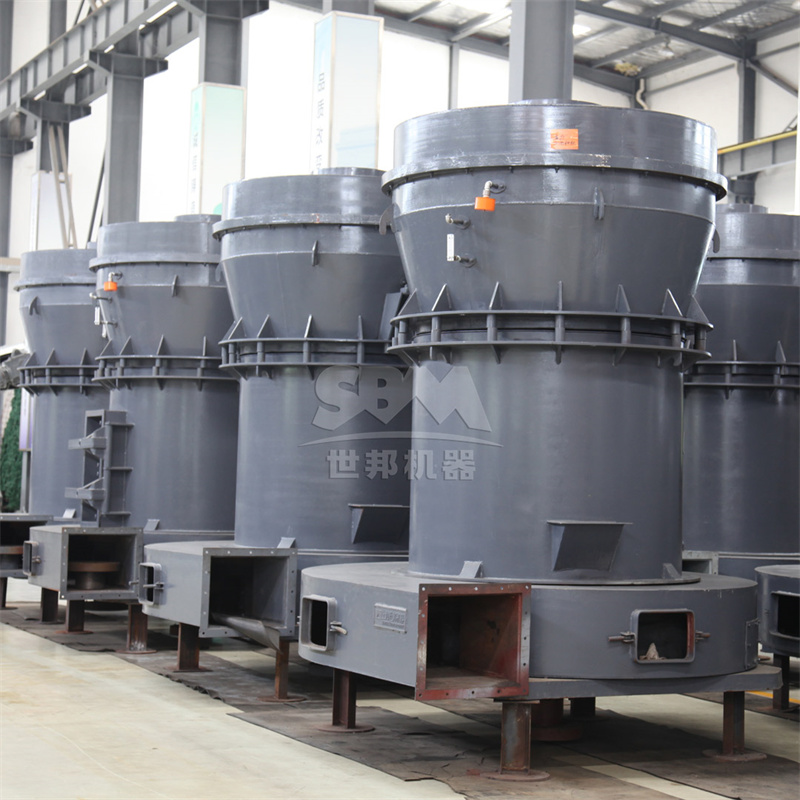
MTW Series European Trapezium Mill: Versatile and Robust for Medium-Fine Fillers
Not all rubber applications require ultrafine fillers. For many general-purpose rubber products, a fineness of 30 to 325 mesh (down to 0.038 mm) is sufficient. In such cases, the MTW Series European Trapezium Mill is an outstanding choice, offering high capacity (up to 45 t/h) and exceptional reliability at a lower capital cost than ultrafine mills.
Technical Advantages for Attapulgite Grinding
- Anti-wear Shovel Design: Combined shovel blades reduce maintenance costs, while the curved design extends grinding roller life. This is particularly beneficial when processing abrasive attapulgite.
- Optimized Arc Air Duct: Reduces airflow energy loss and improves transmission efficiency. High-strength guard plates protect the air duct working surface, ensuring long-term stable operation.
- Integral Bevel Gear Drive: Transmission efficiency up to 98%, saving space and reducing installation costs. This direct drive system minimizes power losses.
- Wear-resistant Volute Structure: Non-resistance flow design improves air selection efficiency, and maintenance costs are reduced by 30%.
Working Principle
The main motor drives the grinding rollers to revolve around the central axis while self-rotating to generate centrifugal force. Shovels throw materials between the ring and rollers to form a material layer, achieving efficient crushing through extrusion. The classification system precisely controls the finished product size. This extrusion-based grinding is gentler than impact milling, helping to maintain attapulgite’s fibrous structure to a reasonable degree.
Models & Specifications
The MTW series includes a wide range of models:
- MTW110: Capacity 3-9 t/h | Main Power 55 kW | Fineness 10-325 mesh
- MTW138Z: Capacity 6-17 t/h | Main Power 90 kW | Fineness 10-325 mesh
- MTW175G: Capacity 9.5-25 t/h | Main Power 160 kW | Fineness 10-325 mesh
- MTW215G: Capacity 15-45 t/h | Main Power 280 kW | Fineness 10-325 mesh
- MRN158: Capacity 7-21 t/h | Main Power 132 kW | Fineness 10-325 mesh
- MRN198: Capacity 12-33 t/h | Main Power 220 kW | Fineness 10-325 mesh
- MRN218: Capacity 15-45 t/h | Main Power 280 kW | Fineness 10-325 mesh
For a rubber filler plant producing 10-20 tons per hour of 200-325 mesh attapulgite, the MTW138Z or MTW175G are ideal. They offer a compelling combination of high throughput, low maintenance, and consistent product quality. The patented internal suction oil lubrication system and pulse dust removal technology further enhance reliability and environmental compliance.
Comparing SCM and MTW for Rubber Attapulgite
Choosing between the SCM Ultrafine Mill and the MTW European Trapezium Mill depends on your target product portfolio and production scale:
- If your focus is ultrafine fillers (800-2500 mesh) for high-performance rubber: The SCM series is the clear winner. Its precision classification and gentle grinding action preserve attapulgite’s reinforcing properties, and its energy efficiency per ton of ultrafine product is unmatched.
- If you produce medium-fine fillers (100-325 mesh) at high volume: The MTW series offers superior capacity and lower initial investment. Its robust construction handles the abrasive nature of attapulgite with ease, and the 30% reduction in maintenance costs is a significant operational advantage.
- For a diversified product line: Many producers operate both mills—a MTW for coarse grades and an SCM for ultrafine grades. This allows them to serve multiple rubber market segments with optimal efficiency.
Both mills share our company’s commitment to quality, innovation, and environmental responsibility. They are backed by our global service network and technical support, ensuring you achieve maximum uptime and product consistency.
Conclusion: Invest in the Right Machinery for Superior Rubber Attapulgite Filler
The rubber industry’s demand for high-quality attapulgite filler is growing, driven by the need for lighter, stronger, and more durable rubber products. To meet these demands, you need processing equipment that delivers precise fineness, preserves the filler’s unique morphology, and operates efficiently and reliably. Our SCM Series Ultrafine Mill and MTW Series European Trapezium Mill represent the state-of-the-art in attapulgite processing technology. By choosing either—or both—you equip your operation with the tools to produce world-class rubber filler that enhances your customers’ products and your bottom line.
Contact our technical team today to discuss your specific attapulgite processing requirements. We will help you select the optimal mill configuration, provide a detailed cost-benefit analysis, and support you through installation and beyond. With our expertise and advanced machinery, you can transform raw attapulgite into a premium rubber filler that commands higher prices and builds lasting customer loyalty.