
Introduction: The Critical Role of Attapulgite in Pesticide Suspension Concentrates
Attapulgite clay, also known as palygorskite, is a naturally occurring hydrated magnesium aluminum silicate mineral with a unique needle-like or fibrous morphology. Its high surface area, cation exchange capacity, and thixotropic properties make it an indispensable rheological additive in pesticide suspension concentrates (SCs). In SC formulations, attapulgite clay serves multiple functions: it acts as a thickener and suspending agent, prevents sedimentation of active ingredients, controls syneresis, and ensures pourability and redispersibility. However, the performance of attapulgite in SCs is highly dependent on its particle size distribution, degree of dispersion, and structural integrity. These characteristics, in turn, are largely determined by the grinding equipment used during processing.
Choosing the right mill for attapulgite clay processing is therefore not merely a matter of throughput or fineness—it is a strategic decision that directly impacts the rheology, stability, and overall quality of the final pesticide formulation. This article explores the key considerations for selecting grinding equipment for attapulgite clay intended for SC applications and introduces two advanced milling solutions that deliver optimal performance.
Why Particle Size and Morphology Matter for SC Rheology
In pesticide suspension concentrates, attapulgite clay must be processed to a specific particle size range to develop an effective gel structure. If the particles are too coarse, the clay will not fully hydrate, resulting in poor thickening efficiency and sedimentation. Conversely, over-grinding can destroy the fibrous structure of attapulgite, reducing its aspect ratio and thixotropic properties. The ideal processing target is typically 325 to 2500 mesh (approximately 45 to 5 microns), where the needles remain intact but are sufficiently dispersed to form a three-dimensional network that suspends active ingredients.
Furthermore, the particle size distribution must be narrow and uniform. Coarse particles can cause grit and nozzle clogging, while excessive fines can lead to viscosity drift and syneresis. Therefore, the mill must offer precise classification, minimal heat generation (to avoid thermal degradation), and gentle grinding action that preserves the clay’s morphology.
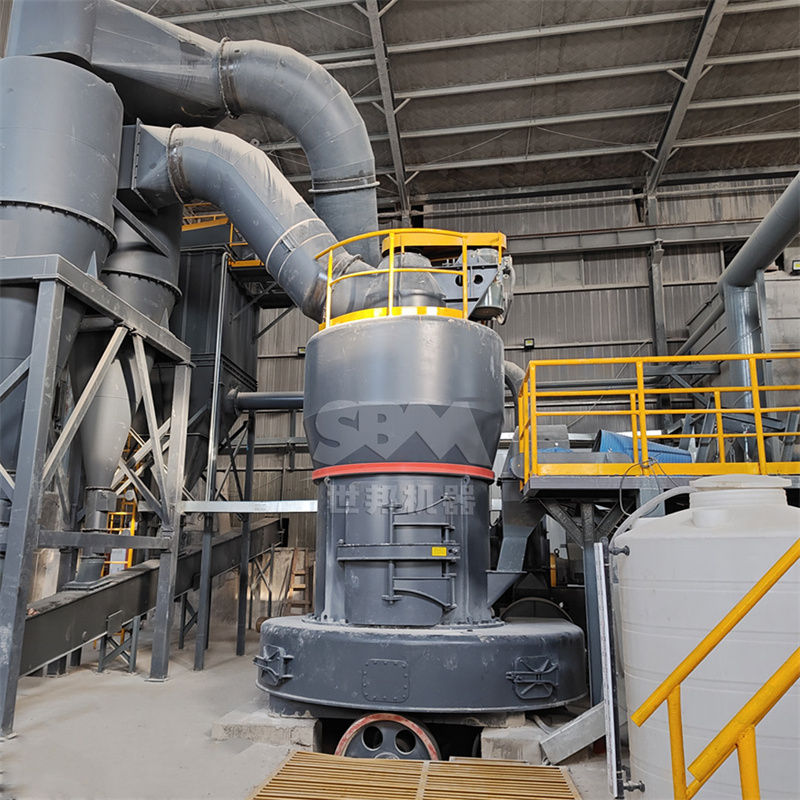
Key Criteria for Selecting a Mill for Attapulgite Clay
When evaluating grinding equipment for attapulgite clay destined for pesticide SCs, formulators and manufacturers should consider the following criteria:
- Fineness Range and Adjustability: The mill must achieve at least 325 mesh, with the capability to reach 2500 mesh for high-performance SCs. Adjustability is essential to tailor the particle size for different formulations.
- Classification Precision: An efficient classifier ensures narrow particle size distribution and prevents coarse particles from entering the finished product.
- Grinding Mechanism: Impact and attrition should be controlled to avoid fracturing the attapulgite needles. Roller mills and vertical mills with gentle compression are preferred over high-speed hammer mills.
- Energy Efficiency: Attapulgite processing can be energy-intensive; a mill with low specific energy consumption reduces production costs.
- Contamination Control: Iron and other wear metals can catalyze degradation of pesticides. The mill should use wear-resistant materials that minimize metal pick-up.
- Scalability and Automation: The equipment should support consistent quality at industrial scale, with intelligent controls for fineness and throughput.
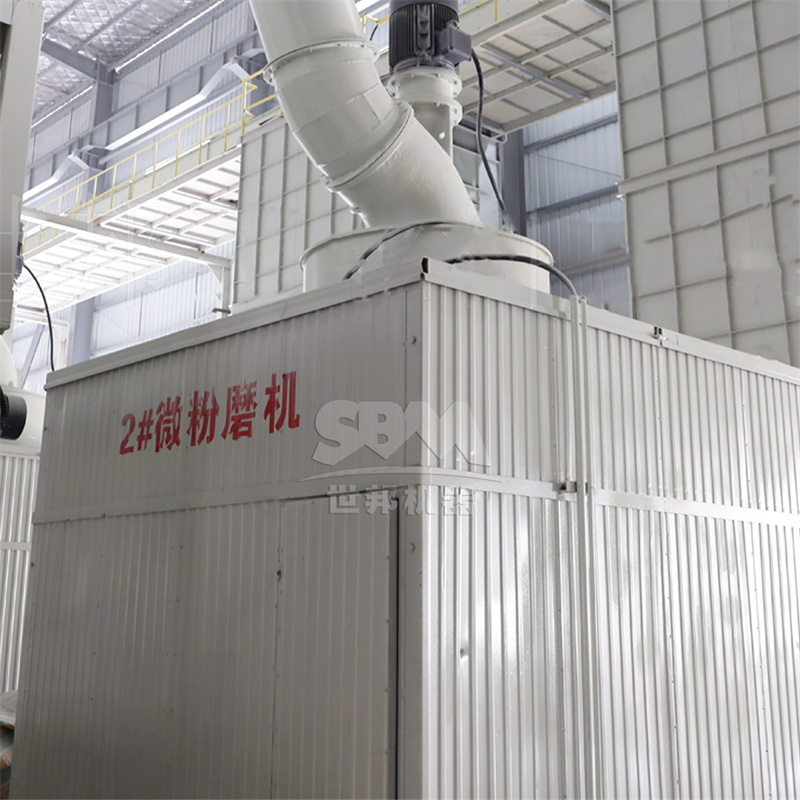
Recommended Equipment: SCM Series Ultrafine Mill
For attapulgite clay processing targeting the finest SC formulations, the SCM Series Ultrafine Mill is an outstanding choice. This vertical turbine mill is designed for ultrafine grinding and precise classification, making it ideal for producing attapulgite powders in the 325–2500 mesh range with minimal damage to the fibrous structure.
Technical Advantages of the SCM Series
- High Efficiency & Energy Saving: Capacity is twice that of jet mills, with 30% lower energy consumption. Intelligent control provides automatic feedback on finished product granularity, ensuring consistent quality.
- High-Precision Classification: The vertical turbine classifier achieves precise particle size cutting, with no coarse powder mixing, ensuring a uniform finished product.
- Durable Design: Special material rollers and rings extend service life several times over. The shaftless screw grinding chamber ensures stable operation.
- Eco-friendly & Low Noise: Pulse dust collection efficiency exceeds international standards, and the soundproof room design ensures low noise levels.
With models ranging from SCM800 (0.5–4.5 t/h) to SCM1680 (5.0–25 t/h), the SCM series can be scaled to meet any production capacity. Its ability to preserve the attapulgite needle structure while delivering ultrafine particles makes it a top recommendation for high-performance pesticide SCs.
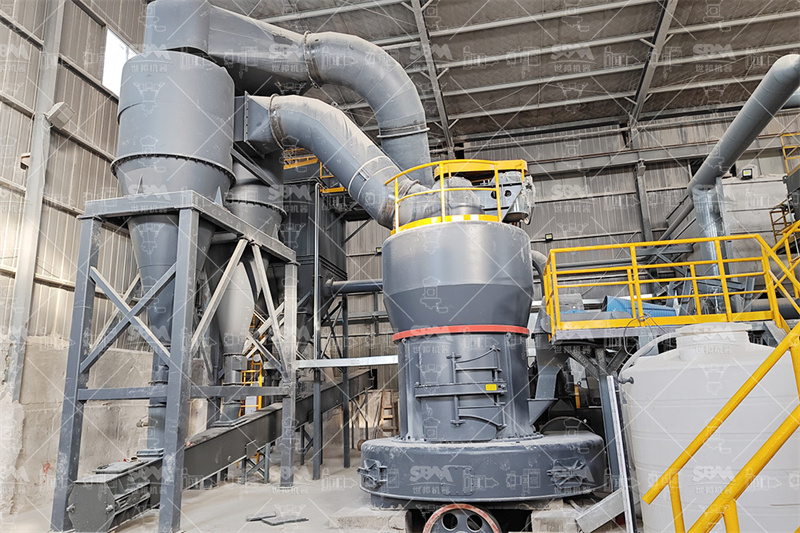
Recommended Equipment: MTW Series European Trapezium Mill
For manufacturers seeking a balance between ultrafine grinding and higher capacity, the MTW Series European Trapezium Mill is an excellent alternative. This mill is designed for medium to fine grinding (30–325 mesh) and can process attapulgite clay at capacities up to 45 t/h, making it suitable for large-scale SC production.
Technical Advantages of the MTW Series
- Anti-wear Shovel Design: Combined shovel blades reduce maintenance costs, and the curved design extends grinding roller life.
- Optimized Arc Air Duct: Reduces airflow energy loss and improves transmission efficiency, with high-strength guard plates protecting the air duct working surface.
- Integral Bevel Gear Drive: Transmission efficiency up to 98%, saving space and reducing installation costs.
- Wear-resistant Volute Structure: Non-resistance flow design improves air selection efficiency, and maintenance costs are reduced by 30%.
The MTW series offers precise control over finished product size, ensuring that attapulgite particles are neither over-ground nor under-ground. Its robust construction and efficient classification make it a reliable workhorse for attapulgite processing plants that demand both quality and throughput.
Comparing the Two Mills for Attapulgite SC Applications
Both the SCM and MTW series are engineered to deliver superior performance for attapulgite clay processing, but they serve different production scales and fineness requirements.
| Feature | SCM Series Ultrafine Mill | MTW Series European Trapezium Mill |
|---|---|---|
| Fineness Range | 325–2500 mesh | 30–325 mesh |
| Capacity | 0.5–25 t/h | 3–45 t/h |
| Best for | Ultrafine SCs, high rheology control | Medium-fine SCs, high volume production |
| Classification | Vertical turbine, high precision | Optimized volute, efficient |
| Energy Consumption | 30% lower than jet mills | Low, with optimized air duct |
For SC formulations requiring the finest attapulgite particles to achieve optimal thixotropy and suspension stability, the SCM series is the clear choice. For manufacturers producing larger volumes of SCs with moderate fineness requirements, the MTW series offers an excellent combination of capacity and precision.
Conclusion: Matching Mill Technology to SC Performance Goals
The selection of grinding equipment for attapulgite clay is a critical determinant of pesticide suspension concentrate quality. The right mill will preserve the clay’s fibrous morphology, deliver a narrow particle size distribution, and ensure consistent rheological properties. By investing in advanced milling technology such as the SCM Series Ultrafine Mill or the MTW Series European Trapezium Mill, manufacturers can achieve optimal rheology and stability in their SC formulations, reduce production costs, and maintain a competitive edge in the agrochemical market.
When evaluating your next attapulgite processing line, consider the specific requirements of your SC products. Whether you need ultrafine grinding for premium formulations or high-capacity milling for standard products, there is a mill designed to meet your needs. Choose wisely, and your pesticide suspension concentrates will deliver the performance your customers expect.