
Introduction
Orthoclase, a potassium-rich feldspar mineral, is an essential raw material in ceramics, glass, and specialty filler industries. Its unique properties — high potassium and aluminum content, low iron, and excellent fluxing ability — make it indispensable in porcelain tile bodies, sanitaryware glazes, and fiberglass manufacturing. However, transforming raw orthoclase ore into a finely ground powder with consistent particle size distribution requires careful selection of grinding equipment. This article provides a comprehensive guide to choosing the right grinding mill for your feldspar processing line, covering key selection criteria, equipment comparisons, and real-world recommendations from our proven portfolio.
Key Factors in Selecting a Grinding Mill for Orthoclase
Before diving into specific mill types, it is critical to evaluate your production requirements against the following parameters:
- Target fineness (mesh or μm): Are you producing a coarse filler (80–200 mesh), a ceramic body material (200–325 mesh), or an ultrafine powder (800–2500 mesh) for high-end applications?
- Capacity (t/h): Small-scale operations may require 0.5–5 t/h, while large ceramic plants demand 20–45 t/h or more.
- Feed size: Orthoclase ore typically comes in lumps up to 50 mm, but some mines deliver finer crush.
- Moisture content: Dry grinding is standard for feldspar, but high-moisture ores may need pre-drying or a mill with integrated drying capability.
- Energy efficiency and wear parts life: Feldspar is moderately hard (Mohs 6–6.5), causing wear on grinding elements. Mills with durable rollers and rings reduce downtime and cost per ton.
- Product purity and iron contamination: For glass and ceramic applications, iron pickup must be minimized. Mills with minimal metal-to-metal contact or ceramic liners are preferred.
- Automation and environmental compliance: Modern plants require low noise, dust-free operation, and intelligent control for consistent quality.
Grinding Mill Options for Orthoclase Processing
Several types of mills are suitable for feldspar grinding, each with distinct advantages and limitations. Below we analyze the most common choices.
1. Ball Mill
Ball mills are traditional workhorses for feldspar grinding. They handle feed sizes up to 25 mm and produce fineness from 0.074 mm to 0.8 mm (about 200 mesh down to 20 mesh). Capacities range from 0.65 t/h to over 450 t/h. Ball mills offer high crushing ratio (up to 300:1) and are suitable for both dry and wet grinding. However, they are energy-intensive, noisy, and require frequent replacement of liners and grinding media. For ultrafine products (below 325 mesh), ball mills become inefficient and costly.
2. Raymond Mill (Pendulum Mill)
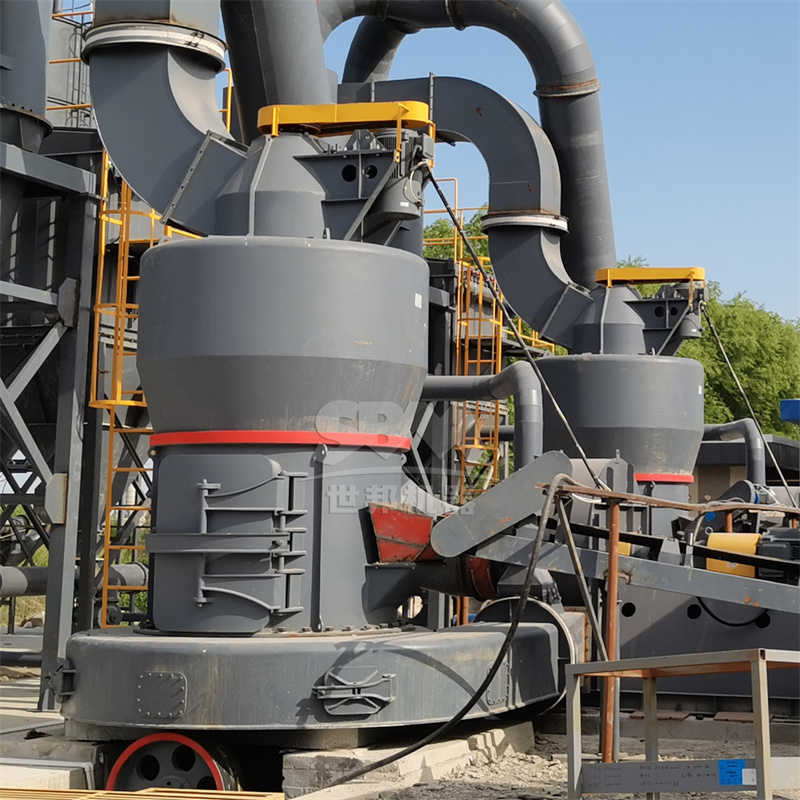
Raymond mills, also known as pendulum mills, are widely used for feldspar grinding to 80–325 mesh. They are more energy-efficient than ball mills and can handle feed sizes up to 50 mm. The MRN Pendulum Mill from our company features thin oil lubrication, efficient collectors, and pulse dust collection. Models like MB5X98 and MB5X298 deliver capacities from 2.7 t/h to 83 t/h. While excellent for medium-fine grinding, they struggle to reach ultrafine ranges below 600 mesh.
3. Hammer Mill
Hammer mills are used for preliminary crushing of orthoclase to 0–3 mm. They are not grinding mills for final powder production but serve as pre-grinding equipment. Our PC series hammer mills offer capacities from 8 t/h to 70 t/h with high manganese steel liners. They are compact, stable, and low-investment, but the output is too coarse for direct use in ceramics or fillers.
4. Vertical Roller Mill (VRM)
Vertical roller mills, such as our LM series, are excellent for large-scale feldspar grinding. They integrate crushing, grinding, and classification, reducing floor space by 50% and energy consumption by 30–40% compared to ball mills. The LM series can produce 30–325 mesh (up to 600 mesh for special models) with capacities from 3 t/h to 250 t/h. Models like LM130K to LM280K are suitable for orthoclase. The non-contact design between rollers and table extends wear part life. However, for ultrafine products below 800 mesh, VRMs may require additional classification.
5. Ultrafine Mills (SCM Series and LUM Series)
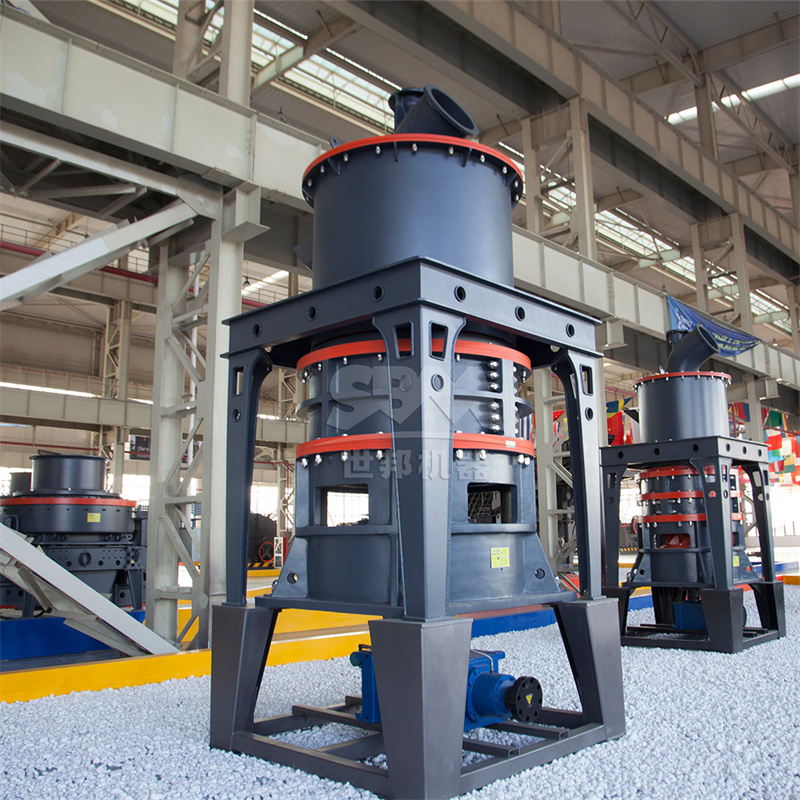
When your feldspar processing line targets high-value applications such as high-end ceramics, coatings, or electronic fillers, ultrafine grinding is necessary. Our SCM Series Ultrafine Mill and LUM Ultrafine Vertical Roller Mill are engineered for 325–2500 mesh products.
SCM Series Ultrafine Mill — This is our flagship product for ultrafine orthoclase powder. With input size ≤20 mm and output fineness 325–2500 mesh, it delivers capacities from 0.5 t/h to 25 t/h depending on model (SCM800 to SCM1680). Key advantages include:
- Capacity is twice that of jet mills with 30% lower energy consumption.
- Intelligent control with automatic finished product granularity feedback.
- Vertical turbine classifier for precise particle size cutting, no coarse powder mixing.
- Special material rollers and rings extend service life several times.
- Pulse dust collection exceeds international standards; soundproof room ensures low noise.
The SCM series is ideal for producing orthoclase powder for high-end ceramic glazes, functional fillers, and specialty glass. Its high-precision classification ensures uniform particle size distribution, critical for consistent ceramic firing.
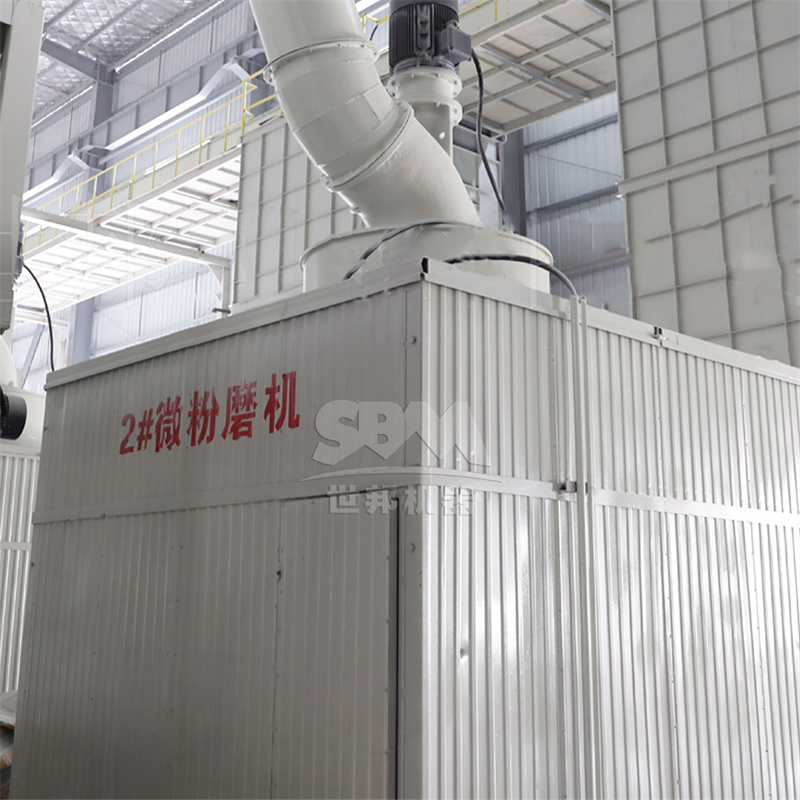
LUM Ultrafine Vertical Roller Mill — Another excellent choice for ultrafine orthoclase. With feed size 0-20 mm and output 325–2500 mesh, LUM models (LUM1525, LUM1632, LUM1836) offer capacities from 1.6 t/h to 15 t/h. Its unique roller/liner curves improve grinding efficiency, and multi-rotor classifying technology eliminates coarse particles. PLC automation ensures stable operation, and negative pressure operation prevents dust leakage. For medium-scale ultrafine production, LUM is a strong contender.
How to Match Mill Type to Your Production Scale
Selecting the right mill depends on your capacity and fineness targets:
- Small scale (0.5–5 t/h) and ultrafine (800–2500 mesh): SCM800 or SCM900. Ideal for specialty ceramic frits and high-purity fillers.
- Medium scale (5–20 t/h) and medium-fine (200–325 mesh): MTW European Trapezium Mill or MTM Medium-speed Trapezium Mill. MTW models (MTW110 to MTW215) offer capacities 3–45 t/h and fineness 30–325 mesh. They feature anti-wear shovel design and integral bevel gear drive. MTM models (MTM100 to MTM160) provide 3–22 t/h with intelligent pressure regulation.
- Large scale (20–250 t/h) and coarse to medium (30–325 mesh): LM Vertical Roller Mill. LM130K to LM280K deliver 10–170 t/h for mineral grinding. For even higher capacities, ball mills or LM-Y pre-grinding mills can be used in combination.
- Ultrafine and large scale (10–25 t/h): SCM1250 or SCM1680. These models bridge the gap between ultrafine grinding and high capacity.
Special Considerations for Orthoclase Grinding
Orthoclase is not the hardest mineral, but its cleavage and brittleness can lead to over-grinding if the mill lacks precise classification. Over-grinding wastes energy and can alter particle morphology, affecting ceramic shrinkage and vitrification. Therefore, a mill with a high-efficiency classifier is essential. Both SCM and LUM series excel here.
Another consideration is iron contamination. For glass and whiteware, iron content must be below 0.1%. Mills with rubber liners or ceramic wear parts reduce iron pickup. Our SCM series uses special material rollers and rings that minimize wear and metal transfer. Additionally, pulse dust collection prevents cross-contamination.
Moisture is a common issue in feldspar mines. If your ore has more than 1% moisture, consider a mill with integrated drying, such as the LM series with hot air circulation, or pre-dry the feed. MTW and MTM mills can handle small moisture but may require a hot air generator for higher moisture.
Energy costs are a major operational expense. Vertical mills and ultrafine mills are significantly more efficient than ball mills. For example, replacing a ball mill with an LM vertical mill can cut power consumption by 30–40% for the same fineness. The SCM series further reduces energy by using advanced classification and grinding chamber design.
Recommended Products for Your Orthoclase Line
Based on our extensive experience in feldspar processing, we recommend two outstanding solutions:
For ultrafine, high-value orthoclase powder (800–2500 mesh): The SCM Series Ultrafine Mill is our top recommendation. With models from SCM800 to SCM1680, it covers capacities from 0.5 t/h to 25 t/h. Its intelligent control, precise classification, and durable design make it the preferred choice for producing high-quality orthoclase for ceramics, paints, and plastics. The ability to adjust fineness automatically ensures consistent product quality, while the pulse dust collector meets the strictest environmental norms.
For large-scale, medium-fine orthoclase (30–325 mesh): The LM Series Vertical Roller Mill is unmatched in efficiency and capacity. Models like LM170K or LM220K can deliver 18–105 t/h, ideal for supplying ceramic tile plants or glass factories. Its integrated design reduces infrastructure costs, and the intelligent control system minimizes manual intervention. When combined with our hammer mill for pre-crushing, the LM mill forms a complete, efficient processing line.
For those requiring both medium-fine and ultrafine capabilities in one line, a two-stage setup with an MTW mill followed by an SCM mill is a flexible option. However, if your budget allows, we recommend the SCM series for direct ultrafine grinding, as it eliminates intermediate handling and reduces total energy consumption.
Conclusion
Choosing the right grinding mill for orthoclase powder production is a decision that impacts product quality, operating cost, and environmental compliance. Evaluate your target fineness, capacity, feed size, moisture, and iron limits. For ultrafine applications, the SCM Series Ultrafine Mill offers superior performance. For large-scale medium-fine grinding, the LM Vertical Roller Mill is the most efficient choice. By matching the mill to your specific needs, you can achieve optimal productivity and profitability in your feldspar processing line. Contact our engineers for a customized solution and equipment quotation.