
Introduction
Chemical-grade activated carbon powder is a critical material in water treatment, air purification, catalyst supports, pharmaceutical processing, and food decolorization. Unlike conventional activated carbon, chemical-grade grades demand strict control over particle size distribution (PSD), surface chemistry, and contamination levels. The grinding stage is arguably the most influential step in determining final product quality, throughput, and operational cost. Selecting the wrong mill can lead to excessive fines, iron contamination, high energy consumption, or unacceptable downtime. This article provides a practical framework for choosing the right grinding mill for chemical-grade activated carbon powder production, with reference to proven equipment technologies.
Key Characteristics of Chemical-Grade Activated Carbon Powder
Before evaluating mills, producers must define target specifications. Typical chemical-grade activated carbon powder has:
- Fineness: 200–325 mesh (45–75 μm) for standard grades; 1250–2500 mesh (5–10 μm) for high-purity specialty applications.
- Purity: Low ash, low iron, and minimal trace metal contamination. Wear from grinding media can introduce iron, which is unacceptable in catalyst or pharmaceutical grades.
- PSD: Narrow distribution. Coarse particles reduce reactivity; excessive ultrafines cause dusting, poor flowability, and filtration issues.
- Moisture and volatility: Activated carbon is friable, hygroscopic, and can contain volatiles; grinding must avoid heat buildup and explosion risks.
- Throughput: From 0.5 t/h in specialty lines to 25 t/h or more in large-scale chemical plants.
These characteristics dictate mill selection more than general-purpose grinding criteria.
Grinding Mill Options for Activated Carbon Powder
1. Hammer Mills (0–3 mm)
Hammer mills are suitable only for pre-crushing or coarse grinding. They cannot achieve the fine PSD required for chemical-grade powder. They are useful as a first-stage crusher before fine grinding, but produce a wide particle size range and generate significant dust.
2. Ball Mills (0.074–0.8 mm)
Ball mills are robust and can handle abrasive materials, but they are energy-intensive, noisy, and prone to iron contamination from steel balls and liners. For chemical-grade activated carbon, ball mills are generally not recommended unless high-purity ceramic media are used, which increases cost. They also have a large footprint and low energy efficiency.
3. Medium-Speed Trapezium Mills (45–325 mesh)
MTM or MTW series mills offer a good balance of capacity and fineness. They are suitable for 200–325 mesh chemical-grade activated carbon and can reach 600 mesh in some configurations. However, they may struggle with very fine grades below 10 μm and can introduce wear from rollers and rings. They are a reasonable choice for mid-range production.
4. Ultrafine Mills (325–2500 mesh)
For high-purity, ultrafine chemical-grade activated carbon, ultrafine mills such as the SCM Series are the preferred solution. They combine high-precision classification with low contamination risk when equipped with special wear-resistant materials. They are also more energy-efficient than jet mills and offer better PSD control.
5. Vertical Roller Mills (30–325 mesh, up to 600 mesh)
LM or LUM series vertical mills are excellent for large-scale production. They integrate crushing, grinding, and classification, reduce floor space, and lower energy consumption by 30–40% compared to ball mills. For activated carbon, they can be configured with ceramic or special alloy wear parts to minimize contamination. The LUM ultrafine vertical mill is particularly suitable for 325–2500 mesh grades.
Selection Criteria for Chemical-Grade Activated Carbon
Fineness and PSD Control
The mill must achieve the target top size and narrow PSD. A high-precision classifier is essential. For 5–10 μm grades, only ultrafine mills with dynamic classifiers (e.g., SCM or LUM) can consistently meet specifications.
Contamination Control
Iron and ash contamination must be minimized. Mills with ceramic liners, special alloy rollers, or non-metallic contact surfaces are preferred. The SCM Series offers special material rollers and rings that extend service life and reduce metal wear. The LUM series can be configured with ceramic wear parts.
Capacity and Scalability
Throughput must match line requirements. For small-to-medium lines (0.5–25 t/h), the SCM Series covers the full range with models from SCM800 to SCM1680. For large-scale lines (up to 250 t/h), the LM series is more appropriate. The MTW series is suitable for 3–45 t/h.
Energy Efficiency
Jet mills are extremely energy-intensive. Ultrafine mills like the SCM Series consume about 30% less energy than jet mills and have twice the capacity. Vertical roller mills consume 30–40% less energy than ball mills. This directly reduces operating costs.
Dust and Environmental Compliance
Activated carbon dust is hazardous and explosive. The mill must be fully sealed, operate under negative pressure, and be equipped with high-efficiency pulse dust collection. The SCM Series features pulse dust collection exceeding international standards and soundproof design. The LM series offers fully sealed negative pressure operation with dust emissions below 10 mg/m³.
Maintenance and Wear Life
Wear parts must last long to minimize downtime and contamination. The SCM Series uses special material rollers and rings that extend service life several times over. The LM series uses non-contact design between rollers and table, increasing wear part life by 3x. The MTW series has anti-wear shovel design and wear-resistant volute structure.
Automation and Control
Intelligent control ensures stable product quality. The SCM Series offers automatic finished product granularity feedback and intelligent control. The LM series has expert-level auto-control with remote/local switching. The MTM series features intelligent pressure regulation that compensates for roller wear.
Recommended Equipment for Chemical-Grade Activated Carbon
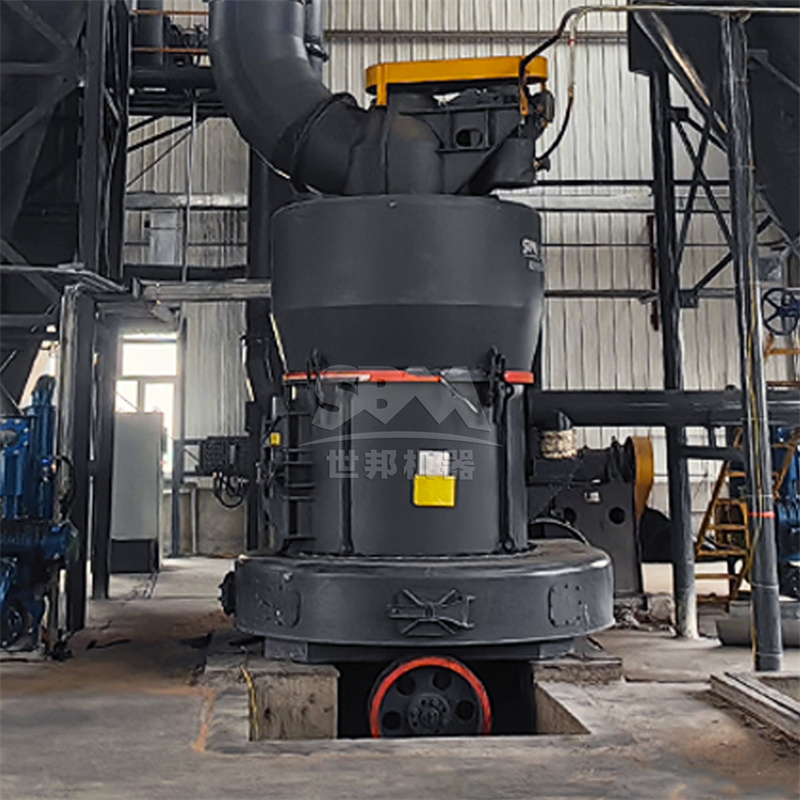
SCM Series Ultrafine Mill
For producers targeting 325–2500 mesh (5–45 μm) chemical-grade activated carbon, the SCM Series is the ideal choice. It offers:
- Capacity: 0.5–25 t/h depending on model.
- Fineness: 325–2500 mesh.
- High-precision vertical turbine classifier for narrow PSD.
- Special material rollers and rings for low contamination and long life.
- Pulse dust collection exceeding international standards.
- Energy consumption 30% lower than jet mills.
- Intelligent control with automatic granularity feedback.
Models SCM800 through SCM1680 cover small to large capacities. For a typical chemical-grade line producing 5–10 μm powder at 5–10 t/h, the SCM1250 or SCM1680 is recommended.
LUM Ultrafine Vertical Roller Mill
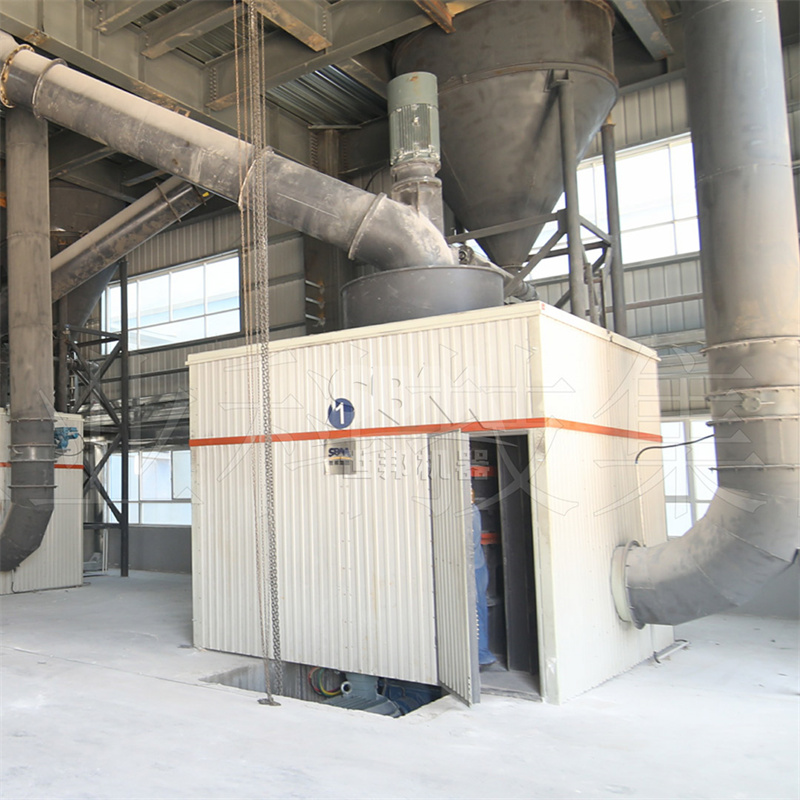
For very large-scale production (up to 15 t/h) of ultrafine activated carbon, the LUM series is a strong alternative. It offers:
- Fineness: 325–2500 mesh.
- Capacity: 1.6–15 t/h depending on model.
- Unique roller/liner curves for efficient grinding.
- Multi-rotor classifier for precise particle size control.
- PLC automation for stable operation.
- Negative pressure operation with no dust leakage.
Models LUM1525, LUM1632, and LUM1836 are available. They are particularly suitable for lines requiring high capacity and low energy consumption.
Conclusion
Choosing the right grinding mill for chemical-grade activated carbon powder requires careful consideration of fineness, PSD, contamination control, capacity, energy efficiency, and environmental compliance. While hammer mills and ball mills have limited application, ultrafine mills and vertical roller mills offer the best performance for high-purity chemical-grade products.
For most chemical-grade activated carbon producers, the SCM Series Ultrafine Mill provides an excellent combination of precision, capacity, and low contamination. For very large-scale operations, the LUM Ultrafine Vertical Roller Mill is a powerful option. By matching mill technology to product specifications and production scale, manufacturers can achieve consistent quality, lower operating costs, and reliable compliance with environmental standards.

Investing in the right grinding mill is not just about capital cost—it is about total cost of ownership, product quality, and market competitiveness. With the right equipment, chemical-grade activated carbon producers can meet the most demanding specifications and stay ahead in a competitive global market.