
Introduction: The Strategic Importance of Spodumene Processing
As the global transition to clean energy accelerates, lithium has become one of the most sought-after minerals on earth. Among the various lithium-bearing minerals, spodumene (LiAlSi₂O₆) is by far the most economically significant source of hard-rock lithium. With lithium carbonate and lithium hydroxide demand soaring for electric vehicle batteries and grid storage, the efficient processing of spodumene ore has never been more critical.
Spodumene processing is a multi-stage operation that begins with crushing, proceeds through grinding and classification, and culminates in beneficiation—typically froth flotation or dense media separation—to produce a high-grade lithium concentrate. Each stage demands specialized equipment that balances throughput, energy efficiency, and product quality. This buyer’s guide walks you through the key equipment categories, selection criteria, and practical considerations for building or upgrading a spodumene processing plant.
1. Crushing: The First Step in Liberation
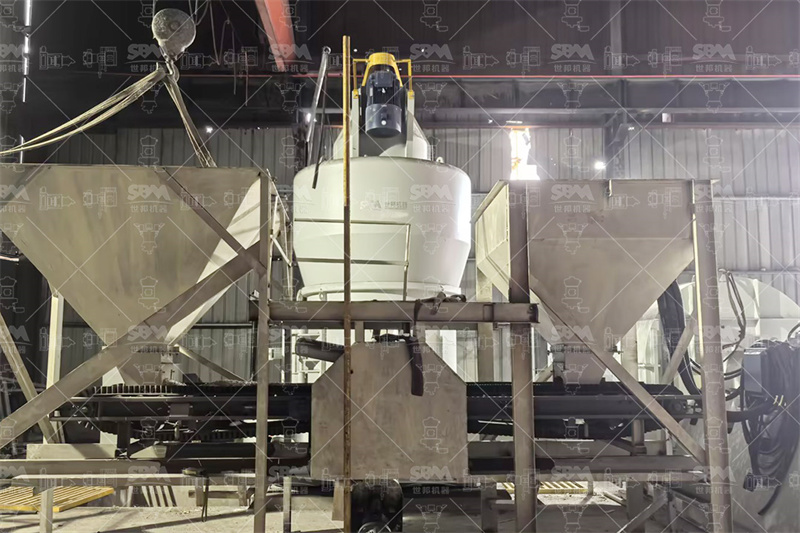
Spodumene ore typically arrives from the mine with a top size of 600–1000 mm. The objective of crushing is to reduce this to a size suitable for grinding—usually below 20–25 mm—while minimizing fines generation and preserving the crystal structure for downstream separation.
A typical crushing circuit for spodumene consists of three stages:
- Primary Crushing: A jaw crusher or gyratory crusher reduces run-of-mine ore to about 150–200 mm. Jaw crushers are preferred for smaller capacities, while gyratory crushers handle large tonnages.
- Secondary Crushing: Cone crushers—such as the HPGR or standard cone—further reduce the ore to 50–80 mm. This stage is critical for creating a uniform feed to the tertiary crusher.
- Tertiary Crushing: Short-head cone crushers or high-pressure grinding rolls (HPGR) bring the material down to 10–20 mm. HPGR is increasingly favored for its energy efficiency and ability to create micro-cracks that improve downstream grinding.
When selecting crushing equipment, consider the Bond Work Index of your spodumene ore (typically 12–16 kWh/t), the moisture content, and the presence of clay minerals. A well-designed crushing circuit should include adequate surge capacity and dust suppression to ensure smooth operation.
2. Grinding: Liberating Lithium Minerals
Grinding is the most energy-intensive stage in spodumene processing. The goal is to liberate spodumene crystals from gangue minerals (quartz, feldspar, mica) while producing a particle size distribution that is optimal for flotation—usually 150–250 μm. Over-grinding produces slimes that are difficult to float, while under-grinding leaves locked particles that report to tailings.
For spodumene grinding, two main equipment types dominate: tumbling ball mills and vertical roller mills. The choice depends on capacity, product fineness, and energy costs.
2.1 Ball Mills: Proven and Flexible
Ball mills remain the workhorse of spodumene grinding, particularly for smaller plants (up to 100 t/h). They are robust, easy to operate, and can handle variations in feed size. A typical ball mill circuit for spodumene operates in closed circuit with a hydrocyclone or mechanical classifier to control the final particle size.
However, ball mills are energy-inefficient. They consume 15–25 kWh/t of ore, and their liners and grinding media wear rapidly due to the abrasive nature of spodumene. Recent advances in liner design (e.g., wave liners, high-chrome media) have extended wear life, but the fundamental energy penalty remains.
2.2 Vertical Roller Mills: The Energy-Efficient Alternative
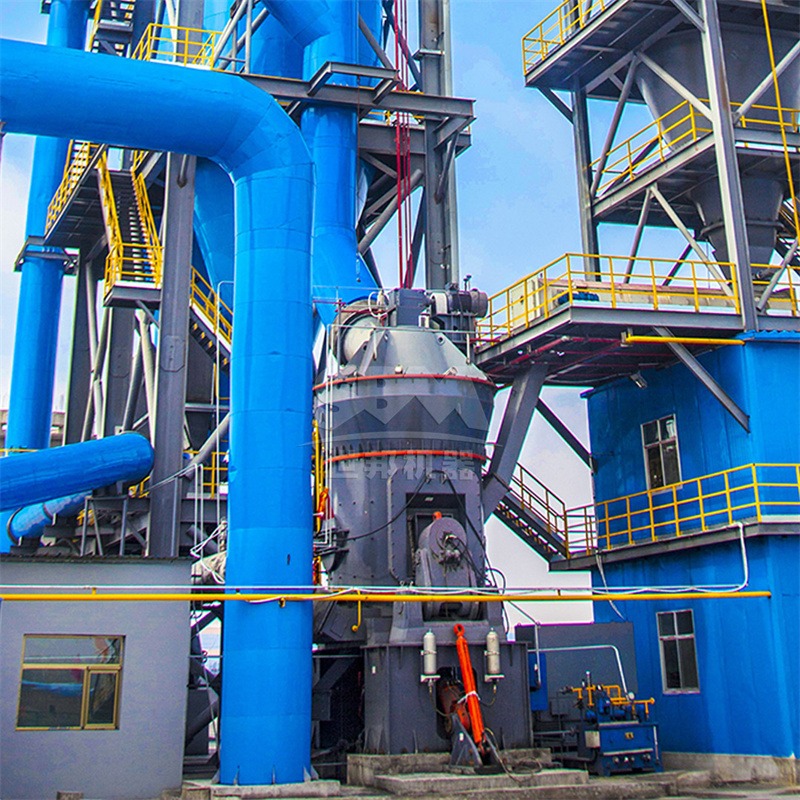
For large-scale spodumene operations (above 150 t/h), vertical roller mills (VRMs) are increasingly the preferred choice. VRMs grind material between a rotating table and stationary rollers, using pressure rather than impact. This results in 30–40% lower specific energy consumption compared to ball mills, as well as a more compact footprint and lower noise levels.
Among the VRM options, the LM Series Vertical Roller Mill from our company stands out for spodumene processing. It integrates crushing, grinding, drying, and classification in a single unit, reducing auxiliary equipment and infrastructure costs. With capacities from 3 to 250 t/h and fineness adjustable from 30 to 325 mesh (down to 600 mesh for special models), the LM Series can be configured to match any plant scale. Its patented modular grinding roller assembly allows quick roller changes, minimizing downtime, while the dynamic classifier ensures a sharp cut point with minimal coarse particles. For spodumene, the LM Series typically operates in a dry grinding mode, which simplifies downstream flotation by eliminating wet grinding and dewatering steps.
If your plant requires ultrafine grinding (below 45 μm) for specialized lithium chemicals, the SCM Series Ultrafine Mill is an excellent choice. It produces 325–2500 mesh powders with capacities up to 25 t/h, and its intelligent control system automatically adjusts to maintain consistent product fineness. The SCM Series is particularly suited for producing high-purity spodumene concentrates for the glass-ceramic and battery industries.
3. Beneficiation: From Ore to Concentrate
After grinding, spodumene ore must be beneficiated to remove gangue minerals and upgrade the lithium content. The three main beneficiation methods are froth flotation, dense media separation (DMS), and magnetic separation. The choice depends on the ore mineralogy, liberation size, and target concentrate grade.
3.1 Froth Flotation
Froth flotation is the most widely used method for spodumene beneficiation, capable of producing concentrates with 5–7% Li₂O and recoveries above 80%. The process involves conditioning the ground ore with collectors (typically fatty acids or amines), frothers, and modifiers, then floating spodumene while depressing gangue minerals.
Key equipment in a flotation circuit includes:
- Conditioning Tanks: Provide sufficient residence time for reagent adsorption.
- Flotation Cells: Mechanical or column cells, often arranged in rougher-scavenger-cleaner configuration.
- Regrind Mills: For middlings that require further liberation.
For spodumene flotation, efficient grinding is critical to avoid slimes. The MTW Series European Trapezium Mill is an excellent choice for preparing flotation feed. With its optimized arc air duct and integral bevel gear drive, the MTW Series achieves transmission efficiency up to 98% and reduces maintenance costs by 30%. It produces a uniform particle size distribution (30–325 mesh) with minimal fines, which is ideal for flotation. Capacities range from 3 to 45 t/h, making it suitable for mid-sized spodumene plants.
3.2 Dense Media Separation (DMS)
DMS exploits the density difference between spodumene (3.1–3.2 g/cm³) and gangue minerals (2.6–2.7 g/cm³). It is typically applied to coarse ore (10–50 mm) before grinding, and can achieve up to 90% recovery with a concentrate grade of 5–6% Li₂O. DMS is less sensitive to slimes than flotation and has lower operating costs, but it requires a well-liberated ore and precise density control.
Key DMS equipment includes:
- Dense Media Cyclones: For fine separation (0.5–10 mm).
- Drum Separators: For coarse separation (10–50 mm).
- Magnetic Separators: To remove ferrosilicon media from the product.
3.3 Magnetic Separation
Magnetic separation is often used as a polishing step to remove iron-bearing minerals (e.g., mica, tourmaline) from the spodumene concentrate. High-intensity magnetic separators (HIMS) or rare-earth roll separators are employed, depending on the magnetic susceptibility of the contaminants. This step is particularly important for battery-grade lithium chemicals, which require low iron content.
4. Equipment Selection Criteria
When selecting equipment for spodumene processing, consider the following factors:
- Ore Characteristics: Hardness, abrasiveness, liberation size, and mineralogy.
- Plant Capacity: Small plants (<50 t/h) may prefer ball mills and mechanical flotation cells; large plants (>150 t/h) benefit from VRMs and column flotation.
- Product Specifications: Concentrate grade, impurity limits, and particle size distribution.
- Energy and Water Availability: Dry grinding (VRM) is preferred in arid regions; wet grinding (ball mill) may be necessary for flotation.
- Capital and Operating Costs: VRMs have higher capital costs but lower energy and maintenance costs over time.
- Environmental Regulations: Dust and noise emissions must be controlled; equipment with integrated dust collection and soundproofing is preferred.
5. Case Study: Integrating Grinding and Beneficiation
A recent spodumene project in Western Australia required a 200 t/h plant to produce a 6% Li₂O concentrate. The circuit design included:
- Primary jaw crusher and secondary cone crusher to reduce ore to 20 mm.
- LM Series Vertical Roller Mill for dry grinding to 150 μm, with integrated dynamic classifier.
- Froth flotation circuit with conditioning tanks, rougher-scavenger-cleaner cells, and regrind mill (MTW Series) for middlings.
- High-intensity magnetic separator to remove iron.
- Thickener and filter press for concentrate dewatering.
The plant achieved 85% lithium recovery and a concentrate grade of 6.2% Li₂O, with specific energy consumption of 18 kWh/t for grinding—significantly lower than a ball mill circuit.
6. Maintenance and Optimization
Spodumene processing equipment operates under abrasive and corrosive conditions. Regular maintenance is essential to maximize uptime and product quality. Key practices include:
- Inspect liners and grinding media weekly; replace when wear exceeds 70%.
- Monitor classifier efficiency and adjust as needed to prevent coarse contamination.
- Calibrate reagent dosing systems daily to maintain flotation performance.
- Implement predictive maintenance using vibration and temperature sensors.
- Train operators on optimal control strategies for varying ore types.
Our company offers comprehensive after-sales support, including spare parts, technical training, and remote monitoring. With our LM Series Vertical Roller Mill and MTW Series European Trapezium Mill, you can achieve reliable, energy-efficient grinding tailored to your spodumene ore.
7. Future Trends in Spodumene Processing
The spodumene processing industry is evolving rapidly. Key trends include:
- Electrification and Automation: PLC and AI-based control systems optimize energy use and product quality.
- Dry Processing: Water scarcity is driving adoption of dry grinding and dry beneficiation (e.g., electrostatic separation).
- Fine Grinding: As ore grades decline, finer liberation is required, boosting demand for ultrafine mills like the SCM Series.
- Circular Economy: Tailings reprocessing and by-product recovery (e.g., feldspar, mica) are gaining attention.
Conclusion: Choosing the Right Partner
Selecting the right equipment for spodumene processing is a complex decision that impacts project economics, product quality, and environmental compliance. By understanding the principles of crushing, grinding, and beneficiation, and by partnering with an experienced equipment supplier, you can build a plant that delivers high recovery, low operating costs, and long-term reliability.
Our company has decades of experience in mineral processing and offers a full range of equipment—from crushers and mills to classifiers and flotation cells. Whether you need a single mill or a complete turnkey plant, we can help you achieve your lithium production goals. Contact us today to discuss your spodumene project.