
Introduction: The Critical Role of Grinding in Iron Oxide Red Pigment Production
Iron oxide red (Fe₂O₃) is one of the most widely used inorganic pigments in the world, finding applications in construction materials, coatings, plastics, rubber, ceramics, and even cosmetics. Its popularity stems from excellent tinting strength, chemical stability, UV resistance, and cost-effectiveness. However, the quality of the final pigment product depends heavily on one crucial processing stage: grinding. The particle size distribution, fineness, and uniformity of iron oxide red powder directly influence color strength, dispersibility, hiding power, and overall performance in end-use applications.
Selecting the right grinding mill for your iron oxide red production line is therefore not merely a matter of equipment procurement—it is a strategic decision that affects product quality, operational efficiency, energy consumption, and long-term profitability. This article provides a comprehensive guide to choosing the optimal grinding solution for iron oxide red pigment manufacturing, drawing on advanced milling technologies available in the market.

Understanding Iron Oxide Red Grinding Requirements
Before evaluating specific mill types, it is essential to understand the unique characteristics of iron oxide red as a grinding material:
- Hardness: Iron oxide red typically has a Mohs hardness of 5-6, making it moderately hard and abrasive. This necessitates wear-resistant grinding components.
- Target Fineness: Depending on the application, iron oxide red pigments generally require fineness ranging from 325 mesh (45μm) to 2500 mesh (5μm). High-end applications such as automotive coatings may demand ultra-fine particles below 10μm.
- Moisture Sensitivity: Iron oxide red powder must maintain low moisture content to prevent agglomeration and ensure free-flowing properties.
- Contamination Control: Iron contamination from grinding equipment must be avoided, as it can alter the pigment’s color properties.
- Production Scale: Pigment manufacturers operate at various scales, from small batch production (0.5 t/h) to large continuous lines (25+ t/h).
These factors collectively determine which grinding mill technology is most suitable for a given production scenario.
Key Grinding Mill Technologies for Iron Oxide Red
1. Ultrafine Grinding Mills for High-End Pigment Applications
When producing iron oxide red for premium applications—such as high-performance coatings, inks, or specialty plastics—ultrafine grinding is essential. The SCM Series Ultrafine Mill represents an ideal solution for such demanding requirements.
The SCM Series is designed to produce powder with fineness ranging from 325 to 2500 mesh (approximately 45μm down to 5μm), perfectly aligning with the particle size requirements of high-quality iron oxide red pigments. Its capacity ranges from 0.5 to 25 tons per hour depending on the model, allowing manufacturers to scale production according to market demand.
Key technical advantages of the SCM Series for iron oxide red processing include:
- High Efficiency and Energy Saving: The SCM Series offers twice the capacity of traditional jet mills while consuming 30% less energy. Given that grinding is one of the most energy-intensive stages in pigment production, this translates to significant operational cost savings.
- High-Precision Classification: The vertical turbine classifier achieves precise particle size cutting, ensuring no coarse powder mixing. This results in uniform finished products—a critical factor for consistent pigment color and performance.
- Durable Design: Special material rollers and rings extend service life several times over compared to conventional grinding elements. The shaftless screw grinding chamber ensures stable operation even under continuous heavy-duty conditions.
- Eco-friendly Operation: The pulse dust collection system exceeds international standards, and the soundproof room design keeps noise levels well within acceptable limits. This is particularly important for pigment manufacturers operating in environmentally regulated regions.

For iron oxide red manufacturers targeting the high-end pigment market, the SCM Series—available in models from SCM800 (0.5-4.5 t/h) to SCM1680 (5.0-25 t/h)—provides the precision, efficiency, and reliability needed to maintain competitive advantage.
2. European Trapezium Mills for Medium to Fine Grinding
For manufacturers requiring fineness in the range of 30 to 325 mesh (down to 0.038mm) with higher production capacities, the MTW Series European Trapezium Mill offers an excellent balance of performance and throughput. With capacities ranging from 3 to 45 tons per hour, this mill series is well-suited for medium-to-large-scale iron oxide red production.
The MTW Series incorporates several design innovations specifically beneficial for pigment grinding:
- Anti-wear Shovel Design: Combined shovel blades reduce maintenance costs, while the curved design extends grinding roller life—a crucial consideration when processing abrasive iron oxide materials.
- Optimized Arc Air Duct: Reduces airflow energy loss and improves transmission efficiency, contributing to lower overall power consumption.
- Integral Bevel Gear Drive: Achieves transmission efficiency up to 98%, saving space and reducing installation costs.
- Wear-resistant Volute Structure: The non-resistance flow design improves air selection efficiency, and maintenance costs are reduced by 30%.
Models such as the MTW138Z (6-17 t/h) and MTW175G (9.5-25 t/h) are particularly popular among iron oxide red producers seeking a reliable workhorse mill that delivers consistent fineness with minimal downtime.
3. Vertical Roller Mills for Large-Scale Production
When production demands exceed 30 tons per hour, or when manufacturers seek to minimize floor space and infrastructure costs, the LM Series Vertical Roller Mill becomes a compelling option. With capacities ranging from 3 to 250 tons per hour, this mill type is designed for large-scale continuous operation.
The LM Series offers:
- Integrated Design: Crushing, grinding, and classification are integrated into a single system, reducing floor space by 50% and infrastructure costs by 40%. Outdoor installation is even possible in suitable climates.
- Low Operating Cost: The non-contact design between rollers and table increases wear part life by three times, while energy consumption is 30-40% lower than ball mill systems.
- Intelligent Control: Expert-level auto-control systems support remote and local switching, with real-time monitoring of parameters to reduce manual intervention.
4. Ball Mills for Coarse to Medium Grinding
For applications requiring coarser iron oxide red powder (0.074-0.8mm) or for pre-grinding stages, ball mills remain a proven and reliable option. With capacities up to 450 tons per hour, ball mills are suitable for large-volume, continuous production where ultra-fine particles are not required.
How to Choose: A Decision Framework
Selecting the right grinding mill for iron oxide red production requires careful evaluation of several factors:
Step 1: Define Your Target Fineness
- Ultra-fine (5-15μm): SCM Series Ultrafine Mill or LUM Ultrafine Vertical Roller Mill
- Fine (15-45μm): MTW Series, LM Series, or MTM Series
- Medium to Coarse (45-800μm): Ball Mill or Hammer Mill
Step 2: Determine Required Capacity
- Small scale (< 5 t/h): SCM800, MTM100, or MB5X98
- Medium scale (5-25 t/h): SCM1250, MTW175G, MTM160, or LM170K
- Large scale (> 25 t/h): SCM1680, MTW215G, LM220K, or Ball Mill GMQY3660
Step 3: Evaluate Energy Efficiency
Energy costs represent a significant portion of pigment production expenses. Vertical roller mills and ultrafine mills generally offer superior energy efficiency compared to ball mills. The SCM Series, for instance, consumes 30% less energy than jet mills of comparable capacity.
Step 4: Consider Maintenance and Wear
Iron oxide red’s abrasive nature accelerates wear on grinding components. Mills with wear-resistant materials, easy maintenance access, and longer replacement intervals will deliver lower total cost of ownership. The MTW Series’ combined shovel blades and the SCM Series’ special material rollers are examples of designs that address this challenge.
Step 5: Assess Environmental Compliance
Dust emission and noise levels are increasingly regulated. Ensure your chosen mill incorporates effective dust collection (such as pulse dust removal systems) and noise reduction features. The SCM Series and LM Series both offer fully sealed negative pressure operation with advanced dust collection.
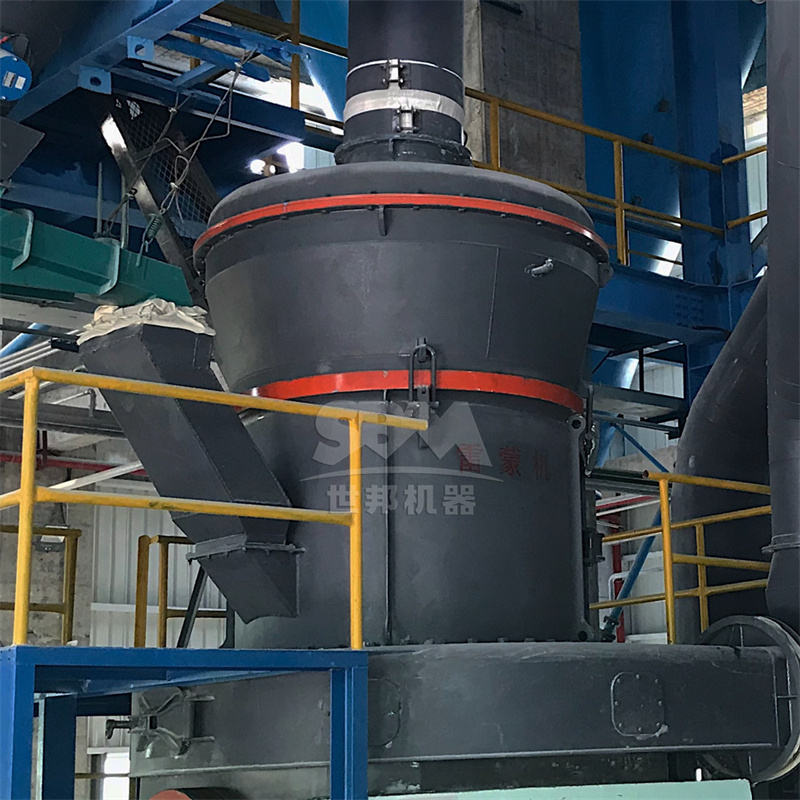
Recommended Solutions for Iron Oxide Red Production
Based on the specific requirements of iron oxide red pigment manufacturing, two mills stand out as particularly well-suited:
For High-End, Ultra-Fine Pigment Production: SCM Series Ultrafine Mill
The SCM Series is the ideal choice for manufacturers targeting premium pigment markets. Its ability to produce 325-2500 mesh powder with precise particle size distribution ensures that iron oxide red pigments achieve maximum color strength, excellent dispersibility, and superior hiding power. The intelligent control system with automatic finished product granularity feedback further ensures consistent quality batch after batch. With models ranging from 0.5 t/h to 25 t/h, it accommodates both specialty producers and large-scale manufacturers.
For Medium-to-Large Scale Production: MTW Series European Trapezium Mill
The MTW Series offers an outstanding combination of capacity (3-45 t/h), fineness (30-325 mesh), and operational reliability. Its robust construction and wear-resistant components are specifically engineered to handle abrasive materials like iron oxide red. The mill’s patented technologies—including the independent intellectual property rights, internal suction oil lubrication system, and internationally advanced pulse dust removal technology—make it a dependable and environmentally compliant solution for continuous pigment production.
Conclusion
Choosing the right grinding mill for iron oxide red pigment production is a multifaceted decision that balances fineness requirements, production capacity, energy efficiency, maintenance costs, and environmental compliance. The SCM Series Ultrafine Mill excels in high-precision, ultra-fine grinding for premium pigment applications, while the MTW Series European Trapezium Mill provides an optimal solution for medium-to-large-scale producers seeking reliability and throughput.
By carefully evaluating your specific production parameters against the technical capabilities of available mill technologies, you can select equipment that not only meets your current needs but also positions your pigment manufacturing line for long-term success in an increasingly competitive global market.
Investing in the right grinding mill is investing in the quality, consistency, and profitability of your iron oxide red pigment products. Choose wisely, and your production line will deliver superior pigments for years to come.