
Introduction to Attapulgite and Its Role in Foundry Sand Binders
Attapulgite, also known as palygorskite, is a naturally occurring hydrated magnesium aluminum silicate clay mineral with a unique needle-like crystal structure. This distinctive morphology gives attapulgite exceptional colloidal, adsorptive, and rheological properties that make it indispensable in a wide range of industrial applications. One of the most important uses of attapulgite is as a binder in foundry sands, where its high surface area, thermal stability, and excellent green strength contribute to superior mold performance and casting quality.
In the foundry industry, attapulgite-based binders are prized for their ability to improve sand mold cohesion, reduce defects, and enhance the dimensional accuracy of castings. However, to fully harness the potential of attapulgite in foundry sand binder formulations, the raw clay must first be processed into a fine, uniform powder with carefully controlled particle size distribution. This is where the selection of an appropriate milling system becomes critical.
Why Particle Size Matters in Foundry Sand Binder Applications
The performance of attapulgite as a foundry sand binder depends heavily on its particle size and distribution. Finer particles provide greater surface area, which enhances binding efficiency and improves the mechanical properties of the sand mold. However, excessively fine particles can lead to agglomeration, increased dust generation, and higher processing costs. Conversely, coarse particles may not fully disperse within the sand matrix, resulting in weaker bonds and potential casting defects.
Typically, attapulgite powders used in foundry sand binders are ground to a fineness ranging from approximately 200 mesh to 400 mesh, with some advanced formulations requiring ultrafine powders down to 800 mesh or even finer. Achieving this level of precision requires a milling system that offers not only high grinding efficiency but also accurate classification and consistent product quality.
Key Factors in Choosing a Milling System for Attapulgite Processing
When selecting a milling system for attapulgite processing for foundry sand binder applications, several factors must be carefully considered:
1. Required Fineness and Capacity
The target particle size and production capacity are the primary determinants of milling system selection. For moderate fineness (100-400 mesh) and high capacity requirements, a vertical roller mill or a European trapezium mill may be the most suitable choice. For ultrafine grinding (400-2500 mesh), an ultrafine mill or a specialized ultrafine vertical mill is necessary.
2. Material Characteristics
Attapulgite has a fibrous structure and moderate hardness (Mohs hardness of 2-3). It also tends to contain moisture and may exhibit stickiness during grinding. The milling system must be capable of handling these characteristics without frequent clogging or excessive wear.
3. Energy Efficiency
Energy consumption is a major operational cost in mineral processing. Milling systems that offer high grinding efficiency and low specific energy consumption can significantly reduce production costs over time.
4. Classification Precision
Accurate classification is essential to ensure that the final product has a narrow particle size distribution and is free from coarse particles that could negatively affect binder performance.
5. Environmental Compliance
Dust emissions and noise levels must be controlled to meet increasingly stringent environmental regulations. Milling systems equipped with advanced dust collection and noise reduction features are preferred.
6. Maintenance and Wear Life
The abrasive nature of some attapulgite deposits can cause rapid wear of grinding components. Systems with wear-resistant materials and easy maintenance access can reduce downtime and extend equipment life.

Recommended Milling Systems for Attapulgite Processing
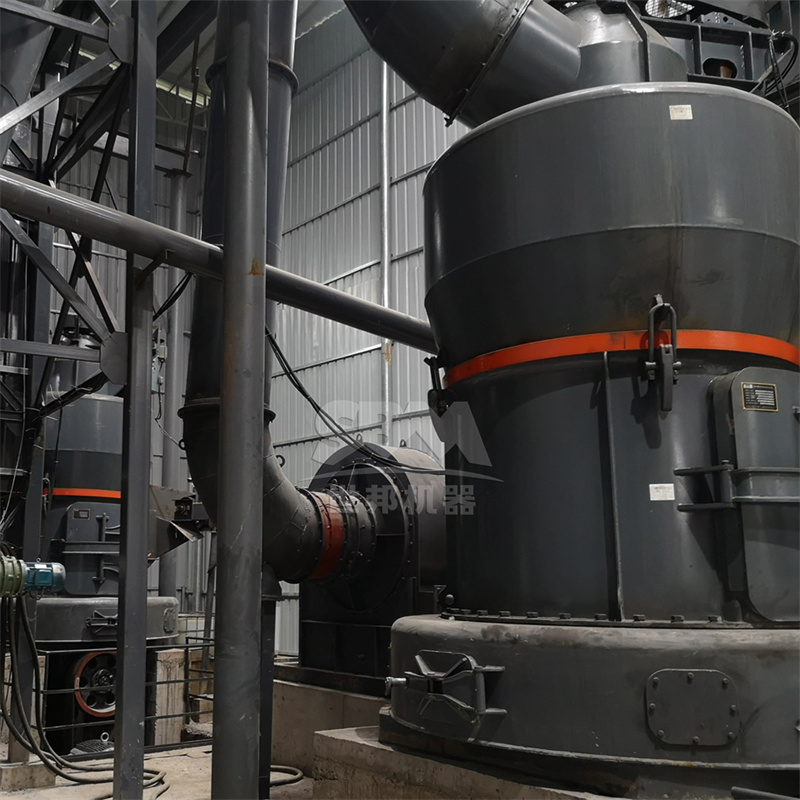
Based on the above considerations, two of our company’s flagship milling systems are particularly well-suited for processing attapulgite for foundry sand binder applications: the LM Series Vertical Roller Mill and the SCM Series Ultrafine Mill.
LM Series Vertical Roller Mill: A Proven Solution for Medium-to-Fine Attapulgite Grinding
The LM Series Vertical Roller Mill is an ideal choice for producing attapulgite powders in the 30-325 mesh range with high capacity and excellent energy efficiency. This mill integrates crushing, grinding, drying, and classification into a single compact system, reducing floor space by up to 50% compared to traditional ball mill circuits.
Key advantages of the LM Series for attapulgite processing include:
- Low Operating Cost: The non-contact design between grinding rollers and the grinding table minimizes wear, extending the service life of wear parts by up to three times. Energy consumption is 30-40% lower than ball mill systems.
- Intelligent Control: The expert-level automatic control system enables remote and local operation, with real-time monitoring of key parameters to reduce manual intervention.
- Environmental Compliance: Fully sealed negative pressure operation ensures dust emissions are well below regulatory limits, while operating noise is minimized.
- Versatile Capacity: With models ranging from LM130K (10-28 t/h) to LM280K (50-170 t/h), the LM Series can be scaled to meet virtually any production requirement.
For foundry sand binder applications requiring a balance of fineness, capacity, and operational economy, the LM Series Vertical Roller Mill is a reliable and cost-effective solution.
SCM Series Ultrafine Mill: Precision Grinding for High-Performance Binders
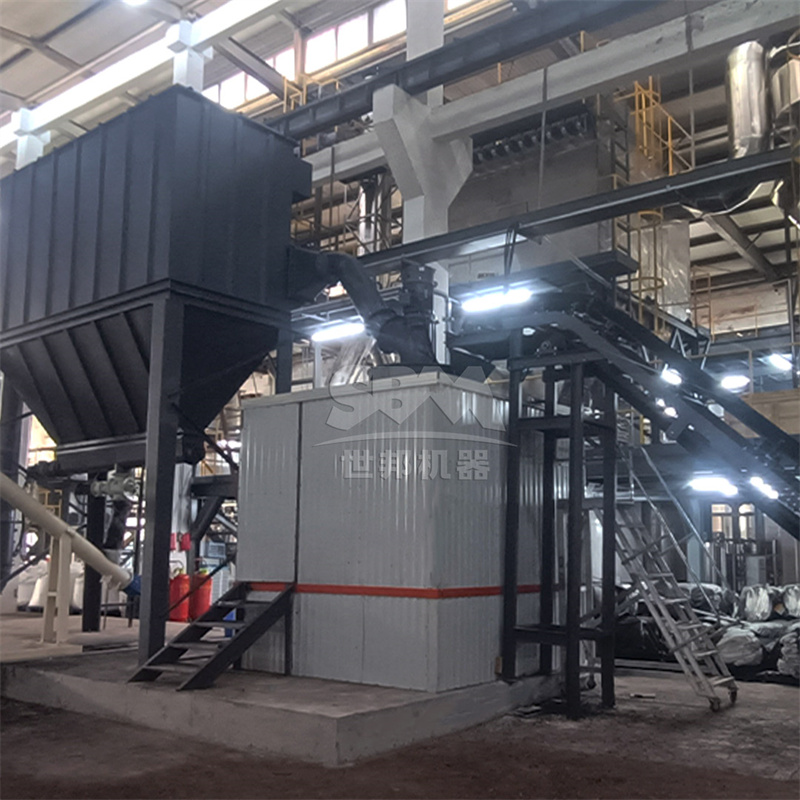
When the application demands ultrafine attapulgite powder with a top size in the range of 325-2500 mesh, the SCM Series Ultrafine Mill is the optimal choice. This mill is engineered for high-precision grinding and classification, ensuring a uniform finished product with no coarse powder contamination.
Notable features of the SCM Series include:
- High Efficiency and Energy Saving: Capacity is twice that of comparable jet mills, with 30% lower energy consumption. The intelligent control system automatically adjusts to maintain consistent product fineness.
- High-Precision Classification: The vertical turbine classifier achieves precise particle size cutting, eliminating coarse particles and ensuring a narrow particle size distribution.
- Durable Design: Special material rollers and rings extend service life several times over, while the shaftless screw grinding chamber ensures stable operation with minimal vibration.
- Eco-friendly and Low Noise: The pulse dust collection system exceeds international standards, and the soundproof room design keeps noise levels well within acceptable limits.
With models ranging from SCM800 (0.5-4.5 t/h) to SCM1680 (5.0-25 t/h), the SCM Series offers flexible capacity options to suit different production scales.
Comparative Analysis: LM Series vs. SCM Series
To assist in the selection process, the following table summarizes the key differences between the LM Series Vertical Roller Mill and the SCM Series Ultrafine Mill for attapulgite processing:
| Parameter | LM Series Vertical Roller Mill | SCM Series Ultrafine Mill |
|---|---|---|
| Fineness Range | 30-325 mesh (up to 600 mesh for special models) | 325-2500 mesh |
| Capacity Range | 3-250 t/h | 0.5-25 t/h |
| Energy Consumption | 30-40% lower than ball mill | 30% lower than jet mill |
| Floor Space | 50% reduction compared to ball mill circuits | Compact design |
| Best Suited For | Medium-to-fine grinding, high capacity | Ultrafine grinding, precision classification |
Conclusion
Choosing the right milling system for attapulgite processing is a critical decision that directly impacts the quality, cost, and competitiveness of foundry sand binder products. The LM Series Vertical Roller Mill and the SCM Series Ultrafine Mill from our company represent two of the most advanced and reliable solutions available on the market today. By carefully evaluating your specific requirements in terms of fineness, capacity, energy efficiency, and environmental compliance, you can select the system that best meets your needs and ensures long-term operational success.
For more information on how our milling systems can enhance your attapulgite processing operations, please contact our technical team for a personalized consultation and equipment recommendation.