
Introduction
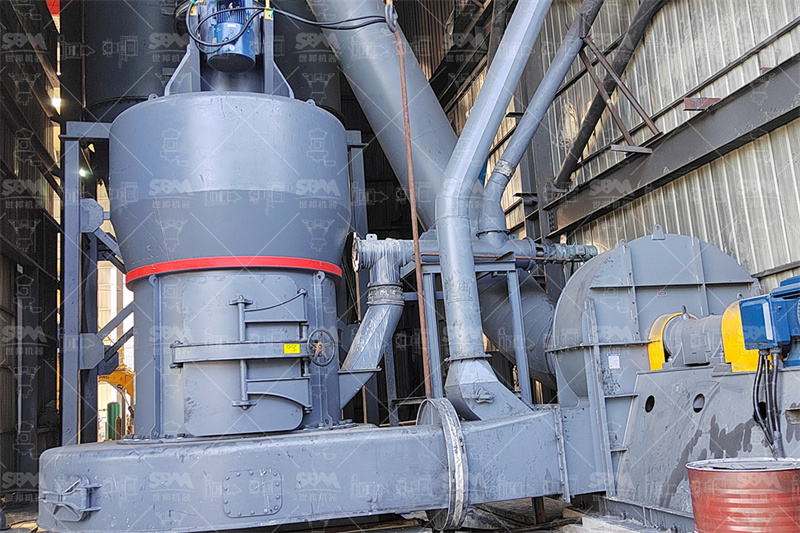
Illite is a common clay mineral belonging to the mica group, widely used in building materials, ceramics, coatings, and agriculture due to its excellent properties such as high plasticity, strong adsorption, and thermal stability. With the growing demand for high-quality illite powder in the construction industry, selecting the appropriate grinding mill is critical for achieving desired fineness, capacity, and energy efficiency. This article provides a comprehensive guide to choosing the right grinding equipment for building material grade illite powder production, covering key considerations, mill types, and recommendations for optimal performance.
Key Factors in Selecting a Grinding Mill for Illite Powder
Before evaluating specific mill models, project planners should assess several fundamental factors:
1. Target Fineness and Particle Size Distribution
Building material grade illite powder typically requires fineness ranging from 200 to 2500 mesh (approximately 74 μm down to 5 μm), depending on the application. For instance, illite used as a filler in paints or plastics demands ultrafine powder (1250–2500 mesh), while ceramic bodies may require 200–400 mesh. The mill must deliver consistent particle size distribution with minimal coarse particles.
2. Production Capacity
Capacity requirements vary from small-scale pilot lines (0.5–5 t/h) to large industrial operations (20–250 t/h). The chosen mill should match the project’s throughput without excessive energy waste or bottlenecking.
3. Material Characteristics
Illite’s Mohs hardness is typically 2–3, but associated impurities like quartz or feldspar can increase abrasiveness. Moisture content also affects grinding efficiency; dry grinding is preferred for most building material applications. The mill’s wear parts must resist abrasion to minimize downtime.
4. Energy Efficiency and Operating Costs
Grinding is energy-intensive. Mills with high grinding efficiency and low power consumption per ton are essential for long-term profitability. Additionally, maintenance costs, spare part life, and automation level influence total cost of ownership.
5. Environmental Compliance
Dust emission and noise regulations are increasingly stringent. Equipment with effective dust collection (e.g., pulse bag filters) and soundproofing is necessary for sustainable operation.
Overview of Grinding Mill Technologies for Illite
Several mill types are suitable for illite processing, each with distinct advantages and limitations.
Raymond Mill / Pendulum Mill
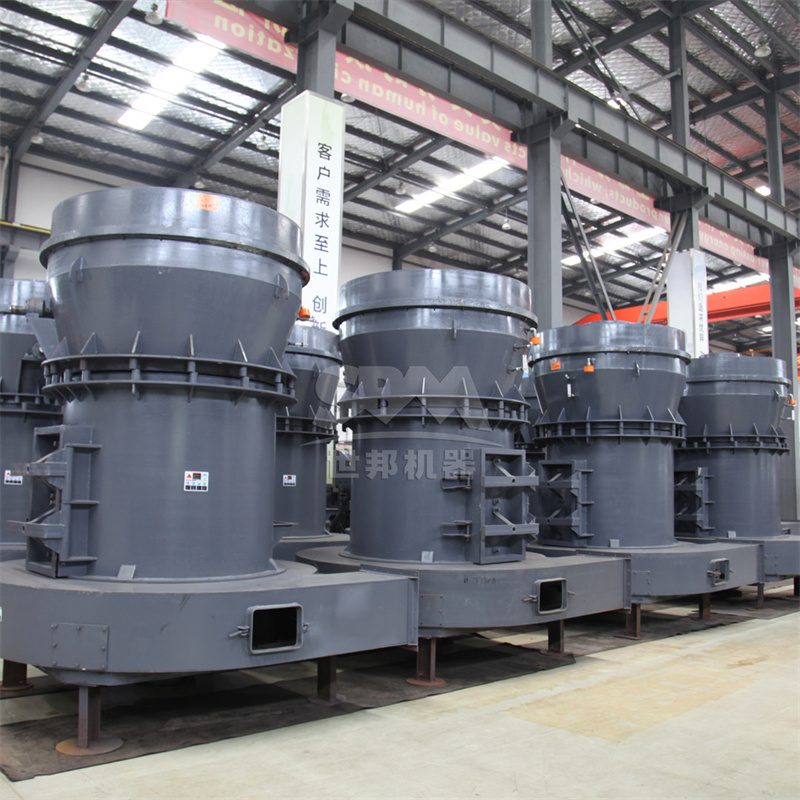
Traditional Raymond mills (e.g., MTM series) offer fineness up to 325 mesh with moderate capacity (3–22 t/h). They are cost-effective for coarse to medium-fine illite powder but less efficient for ultrafine grinding. The MRN Pendulum Mill from our company features thin oil lubrication and efficient dust collection, making it a reliable choice for 30–325 mesh production.
Ball Mill
Ball mills can grind illite to 0.074–0.8 mm but are typically used for coarse grinding or in wet processes. They have high capacity (up to 450 t/h) but consume significant energy and are less suitable for ultrafine building material grades.
Hammer Mill
Hammer mills are used for preliminary crushing to 0–3 mm, not for fine grinding. They are often employed as pre-grinding equipment ahead of fine mills.
Vertical Roller Mill
Vertical roller mills (e.g., LM series) integrate crushing, grinding, and classification. They offer capacities from 3 to 250 t/h and fineness up to 600 mesh. Energy consumption is 30–40% lower than ball mills, making them ideal for large-scale illite production. The LUM ultrafine vertical mill extends fineness to 2500 mesh with precise classification.
Ultrafine Mill
For building material grade illite powder requiring 325–2500 mesh, ultrafine mills such as the SCM series are the best choice. They provide high efficiency, precise particle size control, and eco-friendly operation.
Recommended Products for Illite Powder Production
Based on our extensive experience in mineral processing, we recommend two flagship products for building material grade illite powder production:
1. SCM Series Ultrafine Mill (325–2500 mesh)
The SCM Series Ultrafine Mill is specifically designed for ultrafine grinding of non-metallic minerals like illite. With output fineness adjustable from 325 to 2500 mesh and capacity from 0.5 to 25 t/h, it meets the demands of high-grade building material applications. Key advantages include:
- High Efficiency & Energy Saving: Capacity is twice that of jet mills, with 30% lower energy consumption.
- High-Precision Classification: Vertical turbine classifier ensures uniform particle size with no coarse powder mixing.
- Durable Design: Special material rollers and rings extend service life several times over; shaftless screw grinding chamber ensures stable operation.
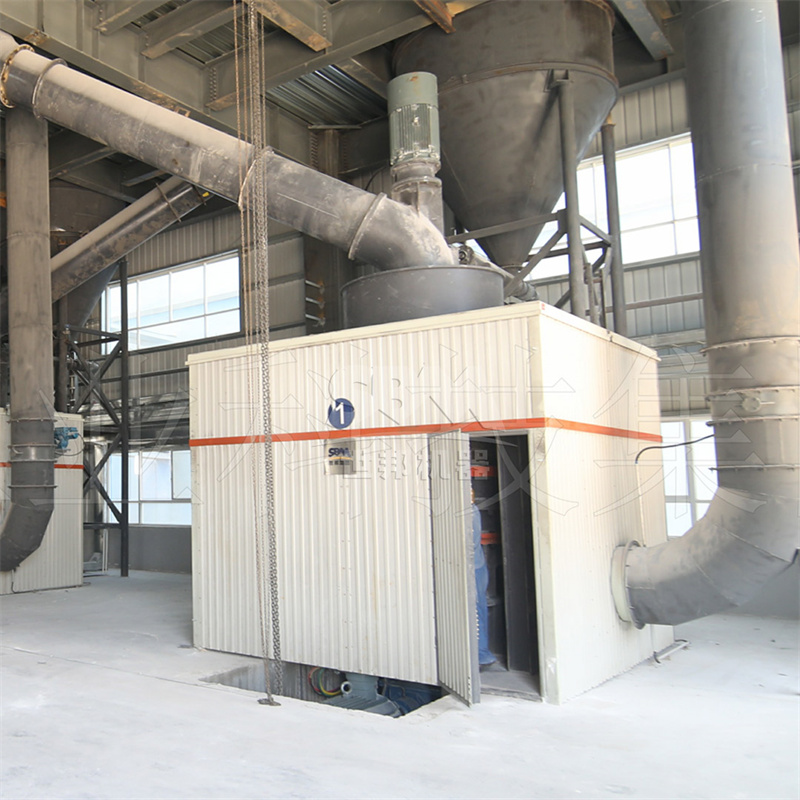
- Eco-friendly & Low Noise: Pulse dust collection efficiency exceeds international standards; soundproof room design ensures quiet operation.
Models range from SCM800 (0.5–4.5 t/h) to SCM1680 (5–25 t/h), with main power from 75 kW to 315 kW. The SCM mill is ideal for producing illite powder for high-end paints, plastics, and ceramics.
2. LM Series Vertical Roller Mill (30–325 mesh, up to 600 mesh)
For large-scale production of building material grade illite powder (e.g., for cement, mortar, or wall materials), the LM Series Vertical Roller Mill offers unmatched capacity and efficiency. With capacity up to 250 t/h and fineness up to 600 mesh, it integrates crushing, grinding, and classification. Key benefits include:
- Integrated Design: Floor space reduced by 50%; outdoor installation possible, cutting infrastructure costs by 40%.
- Low Operating Cost: Non-contact design between rollers and table; wear part life increased by 3x; energy consumption 30–40% lower than ball mill systems.
- Intelligent Control: Expert-level auto-control system with remote/local switching and real-time monitoring.
- Environmental Compliance: Fully sealed negative pressure operation; dust emission and noise levels meet strict standards.
Models such as LM130K (10–28 t/h) to LM280K (50–170 t/h) suit various project scales. The LM series is particularly effective for grinding illite with moisture content, as hot air can be introduced for drying.
How to Choose Between SCM and LM Series
The choice between SCM ultrafine mill and LM vertical roller mill depends on the target product specification and production scale:
- If your project requires ultrafine illite powder (1250–2500 mesh) for high-value applications, the SCM Series is the optimal choice due to its precise classification and high fineness capability.
- If your project demands high capacity (above 10 t/h) and medium fineness (200–600 mesh), the LM Series offers superior energy efficiency and lower operating costs.
- For combined production (coarse and fine powder), a two-stage grinding system using a hammer mill or jaw crusher for pre-crushing, followed by SCM or LM mill, can be cost-effective.
Additional Considerations for Illite Grinding
1. Moisture Control
Illite often contains free moisture. If moisture exceeds 2–3%, drying may be required. The LM series can handle higher moisture by using hot gas generators, while SCM mills generally require dry feed.
2. Wear Protection
Illite with quartz impurities can be abrasive. Choose mills with wear-resistant liners and rollers (e.g., high-chrome alloys or ceramic composites) to extend maintenance intervals.
3. Automation and Control
Modern mills come with PLC control systems that automatically adjust grinding pressure, classifier speed, and feed rate to maintain consistent product quality. This reduces labor and ensures stable operation.
4. Dust Collection and Noise Reduction
Regulations for dust emission (e.g., <20 mg/m³) and noise (<85 dB) must be met. Both SCM and LM series incorporate advanced pulse dust collectors and soundproof enclosures.
5. Investment and Operating Cost
While ultrafine mills have higher initial cost, they deliver higher product value. Vertical roller mills have lower specific energy consumption but may require higher capital investment for large models. Conduct a detailed cost-benefit analysis based on your projected production and market price.
Case Study: Illite Powder Production Line with SCM Mill
A building materials company in East Asia recently installed an SCM1250 ultrafine mill to produce 8 t/h of illite powder at 1250 mesh. The system includes a jaw crusher, bucket elevator, SCM1250 mill, pulse dust collector, and automatic packing machine. Results: fineness 1250 mesh (d97=10 μm), power consumption 45 kWh/t, dust emission <15 mg/m³, and noise <80 dB. The end product is used in high-performance coatings and achieved a 20% price premium compared to standard illite powder.
Conclusion
Selecting the right grinding mill for building material grade illite powder is a strategic decision that impacts product quality, operational efficiency, and profitability. For ultrafine applications, the SCM Series Ultrafine Mill excels with its high precision and energy efficiency. For large-scale production of medium-fine powder, the LM Series Vertical Roller Mill offers superior capacity and low operating costs. By carefully evaluating your project’s fineness, capacity, material properties, and budget, you can choose the optimal solution. Our team of experts is ready to assist you in designing a customized grinding plant tailored to your illite processing needs.