
Introduction
In the metallurgical industry, desulfurization agents play a critical role in reducing sulfur emissions and improving the quality of final metal products. These agents, typically based on calcium carbonate (limestone), calcium oxide (quicklime), or magnesium-based compounds, must be ground to specific particle size distributions to achieve optimal reactivity and efficiency in the desulfurization process. Whether you are producing injection agents for hot metal desulfurization or flux agents for steel ladle treatment, the selection of the right grinding mill is fundamental to your production line’s success.
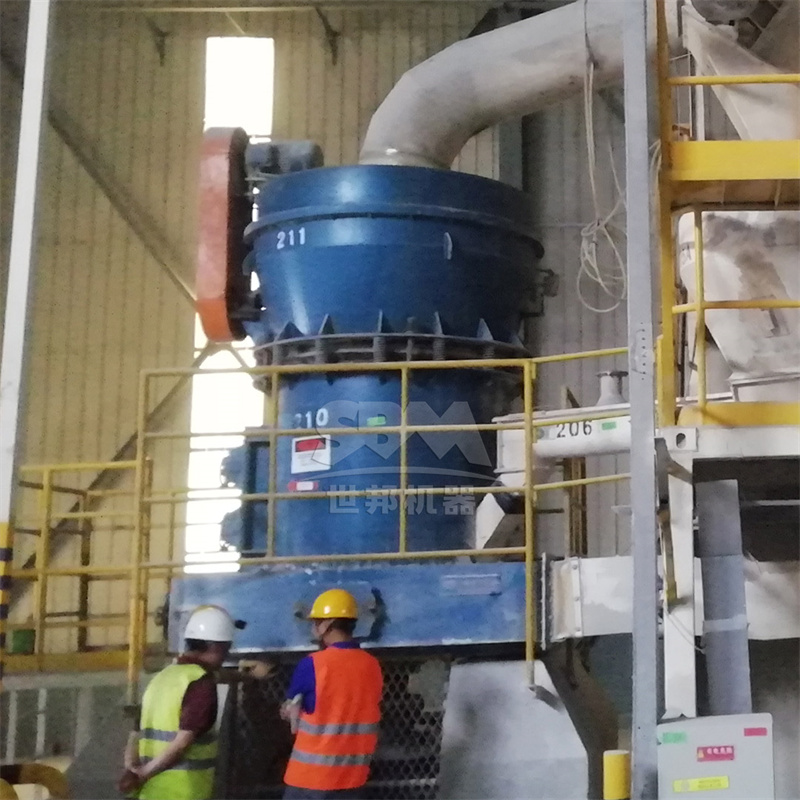
With a myriad of grinding technologies available—from ball mills to ultrafine mills—choosing the appropriate equipment can be overwhelming. This article provides a comprehensive guide to selecting the right grinding mill for metallurgical desulfurization agent production, covering key factors such as required fineness, capacity, energy consumption, and maintenance. We will also highlight two of our company’s most advanced products—the SCM Series Ultrafine Mill and the MTW Series European Trapezium Mill—which are specifically engineered to excel in this demanding application.
Understanding Metallurgical Desulfurization Agents
Desulfurization agents used in metallurgy are generally classified into two categories based on their chemical composition and application:
- Calcium-based agents: Derived from limestone (CaCO₃) or lime (CaO). These are the most common and cost-effective desulfurization agents. They react with sulfur in molten metal to form calcium sulfide (CaS), which is removed as slag.
- Magnesium-based agents: Magnesium powder or magnesium-lime mixtures. These are highly reactive and are often used for deep desulfurization of hot metal. They require finer grinding to ensure rapid dissolution and reaction.
The performance of these agents depends heavily on their particle size distribution (PSD). Typically, desulfurization agents require a fineness ranging from 200 mesh (74 μm) to 600 mesh (23 μm) or even finer for magnesium-based reagents. A narrower PSD and finer particles increase the surface area available for reaction, thereby enhancing desulfurization efficiency and reducing agent consumption. However, finer grinding also increases energy costs and may affect flowability.
Key Factors in Choosing a Grinding Mill
Selecting the optimal grinding mill for your desulfurization agent production line involves a systematic evaluation of several factors:
1. Required Fineness and Particle Size Distribution
The target fineness is the primary driver. If your desulfurization agent needs to be ground to 325 mesh (45 μm) or coarser, a trapezium mill or ball mill may suffice. For ultrafine products in the range of 800–2500 mesh (5–18 μm), an ultrafine mill such as the SCM series is essential. Additionally, consider the PSD width—a narrow distribution is often desired for consistent reactivity.
2. Production Capacity
Your required output (tons per hour) determines the mill’s size and model. Small-scale lines may only need 1–5 t/h, while large industrial operations may require 30 t/h or more. It is crucial to match the mill’s capacity to your overall line design, including upstream crushing and downstream conveying.
3. Energy Efficiency
Grinding is an energy-intensive process. Mills that offer higher energy efficiency can significantly reduce operating costs. For example, vertical roller mills and advanced trapezium mills consume 30–40% less energy than traditional ball mills for the same fineness.
4. Maintenance and Wear
Desulfurization agents are abrasive. Therefore, the mill’s wear parts (rollers, rings, liners) must be made of high-hardness materials to extend service life. Easy maintenance features such as hydraulic roller removal and centralized lubrication also reduce downtime.
5. Environmental Compliance
Dust emissions and noise levels must comply with local regulations. Mills equipped with pulse dust collectors and soundproof enclosures are preferred.
6. Investment and Operating Costs
Consider both capital expenditure (CAPEX) and operational expenditure (OPEX). While ultrafine mills have a higher initial cost, they may offer better returns through higher efficiency and lower power consumption.
Comparing Grinding Mill Technologies
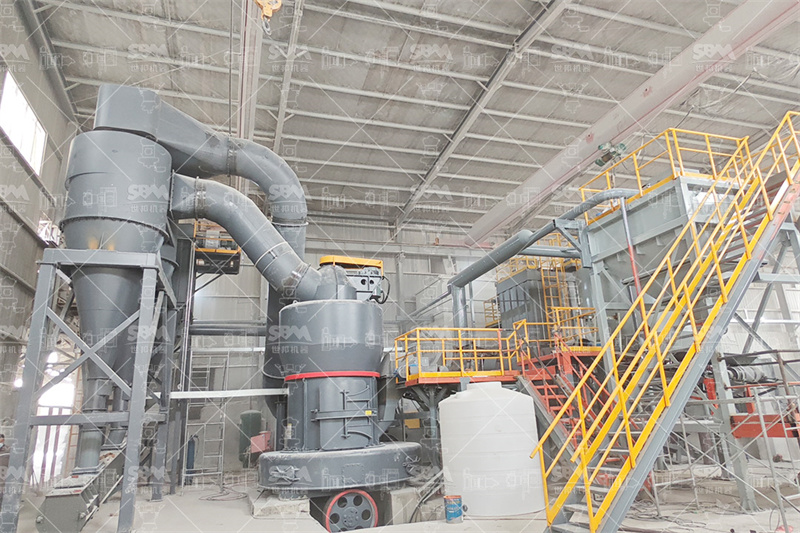
Several types of grinding mills are commonly used in desulfurization agent production. Below is a comparison of their typical applications and limitations:
- Ball Mill: Classic technology, suitable for coarse to medium grinding (0.074–0.8 mm). High capacity, but high energy consumption and large footprint. Often used for lime grinding in older plants.
- MTM Medium-speed Trapezium Mill: Improved version of Raymond mill, capable of 45–325 mesh. Good for medium-fine grinding with moderate capacity.
- MTW European Trapezium Mill: Advanced design with higher efficiency and capacity (3–45 t/h). Ideal for producing 30–325 mesh desulfurization agents with low energy consumption.
- LM Vertical Roller Mill: Integrated crushing, grinding, and classification. High capacity (up to 250 t/h) and energy-efficient. Best for large-scale production of 30–325 mesh powders.
- SCM Ultrafine Mill: Specialized for ultrafine grinding (325–2500 mesh). High precision classification, low noise, and eco-friendly. Perfect for high-value desulfurization agents requiring fine particle sizes.
- LUM Ultrafine Vertical Roller Mill: Combines ultrafine grinding with vertical mill advantages. Capable of 325–2500 mesh with capacities up to 15 t/h.
For metallurgical desulfurization agents, the most common fineness ranges are 200–400 mesh for calcium-based agents and 400–800 mesh for magnesium-based agents. Therefore, the MTW Series and SCM Series are particularly well-suited for this industry.
Recommended Products from Our Company
Based on our extensive experience in metallurgical powder processing, we proudly recommend two flagship products that deliver outstanding performance in desulfurization agent production: the SCM Series Ultrafine Mill and the MTW Series European Trapezium Mill.
SCM Series Ultrafine Mill (45-5μm)
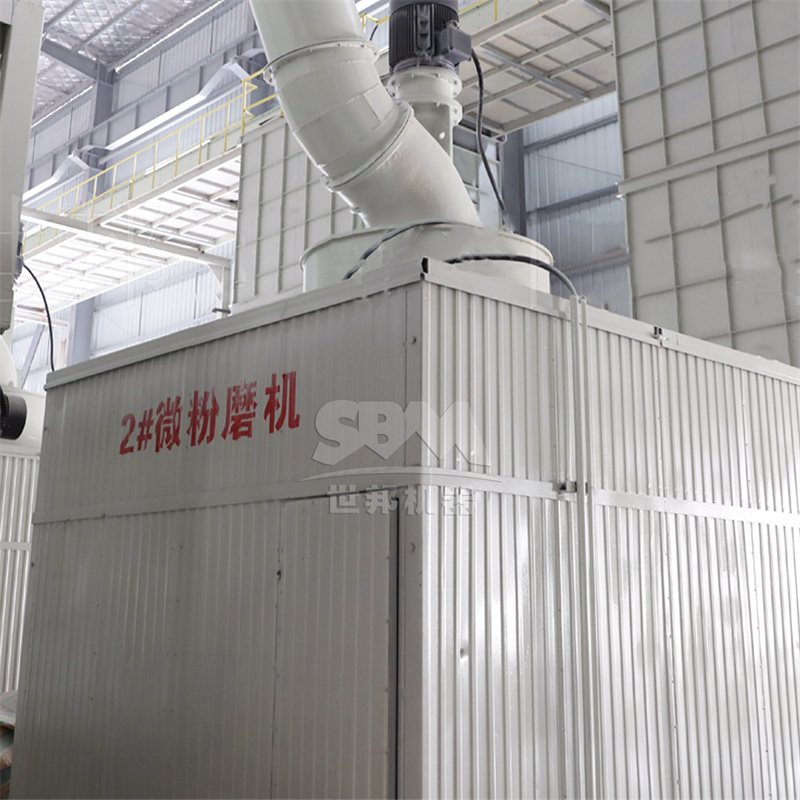
The SCM Series Ultrafine Mill is a state-of-the-art grinding equipment designed for producing ultrafine powders with high efficiency. It is particularly suitable for manufacturing high-performance desulfurization agents that require fineness down to 5 μm (2500 mesh).
Core Parameters:
- Input Size: ≤20 mm
- Output Fineness: 325–2500 mesh (45–5 μm)
- Capacity: 0.5–25 t/h (depending on model)
Technical Advantages:
- High Efficiency & Energy Saving: Capacity is twice that of jet mills, with 30% lower energy consumption. Intelligent control with automatic finished product granularity feedback ensures consistent quality.
- High-Precision Classification: Vertical turbine classifier achieves precise particle size cutting, with no coarse powder mixing, ensuring uniform finished products.
- Durable Design: Special material rollers and rings extend service life several times over. Shaftless screw grinding chamber ensures stable operation.
- Eco-friendly & Low Noise: Pulse dust collection efficiency exceeds international standards. Soundproof room design ensures low noise levels.
Working Principle: The main motor drives three layers of grinding rings to rotate. Materials are dispersed into the grinding path by centrifugal force, crushed by roller pressure, and ground layer by layer. Finally, powder collection is completed by a cyclone collector and a pulse dust removal system.
Models & Specifications:
- SCM800: Capacity 0.5–4.5 t/h | Main Power 75 kW | Feed Size 0–20 mm | Fineness 325–2500 mesh
- SCM900: Capacity 0.8–6.5 t/h | Main Power 90 kW | Feed Size 0–20 mm | Fineness 325–2500 mesh
- SCM1000: Capacity 1.0–8.5 t/h | Main Power 132 kW | Feed Size 0–20 mm | Fineness 325–2500 mesh
- SCM1250: Capacity 2.5–14 t/h | Main Power 185 kW | Feed Size 0–20 mm | Fineness 325–2500 mesh
- SCM1680: Capacity 5.0–25 t/h | Main Power 315 kW | Feed Size 0–20 mm | Fineness 325–2500 mesh
With its ability to produce ultrafine particles, the SCM Series is ideal for magnesium-based desulfurization agents where a high surface area is critical for rapid reaction. It also excels in producing specialty calcium-based agents for deep desulfurization.
MTW Series European Trapezium Mill (600-45μm)
The MTW Series European Trapezium Mill is a robust and versatile grinding mill that combines advanced European technology with our company’s innovation. It is well-suited for producing medium to fine desulfurization agents with high capacity and low maintenance.
Core Parameters:
- Input Size: ≤50 mm
- Output Fineness: 30–325 mesh (down to 0.038 mm)
- Capacity: 3–45 t/h (depending on model)
Technical Advantages:
- Anti-wear Shovel Design: Combined shovel blades reduce maintenance costs. Curved design extends grinding roller life.
- Optimized Arc Air Duct: Reduces airflow energy loss and improves transmission efficiency. High-strength guard plates protect the air duct working surface.
- Integral Bevel Gear Drive: Transmission efficiency up to 98%. Saves space and reduces installation costs.
- Wear-resistant Volute Structure: Non-resistance flow design improves air selection efficiency. Maintenance costs reduced by 30%.
Working Principle: The main motor drives the grinding rollers to revolve around the central axis while self-rotating to generate centrifugal force. Shovels throw materials between the ring and rollers to form a material layer, achieving efficient crushing through extrusion. The classification system precisely controls the finished product size.
Models & Specifications:
- MTW110: Capacity 3–9 t/h | Main Power 55 kW | Fineness 10–325 mesh
- MTW110Z: Capacity 3–10 t/h | Main Power 55 kW | Fineness 10–325 mesh
- MTW138Z: Capacity 6–17 t/h | Main Power 90 kW | Fineness 10–325 mesh
- MTW175G: Capacity 9.5–25 t/h | Main Power 160 kW | Fineness 10–325 mesh
- MTW215G: Capacity 15–45 t/h | Main Power 280 kW | Fineness 10–325 mesh
- MRN158: Capacity 7–21 t/h | Main Power 132 kW | Fineness 10–325 mesh
- MRN198: Capacity 12–33 t/h | Main Power 220 kW | Fineness 10–325 mesh
- MRN218: Capacity 15–45 t/h | Main Power 280 kW | Fineness 10–325 mesh
The MTW Series is particularly effective for large-scale production of calcium-based desulfurization agents. Its high capacity and energy efficiency make it a cost-effective choice for steel plants and cement kilns.
Application Case: Desulfurization Agent Grinding Line
Consider a typical desulfurization agent production line with a capacity of 10 t/h and a target fineness of 325 mesh. The raw material is limestone with a feed size of 30 mm. Based on these requirements, we recommend the MTW138Z model. It delivers 6–17 t/h, ensuring a margin for future expansion. The mill is equipped with a high-efficiency classifier and a pulse dust collector, achieving dust emission concentration below 20 mg/m³. The entire system is automated, requiring minimal operator intervention.
If the same line needed to produce an ultrafine magnesium-based agent at 800 mesh (18 μm) and 5 t/h, the SCM1000 model would be ideal. Its 132 kW main motor and precise classification system guarantee a uniform product with a top cut of 18 μm, while the soundproof enclosure keeps noise below 75 dB.
Conclusion
Choosing the right grinding mill for metallurgical desulfurization agent production is a decision that impacts product quality, operational costs, and environmental compliance. By carefully assessing your required fineness, capacity, and budget, you can narrow down the options. For medium-fine grinding at high capacities, the MTW Series European Trapezium Mill offers an unbeatable combination of efficiency and reliability. For ultrafine, high-reactivity agents, the SCM Series Ultrafine Mill stands out with its precision and energy savings.
Our company has decades of experience in providing grinding solutions for the metallurgical industry. We invite you to consult with our engineers to design a customized desulfurization agent production line that meets your exact needs. With our advanced mills and comprehensive support, you can achieve superior product quality and operational excellence.