
Introduction
Heavy calcium carbonate (HCC), derived from natural minerals such as limestone, marble, and calcite, is a critical industrial filler and coating material used extensively in plastics, rubber, paper, paints, and construction. The production of heavy calcium carbonate powder requires precise grinding and classification to achieve the desired particle size distribution, whiteness, and purity. Selecting the right grinding mill is therefore one of the most important decisions for any HCC processing plant. With a wide range of milling technologies available—from ball mills to ultrafine vertical mills—the choice depends on feed size, target fineness, capacity, energy consumption, and capital budget. This article provides a professional guide to choosing the optimal grinding equipment for heavy calcium carbonate production, and highlights two outstanding product lines from our company that are particularly well-suited for this application.
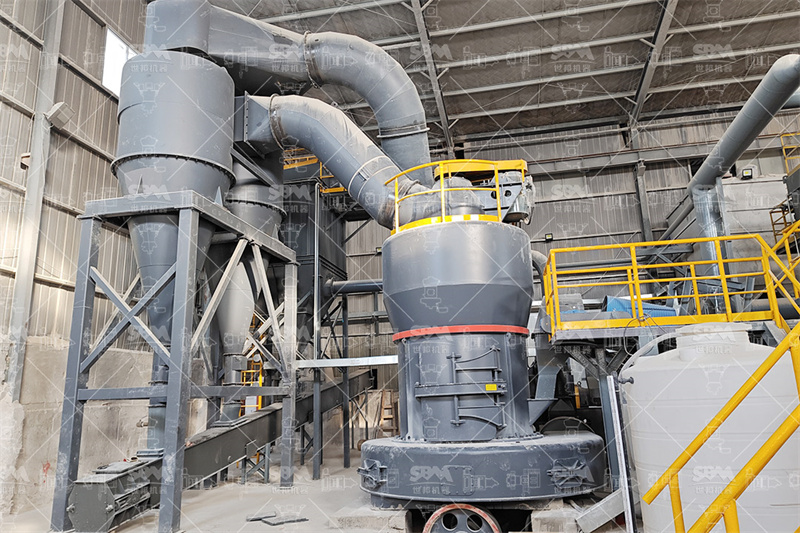
Key Factors in Selecting a Grinding Mill for Heavy Calcium Carbonate
1. Required Fineness and Particle Size Distribution
Heavy calcium carbonate products span a broad range of fineness, from coarse 30–200 mesh powders used in construction to ultrafine 1250–2500 mesh powders for high-end paints and plastics. The mill must be capable of achieving the target top cut and narrow particle size distribution without excessive coarse particles. For ultrafine grades (d97 ≤ 10 μm), specialized ultrafine mills such as the SCM Series Ultrafine Mill are essential.
2. Capacity and Production Scale
Plants range from small 5,000 t/year units to large 500,000 t/year operations. The mill’s capacity must match the plant’s throughput requirements. For large-scale production (e.g., >30 t/h), vertical roller mills like the LM series offer significant advantages in terms of capacity and energy efficiency.
3. Energy Efficiency and Operating Cost
Grinding is the most energy-intensive step in HCC production. Ball mills, while robust, consume 30–40% more energy than modern vertical mills or trapezium mills. Choosing a high-efficiency mill can dramatically reduce electricity costs and carbon footprint.
4. Feed Size and Moisture
Heavy calcium carbonate feed material typically ranges from 0–50 mm after primary crushing. Some mills require fine feed (<20 mm), while others accept coarser feed. Moisture content also affects grinding efficiency; dry grinding is common, but mills with integrated drying (e.g., using hot air) can handle higher moisture.
5. Product Purity and Contamination Control
For high-value applications (e.g., food-grade or pharmaceutical-grade HCC), contamination from wear parts must be minimized. Mills with ceramic or special alloy liners and grinding rollers are preferred.
6. Automation and Maintenance
Modern plants demand intelligent control, remote monitoring, and easy maintenance. Mills with automatic pressure regulation, quick-change roller assemblies, and pulse dust collection reduce downtime and labor costs.
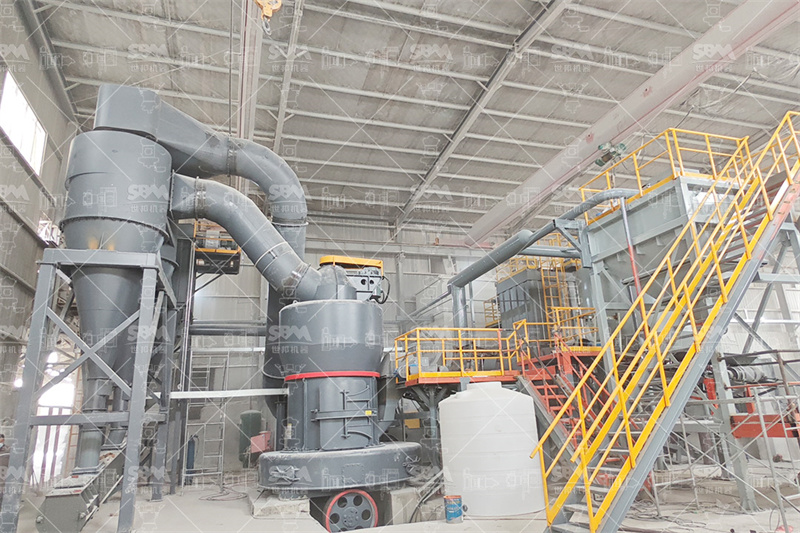
Recommended Grinding Mills for Heavy Calcium Carbonate
SCM Series Ultrafine Mill (45–5 μm)
For producing ultrafine heavy calcium carbonate powder (325–2500 mesh), the SCM Series Ultrafine Mill is an ideal choice. Its core parameters include:
- Input Size: ≤20 mm
- Output Fineness: 325–2500 mesh (45–5 μm)
- Capacity: 0.5–25 t/h (depending on model)
Technical Advantages:
- High Efficiency & Energy Saving: Capacity is twice that of jet mills, with 30% lower energy consumption. Intelligent control with automatic finished product granularity feedback ensures consistent quality.
- High-Precision Classification: A vertical turbine classifier achieves precise particle size cutting, with no coarse powder mixing, ensuring uniform finished products.
- Durable Design: Special material rollers and rings extend service life several times over. The shaftless screw grinding chamber ensures stable operation.
- Eco-friendly & Low Noise: Pulse dust collection efficiency exceeds international standards. Soundproof room design keeps noise levels low.
Working Principle: The main motor drives three layers of grinding rings to rotate. Materials are dispersed into the grinding path by centrifugal force, crushed by roller pressure, and ground layer by layer. Finally, powder collection is completed by a cyclone collector and a pulse dust removal system.
Models & Specifications:
- SCM800: Capacity 0.5–4.5 t/h | Main Power 75 kW | Fineness 325–2500 mesh
- SCM900: Capacity 0.8–6.5 t/h | Main Power 90 kW | Fineness 325–2500 mesh
- SCM1000: Capacity 1.0–8.5 t/h | Main Power 132 kW | Fineness 325–2500 mesh
- SCM1250: Capacity 2.5–14 t/h | Main Power 185 kW | Fineness 325–2500 mesh
- SCM1680: Capacity 5.0–25 t/h | Main Power 315 kW | Fineness 325–2500 mesh
With its ability to produce ultra-fine powders at high capacity, the SCM Series is particularly suitable for HCC plants targeting the paper, paint, and high-grade plastics markets.
MTW Series European Trapezium Mill (600–45 μm)
For medium to fine heavy calcium carbonate powder (30–325 mesh), the MTW Series European Trapezium Mill offers an excellent balance of capacity, efficiency, and reliability. Its core parameters include:
- Input Size: ≤50 mm
- Output Fineness: 30–325 mesh (down to 0.038 mm)
- Capacity: 3–45 t/h (depending on model)
Technical Advantages:
- Anti-wear Shovel Design: Combined shovel blades reduce maintenance costs. Curved design extends grinding roller life.
- Optimized Arc Air Duct: Reduces airflow energy loss and improves transmission efficiency. High-strength guard plates protect the air duct working surface.
- Integral Bevel Gear Drive: Transmission efficiency up to 98%. Saves space and reduces installation costs.
- Wear-resistant Volute Structure: Non-resistance flow design improves air selection efficiency. Maintenance costs reduced by 30%.
Working Principle: The main motor drives the grinding rollers to revolve around the central axis while self-rotating to generate centrifugal force. Shovels throw materials between the ring and rollers to form a material layer, achieving efficient crushing through extrusion. The classification system precisely controls the finished product size.
Models & Specifications:
- MTW110: Capacity 3–9 t/h | Main Power 55 kW | Fineness 10–325 mesh
- MTW138Z: Capacity 6–17 t/h | Main Power 90 kW | Fineness 10–325 mesh
- MTW175G: Capacity 9.5–25 t/h | Main Power 160 kW | Fineness 10–325 mesh
- MTW215G: Capacity 15–45 t/h | Main Power 280 kW | Fineness 10–325 mesh
The MTW Series is well-suited for HCC plants producing fillers for plastics, rubber, and construction applications, where a balance between fineness and throughput is critical.
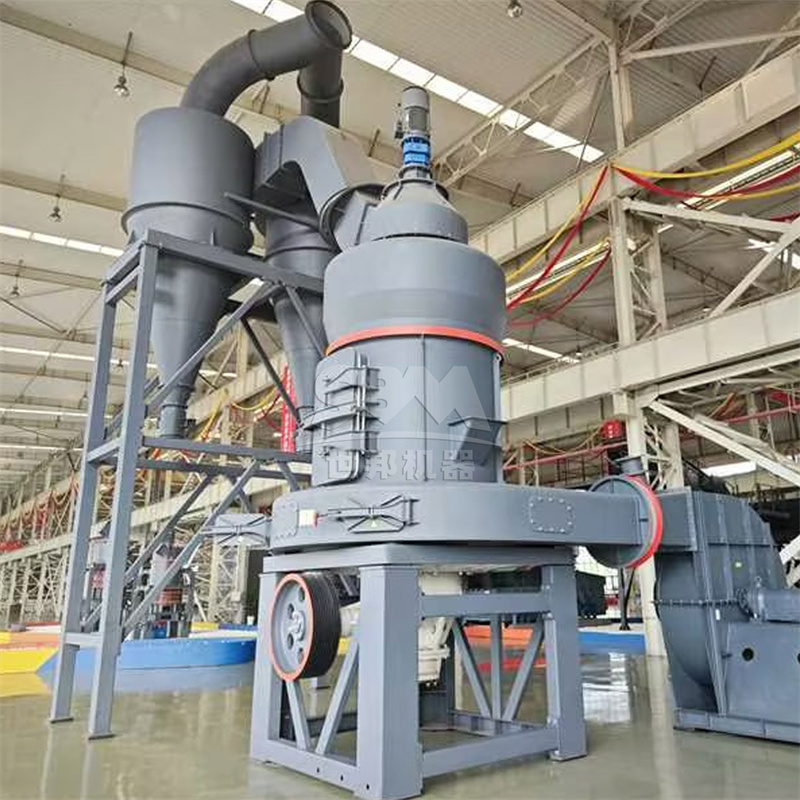
Other Grinding Mill Options
Depending on specific requirements, other mills may also be considered:
- LM Series Vertical Roller Mill: For large-scale production (up to 250 t/h) and fineness up to 600 mesh. Ideal for high-capacity HCC plants with low energy consumption.
- LUM Ultrafine Vertical Roller Mill: For ultrafine HCC (325–2500 mesh) with precise classification and PLC automation.
- MTM Series Medium-speed Trapezium Mill: For medium-fine HCC (45–325 mesh) with intelligent pressure regulation and eco-friendly design.
- Ball Mill: For coarse to medium grinding (0.074–0.8 mm) with large capacity, but higher energy consumption.
Each technology has its niche. The final selection should be based on a thorough techno-economic evaluation.
Conclusion
Choosing the right grinding mill for heavy calcium carbonate production is a strategic decision that impacts product quality, operating cost, and profitability. For ultrafine grades, the SCM Series Ultrafine Mill stands out with its high efficiency, precise classification, and eco-friendly operation. For medium-fine grades with high capacity, the MTW Series European Trapezium Mill offers exceptional durability and energy savings. We invite you to consult our engineers to determine the optimal configuration for your HCC plant. With our advanced milling technologies and global service network, we can help you achieve superior powder quality and operational excellence.