
Introduction
In the coatings and paint industry, limestone powder—primarily calcium carbonate—serves as an essential functional filler. It enhances opacity, improves rheology, reduces formulation costs, and contributes to the mechanical strength of the final film. However, not all limestone powders are created equal. Coating-grade limestone powder must meet stringent specifications: narrow particle size distribution, controlled top-cut (typically D97 ≤ 10–45 μm depending on application), high brightness, low oil absorption, and minimal contamination. Achieving these specifications consistently and economically requires careful selection of grinding equipment. This article examines the key criteria for choosing a grinding mill for your coating filler production line and introduces two proven solutions from our company: the SCM Series Ultrafine Mill and the MTW Series European Trapezium Mill.
Understanding Coating-Grade Limestone Powder Requirements
Before selecting a mill, it is critical to define the target product specifications. Coating-grade limestone fillers are typically categorized by fineness:
- Coarse fillers (325–600 mesh): Used in primers and texture coatings where opacity and cost reduction are primary concerns.
- Medium fillers (800–1250 mesh): Common in architectural paints and industrial coatings requiring balanced performance.
- Fine fillers (1500–2500 mesh): Required for high-performance coatings, powder coatings, and specialty applications demanding excellent dispersion and smoothness.
Beyond fineness, particle size distribution (PSD) is paramount. A steep PSD curve—meaning uniform particles with minimal fines and coarse tails—ensures consistent gloss, reduced binder demand, and improved storage stability. Additionally, contamination from grinding media wear must be minimized to preserve whiteness and chemical purity.
Key Selection Criteria for Grinding Mills
1. Fineness Capability and Precision Classification
The mill must reliably achieve the target fineness while maintaining a sharp cut point. Inefficient classification leads to coarse particle contamination, which can cause surface defects in coatings. High-precision classifiers, such as vertical turbine or multi-rotor designs, are essential for producing narrow PSD powders.
2. Capacity and Scalability
Production capacity must align with market demand and future growth. A mill that is too small will require frequent upgrades; one that is too large may suffer from inefficient operation at low loads. Modular designs and models with a range of capacities offer flexibility.
3. Energy Efficiency
Grinding is energy-intensive. The specific energy consumption (kWh per ton of product) directly impacts production costs. Modern mills with optimized grinding paths, high-efficiency classifiers, and intelligent control systems can reduce energy use by 30–50% compared to traditional ball mills.
4. Wear Protection and Product Purity
Grinding media and liners must be made from wear-resistant materials to minimize iron contamination. For coating applications, even trace amounts of iron can cause discoloration. Ceramic or specially treated alloy liners are often preferred.
5. Environmental Compliance and Noise Control
Dust emissions and noise are regulated in most jurisdictions. Mills equipped with pulse-jet dust collectors, negative pressure operation, and soundproof enclosures ensure compliance and a safer workplace.
6. Automation and Ease of Maintenance
Intelligent control systems that automatically adjust parameters based on finished product feedback reduce manual intervention and ensure consistent quality. Quick-change wear parts and modular assemblies minimize downtime.

Recommended Solutions from Our Company
SCM Series Ultrafine Mill: Precision for Fine and Ultrafine Fillers
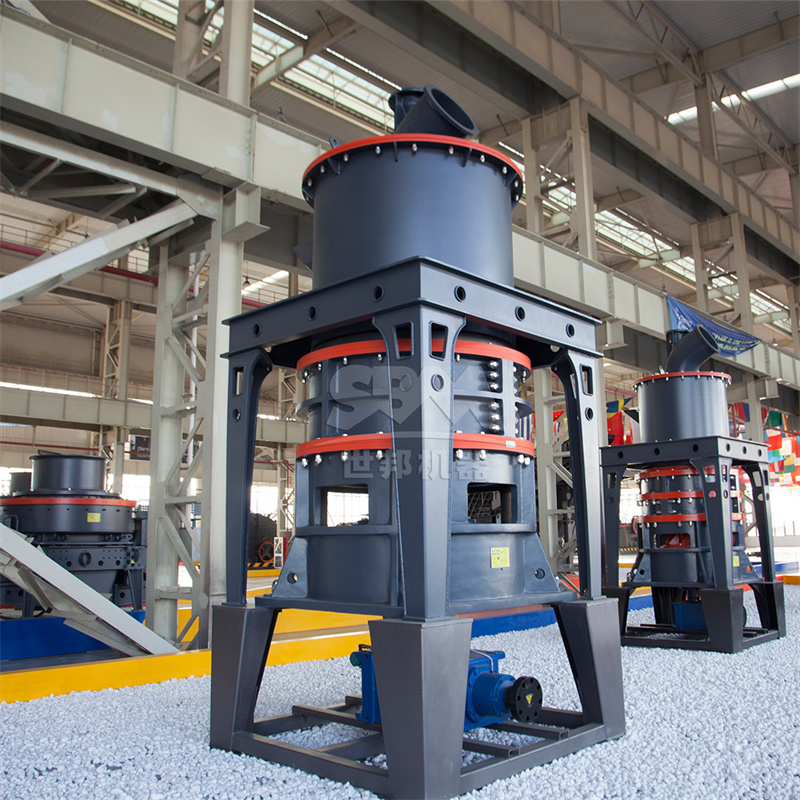
For coating manufacturers targeting 325–2500 mesh (approximately 45–5 μm) products, the SCM Series Ultrafine Mill is an ideal choice. This mill combines high-efficiency grinding with a vertical turbine classifier to deliver precise particle size cutting and uniform finished products.
Key advantages include:
- High Efficiency & Energy Saving: Capacity is twice that of jet mills, with 30% lower energy consumption. The intelligent control system provides automatic finished product granularity feedback, ensuring consistent quality.
- High-Precision Classification: The vertical turbine classifier achieves sharp particle size separation, eliminating coarse powder mixing—critical for coating fillers where top-cut control is essential.
- Durable Design: Special material rollers and rings extend service life several times over. The shaftless screw grinding chamber ensures stable operation with minimal vibration.
- Eco-friendly & Low Noise: Pulse dust collection efficiency exceeds international standards, and the soundproof room design keeps noise levels well within regulatory limits.
The SCM Series is available in models ranging from SCM800 (0.5–4.5 t/h) to SCM1680 (5.0–25 t/h), allowing producers to scale capacity as needed. With fineness adjustable from 325 to 2500 mesh, it can produce everything from standard architectural fillers to high-end powder coating extenders.
MTW Series European Trapezium Mill: Versatile Performance for Medium-Fine Fillers
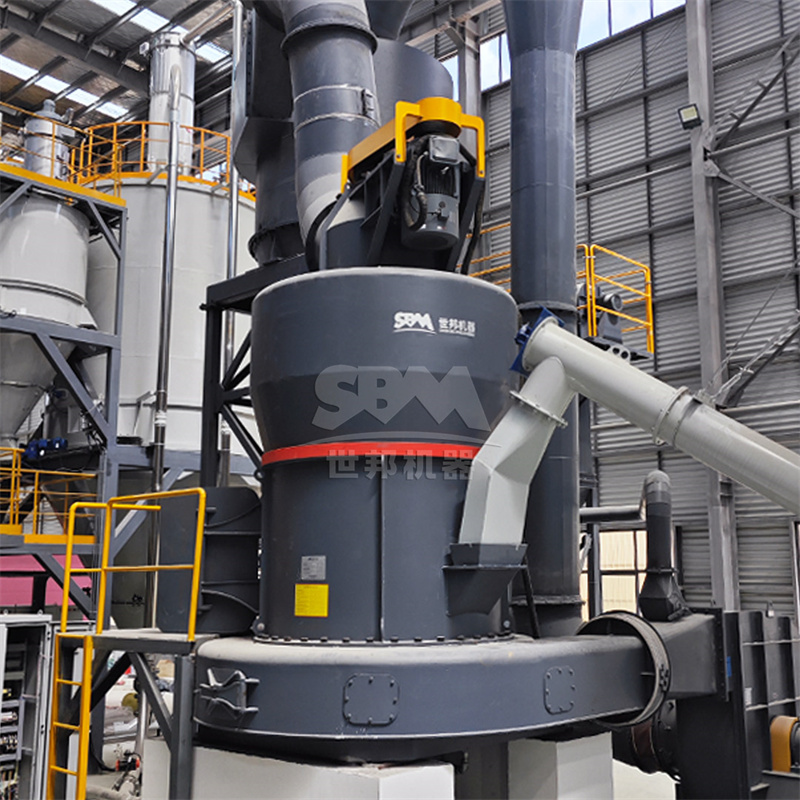
For coating filler lines requiring 30–325 mesh (down to 0.038 mm) products with higher capacity, the MTW Series European Trapezium Mill offers an excellent balance of performance, reliability, and cost-efficiency.
Key advantages include:
- Anti-wear Shovel Design: Combined shovel blades reduce maintenance costs, while the curved design extends grinding roller life—ideal for abrasive limestone.
- Optimized Arc Air Duct: Reduces airflow energy loss and improves transmission efficiency. High-strength guard plates protect the air duct working surface, ensuring long-term durability.
- Integral Bevel Gear Drive: Transmission efficiency up to 98%, saving space and reducing installation costs compared to traditional belt drives.
- Wear-resistant Volute Structure: Non-resistance flow design improves air selection efficiency, and maintenance costs are reduced by 30%.
The MTW Series includes models from MTW110 (3–9 t/h) to MTW215G (15–45 t/h), with fineness adjustable from 10 to 325 mesh. Its robust construction and efficient classification make it suitable for producing medium-fine coating fillers where consistent quality and high throughput are required.
Comparing the Two Mills: Which Is Right for Your Line?
| Criteria | SCM Series Ultrafine Mill | MTW Series European Trapezium Mill |
|---|---|---|
| Fineness Range | 325–2500 mesh | 30–325 mesh |
| Capacity Range | 0.5–25 t/h | 3–45 t/h |
| Best For | Fine to ultrafine coating fillers, powder coatings | Medium-fine fillers, architectural paints, primers |
| Classification Precision | Very high (vertical turbine classifier) | High (optimized volute structure) |
| Energy Efficiency | Excellent (2x jet mill capacity) | Very good (98% transmission efficiency) |
| Footprint | Compact | Compact with integral drive |
In practice, many coating filler producers operate both types of mills in parallel: the MTW for high-volume medium-fine products and the SCM for specialty ultrafine grades. This hybrid approach maximizes flexibility and market coverage.
Integration with Ancillary Equipment
A complete coating-grade limestone powder production line includes more than just the mill. Feeders, classifiers, dust collectors, and conveying systems must all be matched to the mill’s capacity and fineness targets. For pre-crushing, a hammer mill such as our PC Series can reduce limestone lumps to 0–3 mm before grinding. For extremely high capacities, the LM Series Vertical Roller Mill may be considered, though its fineness range (30–325 mesh) overlaps with the MTW. The LUM Ultrafine Vertical Roller Mill is another option for 325–2500 mesh products, offering multi-rotor classification and PLC automation.
Conclusion
Selecting the right grinding mill for your coating filler line is a strategic decision that affects product quality, operating costs, and market competitiveness. The SCM Series Ultrafine Mill and MTW Series European Trapezium Mill from our company represent two of the most reliable and efficient solutions available today. Whether you need ultrafine precision or high-capacity medium-fine grinding, these mills deliver the performance, durability, and environmental compliance that modern coating producers demand. We encourage you to consult with our engineers to conduct material testing and determine the optimal configuration for your specific limestone source and product specifications.