
Introduction: The Role of Illite in Ceramic Additives
Illite, a non-expanding clay mineral with a 2:1 layer structure, has become an increasingly important additive in the ceramics industry. When incorporated into ceramic bodies, illite improves green strength, reduces firing temperature, and enhances the whiteness and mechanical properties of the final product. However, the performance of illite additives depends heavily on their particle size distribution, purity, and surface characteristics. To achieve the required fineness—typically between 200 and 2500 mesh—ceramic manufacturers must select the right grinding equipment. This guide explores the key considerations for choosing a grinding mill for illite additive production and recommends two high-performance solutions from our company.
Key Properties of Illite and Their Impact on Grinding
Illite has a Mohs hardness of 2–3, which is relatively soft compared to quartz or feldspar. However, its layered structure and tendency to form flakes can cause challenges in grinding, such as poor flowability and excessive fines. For ceramic additives, the target fineness usually ranges from 325 mesh (45 μm) to 2500 mesh (5 μm), depending on the application. Coarser grades are used in body compositions for cost reduction, while ultrafine grades enhance sintering and surface finish. Therefore, the grinding mill must offer:
- Adjustable fineness with precise classification
- High capacity to meet industrial demand
- Low contamination to preserve illite purity
- Energy efficiency and environmental compliance
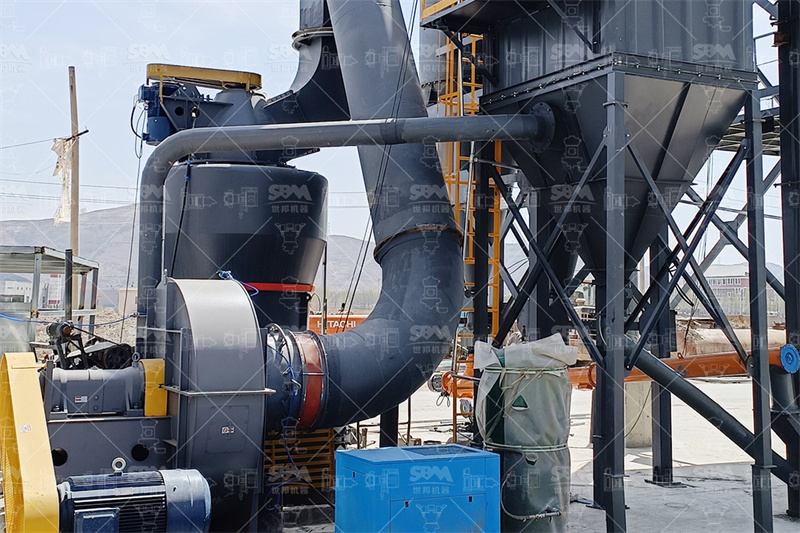
Our company offers a range of mills suitable for illite processing. In this article, we focus on two standout models: the SCM Series Ultrafine Mill and the MTW Series European Trapezium Mill.
SCM Series Ultrafine Mill: For Ultrafine Illite Additives (325–2500 mesh)
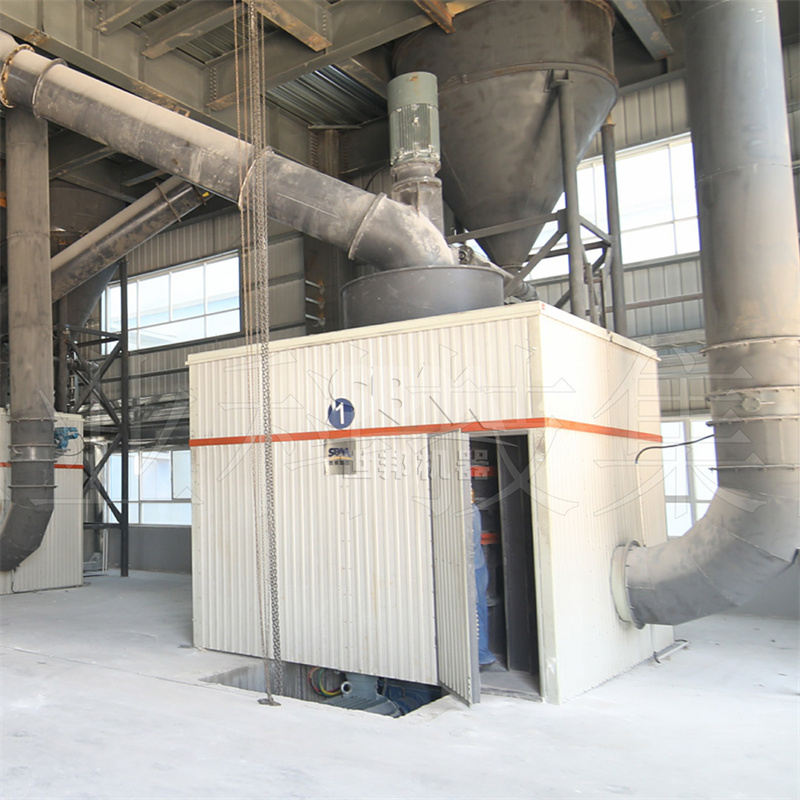
When illite is used as a functional additive in high-end ceramics, such as technical ceramics or advanced refractories, ultrafine grinding is essential. The SCM Series Ultrafine Mill is specifically designed for producing powders in the 325–2500 mesh range, making it an ideal choice for illite additives that require a high surface area and reactivity.
Technical Advantages
High Efficiency & Energy Saving: The SCM mill delivers twice the capacity of a jet mill while consuming 30% less energy. This is particularly beneficial for illite, which is relatively easy to grind but requires fine classification.
High-Precision Classification: The vertical turbine classifier ensures precise particle size cutting, preventing coarse powder from mixing into the finished product. This results in a uniform particle size distribution, critical for consistent ceramic properties.
Durable Design: Special material rollers and rings extend service life, while the shaftless screw grinding chamber ensures stable operation even with the flaky nature of illite.
Eco-friendly & Low Noise: The pulse dust collection system exceeds international standards, and the soundproof room design keeps noise levels low.
Working Principle
The main motor drives three layers of grinding rings to rotate. Illite is dispersed into the grinding path by centrifugal force, crushed by roller pressure, and ground layer by layer. The powder is then collected by a cyclone collector and a pulse dust removal system.
Models & Specifications
The SCM series includes models from SCM800 (0.5–4.5 t/h) to SCM1680 (5.0–25 t/h), with fineness adjustable from 325 to 2500 mesh. For a typical ceramic additive production line, the SCM1000 or SCM1250 models offer a good balance of capacity and energy consumption.
MTW Series European Trapezium Mill: For Coarse to Medium-Fine Illite (30–325 mesh)
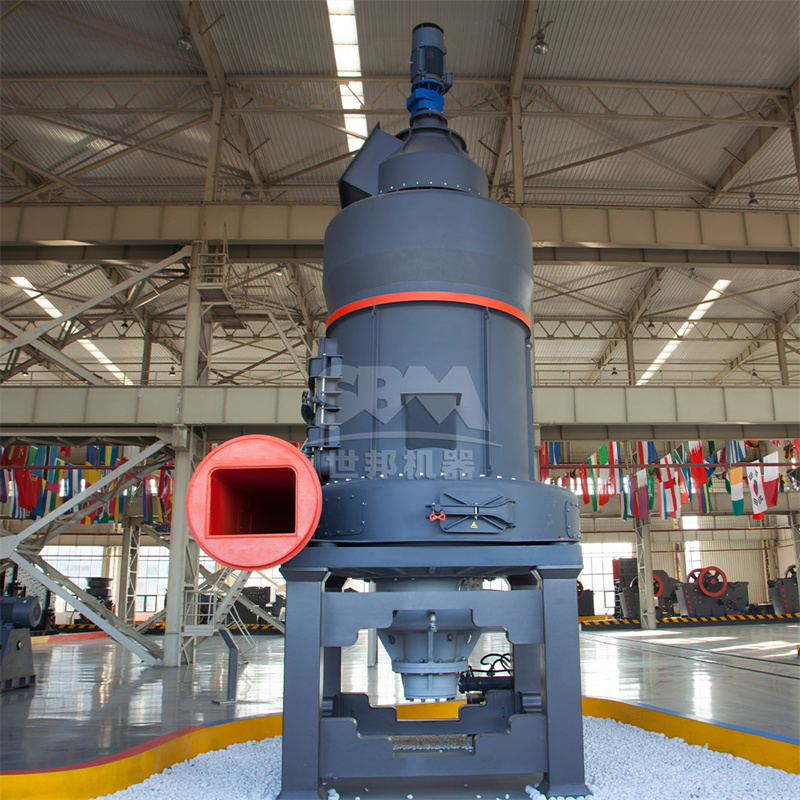
For ceramic applications that require illite additives in the 30–325 mesh range—such as in traditional ceramics, sanitaryware, or as a cost-effective filler—the MTW Series European Trapezium Mill is an excellent choice. It combines high capacity with a wide fineness range and robust construction.
Technical Advantages
Anti-wear Shovel Design: Combined shovel blades and curved design extend grinding roller life, reducing maintenance costs when processing abrasive illite.
Optimized Arc Air Duct: Reduces airflow energy loss and improves transmission efficiency, while high-strength guard plates protect the air duct from wear.
Integral Bevel Gear Drive: Transmission efficiency up to 98%, saving space and reducing installation costs.
Wear-resistant Volute Structure: Non-resistance flow design improves air selection efficiency and reduces maintenance costs by 30%.
Working Principle
The main motor drives the grinding rollers to revolve around the central axis while self-rotating to generate centrifugal force. Shovels throw illite between the ring and rollers to form a material layer, achieving efficient crushing through extrusion. The classification system precisely controls the finished product size.
Models & Specifications
The MTW series offers models from MTW110 (3–9 t/h) to MTW215G (15–45 t/h), with fineness from 10 to 325 mesh. For illite additive production, the MTW138Z (6–17 t/h) or MTW175G (9.5–25 t/h) are popular choices, depending on the required output and fineness.
Other Grinding Options for Illite Additives
While the SCM and MTW series are our top recommendations, other mills can also be considered:
- LM Series Vertical Roller Mill: For large-scale production (up to 250 t/h) and fineness up to 600 mesh, with integrated crushing, grinding, and classification. Ideal for high-capacity illite processing.
- LUM Ultrafine Vertical Roller Mill: For ultrafine illite (325–2500 mesh) with multi-rotor classification and PLC automation.
- Ball Mill: For coarse grinding (0.074–0.8 mm) but less efficient for fine ceramic additives.
- Hammer Mill: For pre-crushing illite to 0–3 mm before fine grinding.
However, for most ceramic additive applications, the SCM and MTW series offer the best combination of fineness control, energy efficiency, and product consistency.
Selection Criteria: Matching the Mill to Your Illite Additive Needs
When choosing a grinding mill for illite additives, consider the following:
- Target Fineness: If you need 325–2500 mesh, choose SCM or LUM. For 30–325 mesh, choose MTW or LM.
- Capacity: Small to medium capacity (0.5–25 t/h) is served by SCM and MTW. Large capacity (up to 250 t/h) requires LM.
- Energy Efficiency: SCM and LM are more energy-efficient than ball mills. MTW offers high transmission efficiency.
- Contamination: For high-purity illite additives, use mills with wear-resistant liners and minimal iron contamination. SCM and MTW are designed with this in mind.
- Automation: SCM offers intelligent control with automatic granularity feedback. LM and LUM feature PLC automation.
- Environmental Compliance: All our mills come with pulse dust collection and noise reduction. SCM and LM meet the strictest standards.
Conclusion: Partner with Us for Your Illite Additive Production
Producing high-quality illite additives for ceramics requires a grinding mill that delivers precise fineness, high capacity, and reliable operation. Our SCM Series Ultrafine Mill and MTW Series European Trapezium Mill are both proven solutions for illite processing. The SCM is ideal for ultrafine additives (325–2500 mesh), while the MTW excels in the coarse to medium-fine range (30–325 mesh). For larger capacities, consider the LM Series Vertical Roller Mill. With our extensive experience in mineral processing and ceramic additives, we can help you select the right mill, optimize your process, and achieve consistent product quality. Contact us today to discuss your illite additive project and receive a customized solution.