
Introduction
Limestone powder is a fundamental material in numerous industries, including construction, agriculture, chemicals, and environmental protection. Among the various fineness specifications, 100-mesh limestone powder (approximately 150 microns) is one of the most widely demanded products. It is commonly used as a filler in asphalt mixtures, as a soil conditioner in agriculture, as a fluxing agent in metallurgy, and as a raw material for cement and concrete production. With the growing global demand for high-quality limestone powder, selecting the right grinding mill for a 100-mesh limestone powder production line has become a critical decision for project investors and plant managers.
Choosing the wrong equipment can lead to inefficiencies, higher operating costs, excessive maintenance, and ultimately, reduced profitability. This article aims to provide a comprehensive guide on how to choose the right grinding mill for your 100-mesh limestone powder project, covering key considerations such as capacity requirements, fineness control, energy consumption, environmental compliance, and equipment durability. We will also introduce some of the most advanced grinding mill solutions available in the market, including our company’s flagship products—the MTW Series European Trapezium Mill and the LM Series Vertical Roller Mill—which are specifically engineered to meet the demands of 100-mesh limestone powder production.
Understanding 100-Mesh Limestone Powder and Its Applications
Mesh size is a measure of particle fineness. A 100-mesh sieve has openings of approximately 0.149 millimeters (149 microns). Therefore, 100-mesh limestone powder consists of particles that pass through a 100-mesh screen, with the majority of particles being finer than 150 microns. This fineness level is considered medium-fine and offers a good balance between reactivity and cost.
In the construction industry, 100-mesh limestone powder is often used as a mineral filler in asphalt concrete, where it improves the stiffness and durability of the mix. In agriculture, it is used to neutralize soil acidity and provide calcium to plants. In the chemical industry, it serves as a filler in paints, plastics, and rubber. In the metallurgical industry, it is used as a flux in steelmaking. In environmental applications, it is used in flue gas desulfurization systems to remove sulfur dioxide from exhaust gases.
The broad range of applications means that the physical and chemical properties of the limestone powder—such as particle size distribution, whiteness, calcium carbonate content, and moisture—must meet specific standards. Consequently, the grinding mill must be capable of consistently producing powder that meets these specifications.
Key Factors in Selecting a Grinding Mill for 100-Mesh Limestone Powder Production
1. Capacity Requirements
The first step in choosing a grinding mill is to determine the required production capacity, typically measured in tons per hour (t/h). This depends on the scale of your project, market demand, and future expansion plans. For small to medium-scale projects, a capacity of 3 to 20 t/h may be sufficient. For large-scale industrial operations, capacities of 50 t/h or more are often required. It is essential to select a mill that can consistently deliver the required output without being overworked, as this ensures stable operation and longer equipment life.
2. Fineness and Particle Size Distribution
While the target is 100-mesh, the actual particle size distribution can significantly affect the performance of the final product. A narrow particle size distribution with minimal oversize particles is often desirable. The grinding mill’s classification system plays a crucial role in achieving precise cut points. Advanced dynamic classifiers allow for accurate control of the top size and can be adjusted to produce different fineness levels without major modifications. For 100-mesh production, a mill with a high-efficiency classifier ensures that no coarse particles contaminate the finished product.
3. Energy Efficiency
Energy consumption is one of the largest operating costs in limestone grinding. Traditional ball mills, while reliable, are known for their high energy consumption, especially when grinding to finer sizes. Modern grinding technologies, such as vertical roller mills and trapezium mills, offer significantly lower energy consumption per ton of product. For instance, vertical roller mills can reduce energy consumption by 30-40% compared to ball mills. Therefore, investing in energy-efficient equipment can lead to substantial long-term savings.
4. Wear Parts and Maintenance
Limestone is moderately abrasive, so wear parts such as grinding rollers, rings, and liners will wear over time. The frequency and cost of replacing these parts can greatly impact the overall operating cost. Mills that feature wear-resistant materials (e.g., high-chrome alloys or ceramic composites) and designs that minimize wear (e.g., non-contact grinding in vertical mills) can extend maintenance intervals and reduce downtime. Additionally, easy access for maintenance and the availability of quick-change systems are important considerations.
5. Environmental Compliance
Dust emissions and noise are major environmental concerns in powder production. Regulatory requirements are becoming increasingly stringent worldwide. A good grinding mill should be equipped with an efficient dust collection system, such as a pulse-jet bag filter, to capture fine particles and ensure emissions are within limits. Noise reduction features, such as soundproof enclosures or damping systems, are also desirable, especially for installations near residential areas.
6. Investment and Operating Costs
The initial capital cost of the grinding mill is an obvious consideration, but it should be evaluated alongside operating costs, including energy, maintenance, and labor. Sometimes a higher initial investment in advanced equipment can yield lower total cost of ownership over the equipment’s lifespan. It is advisable to perform a cost-benefit analysis that takes into account the specific conditions of your project.
7. Technical Support and After-Sales Service
The reliability of the equipment supplier is crucial. A supplier with extensive experience, a proven track record, and a robust after-sales service network can provide valuable support in terms of installation, commissioning, training, and spare parts supply. This minimizes downtime and ensures smooth operation.
Recommended Grinding Mill Solutions for 100-Mesh Limestone Powder
Based on the above factors, we recommend two of our company’s most advanced grinding mills that are particularly well-suited for 100-mesh limestone powder production: the MTW Series European Trapezium Mill and the LM Series Vertical Roller Mill. Both are engineered with state-of-the-art technology to deliver high efficiency, precise fineness, and reliable operation.
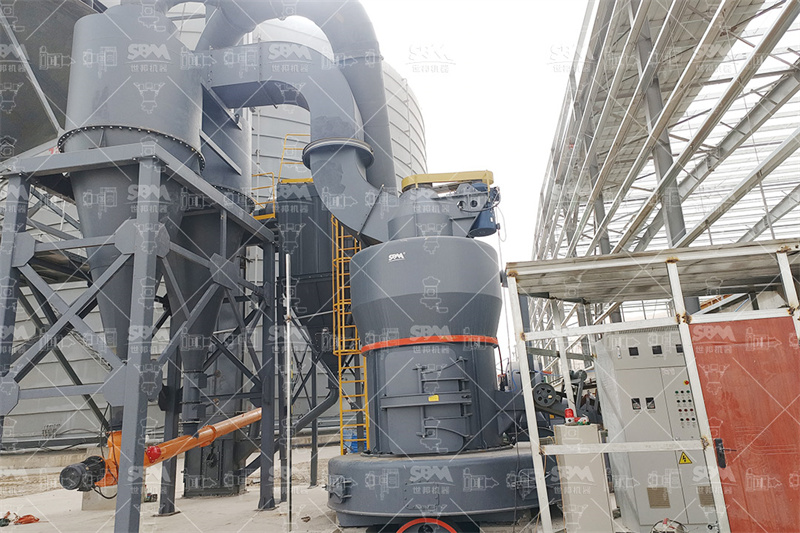
MTW Series European Trapezium Mill
The MTW Series European Trapezium Mill is an ideal choice for producing 100-mesh limestone powder. It is designed with a patented anti-wear shovel and curved grinding rollers that extend the service life of wear parts and reduce maintenance costs. The optimized arc air duct reduces airflow energy loss and improves transmission efficiency, resulting in higher grinding efficiency. The integral bevel gear drive ensures transmission efficiency up to 98%, saving space and reducing installation costs. Additionally, the wear-resistant volute structure with a non-resistance flow design improves air selection efficiency and reduces maintenance costs by 30%.
The MTW mill is available in several models, with capacities ranging from 3 t/h to 45 t/h, and can produce fineness from 30 to 325 mesh. For 100-mesh (150 microns) production, the MTW mill can be equipped with a high-efficiency classifier to achieve precise particle size control. Its robust construction and advanced features make it a reliable and cost-effective solution for medium to large-scale limestone powder projects.
Key technical parameters of popular MTW models include:
- MTW110: Capacity 3-9 t/h, Main Power 55 kW, Fineness 10-325 mesh.
- MTW138Z: Capacity 6-17 t/h, Main Power 90 kW, Fineness 10-325 mesh.
- MTW175G: Capacity 9.5-25 t/h, Main Power 160 kW, Fineness 10-325 mesh.
- MTW215G: Capacity 15-45 t/h, Main Power 280 kW, Fineness 10-325 mesh.
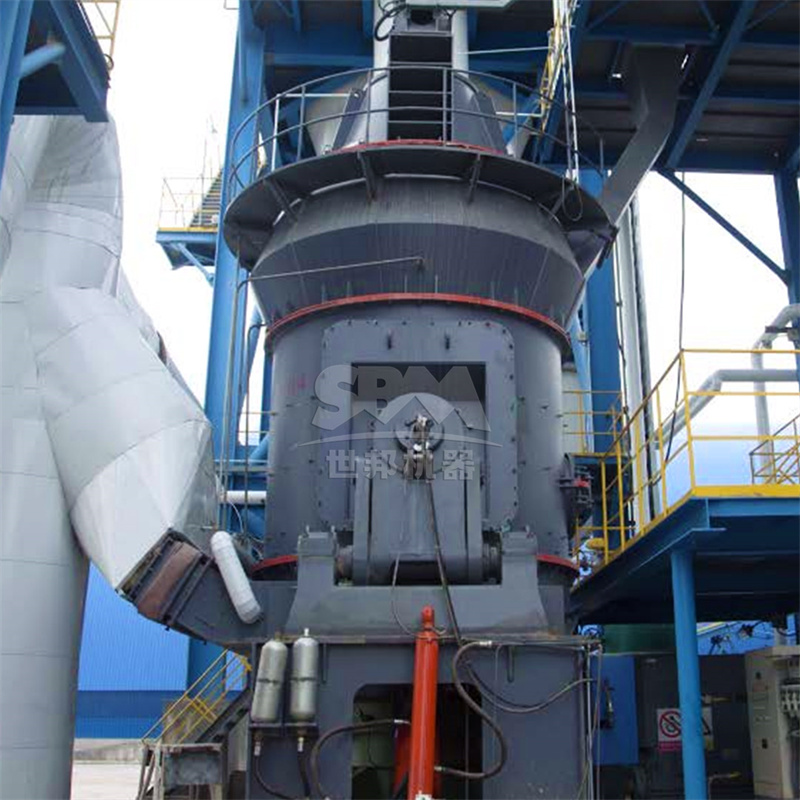
LM Series Vertical Roller Mill
The LM Series Vertical Roller Mill is another excellent option for 100-mesh limestone powder production, especially for high-capacity projects. This mill integrates crushing, grinding, and classification into one system, reducing floor space by 50% and allowing outdoor installation, which can cut infrastructure costs by 40%. The non-contact design between rollers and table minimizes wear, extending wear part life by up to three times. Energy consumption is 30-40% lower than ball mill systems, making it a highly energy-efficient choice.
The LM mill features an intelligent control system that supports remote/local switching and real-time monitoring, reducing manual intervention. It operates under fully sealed negative pressure, ensuring dust emissions are well below international standards. With models capable of capacities up to 250 t/h (for the LM series in mineral processing) and fineness up to 600 mesh for special models, the LM mill can easily handle 100-mesh production at various scales.
For limestone grinding to 100 mesh, the LM series models such as LM130K, LM150K, LM170K, LM190K, LM220K, and LM280K are available, with capacities from 10 t/h to 170 t/h. These mills are equipped with dynamic classifiers that ensure precise fineness control and uniform product quality.

Comparison of MTW and LM Mills for 100-Mesh Limestone
Both the MTW and LM mills are excellent choices, but they have distinct characteristics that make them suitable for different project scenarios.
MTW Series European Trapezium Mill is a horizontal grinding mill that uses rollers and a ring to grind material. It is known for its robust construction, ease of maintenance, and ability to handle moderately abrasive materials. The MTW mill is ideal for projects with moderate capacity requirements (3-45 t/h) and where a relatively compact footprint is desired. It offers good energy efficiency and precise fineness control.
LM Series Vertical Roller Mill is a vertical mill that uses a grinding table and rollers. It is characterized by its high capacity, low energy consumption, and integrated design. The LM mill is best suited for large-scale projects (capacities from 10 t/h to over 100 t/h) where energy efficiency and environmental compliance are top priorities. Its vertical design allows for a smaller footprint and outdoor installation, which can be advantageous in space-constrained sites.
When deciding between the two, consider the following:
- Capacity: For capacities above 50 t/h, the LM mill is generally more energy-efficient and cost-effective. For smaller capacities, the MTW mill may be more economical.
- Space: If space is limited, the LM mill’s vertical design saves significant floor area.
- Energy Costs: If energy costs are high, the LM mill’s lower energy consumption can lead to substantial savings over time.
- Maintenance: Both mills have easy maintenance features, but the LM mill’s non-contact grinding principle reduces wear and maintenance frequency.
- Investment: The initial cost of the LM mill is generally higher, but the total cost of ownership may be lower due to energy savings and reduced maintenance.
Conclusion
Selecting the right grinding mill for your 100-mesh limestone powder project is a decision that requires careful consideration of capacity, fineness, energy efficiency, maintenance, environmental compliance, and cost. The MTW Series European Trapezium Mill and the LM Series Vertical Roller Mill from our company represent the latest advancements in grinding technology and are both well-suited for 100-mesh limestone production. By evaluating your project’s specific needs and comparing the features of these mills, you can make an informed choice that ensures high productivity, low operating costs, and long-term reliability.
For more detailed information on these products, including technical specifications, pricing, and customized solutions, please contact our sales team. We are committed to providing you with the best grinding solution for your limestone powder project.