
Introduction
In the chemical industry, marble powder is not just a filler—it is a functional material whose purity, particle size distribution, and surface characteristics directly influence the performance of final products ranging from paints and plastics to pharmaceuticals and food additives. Producing chemical-grade marble powder requires a milling system that can deliver not only the desired fineness but also maintain stringent purity standards by minimizing contamination, ensuring precise classification, and operating with high energy efficiency. This article explores the key factors in selecting a milling system for high-purity marble powder production and highlights two advanced solutions from our portfolio that excel in this demanding application.

Understanding the Requirements for Chemical-Grade Marble Powder
Chemical-grade marble powder must meet rigorous specifications. Impurities such as iron, silica, and heavy metals can degrade product quality and interfere with chemical reactions. Therefore, the milling equipment must be designed to prevent cross-contamination, typically through wear-resistant materials, sealed systems, and efficient dust collection. Additionally, the powder’s particle size distribution (PSD) must be tightly controlled; a narrow PSD ensures consistent reactivity and dispersion. Fineness requirements can range from 325 mesh (45 μm) down to 2500 mesh (5 μm) for ultrafine grades. High-purity applications also demand minimal noise, low dust emissions, and reliable, continuous operation to maintain productivity.
Key Selection Criteria for Milling Systems
1. Contamination Prevention
The grinding chamber and classifier must be constructed from materials that resist wear and do not introduce foreign particles. Specialized liners and grinding elements, such as ceramic or high-chrome alloys, are often employed. Moreover, the system should feature a fully enclosed negative-pressure operation to prevent ambient contamination.
2. Particle Size Control and Classification Efficiency
A high-precision classifier is essential to achieve a sharp cut point and eliminate coarse particles. Vertical turbine classifiers or multi-rotor designs offer superior classification efficiency, ensuring that the finished product meets strict PSD specifications. The ability to adjust fineness without shutting down the system is also advantageous for production flexibility.
3. Energy Efficiency and Throughput
Chemical-grade marble powder production can be energy-intensive, especially at ultrafine sizes. Selecting a mill with high grinding efficiency and low specific energy consumption reduces operating costs and environmental impact. Systems that integrate grinding, classification, and material transport can further optimize energy use.
4. Dust Collection and Environmental Compliance
Advanced pulse-jet dust collectors with high filtration efficiency are mandatory to capture fine particles and maintain a clean workspace. Compliance with international emission standards is non-negotiable for chemical-grade production.
5. Maintenance and Durability
Wear parts should have long service lives to minimize downtime and maintain product purity. Designs that allow quick and easy replacement of rollers, rings, and classifiers reduce maintenance time and costs.
Recommended Milling Systems for High-Purity Marble Powder
Based on these criteria, two of our milling systems stand out for chemical-grade marble powder production: the SCM Series Ultrafine Mill and the LUM Ultrafine Vertical Roller Mill. Both are engineered to deliver high purity, precise fineness, and reliable performance.
SCM Series Ultrafine Mill: Precision and Efficiency
The SCM Series Ultrafine Mill is specifically designed for ultrafine grinding down to 5 μm (2500 mesh). Its vertical turbine classifier provides precise particle size cutting, ensuring no coarse powder mixing and uniform finished products—critical for chemical applications. The mill features special material rollers and rings that extend service life and minimize contamination. The shaftless screw grinding chamber ensures stable operation, while the intelligent control system with automatic finished product granularity feedback maintains consistent quality. With capacities ranging from 0.5 to 25 t/h (depending on model), the SCM Series can accommodate various production scales. Notably, its capacity is twice that of jet mills with 30% lower energy consumption, making it a cost-effective choice for high-purity ultrafine powder.
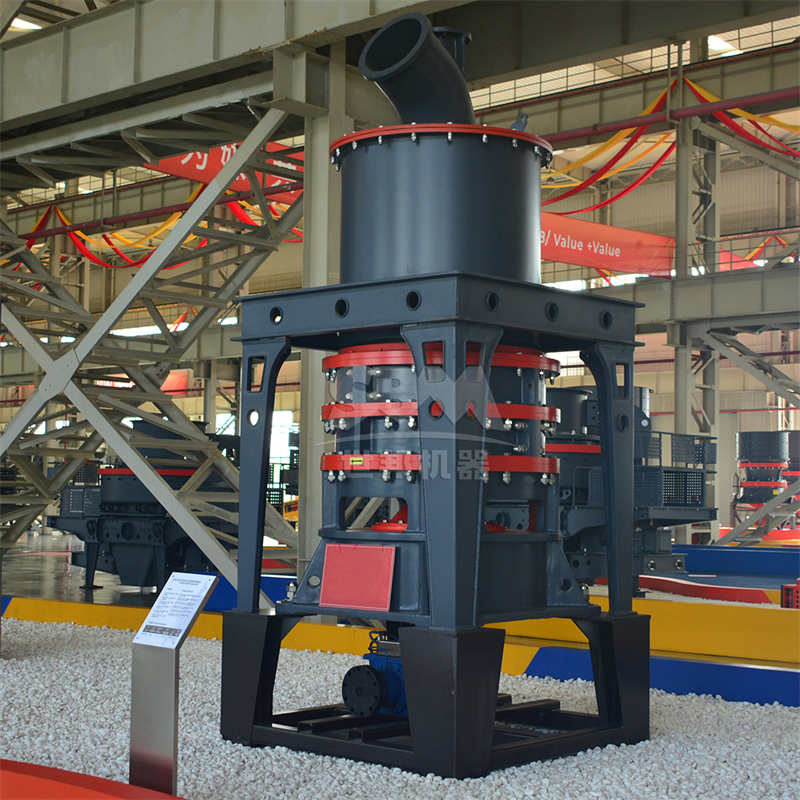
LUM Ultrafine Vertical Roller Mill: Advanced Classification and Eco-Friendly Operation
The LUM Ultrafine Vertical Roller Mill is another excellent option for chemical-grade marble powder, offering fineness up to 2500 mesh. Its unique roller and liner curves improve grinding efficiency, while the multi-rotor classifier technology ensures no coarse particles escape. The PLC automation system provides stable and smart control, reducing manual intervention. The negative-pressure operation prevents dust leakage, and the system is designed for environmental compliance. Models like LUM1525, LUM1632, and LUM1836 offer capacities from 1.6 to 15 t/h, suitable for medium to large-scale production. The LUM series is particularly valued for its compact footprint and low noise levels, making it ideal for facilities with space constraints.
Comparing the Options
When choosing between the SCM and LUM series, consider your specific requirements. The SCM Series excels in ultrafine grinding with high capacity and energy savings, making it suitable for large-scale production of very fine powders. Its intelligent control and precise classification are beneficial for maintaining strict quality standards. The LUM Series, on the other hand, offers integrated grinding and classification in a vertical design, which is space-saving and highly automated. It is particularly effective for producing powders with a narrow PSD and is known for its low noise and dust emissions. Both systems can be equipped with wear-resistant materials to prevent contamination, ensuring the purity required for chemical-grade applications.
Conclusion
Selecting the right milling system for chemical-grade marble powder production is a strategic decision that impacts product quality, operational efficiency, and environmental compliance. By focusing on contamination prevention, classification precision, energy efficiency, and dust control, you can ensure the production of high-purity powders that meet the most demanding specifications. Our SCM Series Ultrafine Mill and LUM Ultrafine Vertical Roller Mill represent the forefront of milling technology, offering reliable, efficient, and clean solutions for high-purity applications. For further assistance in choosing the optimal system for your specific needs, please consult our technical experts.