
Introduction
Clay is one of the most versatile and widely used industrial minerals, finding applications in ceramics, refractories, paper, paint, plastics, rubber, and many other sectors. The performance of clay-based products depends heavily on the particle size, particle size distribution, and purity of the processed clay powder. Therefore, selecting the right grinding mill for your clay processing line is a critical decision that directly affects product quality, production efficiency, and operating costs. This article provides a comprehensive guide to choosing the appropriate grinding equipment for clay powder production, based on the specific characteristics of clay and the available milling technologies.
Key Characteristics of Clay That Influence Mill Selection
Clay minerals, such as kaolinite, montmorillonite, and illite, typically exhibit moderate hardness (Mohs 2–3), high plasticity when wet, and a tendency to agglomerate. Moisture content can vary significantly, and some clays require drying before grinding. The required fineness for clay powder can range from coarse (30–80 mesh) for brick and tile production to ultrafine (325–2500 mesh) for high-grade ceramics, paper coating, and nanocomposites. Additionally, contamination control is crucial for high-purity applications. These factors dictate the choice of grinding principle, classification efficiency, and wear protection.
Overview of Grinding Mill Options for Clay Processing
Several types of grinding mills are commonly used in clay processing lines, each with distinct advantages and limitations. The main categories include:
- Ball Mills: Suitable for coarse to fine grinding (0.074–0.8 mm) with large capacity (up to 450 t/h). However, energy consumption is relatively high, and product fineness is difficult to adjust precisely.
- Hammer Mills: Used for coarse crushing (0–3 mm) with high capacity and low investment. Not suitable for fine powder production.
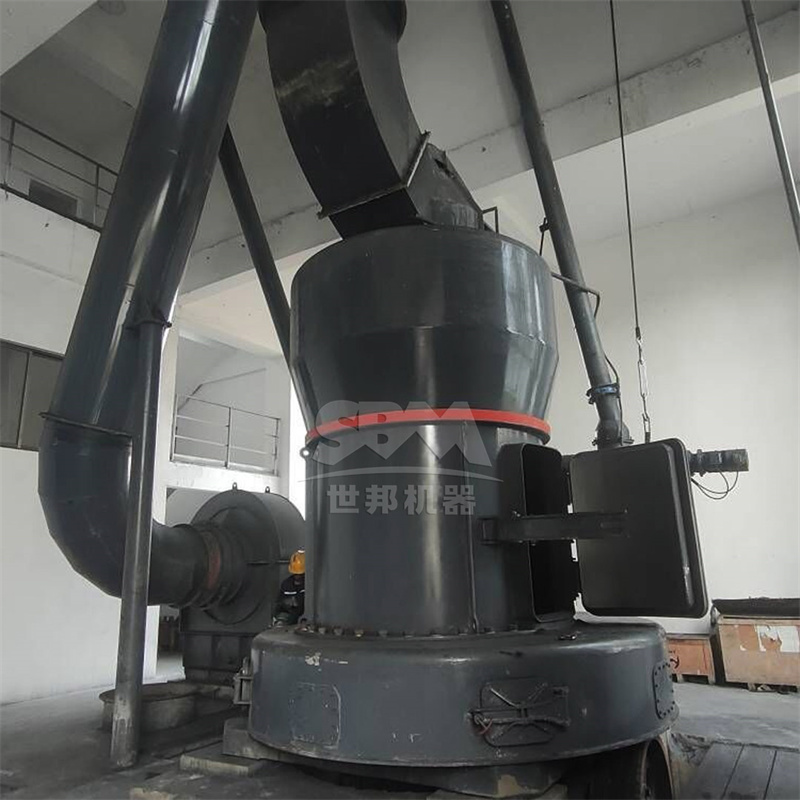
- Raymond Mills (Pendulum Mills): Offer fineness from 30 to 325 mesh with capacities up to 83 t/h. Improved models like the MRN Pendulum Mill feature thin oil lubrication and efficient dust collection.
- Vertical Roller Mills: Such as the LM series, provide integrated crushing, grinding, and classification, with capacities from 3 to 250 t/h and fineness up to 600 mesh. They are energy-efficient and compact.
- Ultrafine Mills: For high-value applications requiring 325–2500 mesh, including the SCM Series Ultrafine Mill and LUM Ultrafine Vertical Roller Mill.
The choice depends on the required fineness, capacity, energy efficiency, and capital investment. For many clay processors, a combination of a hammer mill for pre-crushing and an ultrafine mill for final grinding is optimal.
Detailed Comparison of Recommended Mills for Clay Powder
SCM Series Ultrafine Mill: Ideal for High-Fineness Clay Powder
The SCM Series Ultrafine Mill is a flagship product designed for producing ultrafine powders from 325 to 2500 mesh (45–5 μm). It is particularly well-suited for high-grade clay applications such as kaolin for paper coating, ceramics, and functional fillers. Key advantages include:
- High Efficiency & Energy Saving: Capacity is twice that of jet mills, with 30% lower energy consumption. Intelligent control with automatic finished product granularity feedback ensures consistent quality.
- High-Precision Classification: The vertical turbine classifier achieves precise particle size cutting, preventing coarse powder mixing and ensuring uniform finished products.
- Durable Design: Special material rollers and rings extend service life several times over. The shaftless screw grinding chamber ensures stable operation.
- Eco-friendly & Low Noise: Pulse dust collection efficiency exceeds international standards, and soundproof room design ensures low noise levels.
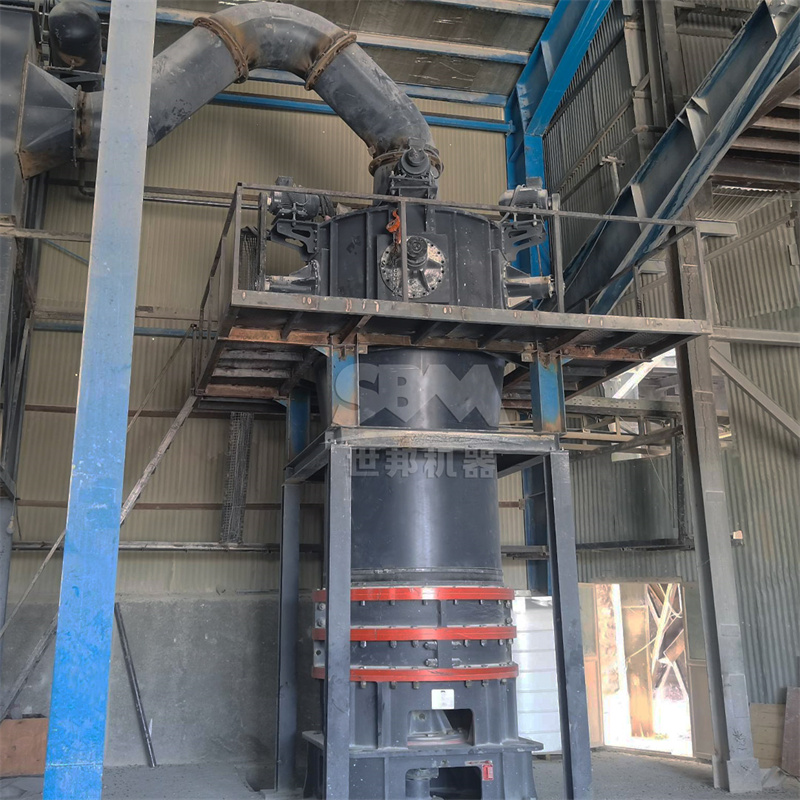
With models from SCM800 (0.5–4.5 t/h) to SCM1680 (5–25 t/h), the SCM Series can be scaled to match various production capacities. Its working principle involves three layers of grinding rings rotating at high speed, with materials crushed by roller pressure and then classified by a cyclone and pulse dust removal system. For clay processors targeting ultrafine powders, the SCM Series offers a reliable and efficient solution.
MTW Series European Trapezium Mill: Versatile for Medium-Fine Clay Powder
For clay applications requiring fineness between 30 and 325 mesh (down to 0.038 mm) and capacities from 3 to 45 t/h, the MTW Series European Trapezium Mill is an excellent choice. It incorporates several patented technologies that enhance performance and reduce maintenance:
- Anti-wear Shovel Design: Combined shovel blades with a curved profile reduce maintenance costs and extend grinding roller life.
- Optimized Arc Air Duct: Reduces airflow energy loss and improves transmission efficiency, protected by high-strength guard plates.
- Integral Bevel Gear Drive: Transmission efficiency up to 98%, saving space and reducing installation costs.
- Wear-resistant Volute Structure: Non-resistance flow design improves air selection efficiency, reducing maintenance costs by 30%.
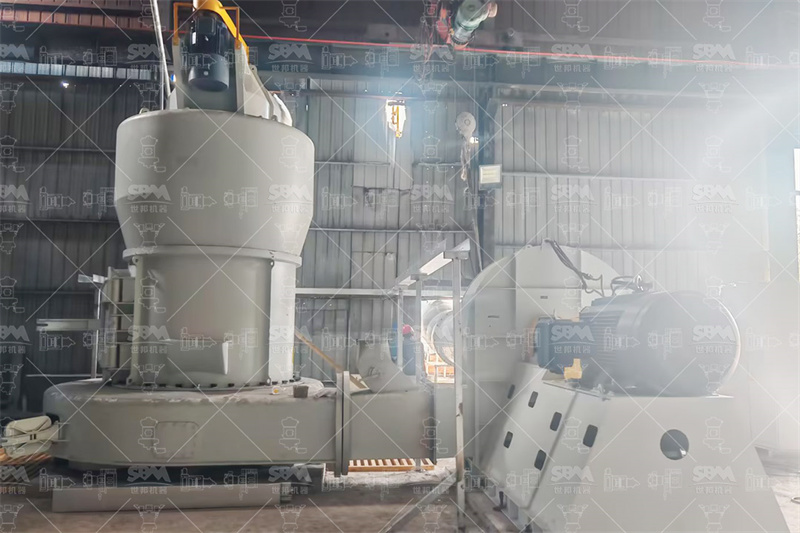
Models range from MTW110 (3–9 t/h) to MTW215G (15–45 t/h), with feed sizes up to 50 mm. The MTW Series is particularly suitable for processing clay with moderate moisture and hardness, offering a balance between fineness and capacity. Its classification system precisely controls the finished product size, making it a versatile workhorse for clay powder production lines.
Practical Selection Guidelines
When choosing a grinding mill for clay processing, consider the following steps:
- Define the Required Fineness: Determine the target particle size range. For coarse powders (below 325 mesh), consider MTW or MTM series; for ultrafine (above 325 mesh), SCM or LUM series are appropriate.
- Determine Production Capacity: Match the mill model to your required output. The SCM series covers 0.5–25 t/h, while the MTW series covers 3–45 t/h. For very large capacities, LM vertical mills or ball mills may be considered.
- Assess Material Properties: Clay moisture, hardness, and abrasiveness influence the choice of wear parts and drying requirements. The SCM and MTW series both offer wear-resistant designs.
- Evaluate Energy Efficiency: Ultrafine mills like SCM offer significant energy savings compared to jet mills. Vertical roller mills also have lower energy consumption than ball mills.
- Consider Environmental Regulations: Ensure the mill is equipped with efficient dust collection. SCM and MTW series both feature advanced pulse dust removal systems.
- Check Maintenance Requirements: Designs that reduce downtime, such as the SCM’s shaftless screw grinding chamber and the MTW’s anti-wear shovel, can lower operating costs.
For most clay processing lines, a two-stage grinding circuit—hammer mill for pre-crushing followed by SCM or MTW for fine grinding—provides an optimal balance of efficiency and product quality. The hammer mill reduces clay lumps to 0–3 mm, ensuring consistent feed to the fine grinder.
Conclusion
Selecting the right grinding mill for clay powder production requires a careful analysis of fineness requirements, capacity, material characteristics, and operational costs. The SCM Series Ultrafine Mill stands out for high-fineness applications, delivering precise classification, energy efficiency, and durable performance. The MTW Series European Trapezium Mill offers versatility for medium-fine grinding with low maintenance and high transmission efficiency. By aligning your production goals with the capabilities of these mills, you can build a clay processing line that achieves consistent product quality and maximized profitability. For further assistance in selecting the optimal equipment for your specific clay type and capacity, consult with our technical team to customize a solution that meets your exact needs.