
Introduction
Barite (barium sulfate, BaSO4) is a critical industrial mineral used in drilling fluids, paints, plastics, rubber, and medical imaging. Its unique properties—high density, chemical inertness, and radiopacity—make it indispensable in many sectors. However, to unlock its full value, barite must be ground to specific particle sizes, typically ranging from coarse (200 mesh) to ultrafine (2500 mesh or finer). Choosing the right grinding mill is therefore crucial for optimizing production efficiency, product quality, and operational costs. This article provides a comprehensive guide to selecting the appropriate grinding equipment for your barite processing plant, with reference to our company’s advanced milling solutions.
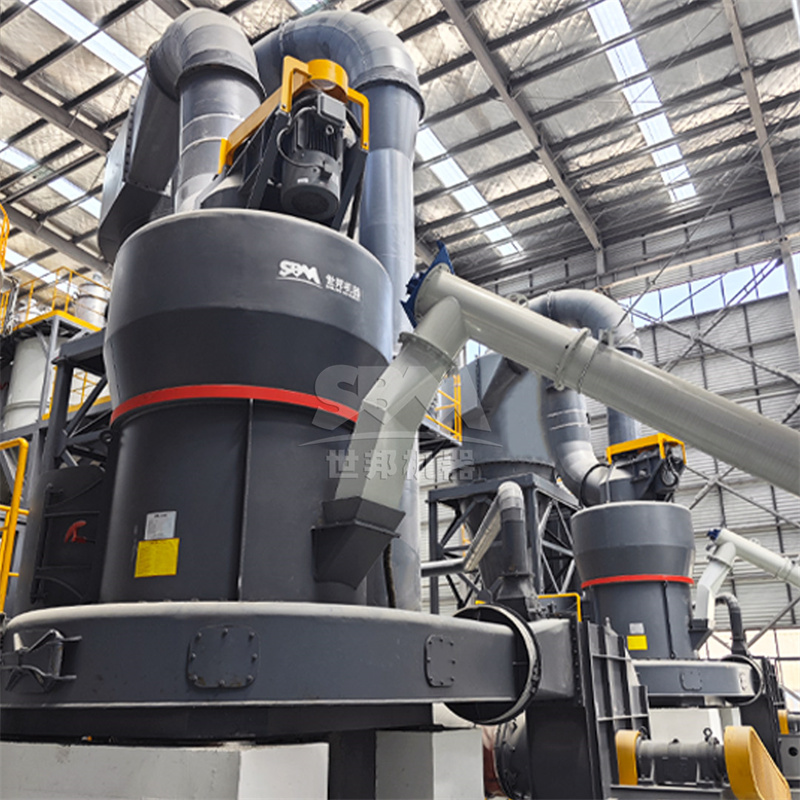
Key Factors in Selecting a Barite Grinding Mill
Before diving into equipment options, it’s essential to understand the factors that influence mill selection:
- Target Fineness: Barite for drilling fluids typically requires 200–325 mesh, while fillers and extenders may need 800–2500 mesh. Ultrafine grades are used in specialty coatings and pharmaceuticals.
- Production Capacity: Plants may range from small-scale (0.5 t/h) to large-scale (45 t/h or more).
- Moisture and Hardness: Barite has a Mohs hardness of 3–3.5 and is relatively brittle, but moisture content can affect grinding efficiency.
- Energy Efficiency: Grinding is energy-intensive; mills with lower power consumption per ton are preferred.
- Environmental Compliance: Dust control and noise reduction are mandatory in modern plants.
- Maintenance and Wear Parts: Barite is abrasive; mills with durable rollers and liners reduce downtime.
Types of Grinding Mills for Barite
Several mill types are used in barite processing, each with distinct advantages:
- Raymond Mills (Pendulum Mills): Traditional choice for 80–400 mesh, but limited for ultrafine grinding.
- Ball Mills: Suitable for coarse to medium grinding, but inefficient for fine products and high energy consumption.
- Vertical Roller Mills: Ideal for large-capacity, medium-fine grinding (30–325 mesh).
- Ultrafine Mills: Required for 325–2500 mesh; examples include jet mills and stirred media mills.
- Hammer Mills: Used for preliminary crushing to 0–3 mm before fine grinding.
Given the growing demand for fine and ultrafine barite powder, we recommend our SCM Series Ultrafine Mill and MTW Series European Trapezium Mill as two outstanding solutions. Below, we detail their features and how they address barite processing challenges.
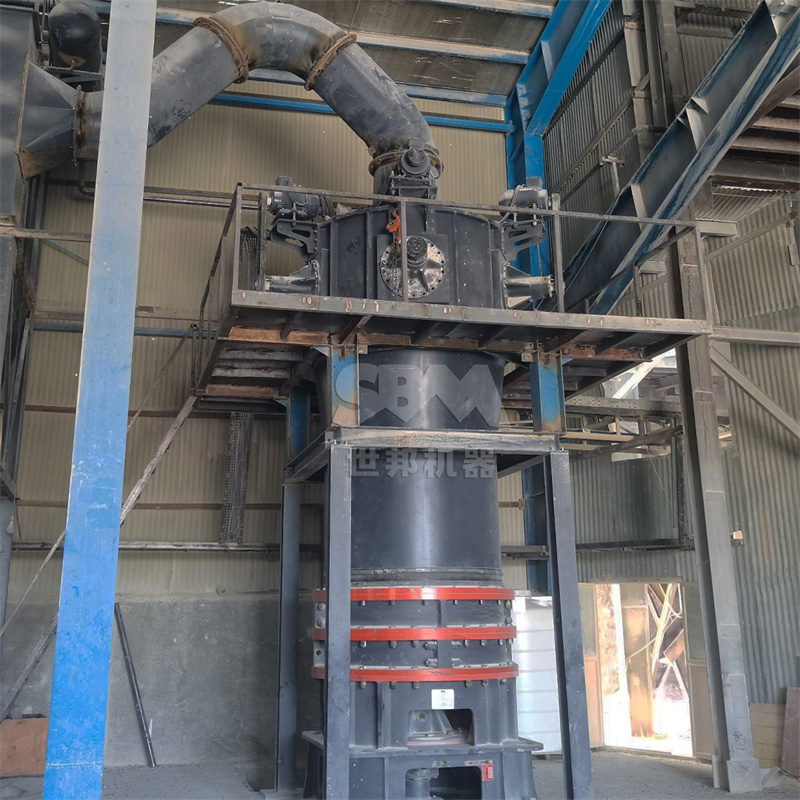
SCM Series Ultrafine Mill: Precision Grinding for High-Value Barite
The SCM Series is a state-of-the-art ultrafine grinding mill designed for producing 325–2500 mesh powders with exceptional efficiency. It is particularly suited for barite applications requiring high whiteness, uniform particle size, and minimal contamination.
Core Parameters
- Input Size: ≤20 mm
- Output Fineness: 325–2500 mesh (adjustable)
- Capacity: 0.5–25 t/h (depending on model)
Technical Advantages for Barite Processing
- High Efficiency & Energy Saving: Capacity is twice that of jet mills, with 30% lower energy consumption. Intelligent control with automatic finished product granularity feedback ensures consistent quality.
- High-Precision Classification: The vertical turbine classifier achieves precise particle size cutting, preventing coarse powder mixing and ensuring uniform finished products—critical for barite used in drilling fluids and coatings.
- Durable Design: Special material rollers and rings extend service life several times over, reducing maintenance costs. The shaftless screw grinding chamber ensures stable operation even with abrasive barite.
- Eco-friendly & Low Noise: Pulse dust collection efficiency exceeds international standards, and soundproof room design keeps noise levels low.
With models from SCM800 (0.5–4.5 t/h) to SCM1680 (5–25 t/h), the SCM series can be scaled to match any plant capacity. Its ability to produce ultrafine barite makes it ideal for high-end applications such as automotive paints, radiation shielding, and specialty polymers.
MTW Series European Trapezium Mill: Versatile and Cost-Effective for Medium-Fine Barite
For plants requiring 30–325 mesh (0.6–0.045 mm) barite powder at high capacity, the MTW Series offers an optimal balance of performance and economy. It incorporates European technology with innovative design improvements.
Core Parameters
- Input Size: ≤50 mm
- Output Fineness: 30–325 mesh (down to 0.038 mm)
- Capacity: 3–45 t/h (depending on model)
Technical Advantages for Barite Processing
- Anti-wear Shovel Design: Combined shovel blades reduce maintenance costs, and the curved design extends grinding roller life—beneficial when grinding abrasive barite.
- Optimized Arc Air Duct: Reduces airflow energy loss and improves transmission efficiency. High-strength guard plates protect the air duct working surface, ensuring long-term reliability.
- Integral Bevel Gear Drive: Transmission efficiency up to 98%, saving space and reducing installation costs.
- Wear-resistant Volute Structure: Non-resistance flow design improves air selection efficiency, and maintenance costs are reduced by 30%.
Models range from MTW110 (3–9 t/h) to MTW215G (15–45 t/h), with fineness easily adjustable via the classifier. The MTW mill is particularly suitable for producing barite for drilling mud weighting agents, where a consistent 200–325 mesh product is required. Its robust construction and low maintenance requirements make it a reliable workhorse for medium-scale plants.
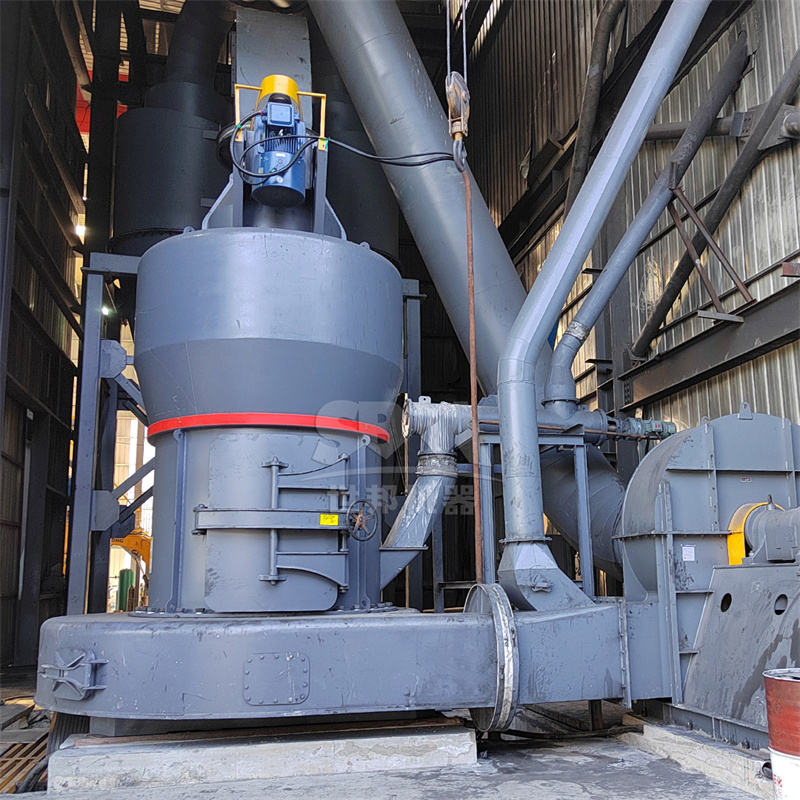
Complementary Equipment for a Complete Barite Processing Line
While the grinding mill is the heart of the plant, a complete barite powder production line requires several auxiliary machines:
- Hammer Mill: For primary crushing of barite lumps to 0–3 mm. Our hammer mill (models PC4008-75 to PC4015-132) offers high capacity and wear-resistant liners.
- Bucket Elevator and Feeder: To transport material to the mill.
- Classifier: Integrated in most mills, but standalone classifiers can be added for precise cut points.
- Dust Collector: Pulse jet dust collectors ensure environmental compliance.
- Packaging System: For bagging finished powder.
Our company provides complete turnkey solutions, from individual mills to full plant automation.
How to Choose Between SCM and MTW for Your Barite Plant
The decision depends on your product portfolio and production scale:
- Choose SCM Series if: You need ultrafine barite (325–2500 mesh) for high-value applications, require precise particle size distribution, and prioritize energy efficiency and environmental performance. The SCM is ideal for specialty chemical and pharmaceutical-grade barite.
- Choose MTW Series if: Your target fineness is 30–325 mesh (e.g., drilling fluid grade), you need high capacity (up to 45 t/h), and you want a proven, cost-effective solution with low maintenance. The MTW is perfect for large-scale drilling mud production.
In some plants, a combination of both mills can be used: the MTW for coarse grinding and the SCM for ultrafine processing, maximizing flexibility and product range.
Case Study: Barite Grinding Plant in Mexico
A recent installation in Mexico uses an MTW175G mill to produce 200 mesh barite for oil drilling. The plant achieves 20 t/h with a single mill, and the pulse dust collector ensures emissions below 10 mg/m³. The client reports 30% lower maintenance costs compared to their previous ball mill system. For their new ultrafine line, they have ordered an SCM1250 to produce 1250 mesh barite for paint fillers.
Conclusion
Selecting the right grinding mill for barite processing is a strategic decision that impacts profitability and product quality. The SCM Series Ultrafine Mill and MTW Series European Trapezium Mill represent the cutting edge of milling technology, offering efficiency, durability, and environmental compliance. By matching mill specifications to your target fineness and capacity, you can achieve optimal results. Contact our engineers today for a customized solution and a free feasibility study for your barite project.