
Introduction
Activated carbon is a cornerstone material in water treatment, air purification, food decolorization, and pharmaceutical refining. Among the various grades, 200-mesh activated carbon powder (approximately 74 microns) is one of the most widely demanded specifications. Producing this fineness efficiently and consistently requires careful selection of grinding equipment. Unlike simply crushing raw carbon, activated carbon is abrasive, lightweight, and prone to dusting, which places special demands on mill design. This article guides you through the key factors in choosing a grinding mill for a 200-mesh activated carbon powder production line and introduces two proven solutions from our company: the MTW Series European Trapezium Mill and the SCM Series Ultrafine Mill.
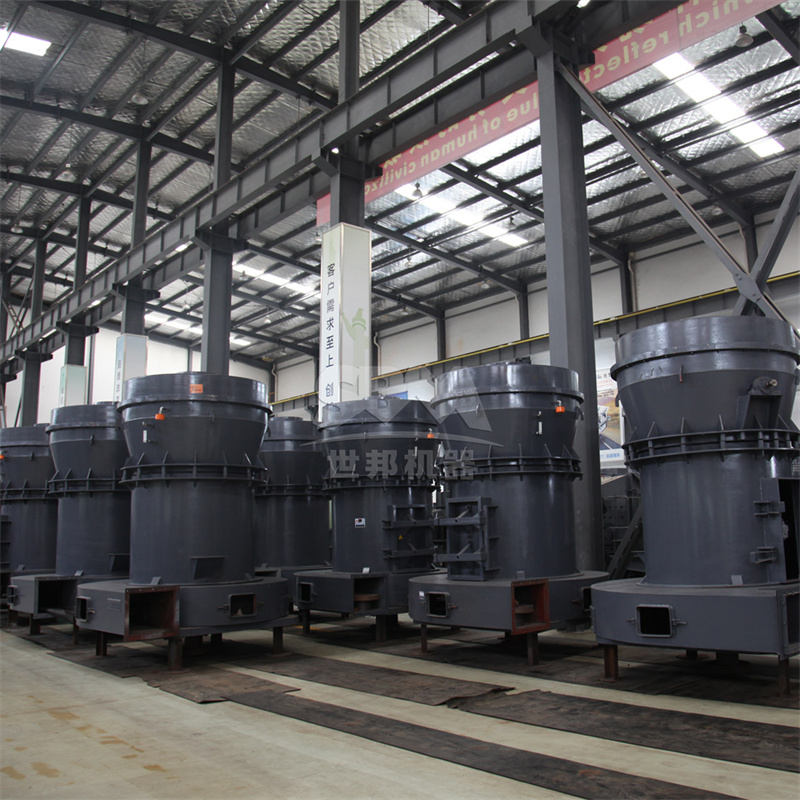
Understanding 200-Mesh Activated Carbon Powder
200 mesh corresponds to a particle size of about 74 microns. At this fineness, activated carbon exhibits a high surface area and rapid adsorption kinetics. However, the material itself is relatively soft but abrasive due to residual ash and mineral content. It also tends to generate static electricity and dust. Therefore, the ideal grinding mill must deliver:
- Precise classification to avoid oversize particles while minimizing over-grinding.
- Efficient dust collection to maintain a clean workplace and recover product.
- Wear-resistant grinding elements to handle abrasive impurities.
- Stable operation with low noise and vibration.
- Capacity flexibility to match your production scale.
Our MTW European Trapezium Mill and SCM Ultrafine Mill both address these requirements, but they serve different capacity and fineness ranges.
Key Selection Criteria for 200-Mesh Activated Carbon Grinding
1. Fineness Range and Classification Precision
200 mesh is a relatively coarse target for ultrafine mills but falls well within the standard range of many pendulum or trapezium mills. The classifier must be able to cut at 74 microns with minimal coarse particle leakage. The MTW Series, for example, offers fineness adjustment from 30 to 325 mesh (down to 0.038mm), with a high-efficiency classifier that ensures uniform product. For applications requiring tighter control, the SCM Series provides 325–2500 mesh, which is overkill for 200 mesh but allows future expansion into finer grades.
2. Capacity and Production Scale
Activated carbon powder lines vary from small pilot operations (0.5 t/h) to large industrial plants (25 t/h or more). The MTW Series covers 3–45 t/h depending on model, making it ideal for medium to large-scale 200-mesh production. The SCM Series, with 0.5–25 t/h, suits small to medium lines or where occasional finer grinding is needed. For a dedicated 200-mesh line, the MTW is often the more economical choice due to its higher capacity per horsepower.
3. Energy Consumption and Operating Cost
Activated carbon grinding is energy-intensive. The MTW Series features an optimized arc air duct that reduces airflow resistance, and an integral bevel gear drive with 98% transmission efficiency. These design improvements lower power consumption per ton. The SCM Series uses intelligent control and a vertical turbine classifier to avoid over-grinding, saving energy. For 200 mesh, however, the MTW’s lower specific energy consumption at coarser fineness gives it an edge.
4. Wear Parts and Maintenance
Activated carbon can contain abrasive ash. The MTW’s anti-wear shovel design and curved grinding roller profile extend service life. The wear-resistant volute structure reduces maintenance costs by 30%. The SCM Series uses special material rollers and rings that last several times longer than standard parts. Both mills offer easy maintenance access, but the MTW’s combined shovel blades simplify replacement.
5. Dust Collection and Environmental Compliance
Activated carbon dust is a health and explosion hazard. The mill must be equipped with efficient pulse-jet dust collection. Both series offer pulse dust removal systems that exceed international standards. The SCM Series additionally provides a soundproof room design for noise reduction. For 200-mesh lines, a cyclone collector followed by a pulse dust collector is standard.
6. Feed Size and Material Handling
Activated carbon feedstock may come as granules or powder. The MTW Series accepts feed sizes up to 50mm (depending on model), while the SCM Series accepts up to 20mm. If your raw material is already crushed to less than 20mm, both are suitable. If you need to handle larger chunks, the MTW is more forgiving.
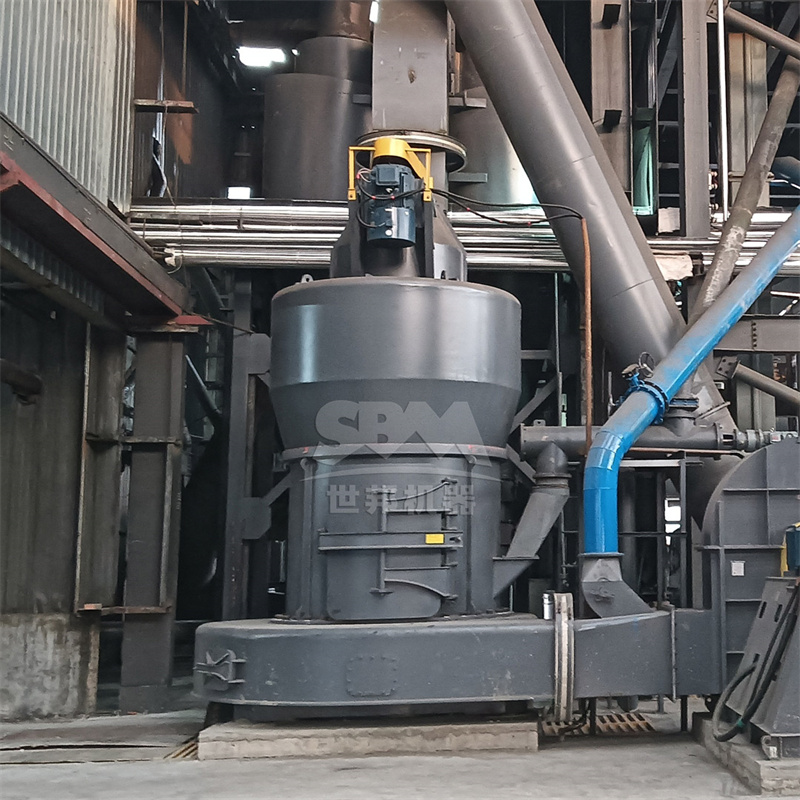
Recommended Solution 1: MTW Series European Trapezium Mill
For most 200-mesh activated carbon powder production lines, the MTW Series is our top recommendation. It combines high capacity, precise classification, and low maintenance in a robust package. Key advantages for activated carbon include:
- Anti-wear shovel design: Combined shovel blades reduce maintenance frequency and cost.
- Optimized arc air duct: Reduces airflow energy loss, improving transmission efficiency and lowering power draw.
- Integral bevel gear drive: 98% transmission efficiency saves space and installation cost.
- Wear-resistant volute structure: Non-resistance flow design improves air selection efficiency and reduces maintenance by 30%.
With models from MTW110 (3–9 t/h) to MTW215G (15–45 t/h), you can match capacity precisely to your line. The MTW138Z, for example, delivers 6–17 t/h at 200 mesh, a popular choice for mid-sized activated carbon plants. The mill’s working principle—centrifugal force driving rollers against a ring—ensures efficient crushing, while the classifier precisely controls the finished product size.
For a typical 200-mesh activated carbon line producing 10 t/h, we recommend the MTW138Z with main power 90kW, fan power 110kW, and classifier power 18.5kW. This configuration balances investment and operating cost. The MTW’s ability to adjust fineness from 10 to 325 mesh also allows you to switch to other grades (e.g., 100 mesh or 300 mesh) without major modifications, adding flexibility to your business.
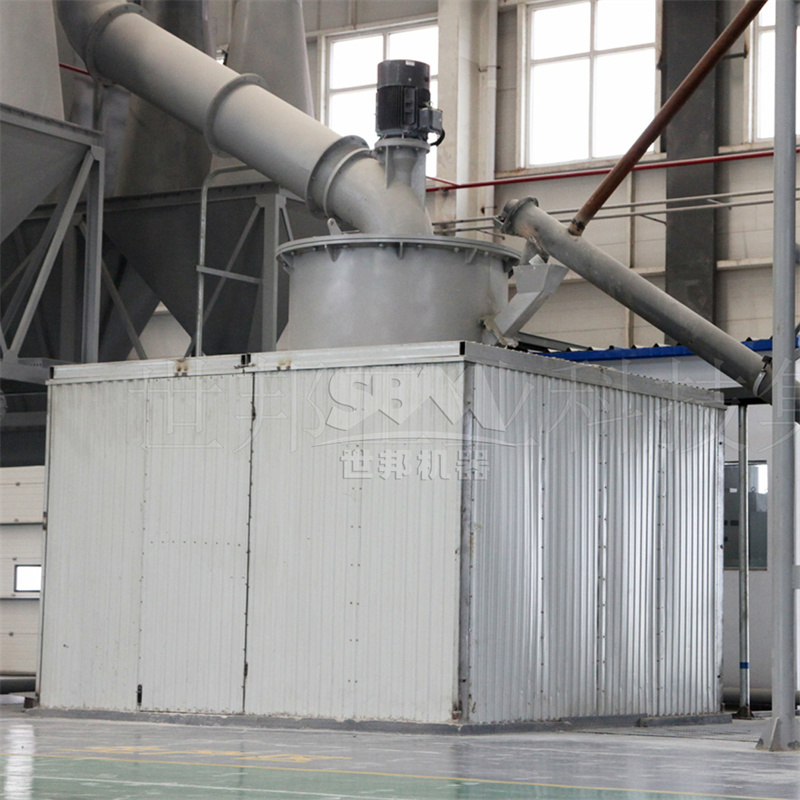
Recommended Solution 2: SCM Series Ultrafine Mill
If your activated carbon line requires occasional production of finer grades (e.g., 325 mesh or beyond) or if you operate a smaller line with strict noise and dust requirements, the SCM Series Ultrafine Mill is an excellent alternative. Its vertical turbine classifier achieves precise particle size cutting, ensuring no coarse powder mixing—critical for high-quality activated carbon. The mill’s intelligent control with automatic finished product granularity feedback simplifies operation.
For 200-mesh production, the SCM800 model (0.5–4.5 t/h) or SCM900 (0.8–6.5 t/h) can be used. Although the SCM is designed for ultrafine grinding, it handles 200 mesh easily and offers the advantage of future-proofing: you can shift to 800 mesh or finer without purchasing new equipment. The SCM’s special material rollers and rings extend service life, and the shaftless screw grinding chamber ensures stable operation. Its pulse dust collection efficiency exceeds international standards, and the soundproof room design keeps noise low—a significant benefit in urban or indoor installations.
However, note that the SCM’s capacity at 200 mesh is lower than the MTW’s for the same power, because the SCM is optimized for finer grinding. Therefore, choose SCM if fineness flexibility and environmental performance are priorities over pure throughput.
Comparison and Decision Guide
To summarize, use the following decision framework:
- Capacity > 5 t/h and dedicated 200 mesh: Choose MTW Series. Higher efficiency, lower specific energy, robust wear parts.
- Capacity < 5 t/h or need future ultrafine capability: Choose SCM Series. Precise classification, quiet operation, expandable to 2500 mesh.
- Feed size > 20mm: MTW Series (accepts up to 50mm).
- Strict noise and dust constraints: SCM Series with soundproof design.
- Budget-sensitive with moderate capacity: MTW110 or MTW138Z offer good value.
Both mills are supported by our company’s patented technology, including internal suction oil lubrication (MTW) and intelligent control systems (SCM). We also provide complete auxiliaries: feeders, classifiers, pulse dust collectors, and cyclones, ensuring a turnkey line.
Conclusion
Selecting the right grinding mill for 200-mesh activated carbon powder production is a balance of fineness control, capacity, energy cost, and maintenance. Our MTW Series European Trapezium Mill delivers high throughput and low operating cost for medium-to-large lines, while the SCM Series Ultrafine Mill offers precision and environmental benefits for smaller or flexible operations. By matching the mill to your specific production profile, you can achieve consistent 200-mesh powder with minimal downtime and maximum profitability. Contact our engineers for a tailored recommendation based on your raw material and capacity targets.