
Introduction to Pyrophyllite and Its Industrial Significance
Pyrophyllite is a hydrous aluminum silicate mineral with the chemical formula Al2Si4O10(OH)2. It is known for its unique properties, including low thermal expansion, high refractoriness, chemical inertness, and excellent dielectric characteristics. These properties make pyrophyllite an indispensable raw material in a wide range of industries, including ceramics, refractories, paints, plastics, rubber, cosmetics, and even agriculture. The demand for finely ground pyrophyllite has been steadily increasing, driven by the growing need for high-performance materials in advanced applications.
However, the processing of pyrophyllite into usable powders of specific fineness and purity requires specialized equipment. The choice of milling solution is critical, as it directly impacts product quality, operational efficiency, and overall profitability. This article aims to guide you through the key considerations for selecting the right pyrophyllite processing equipment, and to highlight our company’s advanced milling solutions that are engineered to meet the diverse needs of pyrophyllite processors worldwide.
Key Factors in Choosing a Milling Solution for Pyrophyllite
Before delving into specific equipment, it is essential to understand the factors that influence the selection of a milling solution. Pyrophyllite is relatively soft (Mohs hardness 1-2) but can be abrasive due to associated minerals. Its processing typically involves crushing, grinding, and classification. The target fineness can range from coarse (hundreds of microns) to ultrafine (down to a few microns). Therefore, the following factors must be carefully evaluated:
- Required Fineness and Particle Size Distribution: Different applications demand different fineness levels. For example, ceramics and refractories may require 200-325 mesh, while advanced ceramics and fillers might need ultrafine powders of 1250 mesh or even 2500 mesh. The milling equipment must be capable of achieving the desired fineness with a narrow particle size distribution.
- Capacity and Throughput: The production scale can vary from small pilot plants to large-scale industrial operations. The equipment should be selected to match the required output, ensuring efficient operation without over- or under-sizing.
- Energy Efficiency and Operating Costs: Milling is an energy-intensive process. Choosing equipment with high grinding efficiency and low energy consumption can significantly reduce operating costs. Additionally, wear parts life and maintenance requirements affect the total cost of ownership.
- Product Purity and Contamination: Pyrophyllite for high-end applications must be free from contamination. The milling equipment should be designed to minimize iron and other impurities, often using wear-resistant materials and closed systems.
- Environmental Compliance: Dust emissions and noise levels must be controlled to meet environmental regulations. Equipment with efficient dust collection and soundproofing is preferred.
- Space and Infrastructure: The available floor space, installation height, and infrastructure (power supply, etc.) influence the choice between vertical and horizontal mills, and between integrated and separate systems.
Overview of Milling Equipment Options for Pyrophyllite
Several types of mills are commonly used for grinding pyrophyllite. Each has its own advantages and limitations, making it suitable for specific applications.
Ball Mills
Ball mills are traditional grinding equipment that use steel balls as grinding media. They are versatile and can produce fine powders, but they are generally less energy-efficient and have a large footprint. Ball mills are often used for coarse to medium-fine grinding and are suitable for large capacity operations. However, for ultrafine grinding, they are less effective compared to modern mills.
Raymond Mills (Pendulum Mills)
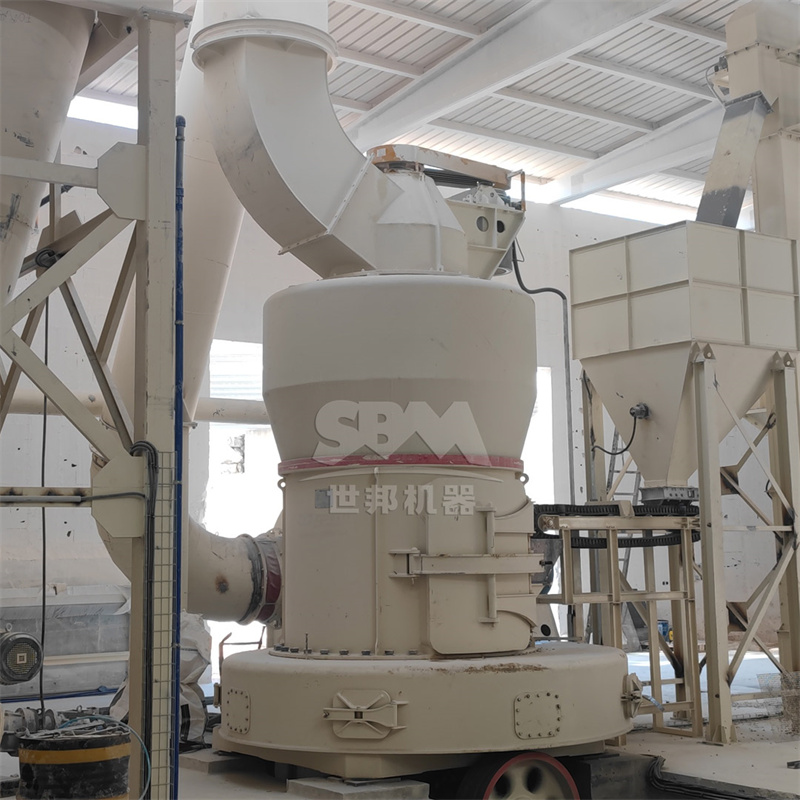
Raymond mills, also known as pendulum mills, are widely used for grinding non-metallic minerals. They are characterized by a vertical structure, high grinding efficiency, and relatively low noise. They are suitable for producing powders in the range of 30-325 mesh. The MTM and MTW series from our company are modern iterations of this technology, incorporating advanced features for improved performance.
Vertical Roller Mills
Vertical roller mills (VRMs) are increasingly popular for grinding minerals. They integrate crushing, grinding, and classification in a single unit, resulting in a compact footprint and high energy efficiency. VRMs are capable of producing fine powders and are known for their low operating costs and high reliability. Our LM series vertical roller mills are a prime example, offering capacities up to 250 t/h and fineness down to 600 mesh.
Ultrafine Mills
For ultrafine powders (e.g., 325-2500 mesh), specialized mills such as jet mills, stirred media mills, and ultrafine vertical mills are required. These mills use different mechanisms to achieve fine grinding, such as high-speed air jets or mechanical agitation. Our SCM series ultrafine mill is a high-efficiency solution that combines a vertical turbine classifier with a durable grinding chamber, achieving fineness up to 2500 mesh.
Our Recommended Solutions for Pyrophyllite Processing
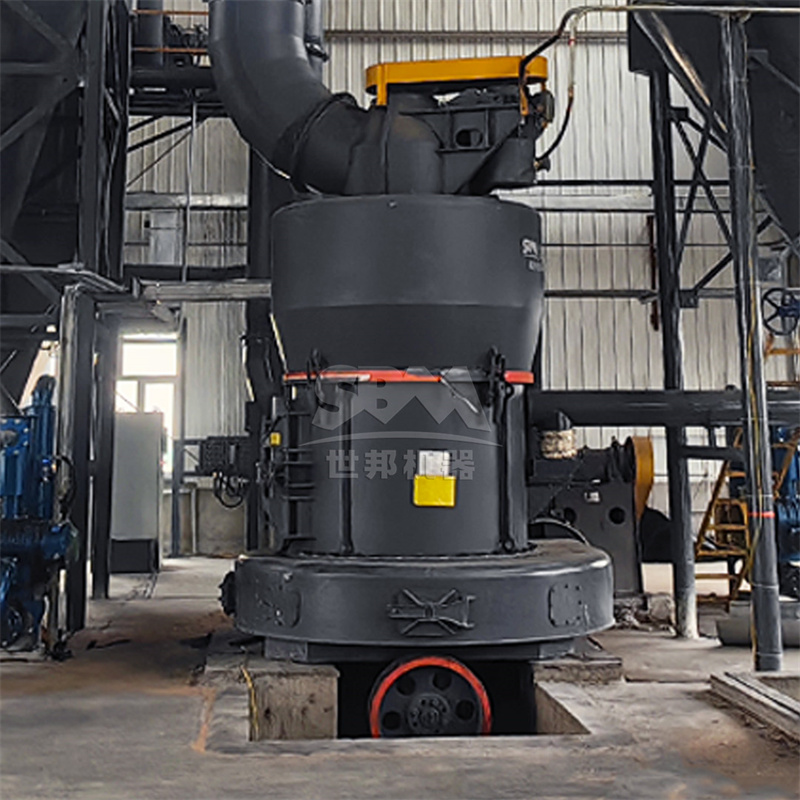
At our company, we offer a comprehensive range of milling equipment designed to meet the specific challenges of pyrophyllite processing. Based on our extensive experience and customer feedback, we recommend the following two products for their exceptional performance and versatility.
SCM Series Ultrafine Mill: The Ideal Choice for Ultrafine Pyrophyllite Powders
The SCM Series Ultrafine Mill is a state-of-the-art solution for producing ultrafine pyrophyllite powders with high precision and efficiency. It is particularly suited for applications requiring fineness between 325 and 2500 mesh, such as in the production of high-grade ceramics, fillers, and functional coatings.
Key Advantages:
- High Efficiency & Energy Saving: The SCM mill boasts a capacity that is twice that of jet mills, while consuming 30% less energy. Its intelligent control system with automatic feedback on finished product granularity ensures consistent quality and optimal energy usage.
- High-Precision Classification: The vertical turbine classifier enables precise particle size cutting, eliminating coarse powder mixing and ensuring a uniform finished product. This is crucial for applications where particle size distribution affects product performance.
- Durable Design: The use of special material rollers and rings significantly extends service life, reducing maintenance costs. The shaftless screw grinding chamber ensures stable operation and minimizes downtime.
- Eco-friendly & Low Noise: The pulse dust collection system exceeds international standards, capturing fine particles and ensuring a clean working environment. The soundproof room design reduces noise levels, complying with occupational health regulations.
With models ranging from SCM800 (0.5-4.5 t/h) to SCM1680 (5-25 t/h), the SCM series can be tailored to various production scales. Its working principle involves three layers of grinding rings rotating at high speed, dispersing material by centrifugal force and crushing it by roller pressure, followed by efficient classification and collection.
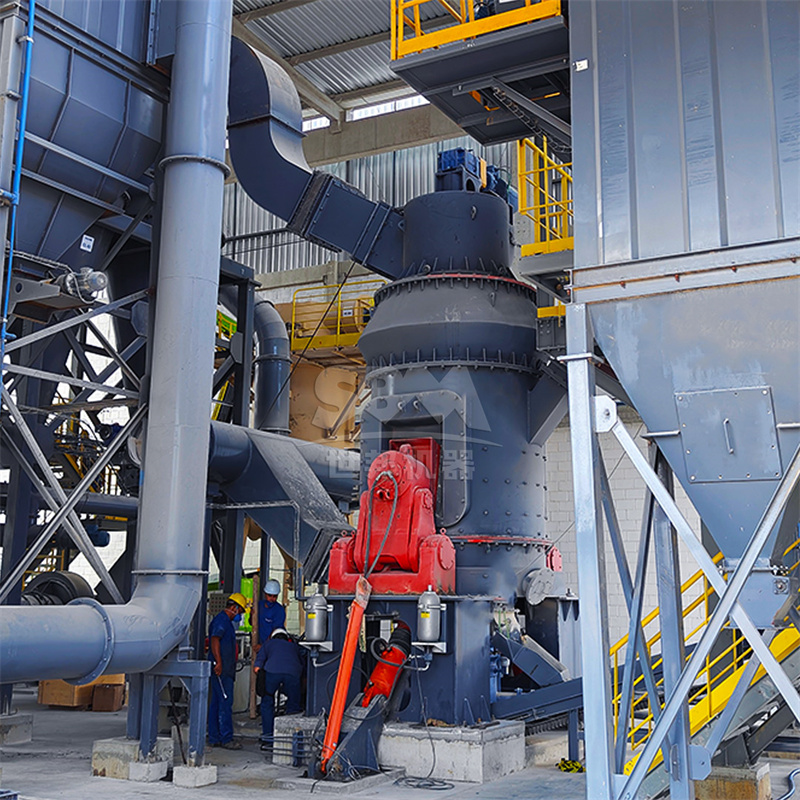
LM Series Vertical Roller Mill: Versatile and Cost-Effective for Medium-Fine Grinding
For pyrophyllite processing that requires medium to fine powders (30-325 mesh, with special models up to 600 mesh) at high capacities, the LM Series Vertical Roller Mill is an excellent choice. It is widely used in the ceramics, refractory, and building materials industries.
Key Advantages:
- Integrated Design: The LM mill combines crushing, grinding, and selection into one compact unit, reducing floor space by up to 50%. It can be installed outdoors, lowering infrastructure costs by 40%.
- Low Operating Cost: The non-contact design between rollers and table minimizes wear, extending wear part life by three times. Energy consumption is 30-40% lower compared to ball mill systems, leading to significant savings.
- Intelligent Control: The expert-level auto-control system supports remote and local switching, with real-time monitoring of parameters to reduce manual intervention and ensure stable operation.
- Environmental Compliance: Fully sealed negative pressure operation prevents dust emission, and the noise level is well below regulatory limits, making it an environmentally friendly option.
The LM series offers a wide range of models, from LM130K (10-28 t/h) to LM280K (50-170 t/h), and even larger for slag and coal. Its working principle involves a rotating grinding table and rollers that crush the material layer, with hot air carrying fines to the classifier. The coarse powder returns to the table for re-grinding, ensuring high grinding efficiency.
Application-Specific Considerations for Pyrophyllite
When selecting equipment, it is important to consider the specific application of the pyrophyllite powder. For example:
- Ceramics and Refractories: Typically require powders in the range of 200-325 mesh. The LM series or MTW series can efficiently produce these grades with high capacity. The LM mill’s integrated design and low energy consumption make it a cost-effective choice for large-scale production.
- Paints and Coatings: Need ultrafine powders (e.g., 800-1250 mesh) for smoothness and opacity. The SCM series ultrafine mill is ideal, delivering precise particle size and high purity.
- Plastics and Rubber: Fillers require fine powders with consistent quality. The SCM mill’s high-precision classification ensures uniform products, enhancing the properties of the final composite.
- Cosmetics and Pharmaceuticals: Require extremely fine and pure powders, often 2500 mesh or finer. The SCM mill, with its advanced classification and dust collection, can meet these stringent requirements.
Additionally, the presence of abrasive minerals in pyrophyllite ore can accelerate wear. Our equipment features wear-resistant materials and designs (e.g., special rollers and rings in SCM, and wear-resistant volute in MTW) to ensure long service life and consistent performance. Furthermore, our patented technologies, such as the internal suction oil lubrication system in MTW and the modular grinding roller assembly in LM, further enhance reliability and ease of maintenance.
Conclusion
Choosing the right milling solution for pyrophyllite processing is a critical decision that affects product quality, operational efficiency, and profitability. By considering factors such as required fineness, capacity, energy efficiency, and environmental compliance, you can select equipment that best suits your needs. Our company offers a diverse range of advanced mills, including the SCM Series Ultrafine Mill and the LM Series Vertical Roller Mill, which are engineered to deliver superior performance in pyrophyllite grinding. With a commitment to innovation and customer satisfaction, we provide not only equipment but also comprehensive technical support and after-sales service. We invite you to consult with our experts to determine the optimal solution for your pyrophyllite processing application.