
Introduction
In the modern papermaking industry, limestone-based additives play an indispensable role in both coating and filler applications. Ground calcium carbonate (GCC), derived from high-purity limestone, is one of the most widely used mineral additives in paper production. It improves paper brightness, opacity, printability, and surface smoothness while reducing production costs. However, the performance of limestone additives depends heavily on their particle size distribution, fineness, and uniformity — all of which are determined by the grinding mill selected for processing.
Choosing the right grinding mill for limestone additive production is therefore a critical decision that directly impacts product quality, energy consumption, and overall operational efficiency. This article provides a professional guide to selecting the appropriate grinding equipment for coating-grade and filler-grade limestone additives, with reference to the specific requirements of each application.
Understanding the Requirements: Coating vs. Filler Applications
Before selecting a grinding mill, it is essential to understand the distinct requirements of coating-grade and filler-grade limestone additives.
Coating-Grade Limestone Additives
Coating applications demand extremely fine limestone particles, typically in the range of 90% passing 2 μm or finer (equivalent to approximately 1250–2500 mesh). The particles must be uniform in size, with minimal coarse particles that could cause surface defects on coated paper. Brightness and purity are also critical, requiring high-grade limestone feedstock. The grinding mill must therefore deliver:
- Ultrafine grinding capability down to 5 μm or finer
- Precise particle size classification with sharp top-size control
- High whiteness preservation (minimal iron contamination)
- Consistent product quality with narrow particle size distribution
Filler-Grade Limestone Additives
Filler applications typically require limestone powders in the range of 200–600 mesh (approximately 25–75 μm), with some specialty fillers requiring finer grades up to 800–1250 mesh. The key requirements for filler-grade limestone include:
- Good brightness and opacity contribution
- Controlled particle size distribution
- High production capacity to meet large-volume demands
- Cost-effective operation with low energy consumption
Key Factors in Mill Selection
Several critical factors must be considered when selecting a grinding mill for limestone additive production:
1. Product Fineness and Particle Size Distribution
The required fineness is the primary determinant of mill type. Coating applications demand ultrafine mills capable of reaching 1250–2500 mesh, while filler applications can utilize medium-speed mills operating in the 200–600 mesh range. The classifier technology integrated into the mill is equally important, as it determines the sharpness of particle size cut and the absence of oversized particles.
2. Production Capacity
Paper mills and mineral processing plants have varying capacity requirements. Small-scale operations may require 1–5 tons per hour, while large integrated paper mills may need 20–50 tons per hour or more. The selected mill must match the required throughput without compromising product quality.
3. Energy Efficiency
Grinding is an energy-intensive process, and energy costs represent a significant portion of production costs. Modern grinding mills should offer high grinding efficiency and low specific energy consumption. Comparing the energy consumption per ton of product across different mill types is essential for long-term cost optimization.
4. Product Purity and Contamination Control
For coating-grade limestone, iron contamination must be minimized to preserve whiteness. The mill’s wear parts should be made from materials that do not introduce significant iron or other color-affecting contaminants. Additionally, the dust collection system must be efficient to prevent product loss and environmental pollution.
5. System Integration and Automation
Modern grinding systems should feature intelligent control capabilities, including automatic fineness feedback, remote monitoring, and integrated dust collection. These features reduce manual intervention, ensure consistent product quality, and minimize downtime.
Recommended Equipment Solutions
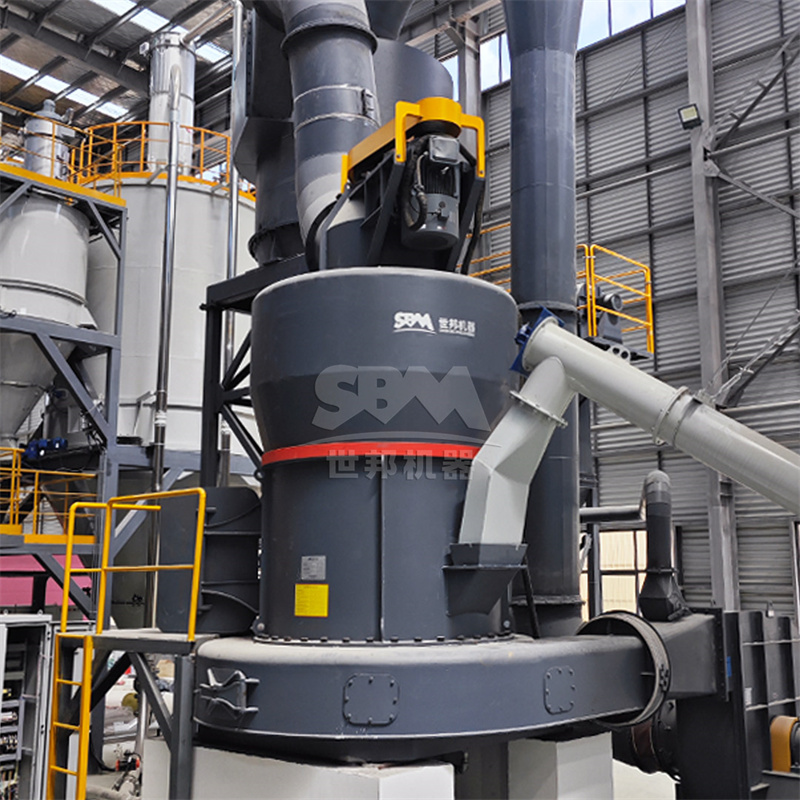
SCM Series Ultrafine Mill: The Ideal Choice for Coating-Grade Limestone
For coating-grade limestone additives requiring ultrafine grinding to 1250–2500 mesh, the SCM Series Ultrafine Mill represents an optimal solution. This mill is specifically engineered for high-precision ultrafine grinding and offers several advantages that make it particularly suitable for paper coating applications:
- Ultrafine Output: Achieves fineness from 325 to 2500 mesh (down to 5 μm), meeting the most demanding coating specifications.
- High-Precision Classification: The vertical turbine classifier ensures precise particle size cutting with no coarse powder mixing, resulting in uniform finished products — a critical requirement for coating-grade GCC.
- High Efficiency: Capacity is twice that of jet mills with 30% lower energy consumption, significantly reducing production costs.
- Durable Design: Special material rollers and rings extend service life several times over, reducing maintenance frequency and costs.
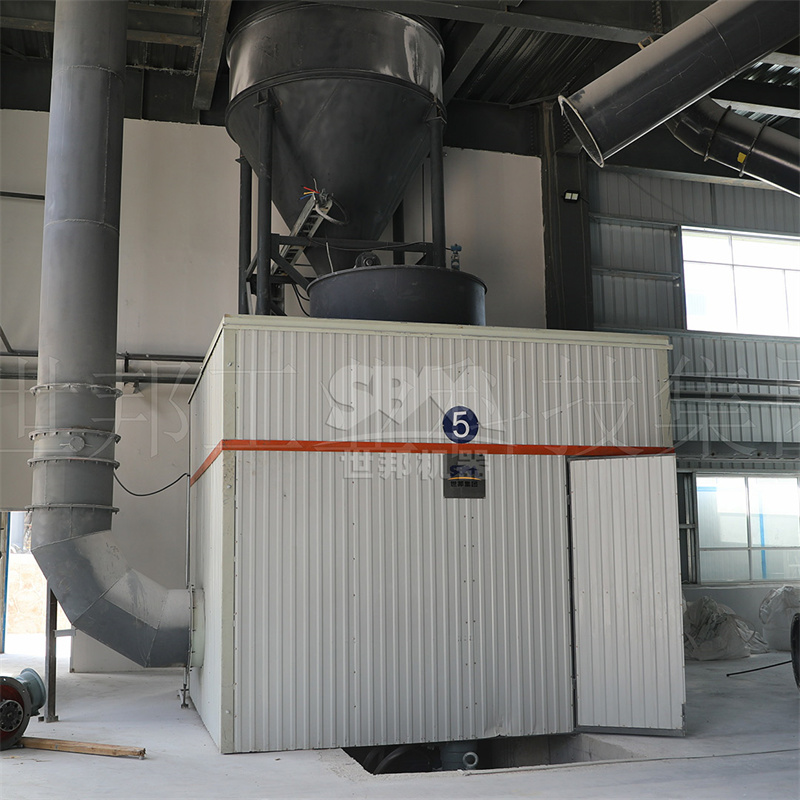
- Eco-friendly Operation: Pulse dust collection efficiency exceeds international standards, and the soundproof room design ensures low noise levels.
The SCM Series is available in multiple models, from the SCM800 (0.5–4.5 t/h) to the SCM1680 (5.0–25 t/h), allowing flexibility in matching capacity to specific production requirements. For a typical paper mill requiring 5–10 tons per hour of coating-grade limestone at 1250–2500 mesh, the SCM1250 model (2.5–14 t/h, 185 kW) provides an excellent balance of capacity and energy efficiency.
MTW Series European Trapezium Mill: A Versatile Solution for Filler-Grade Limestone
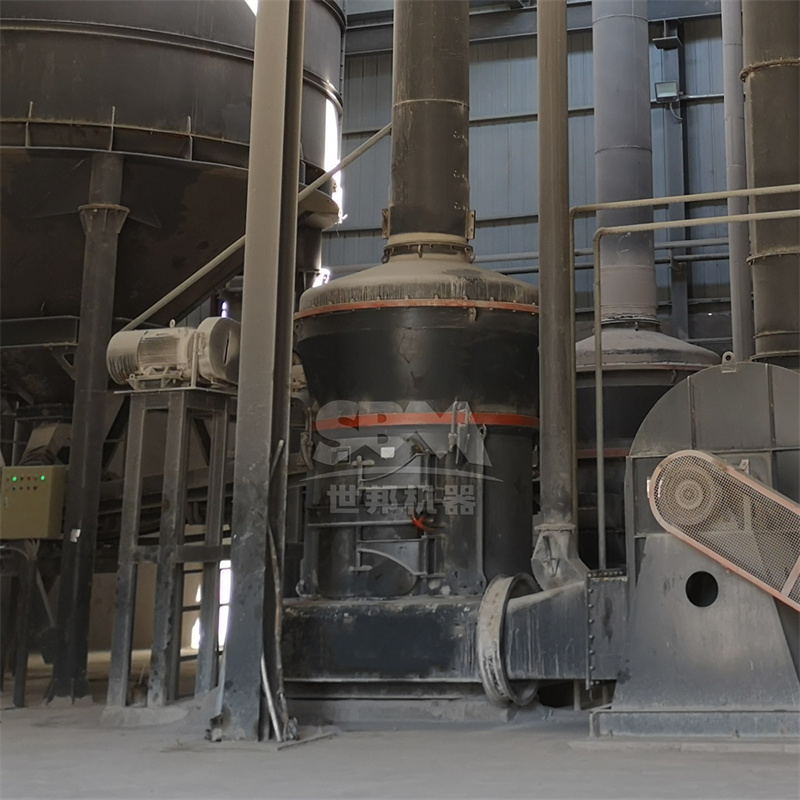
For filler-grade limestone additives in the 200–600 mesh range, the MTW Series European Trapezium Mill offers an efficient and cost-effective solution. This mill combines advanced grinding technology with robust construction to deliver reliable performance for medium-fineness applications:
- Optimized Grinding Design: The anti-wear shovel design and curved grinding roller extend service life while reducing maintenance costs.
- Efficient Airflow System: The optimized arc air duct reduces airflow energy loss and improves transmission efficiency, contributing to lower energy consumption.
- High Transmission Efficiency: The integral bevel gear drive achieves transmission efficiency up to 98%, saving space and reducing installation costs.
- Wear-resistant Construction: The wear-resistant volute structure with non-resistance flow design improves air selection efficiency and reduces maintenance costs by 30%.
- Flexible Capacity Range: Models from MTW110 (3–9 t/h) to MTW215G (15–45 t/h) cover a wide range of production requirements.
For a paper mill requiring 10–20 tons per hour of filler-grade limestone at 325 mesh, the MTW138Z model (6–17 t/h, 90 kW main power) or MTW175G model (9.5–25 t/h, 160 kW main power) would be appropriate selections, offering high capacity and reliable operation.
Comparison and Selection Guidelines
When choosing between the SCM Series and MTW Series for limestone additive production, consider the following guidelines:
Select SCM Series When:
- Coating-grade fineness (1250–2500 mesh) is required
- Product uniformity and absence of coarse particles are critical
- High whiteness must be preserved
- Energy efficiency in ultrafine grinding is a priority
Select MTW Series When:
- Filler-grade fineness (200–600 mesh) is sufficient
- High production capacity is the primary requirement
- Cost-effective operation with low maintenance is desired
- A wide range of fineness adjustment is needed
System Integration Considerations
Beyond the grinding mill itself, a complete limestone additive production system should include:
- Feeding System: Consistent and controlled material feed to ensure stable grinding operation
- Classification System: Integrated or standalone classifiers to ensure precise product fineness
- Dust Collection System: High-efficiency pulse dust collectors to capture fine particles and meet environmental standards
- Product Collection and Storage: Cyclone collectors and storage silos for finished product handling
- Automation and Control: PLC-based control systems with automatic fineness feedback and remote monitoring capabilities
Conclusion
Selecting the right grinding mill for limestone additive production in papermaking requires careful consideration of product fineness requirements, production capacity, energy efficiency, and product purity. For coating-grade applications demanding ultrafine particles, the SCM Series Ultrafine Mill offers precise classification, high efficiency, and reliable performance. For filler-grade applications requiring medium-fineness powders, the MTW Series European Trapezium Mill provides a cost-effective and versatile solution. By matching the mill selection to the specific application requirements, paper manufacturers and mineral processors can achieve optimal product quality, operational efficiency, and long-term profitability in their limestone additive production operations.
For detailed technical consultations and customized equipment recommendations, please contact our engineering team to discuss your specific limestone additive production requirements.