
Introduction
Diabase, also known as dolerite or basalt, is a hard and abrasive igneous rock that is widely used in construction, road building, and as a raw material for various industrial applications. Processing diabase into fine powder requires robust and efficient grinding equipment that can withstand the material’s hardness while delivering consistent particle size distribution. With a plethora of grinding mill options available, selecting the right equipment for your basalt processing plant is crucial for optimizing production efficiency, minimizing operating costs, and ensuring product quality. This article provides a comprehensive guide to choosing the appropriate grinding mill for diabase powder production, highlighting key factors such as capacity, fineness, energy consumption, and maintenance requirements. We will also introduce two of our company’s flagship products—the SCM Series Ultrafine Mill and the MTW Series European Trapezium Mill—which are particularly well-suited for processing hard and abrasive materials like diabase.
Understanding Diabase and Its Grinding Challenges
Diabase is characterized by its high compressive strength (typically 100-300 MPa) and high abrasiveness due to its mineral composition, which includes plagioclase feldspar, pyroxene, and iron oxides. These properties pose significant challenges for grinding equipment: wear parts experience rapid deterioration, energy consumption tends to be high, and achieving fine and uniform particle sizes can be difficult. Therefore, a grinding mill for diabase must be designed with wear-resistant materials, efficient grinding mechanisms, and precise classification systems. Additionally, the mill should be capable of handling feed sizes up to 50 mm and reducing the material to fineness levels ranging from coarse (30 mesh) to ultrafine (2500 mesh), depending on the end-use application.
Key Factors in Selecting a Grinding Mill for Diabase
When choosing a grinding mill for your basalt processing plant, consider the following critical factors:
1. Production Capacity and Fineness Requirements
Determine the required output fineness and hourly capacity. Diabase powder is used in various applications: as a filler in asphalt and concrete, as a raw material for mineral wool, or as a functional additive in paints and plastics. Each application demands specific particle size distributions. For instance, ultrafine diabase powder (e.g., 1250 mesh) may be needed for high-performance coatings, while coarser grades (e.g., 200 mesh) suffice for construction fillers. Ensure the mill’s capacity range and fineness adjustment capabilities align with your production targets.
2. Hardness and Abrasiveness
Given diabase’s abrasiveness, the mill’s wear parts—such as rollers, rings, and liners—must be made from high-chrome or ceramic materials to extend service life. Mills with innovative designs that reduce wear, such as those with curved grinding rollers or special alloy compositions, are preferable.
3. Energy Efficiency
Grinding is an energy-intensive process. Choose mills with high grinding efficiency and low power consumption per ton of product. Features like optimized airflow systems, advanced classifiers, and intelligent control can significantly reduce energy costs.
4. Maintenance and Downtime
Easy access for maintenance and quick replacement of wear parts are essential to minimize downtime. Mills with modular designs, hydraulic systems for roller adjustment, and centralized lubrication simplify maintenance tasks.
5. Environmental Compliance
Dust and noise emissions must be controlled to meet environmental regulations. Look for mills equipped with efficient pulse-jet dust collectors, soundproof enclosures, and negative pressure operation to ensure a clean and safe working environment.
6. Total Cost of Ownership
Beyond the initial purchase price, consider installation costs, energy consumption, wear part replacement frequency, and maintenance labor. A mill with a higher upfront cost but lower operating expenses may offer a better return on investment over its lifespan.
Recommended Equipment for Diabase Powder Production
Based on the aforementioned factors, we recommend two of our company’s products that excel in processing hard and abrasive materials like diabase: the SCM Series Ultrafine Mill and the MTW Series European Trapezium Mill.
SCM Series Ultrafine Mill: Precision Grinding for High-Value Applications
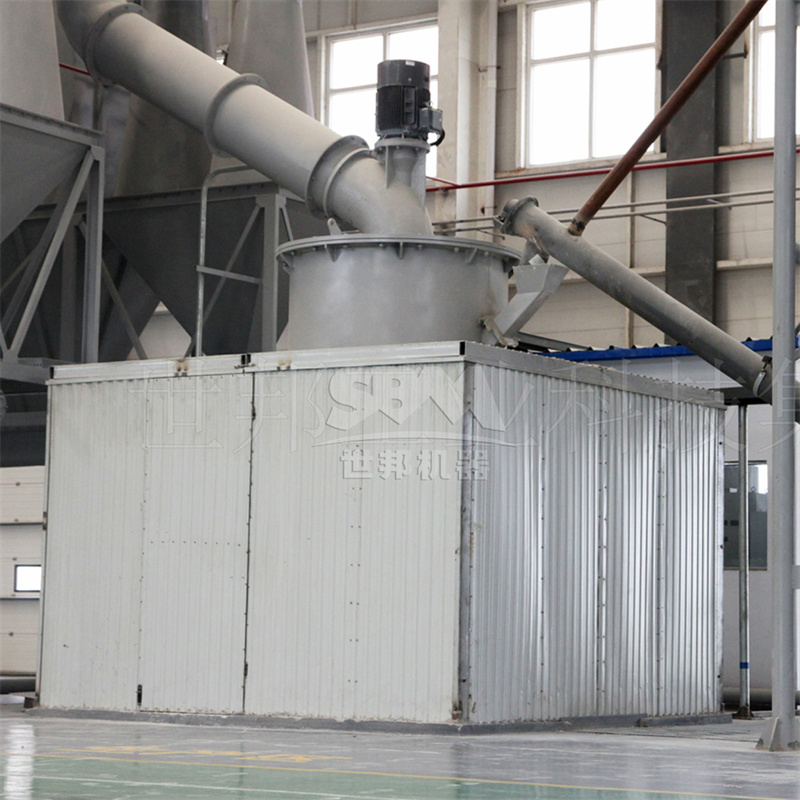
The SCM Series Ultrafine Mill is a state-of-the-art solution for producing ultrafine diabase powder with fineness ranging from 325 to 2500 mesh. Its core parameters include an input size of ≤20 mm and a capacity of 0.5-25 t/h, making it suitable for both small and large-scale operations. What sets the SCM apart is its ability to deliver high-precision classification and energy-efficient grinding.
Technical Advantages:
- High Efficiency & Energy Saving: The SCM mill boasts a capacity twice that of jet mills while consuming 30% less energy. Its intelligent control system with automatic finished product granularity feedback ensures stable operation and optimal energy use.
- High-Precision Classification: The vertical turbine classifier achieves precise particle size cutting, eliminating coarse powder mixing and guaranteeing uniform finished products—crucial for high-end applications.
- Durable Design: Special material rollers and rings extend service life several times over, effectively handling diabase’s abrasive nature. The shaftless screw grinding chamber ensures stable operation and reduces vibration.
- Eco-friendly & Low Noise: Pulse dust collection efficiency exceeds international standards, and the soundproof room design keeps noise levels low, ensuring compliance with environmental regulations.
With models ranging from SCM800 (0.5-4.5 t/h) to SCM1680 (5-25 t/h), you can select the ideal capacity for your plant. The SCM Series is particularly recommended for producing ultrafine diabase powder used in specialty coatings, plastics, and sealants.
MTW Series European Trapezium Mill: Versatile and Cost-Effective for Medium-Fine Powder
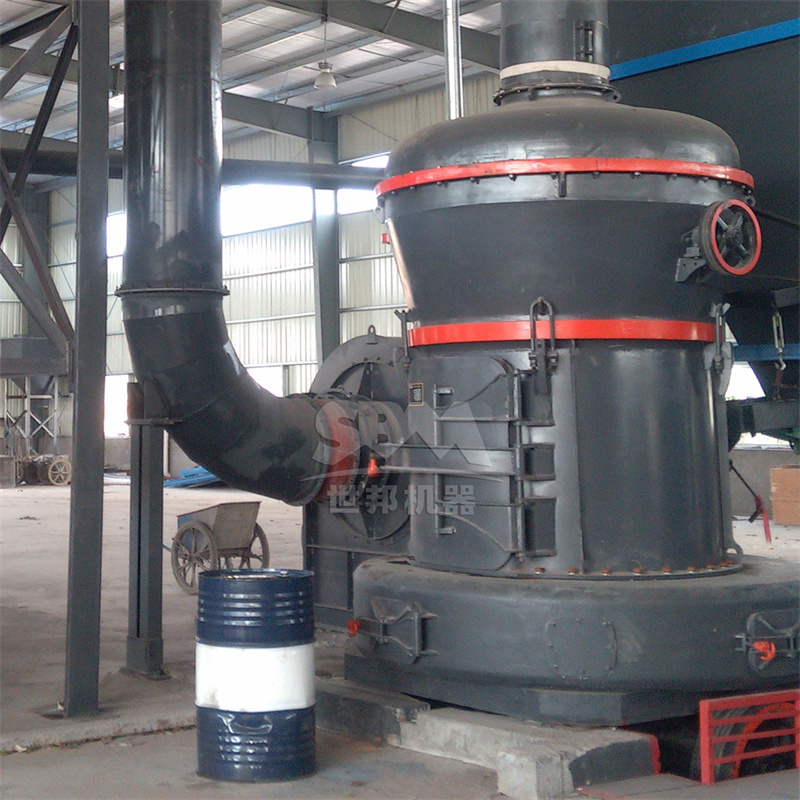
For medium-fine diabase powder (30-325 mesh), the MTW Series European Trapezium Mill offers an excellent balance of performance and economy. With an input size of ≤50 mm and a capacity of 3-45 t/h, it is ideal for large-scale production of diabase powder for construction and industrial fillers.
Technical Advantages:
- Anti-wear Shovel Design: Combined shovel blades with a curved profile reduce maintenance costs and extend grinding roller life, directly addressing diabase’s abrasiveness.
- Optimized Arc Air Duct: The arc-shaped air duct reduces airflow energy loss and improves transmission efficiency, while high-strength guard plates protect the working surface.
- Integral Bevel Gear Drive: Transmission efficiency up to 98% saves space and reduces installation costs.
- Wear-resistant Volute Structure: The non-resistance flow design improves air selection efficiency and reduces maintenance costs by 30%.
Models such as the MTW110 (3-9 t/h) to MTW215G (15-45 t/h) cater to various production scales. The MTW Series is particularly suitable for producing diabase powder for asphalt mixtures, concrete admixtures, and mineral wool production.
Application Insights: Diabase Powder in Industry
Diabase powder has diverse applications, each requiring specific fineness and quality. In the construction industry, diabase powder is used as a mineral filler in asphalt pavements to improve durability and resistance to deformation. For this application, a fineness of 200-325 mesh is typically sufficient, and the MTW Series mill provides an economical solution. In the production of high-performance concrete, ultrafine diabase powder (≥1250 mesh) can enhance compressive strength and reduce permeability; the SCM Series excels here. Additionally, diabase powder serves as a raw material for rock wool insulation, where consistent fiber diameter is critical, necessitating precise classification that both mills offer.
Conclusion
Selecting the right grinding mill for your diabase processing plant hinges on a careful assessment of your production requirements, material characteristics, and operational constraints. The SCM Series Ultrafine Mill and MTW Series European Trapezium Mill from our company are engineered to meet the challenges of grinding hard and abrasive diabase, offering high efficiency, durability, and environmental compliance. By choosing the appropriate model and configuration, you can achieve optimal productivity and product quality while minimizing total cost of ownership. For further assistance in selecting the ideal mill for your specific needs, please consult our technical experts.